raw silk 1401100000
CN → US| HS编码 | 关税税率 | 原产国 | 目的国 | 文档 |
|---|---|---|---|---|
| 5002000000 | 35.0% | CN | US | 官方文档 |
| 5001000000 | 35.0% | CN | US | 官方文档 |
| 5002000000 | 35.0% | CN | US | 官方文档 |
| 5002000000 | 35.0% | CN | US | 官方文档 |
| 5001000000 | 35.0% | CN | US | 官方文档 |
商品图片
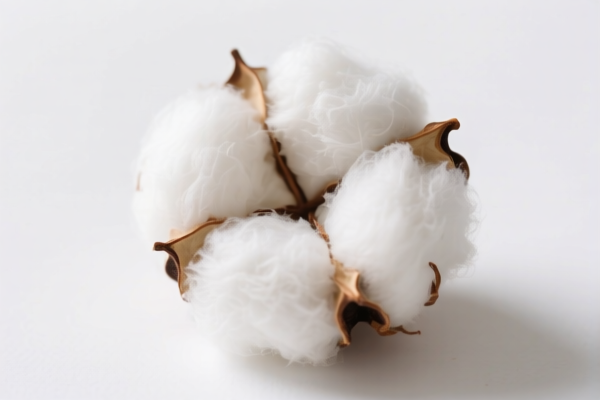
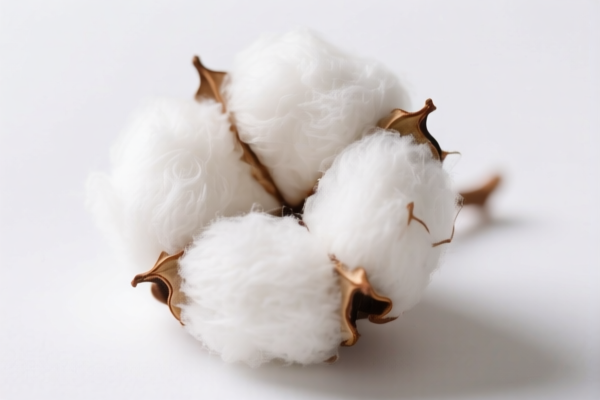
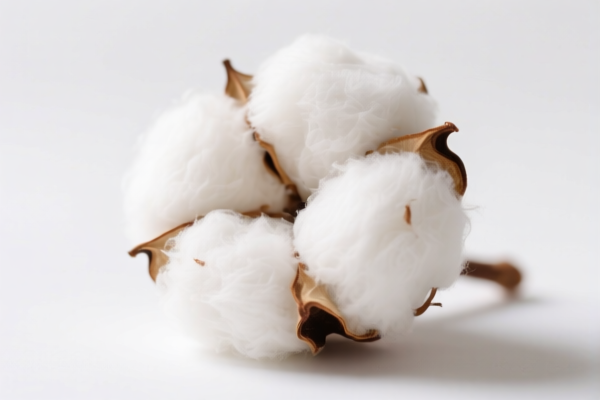
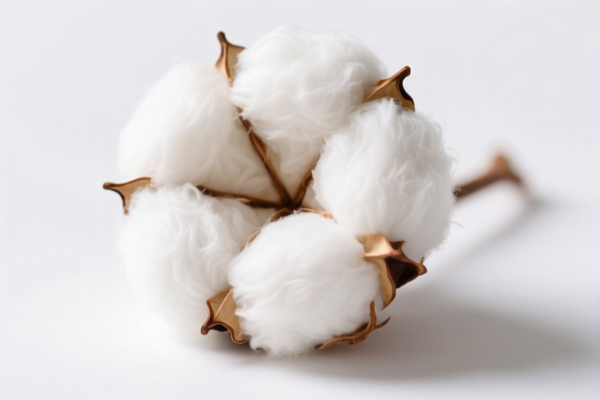
AI分析
🧵 Raw Silk & Mulberry Cocoons (HS Codes 5001/5002)
🌐 HS Code Reference & Customs Clearance Guide | 2026 Tariff Analysis | Professional Clearance Strategy
📌 I. Product Definition & Classification: Do You Truly Understand "Raw Silk"?
In international trade, Raw Silk is not a single monolithic category. It is strictly divided into two distinct stages of processing, which directly determine your HS Code and, crucially, your tax liability under current U.S. trade policies.
1. Mulberry Silkworm Cocoons (Raw Silk Cocoons):
The un-reeled cocoons from Bombyx mori silkworms. This is the raw material before the silk filament is extracted.
* HS Code: 5001.00.00.00
2. Raw Silk (Unreeled/Unreeling):
The continuous filament obtained from cocoons, which has not yet been processed for spinning (i.e., not degummed, dyed, or reeled into threads for weaving). It is still in its natural, raw state.
* HS Code: 5002.00.00.00
⚠️ Key Distinction: - If you are importing whole cocoons →
5001.00.00.00- If you are importing filament silk (threads/yarns not yet spun) →5002.00.00.00- Note: Do not confuse with "Silk Yarn" (5003or5004), which is spun and ready for weaving.
📦 II. HS Code Classification Details (2026 Latest Tariff Authority)
Based on the provided data, here are the specific classifications and their tax implications.
| HS Code | Product Description | Status |
|---|---|---|
5001.00.00.00 |
Silkworm Cocoons Suitable for Reeling (Silk Raw Material /原材料) |
Unprocessed Cocoons |
5002.00.00.00 |
Raw Silk (Unreeling/Unreeling) (Raw Silk / 未精练) |
Filament Silk, Not Spun/Dyed |
🔍 Critical Reminder: -
5001is the source material (cocoons). -5002is the processed fiber (silk filament). - Both codes are subject to the same high tariff structure under current U.S. regulations. - Do not misdeclare5001as5002or vice versa; customs will require botanical/zoological proof (e.g., cocoons vs. filaments).
💰 III. 2026 Latest Tariff Rate Details (Including Surcharges & Policy Add-ons)
✅ Applicable Country: United States (US)
✅ Country of Origin: China (CN)
✅ Effective Time: Current applicable rates (including Section 301 and Section 122 measures)
🎯 1. 5001.00.00.00 & 5002.00.00.00 — Raw Silk & Cocoons
| Item | Content |
|---|---|
| Base Duty Rate | 0.0% (Most Favored Nation rate for raw silk/cocoons is typically 0%) |
| Section 301 Surcharge | +25.0% (Added Tariff from USITC Footnote 9903.01.24/25) |
| Section 122 / Additional Surcharge | +10.0% (122 Clause Tariff) |
| Total Effective Rate | 35.0% |
| Tax Calculation | CIF Value × 35% |
| De Minimis Eligibility | ❌ NO (Not eligible for $800 de minimis exemption) |
| Legal Authority Path | USITC:5001.00.00.00 / USITC:5002.00.00.00 → Section 301: 25% → Section 122: 10% |
📌 Explanation: - "Base Duty 0%": Raw silk and cocoons are considered raw materials, so the standard MFN (Most Favored Nation) duty is zero. - "Section 301 Surcharge 25%": Under the U.S.-China Trade War, most Chinese-origin goods, including raw silk and cocoons, are subject to an additional 25% tariff. - "Section 122 Tariff 10%": Additional surcharge applied under Section 122 of the Trade Act of 1974 (often used for national security or supply chain reasons). - Total Tax: 35%. This is a high-cost item. You must factor this into your landed cost calculation immediately.
🛠️ IV. Customs Clearance Practical Advice (Combat Pitfall Guide)
✅ 1. Required Documentation Checklist (None Missing)
| Document | Must Provide | Description |
|---|---|---|
| ✅ Commercial Invoice | ✔️ | Must clearly state "Raw Silk" or "Silkworm Cocoons" and HS Code. |
| ✅ Packing List | ✔️ | Weight, quantity, and packaging details (cocoons vs. silk reels). |
| ✅ Certificate of Origin | ✔️ | Proof of Chinese origin (triggers the 35% tariff). |
| ✅ Phytosanitary Certificate | ✔️ | Crucial for 5001 (Cocoons). Certifies no pests/diseases. |
| ✅ Product Specification | ✔️ | Details on degumming status, filament length, and quality grade. |
| ✅ Bill of Lading / Air Waybill | ✔️ | Standard shipping documents. |
✅ 2. Declaration Tips (Key Mantras)
🔥 "Clear Origin, Clear Status, No Mixing!"
| Scenario | Correct Declaration | Wrong Approach |
|---|---|---|
| Importing Cocoons | Declare as 5001.00.00.00 + Phytosanitary Cert. |
Declare as Raw Silk (5002) → Penalty/Rejection. |
| Importing Silk Filament | Declare as 5002.00.00.00 + Spec Sheet. |
Declare as Cocoons (5001) → Mismatch. |
| Mixed Shipment | Separate HS Codes for Cocoons and Silk. | Mixed declaration → Customs Hold. |
| Origin Labeling | Clearly mark "Product of China". | Hidden origin → Seizure/Fraud. |
✅ 3. Special Cases Handling
| Scenario | Handling Advice |
|---|---|
| Re-exported Silk | If silk was processed in a third country (e.g., Vietnam), you may avoid the 35% tariff by declaring the new country of origin. Ensure substantial transformation occurred. |
| Sample Shipments | No De Minimis Exemption. Even small samples are subject to the 35% tariff and full customs entry. |
| Organic/Natural Silk | Provide additional certification if claiming "Organic" status, but does not change the HS Code or Tariff. |
🌍 V. Global Market Comparison (2026 Latest)
| Country/Region | Recommended HS Code | Duty Rate (China Origin) | Certification Required | Notes |
|---|---|---|---|---|
| 🇺🇸 USA | 5001.00.00.00 / 5002.00.00.00 |
35% (0% Base + 25% Sec 301 + 10% Sec 122) | Phytosanitary (for Cocoons) | Highest Tariff. High risk. |
| 🇨🇳 China | 5001.00.00.00 / 5002.00.00.00 |
0% | N/A | Import duty-free for raw silk. |
| 🇪🇺 EU | 5001.00.00.00 / 5002.00.00.00 |
0% - 4% | REACH, Organic (if claimed) | Low duty, strict quality standards. |
| 🇮🇳 India | 5001.00.00.00 / 5002.00.00.00 |
0% - 10% | APEDA, Phytosanitary | Major silk importer, competitive market. |
| 🇹🇷 Turkey | 5001.00.00.00 / 5002.00.00.00 |
0% - 5% | CE (for processed goods) | Strong textile industry. |
📌 Conclusion: - USA is the most expensive market for Chinese raw silk due to 35% total tariff. - EU, China, and India offer 0% to low tariffs, making them more cost-effective for raw silk imports. - If your final market is the US, consider supply chain relocation (e.g., reeling in Vietnam/India) to avoid the 35% duty, provided substantial transformation occurs.
📌 VI. Common Mistakes & Pitfall Guide (Blood & Tears Lessons)
❌ Mistake 1: Declaring Cocoons (5001) as Raw Silk (5002)
👉 Consequence: Customs will reject due to missing Phytosanitary Certificate. Goods may be quarantined or destroyed.
❌ Mistake 2: Assuming De Minimis ($800) applies to Small Samples
👉 Consequence: 35% tax still applies. No exemption for raw materials from China under current rules.
❌ Mistake 3: Not Declaring Section 122 Tariff
👉 Consequence: Underpayment of duty. Customs will audit and penalize for under-declared taxes.
❌ Mistake 4: Mixing Cocoons and Silk in One Package Without Separate Declaration
👉 Consequence: Customs will hold the entire shipment for inspection, causing delays and storage fees.
✅ Correct Action:
"Raw Silk Filament, Unreeling, Grade 6A, Product of China, HS 5002.00.00.00"
OR
"Silkworm Cocoons, Unreeling, Product of China, HS 5001.00.00.00, Phytosanitary Cert Attached"
🎯 VII. Conclusion: Professional Declaration Saves Cost!
🎯 Remember This Mantra:
🔹 "Cocoons =
5001+ Phytosanitary"
🔹 "Silk Filament =5002+ Spec Sheet"
🔹 "China Origin = 35% Tax (No Exemption)"
🔹 "De Minimis = NO for Silk!"
📌 Tips:
- If you are exporting finished silk fabrics (5007, 5008, etc.), the tariff rate may differ. Ensure you are declaring the raw material correctly.
- Consider Advance Ruling from U.S. Customs if your product is borderline between 5001 and 5002.
- For US shipments, calculate the 35% tariff into your pricing strategy before signing contracts.
📣 Immediate Action:
📞 Contact a licensed customs broker + Provide Phytosanitary Cert (if cocoons) + Verify Origin Country.
🚀 Ensure your raw silk clears smoothly, avoids penalties, and maximizes profit!
✨ Professional Customs Clearance Starts with Accurate Classification!
💼 Every cent of tariff is a cost you can control!
用户评价
关于 HS 编码归类
协调制度(HS)是由世界海关组织(WCO)制定的国际贸易商品分类标准。全球 200 多个国家采用 HS 系统作为海关关税、贸易统计和进出口监管的基础。
每个 HS 编码遵循以下层级结构:
- 章(2 位)——商品大类(例如:第 84 章:机器和机械设备)
- 品目(4 位)——章内的更具体分类
- 子目(6 位)——国际通用细分,所有 WCO 成员国统一使用
- 本国细分(8-10 位)——各国自行扩展的细分编码,如美国 HTSUS 10 位编码
正确的 HS 编码归类对于顺利通关、准确缴纳关税和遵守贸易法规至关重要。错误归类可能导致海关延误、多缴关税或罚款。
从CN进口到US时,适用的关税税率可能包括:
- 最惠国(MFN)税率——适用于 WTO 成员国的标准关税税率
- 普通税率——适用于无贸易协定国家
- 贸易救济关税——附加关税,如 301 条款(反倾销)、232 条款(国家安全)或反补贴税
本页内容仅供参考。如需正式归类,请咨询当地海关或持牌报关代理。