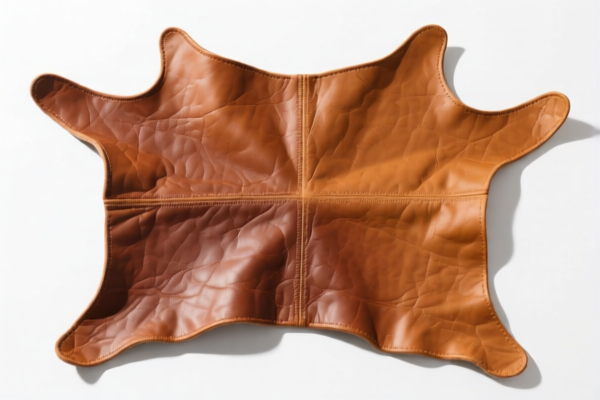
raw tanned sheepskin
CN → US商品图片
AI分析
🐑 Raw Tanned Sheepskin (Sheep Pelts)
🌐 HS Code Reference & Customs Clearance Guide | 2026 Latest Tariff Analysis | Professional-Level Clearance Strategy
📌 I. Product Definition & Classification: Do You Truly Understand "Raw Tanned Sheepskin"?
Raw Tanned Sheepskin refers to animal skins that have undergone initial preservation and tanning processes (usually chrome-tanned or vegetable-tanned) to prevent decomposition but have not been further processed into finished leather goods (such as coats, boots, or upholstery). In international trade, the distinction between "raw skins," "tanned hides/skins," and "finished leather" is critical for accurate classification and tariff calculation.
⚠️ Key Distinction Points:
- Raw Skins (Uncured): Salted, fresh, or dried without tanning → Chapter 05.
- Raw Tanned (Cured/Tanned): Processed to withstand bacterial decay, usually soft and pliable → Chapter 41.
- Finished Leather: Further processed, dyed, or used in manufacturing → Chapter 41 or 42 (if made into goods).🔍 Critical Note:
"Raw Tanned" typically refers to Sheep Skins in the Raw (Tanned) in the context of Chapter 41. If the skin is merely salted and not tanned, it may fall under Chapter 05 (0501.00.10). However, the standard trade term "Raw Tanned Sheepskin" almost always points to Chapter 41. We will focus on Chapter 41 as it is the most common and complex category for this product.
📦 II. HS Code Classification Details (2026 Latest Tariff Authority Comparison)
| HS Code | Product Description | Application Scenario | Processing Level |
|---|---|---|---|
4106.31.00.00 |
Sheepskins, tanned or crusted, without wool | Industrial leather, suede bases | ✅ Tanned/Crusted, No Wool |
4106.32.10.00 |
Sheepskins, tanned or crusted, with wool, not further processed | Raw sheepskin coats, fur bases | ✅ Tanned, With Wool |
4106.32.90.00 |
Sheepskins, tanned or crusted, with wool, other | Semi-finished leather goods | ✅ Tanned, With Wool |
0501.00.10.00 |
Raw horsehair and raw horsehair waste | (Not applicable to sheep) | ❌ Wrong Chapter |
4107.11.00.00 |
Sheep or lamb leather, further tanned or crusted | Semi-finished leather ready for manufacturing | ✅ Further Processed |
🔍 Focus for "Raw Tanned Sheepskin":
The most common classification for sheepskins with wool remaining, which are tanned but not further processed into finished leather, is4106.32.10.00or4106.32.90.00depending on specific regional subheadings.
- If the wool is shorn off before tanning:4106.31.00.00.
- If the wool is still attached:4106.32.10.00(Sheepskins with wool, not further processed).
💰 III. 2026 Latest Tariff Rate Breakdown (Including Additional Duties, Policy Surcharges)
✅ Applicable Country: United States (US)
✅ Country of Origin: China (CN)
✅ Effective Date: From November 10, 2025 (Including subsequent imports)
🎯 1. 4106.32.10.00 —— Sheepskins, Tanned or Crusted, With Wool, Not Further Processed
| Item | Details |
|---|---|
| Base Tariff Rate | 2.5% (ad valorem) |
| USITC Additional Tariff | +25% (Under USITC Footnote 9903.88.01, Section 301) |
| IEEPA Additional Tariff | +10% (对华加征关税,Effective Nov 10, 2025) |
| Total Tariff Rate | 37.5% |
| Tax Calculation | CIF Value × 37.5% |
| De Minimis Exemption Eligibility | ❌ Not Eligible (deny_de_minimis) |
| Legal Basis Path | IEEPA:9903.01.25 → IEEPA:9903.01.24 → USITC:4106.32.10.00 → FOOTNOTE:9903.88.01 |
📌 Explanation:
- The 25% USITC tariff is part of the Section 301 duties on Chinese imports;
- The 10% IEEPA tariff is a specific additional levy on Chinese-origin goods effective from late 2025;
- Total 37.5% is a high duty rate, significantly increasing landed cost.
🎯 2. 4106.31.00.00 —— Sheepskins, Tanned or Crusted, Without Wool
| Item | Details |
|---|---|
| Base Tariff Rate | 2.5% |
| USITC Additional Tariff | +25% |
| IEEPA Additional Tariff | +10% |
| Total Tariff Rate | 37.5% |
| Tax Calculation | CIF × 37.5% |
| De Minimis Exemption Eligibility | ❌ Not Eligible |
| Legal Basis Path | IEEPA:9901.25 → IEEPA:9903.01.24 → USITC:4106.31.00.00 → FOOTNOTE:9903.88.01 |
📌 Note:
- Same high tariff rate applies to woolless tanned sheepskins;
- Even if the wool is removed, the base duty and additional surcharges remain the same.
🛠️ IV. Customs Clearance Practical Advice (Combat Pitfall Guide)
✅ 1. Document Checklist (None Can Be Omitted)
| Document | Required | Description |
|---|---|---|
| ✅ Product Specification Sheet | ✔️ | Includes weight, dimensions, tanning method (chrome/veg), whether wool is present |
| ✅ Photos of Skins | ✔️ | Clear images showing wool attachment, tanning quality, and any defects |
| ✅ Tanning Process Description | ✔️ | Detailed explanation of the tanning process to prove "not further processed" |
| ✅ Commercial Invoice | ✔️ | Must clearly state "Sheepskins, Tanned, With/Without Wool, Not Further Processed" |
| ✅ Packing List | ✔️ | Total weight, number of skins, packaging type |
| ✅ Certificate of Origin (CO) | ✔️ | To verify origin; if not China, may qualify for lower tariffs |
| ✅ Third-Party Inspection Report | ✔️ | Quality inspection, especially for residue chemicals (chromium, formaldehyde) |
✅ 2. Declaration Tips (Key Mantra)
🔥 "Tanned Check Wool, Process Level is Key!"
| Scenario | Correct Declaration | Wrong Practice |
|---|---|---|
| Sheepskins with wool, tanned | 4106.32.10.00 |
Misdeclared as "Leather" → 15%+ |
| Sheepskins without wool, tanned | 4106.31.00.00 |
Misdeclared as "Raw Skins" → Wrong Chapter |
| Sheepskins further processed (dyed, buffed) | 4107.11.00.00 |
Misdeclared as "Raw Tanned" → Lower duty but risk of penalty |
| Salted, un-tanned skins | 0501.00.10.00 |
Misdeclared as "Tanned" → Higher duty + fine |
✅ 3. Special Situations Handling
| Situation | Handling Advice |
|---|---|
| OEM Custom Sheepskins | Provide customer orders + design specs; avoid misclassification as "Finished Goods" |
| Sheepskins with Chemical Residue | Must pass environmental tests (REACH, CPSIA); non-compliance leads to rejection |
| Mixed Packaging (Skinned + Processed) | Declare separately; do not mix "Raw Tanned" with "Finished Leather" |
| Origin Misdeclaration | If shipped from Vietnam but origin is China, face severe penalties under US Customs |
🌍 V. Global Market Customs Clearance Comparison (2026 Latest)
| Country/Region | Recommended HS Code | Tariff Rate | Certification Requirements | Notes |
|---|---|---|---|---|
| 🇺🇸 United States | 4106.32.10.00 |
37.5% (China Origin) | None Specific | High due to 301 + IEEPA |
| 🇨🇳 China | 4106.32.10.00 |
5% - 8% | CCC (if applicable) | Lower duty, no surcharges |
| 🇪🇺 European Union | 4106.32.10 |
3.7% - 12% | REACH, RoHS | Varies by member state |
| 🇦🇺 Australia | 4106.32.00 |
5% | None Specific | No surcharges |
| 🇯🇵 Japan | 4106.32.10 |
3.5% - 6% | None Specific | Stable tariffs |
📌 Conclusion:
- The US is the most expensive market for Chinese-origin raw tanned sheepskin due to combined tariffs;
- China, EU, Australia, and Japan have significantly lower tariff burdens;
- Consider supply chain adjustment (e.g., shipping from non-China origins) to mitigate US tariffs.
📌 VI. Common Mistakes & Pitfall Guide (Lessons Learned the Hard Way)
❌ Mistake 1: Declaring "Tanned Sheepskins" as "Raw Skins" (Chapter 05)
👉 Consequence: Underpayment of duty + fines; US Customs may assess 37.5% instead of 5%
❌ Mistake 2: Ignoring the "With/Without Wool" distinction
👉 Consequence: Misclassification between 4106.31 and 4106.32; leads to delays or penalties
❌ Mistake 3: Failing to disclose tanning method (Chrome vs. Vegetable)
👉 Consequence: Environmental compliance issues; potential rejection at US border
❌ Mistake 4: Mixing "Raw Tanned" with "Finished Leather" in one shipment
👉 Consequence: Customs may separate and tax each part differently, increasing complexity and cost
✅ Correct Practice:
"Sheepskins, Tanned, With Wool, Not Further Processed, Model ABC, Chromium Tanned, Weight: 500kg, Origin: China"
🎯 VII. Conclusion: Professional Declaration, Time-Saving, Cost-Efficient!
🎯 Remember the Mantra:
🔹 "Tanned Check Wool, Process Level is Key!"
🔹 "HS Code Determines Duty, 37.5% is High, Declare Correctly, Save Money!"
📌 Tips:
- If your sheepskins are originated from Vietnam, Indonesia, or India, you may apply for preferential tariff rates (e.g., under US Trade Acts or GSP if applicable);
- Consider applying for an Advance Ruling (Pre-Ruling) from US Customs to confirm the correct HS Code before shipment.
📣 Take Action Now:
📞 Contact a professional customs broker + Provide product photos + Apply for HS Code Pre-Ruling
🚀 Ensure smooth customs clearance, efficient global trade, and maximize profits!
✨ Professional Clearance Starts with Accurate Classification!
💼 Every cent of cost deserves precise calculation!
用户评价
关于 HS 编码归类
协调制度(HS)是由世界海关组织(WCO)制定的国际贸易商品分类标准。全球 200 多个国家采用 HS 系统作为海关关税、贸易统计和进出口监管的基础。
每个 HS 编码遵循以下层级结构:
- 章(2 位)——商品大类(例如:第 84 章:机器和机械设备)
- 品目(4 位)——章内的更具体分类
- 子目(6 位)——国际通用细分,所有 WCO 成员国统一使用
- 本国细分(8-10 位)——各国自行扩展的细分编码,如美国 HTSUS 10 位编码
正确的 HS 编码归类对于顺利通关、准确缴纳关税和遵守贸易法规至关重要。错误归类可能导致海关延误、多缴关税或罚款。
从CN进口到US时,适用的关税税率可能包括:
- 最惠国(MFN)税率——适用于 WTO 成员国的标准关税税率
- 普通税率——适用于无贸易协定国家
- 贸易救济关税——附加关税,如 301 条款(反倾销)、232 条款(国家安全)或反补贴税
本页内容仅供参考。如需正式归类,请咨询当地海关或持牌报关代理。