raw wool grease wool
CN → US| HS编码 | 关税税率 | 原产国 | 目的国 | 文档 |
|---|---|---|---|---|
| 5101114000 | 35.0% | CN | US | 官方文档 |
| 5101191000 | 35.0% | CN | US | 官方文档 |
| 5101112000 | 35.0% | CN | US | 官方文档 |
| 4102103000 | 12.0% | CN | US | 官方文档 |
| 4301300000 | 10.0% | CN | US | 官方文档 |
商品图片
AI分析
🐑 Raw Wool & Grease Wool (Unwashed Sheep Wool)
🌐 HS Code Reference & Customs Clearance Guide | 2026 Latest Tariff Analysis | Professional Entry Strategies for Animal Fibers
📌 I. Product Definition: What Exactly Is "Raw Wool"?
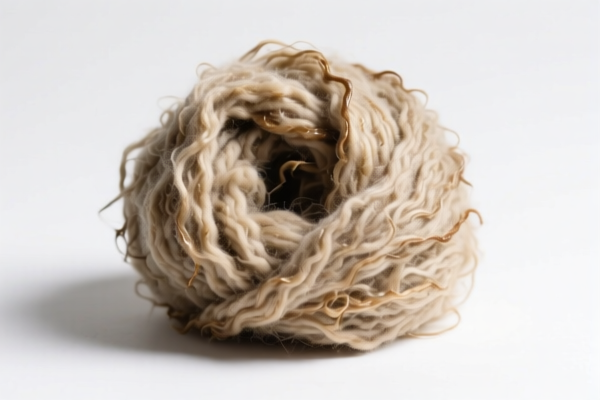
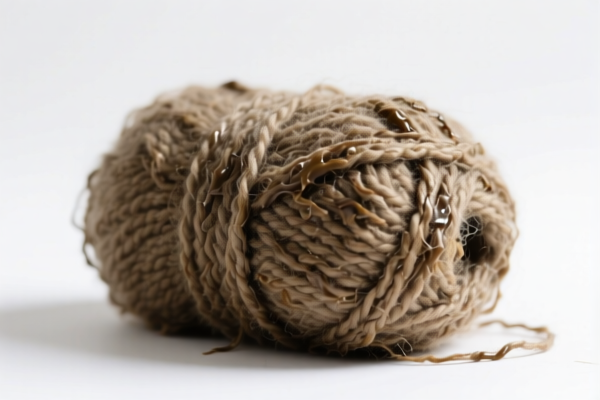
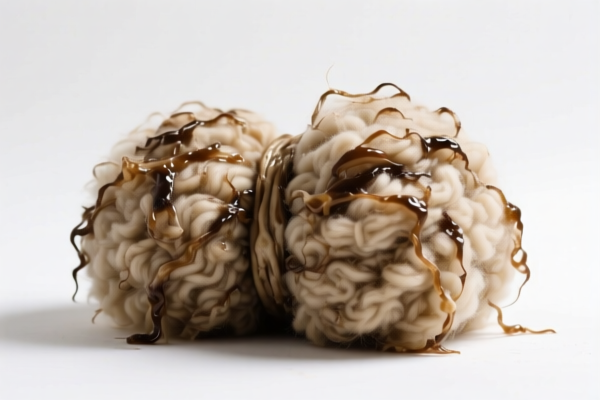
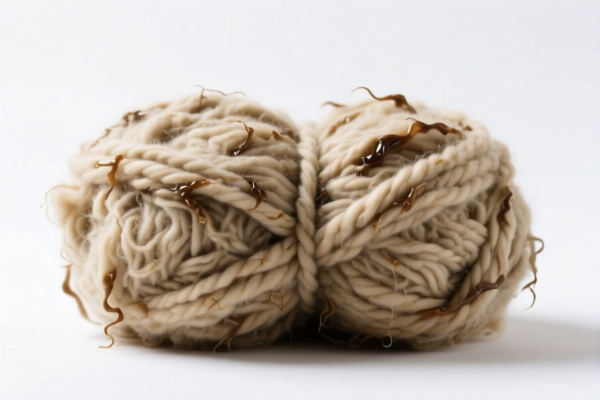
Raw wool, commonly referred to as Grease Wool (or Laine Vierge), is the unprocessed fleece sheared directly from sheep. It is not clean wool. It contains a significant amount of impurities, including: * Suint: Dried sheep sweat (contains potash and salts). * Wool Fat (Lanolin): A natural wax secreted by sebaceous glands. * Scales & Epidermal Cells: Skin particles attached to the fiber. * Vegetable Matter: Seeds, burrs, leaves, and straw embedded in the fleece.
In international trade, precise classification depends on whether the wool is in its natural oily state (Grease Wool) or if it has been scoured/cleaned. The data provided focuses strictly on Raw/Grease Wool and Raw Skins.
⚠️ Critical Distinction:
- If the wool is washed/scoured (lanolin removed, vegetable matter reduced) → It is no longer "raw wool" and may fall under different categories (e.g., Combed Wool Tops, HS 5105).
- If the wool is greasy/oily and uncombed/unwashed → It falls under Chapter 51 (Wool) or Chapter 41 (Skins).
- Skins with Wool Attached vs. Loose Wool: If the fleece is still on the skin (pelt), it may be classified under Chapter 41 (Skins) rather than Chapter 51, unless the wool is shorn off.
📦 II. HS Code Classification Details (2026 Latest Tariff Authority)
Based on the provided dataset, here are the exact HS Codes for Raw Wool and Raw Skins with Wool:
| HS Code | Product Description | Application Scenario | Key Characteristics |
|---|---|---|---|
5101.11.40.00 |
Raw Wool (Grease Wool): Sheep's wool, greasy, not carded or combed. | Raw fleece from sheep, containing lanolin and suint. | ✅ Greasy; ❌ Not washed/scoured; ❌ Not carded/combed |
5101.19.10.00 |
Raw Wool (Grease Wool): Other sheep's wool, greasy, not carded or combed. | General raw sheep wool with high grease content. | ✅ Greasy; ❌ Unprocessed; ❌ Primary form |
5101.11.20.00 |
Raw Wool (Wool Grease): Unimproved/raw wool with grease characteristics. | Wool with significant lanolin content, unsorted/unblended. | ✅ High Oil/Fat content; ❌ Unrefined |
4102.10.30.00 |
Raw Sheepskins: With wool on, uncurried, not split, not further prepared. | Skins with fleece still attached, raw hide. | ✅ Skin+Fleece intact; ❌ Not tanned; ❌ Not curried (wool removed) |
4301.30.00.00 |
Raw Sheepskins (with wool): In the raw state. | Skins with wool, suitable for further processing. | ✅ Raw skin; ✅ Wool attached; ❌ Not tanned |
🔍 Key Compliance Note:
- HS 5101 applies to loose wool that has been shorn off the animal.
- HS 4102/4301 applies to pelts/skins where the wool is still attached to the hide.
- Do not mix these in one shipment without clear separation, as customs may reclassify the entire batch, leading to penalty risks.
💰 III. 2026 Latest Tariff Rate Breakdown (Including Surtaxes & Policy Add-ons)
✅ Applicable Country: United States (US)
✅ Origin: China (CN)
✅ Effective Date: November 10, 2025 (and subsequent imports)
🎯 1. 5101.11.40.00 / 5101.19.10.00 / 5101.11.20.00 —— Raw Wool (Grease Wool)
| Item | Content |
|---|---|
| Base Duty Rate | 0.0% (Ad valorem) |
| Section 301 Surtax | +25.0% (USITC Footnote 9903.88.01) |
| IEEPA Surtax (Section 122) | +10.0% (Targeting China-origin goods) |
| Total Effective Tax Rate | 35.0% |
| Tax Calculation | CIF Value × 35% |
| De Minimis Eligibility | ❌ Not Eligible (denied under current rules for wool/textiles) |
| Legal Basis | IEEPA:9903.01.25 → USITC:5101.11.40.00 → FOOTNOTE:9903.88.01 |
📌 Interpretation:
- Although the base duty is 0%, the total cost is 35% due to heavy surcharges.
- Section 301 (25%): Standard trade war tariff on Chinese textiles.
- Section 122 (10%): Additional penalty/add-on for specific Chinese-origin raw materials.
- Result: High entry cost. Importers must factor in this 35% into landed cost.
🎯 2. 4102.10.30.00 —— Raw Sheepskins (With Wool Attached)
| Item | Content |
|---|---|
| Base Duty Rate | 2.0% |
| Section 301 Surtax | 0.0% |
| IEEPA Surtax (Section 122) | +10.0% |
| Total Effective Tax Rate | 12.0% |
| Tax Calculation | CIF Value × 12% |
| De Minimis Eligibility | ❌ Not Eligible |
| Legal Basis | IEEPA:9901.25 → USITC:4102.10.30.00 |
📌 Note:
- Raw skins have a lower total tax (12%) compared to loose raw wool (35%).
- This is because Section 301 (25%) does not apply to certain animal skins under this specific code.
🎯 3. 4301.30.00.00 —— Raw Sheepskins (General Category)
| Item | Content |
|---|---|
| Base Duty Rate | 0.0% |
| Section 301 Surtax | 0.0% |
| IEEPA Surtax (Section 122) | +10.0% |
| Total Effective Tax Rate | 10.0% |
| Tax Calculation | CIF Value × 10% |
| De Minimis Eligibility | ❌ Not Eligible |
| Legal Basis | IEEPA:9901.25 → USITC:4301.30.00.00 |
📌 Note:
- This is the most cost-effective classification among the options provided, with only a 10% total tax.
- However, classification must strictly match the product description ("Raw Sheepskins"). Loose wool cannot be declared here.
🛠️ IV. Customs Clearance Practical Advice (Avoiding Pitfalls)
✅ 1. Mandatory Documentation Checklist
| Document | Required | Explanation |
|---|---|---|
| ✅ Commercial Invoice | ✔️ | Must clearly state: "Raw Sheep Wool, Greasy, Unwashed, Uncombed" |
| ✅ Packing List | ✔️ | Detail weight (Gross/Net), number of bales, moisture content (if known) |
| ✅ Certificate of Origin | ✔️ | Critical for verifying Chinese origin for surtax application |
| ✅ Phytosanitary Certificate | ✔️ | Essential for wool/skins to prove no plant pests (seeds, burrs) |
| ✅ Animal Health Certificate | ✔️ | Proves wool/sheepskin is free from diseases (e.g., Foot-and-Mouth, Anthrax) |
| ✅ Material Safety Data Sheet (MSDS) | Optional | If wool is contaminated with chemicals (rare for raw wool, but good for proof) |
| ✅ Customs Bond | ✔️ | Required for commercial imports > $2,500 |
🚨 Critical Warning:
- Vegetable Matter (VM): If raw wool contains excessive seeds/straw, Customs may assess additional duties or reject entry for biosecurity reasons.
- Moisture Content: If wool is wet/moldy, it may be classified as "damaged" or rejected. Ensure wool is dry (moisture < 17.5%) before shipping.
✅ 2. Declaration Strategy (Key Mantras)
🔥 "Greasy Means 5101, Skins Mean 4102/4301, Never Mix, Always Certify!"
| Scenario | Correct Declaration | Wrong Declaration | Consequence |
|---|---|---|---|
| Loose raw fleece | 5101.11.40.00 | "Wool Tops" or "Clean Wool" | Penalty for misclassification + back taxes |
| Skins with fleece | 4102.10.30.00 or 4301.30.00.00 | "Raw Wool" | HS Code mismatch → Delay + Re-inspection |
| Scoured (Cleaned) Wool | Not in this list (e.g., 5105) | "Raw Wool" | Overpayment of tax (35% vs. lower rate for clean wool) |
| Mixed Bales (Wool + Skins) | Split Declaration | Single line item | Customs will seize or force split + penalties |
✅ 3. Special Handling Cases
| Case | Handling Advice |
|---|---|
| High Oil Content | If wool has excessive lanolin, declare as "Grease Wool." Customs may test for oil content to verify HS 5101 vs. 5105. |
| Moldy/Damaged Wool | Provide lab report proving no health hazard. May be subject to destruction or re-export. |
| OEM/Custom Orders | If wool is dyed or treated, it is no longer raw. It may fall under Chapter 55 (Man-made fibers) or different subheadings. |
| De Minimis (Section 321) | ❌ Not Available for wool. All shipments must go through formal entry. |
🌍 V. Global Market Comparison (2026 Latest)
| Country/Region | Recommended HS Code | Total Tax (China Origin) | Certification Requirements | Notes |
|---|---|---|---|---|
| 🇺🇸 USA | 5101.11.40.00 (Wool)4301.30.00.00 (Skin) |
35% (Wool) 10% (Skin) |
USDA Phytosanitary + Animal Health | High surtax on wool. |
| 🇨🇳 China | 5101.11.40.00 |
0% (Import Duty) + VAT 13% |
No special phytosanitary for domestic | Competitive raw material source. |
| 🇪🇺 EU | 5101.11.00 |
6% (Standard) + No 301 |
REACH + EcoVet | No Section 301 surtax. Lower cost than US. |
| 🇬🇧 UK | 5101.11.00 |
6% | UKCA + Biosecurity | Post-Brexit rules apply. |
| 🇯🇵 Japan | 5101.11.00 |
0% (MFN) | FMD-Free Zone Proof | Strict animal disease controls. |
📌 Conclusion:
- USA has the highest cost for raw wool due to 35% total tax.
- EU/UK/Japan offer significantly lower duty rates (0-6%).
- Skins (4301.30.00.00) are cheaper to import into the US (10%) than loose wool (35%).
📌 VI. Common Mistakes & Pitfalls (Lessons Learned)
❌ Mistake 1: Declaring "Cleaned Wool" as "Raw Wool" to avoid testing
👉 Consequence: If lab tests show lanolin < 10%, customs will reclassify to 5105 (Cleaned Wool), potentially leading to underpayment penalties if the wrong tax rate was used.
❌ Mistake 2: Not providing a Phytosanitary Certificate
👉 Consequence: USDA will quarantine or destroy the shipment due to risk of foreign pests (seeds, insects).
❌ Mistake 3: Mixing "Raw Skins" and "Loose Wool" in one B/L without separation
👉 Consequence: Customs may classify the entire shipment under the higher tax rate (35%) or hold it for inspection.
❌ Mistake 4: Assuming "De Minimis" applies
👉 Consequence: Small samples of wool are not exempt from duties or documentation. Formal entry is required.
✅ Correct Practice:
"Sheep's Wool, Grease, Uncombed, Unscoured, Chinese Origin, with Phytosanitary Certificate No. XXXXX"
🎯 VII. Conclusion: Strategic Sourcing & Cost Optimization
🎯 Remember:
🔹 "Raw Wool = 35% Tax in US; Skins = 10-12%."
🔹 "If you can process skins into wool in the US, you save 25% in duties."
🔹 "Always get a Phytosanitary Certificate or risk destruction!"
📌 Pro Tip:
If you are importing large volumes, consider:
1. Classifying as Skins (4301.30.00.00) if the wool is still on the pelt, to save 25% in duties.
2. Sourcing from Non-Chinese Origins (e.g., Australia, New Zealand) to avoid Section 301/122 surtaxes entirely (0% tax in US for AU/NZ wool under FTAs).
3. Applying for Advance Ruling from US Customs (CBP) to confirm HS Code before shipment.
📣 Immediate Action:
📞 Contact your customs broker before shipping.
📄 Ensure Phytosanitary Certificate is issued by the country of origin.
🚀 Optimize your HS Code to minimize the 35% tax burden!
✨ Professional Customs Clearance Starts with Accurate Classification!
💼 Your Profit Margin Depends on This 35% Difference!
用户评价
关于 HS 编码归类
协调制度(HS)是由世界海关组织(WCO)制定的国际贸易商品分类标准。全球 200 多个国家采用 HS 系统作为海关关税、贸易统计和进出口监管的基础。
每个 HS 编码遵循以下层级结构:
- 章(2 位)——商品大类(例如:第 84 章:机器和机械设备)
- 品目(4 位)——章内的更具体分类
- 子目(6 位)——国际通用细分,所有 WCO 成员国统一使用
- 本国细分(8-10 位)——各国自行扩展的细分编码,如美国 HTSUS 10 位编码
正确的 HS 编码归类对于顺利通关、准确缴纳关税和遵守贸易法规至关重要。错误归类可能导致海关延误、多缴关税或罚款。
从CN进口到US时,适用的关税税率可能包括:
- 最惠国(MFN)税率——适用于 WTO 成员国的标准关税税率
- 普通税率——适用于无贸易协定国家
- 贸易救济关税——附加关税,如 301 条款(反倾销)、232 条款(国家安全)或反补贴税
本页内容仅供参考。如需正式归类,请咨询当地海关或持牌报关代理。