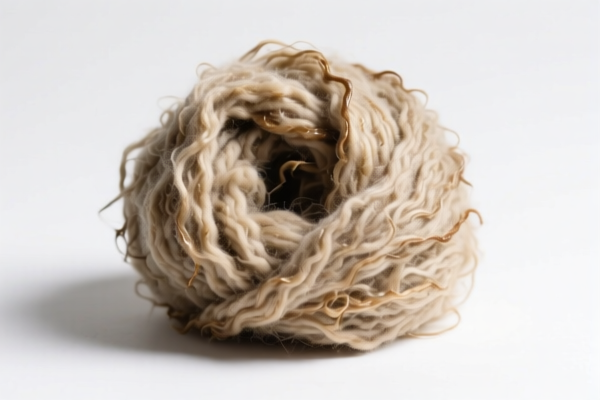
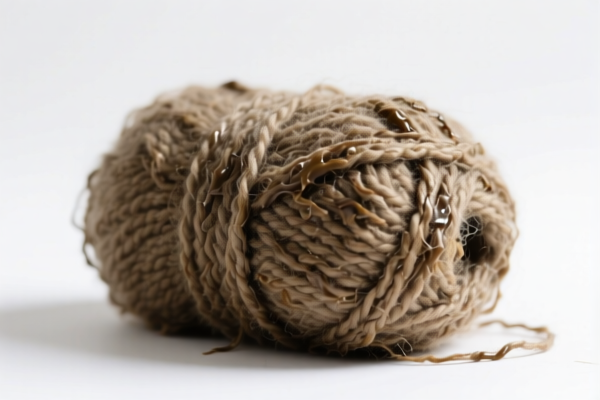
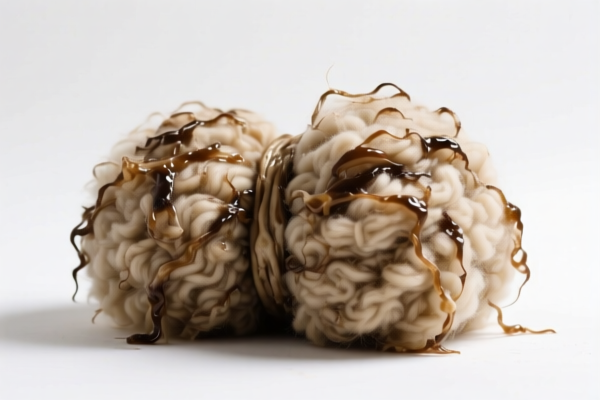
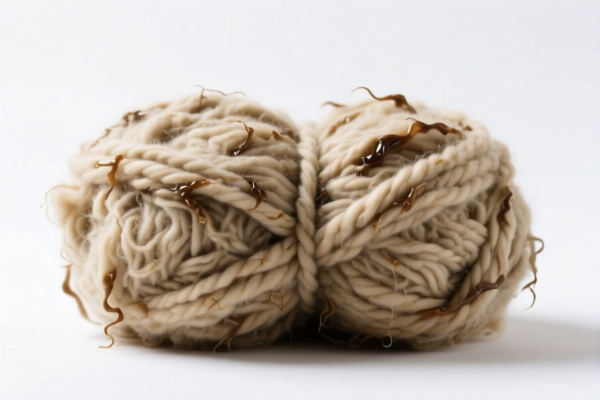
raw wool wool greasy
CN → US| HS编码 | 关税税率 | 原产国 | 目的国 | 文档 |
|---|---|---|---|---|
| 5101112000 | 35.0% | CN | US | 官方文档 |
| 4301300000 | 10.0% | CN | US | 官方文档 |
| 4301900000 | 10.0% | CN | US | 官方文档 |
| 4102101000 | 17.5% | CN | US | 官方文档 |
| 5101111000 | 35.0% | CN | US | 官方文档 |
商品图片
AI分析
🐑 Raw Wool / Greasy Wool (Raw Sheep’s Wool)
🌐 HS Code Reference & Customs Clearance Guide | 2026 Latest Tariff Analysis | Professional Level Compliance Strategy
📌 1. Product Definition & Classification: Do You Truly Understand "Raw Wool"?
Raw wool, often referred to as "greasy wool," is the natural fleece sheared from sheep before any significant cleaning or processing. It contains natural impurities such as suint (sweat salts), secernments (lanolin/wax), dirt, and vegetable matter. In international trade, the classification depends heavily on the physical state (loose vs. skin/fur) and the species (sheep vs. lambs/specialty).
Key Distinction Logic: * Loose Fiber (Uncombed/Unwashed): Classified under Heading 51.01. * Whole Skins/Furs (With Wool Attached): Classified under Heading 43.01 (Furskins) or 41.02 (Sheepskins/Lambkins without wool). * Note: While 43.01 covers furskins, "raw wool" specifically as a fiber commodity usually falls under 51.01 unless it is a whole hide intended for fur processing. However, the provided data includes specific HS codes for "Raw Sheep Skin/Fur" (4301/4102). We will analyze all applicable codes from the provided.
⚠️ Critical Classification Point:
- If the product is loose wool (clipped/sheared off the animal) → Heading 51.01
- If the product is a whole skin/hide with wool attached → Heading 43.01 (if considered a fur) or 41.02 (if considered a leather raw material).
- Lamb vs. Sheep: Differentiation affects the HS code (e.g., 4301.30 for lambs).
📦 2. HS Code Classification Details (Based on Provided Data)
The following HS Codes are derived strictly from the <DATA> provided.
| HS Code | Product Description | Applicable Scenario | Tax Rate |
|---|---|---|---|
5101.11.20.00 |
Raw Sheep’s Wool, uncombed/uncleaned, sheep’s wool category | Loose wool, unsorted, primary wool product | 35.0% |
5101.11.10.00 |
Raw Sheep’s Wool, uncombed/uncleaned, sheared wool | Loose wool, sheared but not improved | 35.0% |
4301.30.00.00 |
Raw Sheep Skin/Fur, Lamb/Lambskin category | Whole skins of lambs or similar furskins, primary form | 10.0% |
4301.90.00.00 |
Raw Sheep Skin/Fur, other furskins (slices/fragments) | Other raw furs, commercial cuts, not lamb-specific | 10.0% |
4102.10.10.00 |
Raw Sheep Skin/Lambskin, unpre-tanned leather raw material | Skins with hair/shed, unpre-tanned, for leather production | 17.5% |
🔍 Key Differentiation:
- Loose Wool: Always5101.xx. High tax burden (35%).
- Whole Skin (Fur):4301.xx. Lower tax burden (10%). Used for fur garments.
- Whole Skin (Leather):4102.10.10.00. Medium tax burden (17.5%). Used for leather goods.
💰 3. 2026 Latest Tariff Rate Breakdown (Including Surcharges & Policy Add-ons)
✅ Applicable Country: United States (US)
✅ Origin: China (CN)
✅ Effective Date: From November 10, 2025 (inclusive of subsequent imports)
🎯 1. 5101.11.20.00 & 5101.11.10.00 — Raw Sheep’s Wool (Loose Fiber)
| Item | Detail |
|---|---|
| Base Tariff | 0.0% (ad valorem) |
| USITC Surcharge (Section 301) | +25.0% |
| IEEPA Surcharge (Section 122) | +10.0% |
| Total Tariff Rate | 35.0% |
| Tax Calculation | CIF Value × 35% |
| De Minimis Eligibility | ❌ Not Eligible (High value thresholds typically apply, but surcharges usually negate low-value exemptions for agricultural/wool products) |
| Legal Basis Path | IEEPA:122 → USITC:5101.11 → FOOTNOTE:301 |
📌 Explanation:
- Base Tariff (0%): Raw wool often has low base rates to encourage import for processing.
- USITC 25%: Section 301 tariffs target Chinese manufacturing and raw material imports.
- IEEPA 10%: Additional surcharge under the International Emergency Economic Powers Act for specific Chinese goods.
- Total: 35% is a significant cost driver. Importers must factor this into FOB/CIF pricing.
🎯 2. 4301.30.00.00 & 4301.90.00.00 — Raw Sheep/Lamb Skins (Fur Category)
| Item | Detail |
|---|---|
| Base Tariff | 0.0% |
| USITC Surcharge (Section 301) | 0.0% |
| IEEPA Surcharge (Section 122) | +10.0% |
| Total Tariff Rate | 10.0% |
| Tax Calculation | CIF Value × 10% |
| De Minimis Eligibility | ❌ Generally not eligible for fur products |
| Legal Basis Path | IEEPA:122 → USITC:4301 |
📌 Explanation:
- Base Tariff (0%): Furskins often have low base duties.
- USITC 0%: Unlike general goods or wool fiber, certain furskins are exempt from the 301 tariff.
- IEEPA 10%: The 122 Clause tariff still applies.
- Total: 10% is significantly lower than raw wool (35%). This is a critical compliance strategy for traders dealing in whole skins vs. loose wool.
🎯 3. 4102.10.10.00 — Raw Sheepskins (Leather Category)
| Item | Detail |
|---|---|
| Base Tariff | 0.0% |
| USITC Surcharge (Section 301) | +7.5% |
| IEEPA Surcharge (Section 122) | +10.0% |
| Total Tariff Rate | 17.5% |
| Tax Calculation | CIF Value × 17.5% |
| De Minimis Eligibility | ❌ Not eligible |
| Legal Basis Path | IEEPA:122 → USITC:4102 → FOOTNOTE:301 |
📌 Explanation:
- Base Tariff (0%): Raw leather skins often have low base duties.
- USITC 7.5%: A partial surcharge, lower than the 25% on textiles/wool.
- IEEPA 10%: Applies.
- Total: 17.5% sits in the middle range. Correct classification between "Fur" (4301) and "Leather Raw Material" (4102) is vital here.
🛠️ 4. Customs Clearance Practical Advice (Real-World Pitfall Avoidance)
✅ 1. Documentation Checklist (All Must Be Provided)
| Document | Required | Notes |
|---|---|---|
| ✅ Commercial Invoice | ✔️ | Must clearly state "Raw Sheep’s Wool" or "Raw Sheepskins" and specify condition (greasy, uncombed). |
| ✅ Packing List | ✔️ | Detail weight (gross/net), package count, and material composition. |
| ✅ Certificate of Origin | ✔️ | Essential for proving Chinese origin (triggers 301/122 tariffs). |
| ✅ Phytosanitary Certificate | ✔️ | Critical for Wool (5101). Requires inspection for pests, ticks, and disease (e.g., Scrapie). |
| ✅ Veterinary Certificate | ✔️ | Required for Skins (4301/4102) to prove animal health status. |
| ✅ Product Photos | ✔️ | Show the state of the wool (loose vs. attached to skin) to support HS classification. |
✅ 2. Declaration Tips (Key Mnemonics)
🔥 "Loose Wool is 35%, Fur Skin is 10%, Leather Skin is 17.5%. Classify Correctly!"
| Scenario | Correct Declaration | Risk of Misclassification |
|---|---|---|
| Sheared, loose wool | 5101.11.10.00 / 5101.11.20.00 |
If declared as "fabric," it may be rejected. If declared as "skin," it fails inspection. |
| Whole lamb skin (fur use) | 4301.30.00.00 |
Declaring as 4102 (leather) may incur higher duties (17.5% vs 10%). Declaring as 5101 (wool) is incorrect because it’s a skin. |
| Whole sheep skin (leather use) | 4102.10.10.00 |
If declared as 4301, you might claim incorrect fur status. |
| Degreased/Cleaned Wool | Not in | Warning: If wool is cleaned, it may fall under a different HS code (e.g., 5101.21). The provided data only covers raw/uncombed wool. Ensure the product is truly "raw" (greasy). |
✅ 3. Special Cases & Handling
| Case | Handling Advice |
|---|---|
| Mixed Shipments (Wool + Skins) | Must Split Declaration. Do not lump loose wool and skins into one line. Each has different HS codes and inspection requirements. |
| High Impurities (Dirt/Manure) | Declare Gross Weight but provide Net Weight for tax calculation if allowed. Ensure phytosanitary certificate addresses contamination. |
| Sample vs. Commercial | Even samples of raw wool are subject to phytosanitary checks. Pre-cleared samples are recommended to avoid quarantine delays. |
| Origin Verification | If the wool is sheared in China but processed elsewhere, the Country of Origin for tariff purposes is usually where the shearing occurred (China), triggering the full 35% or 10% surcharge. |
🌍 5. Global Market Comparison (2026 Update)
| Market | Recommended HS Code | Base Rate | Surcharge (China) | Total Rate | Notes |
|---|---|---|---|---|---|
| 🇺🇸 USA | 5101.11.10.00 (Loose) |
0% | +35% (25%+10%) | 35% | High barrier. Phytosanitary strict. |
| 🇪🇺 EU | 51.01 |
6.5% | 0% (No Section 301) | 6.5% | Lower base rate, but no US-style surcharges. |
| 🇨🇳 China (Export) | 5101.11.10.00 |
0% (Export) | N/A | 0% | No export tariff on raw wool. |
| 🇬🇧 UK | 51.01 |
6.5% | 0% | 6.5% | Post-Brexit regime mirrors EU closely. |
📌 Conclusion:
- The US market is the most expensive for raw wool imports due to the combination of 301 and IEEPA tariffs.
- Skins/Furs (4301) enjoy a lower tariff burden (10%) in the US compared to loose wool (35%), but require stricter veterinary documentation.
- Diversify markets: Consider exporting to EU or Asia if US margins are compressed by the 35% duty.
📌 6. Common Mistakes & Pitfalls (Lessons Learned)
❌ Mistake 1: Declaring "Raw Wool" as "Textile Material" without specifying "Greasy/Uncombed"
👉 Consequence: Customs may reject the phytosanitary document mismatch or misclassify, leading to fines.
❌ Mistake 2: Confusing 4301 (Fur) with 4102 (Leather)
👉 Consequence: Wrong duty rate (10% vs 17.5%). If under-declared, you owe back-taxes + interest. If over-declared, you lose profit.
❌ Mistake 3: Ignoring Phytosanitary Requirements for 5101
👉 Consequence: Quarantine detention. Wool can carry diseases. Without a valid phytosanitary certificate, the shipment will be returned or destroyed.
❌ Mistake 4: Assuming "Cleaned Wool" falls under the same HS code as "Raw Wool"
👉 Consequence: 5101 is strictly for raw/uncombed wool. Cleaned wool may fall under 51.02 or other headings with different tax implications. Ensure your product matches the <DATA> description of "uncombed/uncleaned."
✅ Correct Practice:
"Raw Sheep’s Wool, Greasy, Uncombed, Net Weight 10,000 kg, Origin: China, Phytosanitary Cert #12345"
🎯 7. Conclusion: Precision in Classification Saves Money!
🎯 Remember the Golden Rule:
🔹 "Loose Wool = 35% (Heavy Tax)"
🔹 "Fur Skin = 10% (Light Tax)"
🔹 "Leather Skin = 17.5% (Medium Tax)"
🔹 "Classify by Physical State, Not Just Material!"
📌 Pro Tip:
If you are importing sheared wool, ensure it is not washed or carded. The moment it is washed, the HS code changes, and the duty structure may differ.
For skins, decide early: Is it for fur (4301) or leather (4102)? This decision directly impacts your 7.5% tax difference.
📣 Immediate Action:
📞 Contact a licensed customs broker.
📦 Ensure Phytosanitary Certificate is ready for wool.
📄 Verify Country of Origin to confirm surcharge applicability.
🚀 Clear Customs Smoothly, Control Costs, Maximize Profit!
✨ Professional Customs Clearance Starts with Accurate Classification!
💼 Every dollar of duty is a dollar of profit lost or saved!
用户评价
关于 HS 编码归类
协调制度(HS)是由世界海关组织(WCO)制定的国际贸易商品分类标准。全球 200 多个国家采用 HS 系统作为海关关税、贸易统计和进出口监管的基础。
每个 HS 编码遵循以下层级结构:
- 章(2 位)——商品大类(例如:第 84 章:机器和机械设备)
- 品目(4 位)——章内的更具体分类
- 子目(6 位)——国际通用细分,所有 WCO 成员国统一使用
- 本国细分(8-10 位)——各国自行扩展的细分编码,如美国 HTSUS 10 位编码
正确的 HS 编码归类对于顺利通关、准确缴纳关税和遵守贸易法规至关重要。错误归类可能导致海关延误、多缴关税或罚款。
从CN进口到US时,适用的关税税率可能包括:
- 最惠国(MFN)税率——适用于 WTO 成员国的标准关税税率
- 普通税率——适用于无贸易协定国家
- 贸易救济关税——附加关税,如 301 条款(反倾销)、232 条款(国家安全)或反补贴税
本页内容仅供参考。如需正式归类,请咨询当地海关或持牌报关代理。