refined babassu oil
CN → US商品图片


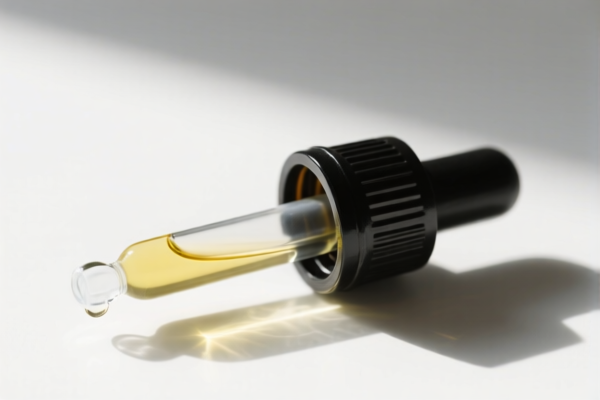

AI分析
🌴 Refined Babassu Oil (The "Vegetable Tallow" of the Amazon)
🌐 HS Code Reference & Customs Clearance Guide | 2026 Latest Tariff Analysis | Professional Import Strategy
📌 I. Product Definition & Classification: Do You Really Understand "Babassu Oil"?
Refined Babassu Oil is a versatile vegetable fat extracted from the kernels of the Attalea speciosa palm, native to the Amazon basin. In international trade, it is highly valued as a sustainable alternative to animal fats and palm oil. Its unique chemical profile (high in lauric acid) places it in specific categories depending on its processing level and intended use.
Key Distinctions: * Edible Grade: Refined for food applications (shortening, margarine, cooking oil). * Industrial/ Cosmetic Grade: Refined for soap making, surfactants, or skincare. * Unrefined/Crude: Often classified differently (Chapter 15 vs. Chapter 21), but the prompt specifies Refined.
⚠️ Key Classification Point:
- If pure vegetable fat, refined or not, it generally falls under Chapter 15 (Animal or Vegetable Fats and Oils).
- If blended with other fats or used in prepared foods (like margarine), it may fall under Chapter 21.
- If processed into cosmetics/soaps, the oil itself is still Chapter 15, but the final product is Chapter 34.
📦 II. HS Code Classification Details (2026 Latest Tariff Authority Comparison)
| HS Code | Product Description | Application Scenario | Refined Status |
|---|---|---|---|
1513.90.90.00 |
Other vegetable oils and their fractions (Babassu oil falls under "Other" in many jurisdictions) | Most Common: Pure refined babassu oil for food or industrial use | ✅ Yes |
1513.90.10.00 |
Specific sub-codes may vary by country (e.g., India/Philippines may have specific codes for Babassu) | Localized classification where Babassu is explicitly listed under "Other" | ✅ Yes |
2106.90.90.00 |
Food preparations not elsewhere specified or included | If mixed with other oils or used in pre-packaged food mixes | ✅ N/A (Final Product) |
3402.90.00.00 |
Organic surface-active agents (prepared) | If the oil is chemically processed into surfactants (e.g., ethoxylates) | ❌ No (Chemically Modified) |
🔍 Critical Reminder:
- Pure Refined Babassu Oil is almost universally classified under HS 1513 (Other vegetable oils).
- Do not confuse it with Coconut Oil (1513.10/1513.20) or Palm Oil (1511). While chemically similar, customs require precise botanical identification.
- If the oil is blended, the classification depends on the essential character of the blend.
💰 III. 2026 Latest Tariff Rate Details (Including Additional Duties, Policy Add-ons)
✅ Applicable Country: United States (US)
✅ Origin: Brazil, Indonesia, or Philippines (Major Babassu Producers)
✅ Effective Time: 2026 (Subject to Trade Agreements)
🎯 1. 1513.90.90.00 —— Refined Vegetable Oils (Including Babassu)
| Item | Content |
|---|---|
| Base Tariff Rate | 0% – 5% (Most Favored Nation - MFN rate) |
| USITC Additional Duty | 0% (No Section 301 tariff on vegetable oils) |
| IEEPA Additional Duty | 0% (Not targeted under IEEPA for agricultural oils) |
| Total Tariff | 0% – 5% |
| Tax Calculation | CIF Value × (0%~5%) |
| De Minimis Eligibility | ✅ Yes (If value < $800, under Section 321) |
| Legal Basis Path | USITC:1513.90.90.00 → MFN:0% |
📌 Explanation:
- Vegetable oils are generally low-tariff items to support food and cosmetic industries.
- Unlike electronics or steel, babassu oil is not subject to heavy trade war tariffs.
- Note: If imported from countries with FTA (Free Trade Agreements) like Canada or Australia, rates may be 0%. For most origins, it remains minimal.
🎯 2. Special Case: 2106.90.90.00 —— Prepared Food Blends
| Item | Content |
|---|---|
| Base Tariff | 5% – 10% |
| Additional Duties | 0% |
| Total Tariff | 5% – 10% |
| De Minimis Eligibility | ✅ Yes |
📌 Note:
- Only applies if babassu oil is mixed with other ingredients (e.g., in a shortening mix).
- Pure oil stays in Chapter 15.
🛠️ IV. Customs Clearance Practical Advice (Battle-Tested Pitfall Guide)
✅ 1. Documentation Checklist (Non-negotiable)
| Document | Mandatory | Description |
|---|---|---|
| ✅ Certificate of Analysis (COA) | ✔️ | Must specify Fatty Acid Profile (e.g., Lauric Acid >40%, Myristic Acid ~20%). Proves it's Babassu, not Coconut. |
| ✅ Refining Certificate | ✔️ | Confirms the oil is Refined, not crude. Impacts food safety clearance. |
| ✅ Free Sale Certificate | ✔️ | If for food/cosmetic use. |
| ✅ Non-GMO Declaration | ✔️ | Often required by EU/US importers. |
| ✅ Bill of Lading | ✔️ | Must show HS Code 1513.90.90.00 clearly. |
| ✅ Packing List | ✔️ | Specify net weight, gross weight, and packaging type (drums, IBCs, or bottles). |
✅ 2. Declaration Tips (Key Mnemonic)
🔥 “Pure Oil = 1513, Blend = 2106, Botanical Name = Mandatory!”
| Scenario | Correct Declaration | Wrong Practice |
|---|---|---|
| Pure Refined Babassu Oil | 1513.90.90.00 |
Misdeclare as Coconut Oil → Audit Risk |
| Babassu in a Soap Mix | 3401.30.00.00 (Final Product) |
Declare oil alone → Valuation Dispute |
| Unrefined Crude Oil | 1513.91.00.00 (if applicable) |
Declare as Refined → Customs Penalty |
| Blended Fat Shortening | 2106.90.90.00 |
Declare as single oil → Incorrect Classification |
✅ 3. Special Case Handling
| Scenario | Handling Advice |
|---|---|
| OEM/Private Label | Provide brand authorization if using a trademarked name. |
| Food Grade vs. Cosmetic Grade | Clearly state intended use on the invoice. Food grade requires FDA pre-approval if shipped to US. |
| Babassu from Brazil vs. Indonesia | Both are valid, but origin affects anti-dumping checks in some countries. |
| Sample Shipment | Mark as “Non-Commercial Sample” for de minimis clearance. |
🌍 V. Global Market Customs Comparison (2026 Latest)
| Country/Region | Recommended HS Code | Tariff | Certification Requirement | Notes |
|---|---|---|---|---|
| 🇺🇸 USA | 1513.90.90.00 |
0% – 5% | FDA Registration (if food/cosmetic) | No extra tariffs |
| 🇪🇺 EU | 1513.90.90 |
0% | REACH Compliance, EFSA Safety | Strict on pesticide residues |
| 🇨🇳 China | 1513.90.90.00 |
5% – 10% | CCC (if applicable), CIQ | High demand for cosmetics |
| 🇮🇳 India | 1513.90.10.00 |
5% – 15% | BIS Certification | Specific code for Babassu |
| 🇬🇧 UK | 1513.90.90.00 |
0% – 5% | UKCA Marking | Post-Brexit rules apply |
📌 Conclusion:
- USA and EU are tariff-friendly markets for refined babassu oil.
- Certification (FDA, REACH, FAMI-QS) is more critical than tariff in these regions.
📌 VI. Common Errors & Pitfall Guide (Blood & Tears Lessons)
❌ Error 1: Misdeclaring Babassu Oil as Coconut Oil (1513.10)
👉 Consequence: Customs Audit for misclassification → Fines + Delay.
👉 Solution: Provide COA showing fatty acid profile difference.
❌ Error 2: Declaring Refined Oil as Crude Oil
👉 Consequence: Higher Tariff or Rejection if food grade required.
👉 Solution: Clearly state “Refined, Bleached, Deodorized (RBD)” on invoice.
❌ Error 3: Ignoring Pesticide Residue Limits (EU/USA)
👉 Consequence: Product Destruction at port.
👉 Solution: Ensure third-party lab test for pesticides complies with target market standards.
❌ Error 4: Failing to Declare Intended Use
👉 Consequence: Customs holds for safety verification.
👉 Solution: Explicitly state “For Cosmetic Use Only” or “For Food Industry” on packing list.
✅ Correct Practice:
“Refined Babassu Kernel Oil, RBD, Fatty Acid Profile: Lauric 40%, Myristic 20%, Palmitic 15%, Stearic 5%, Oleic 10%, Linoleic 10%, For Cosmetic Use, HS Code 1513.90.90.00, Origin: Brazil.”
🎯 VII. Conclusion: Precise Classification, Smooth Clearance!
🎯 Remember the Mnemonic:
🔹 “Pure Oil = 1513, Blend = 2106, Botanical Proof = Mandatory!”
🔹 “Tariff Low, Certification High, COA is King!”
📌 Pro Tip:
- If importing large volumes, consider FTA benefits (if available).
- For cosmetic use, ensure IFRA compliance for fragrance derivatives.
- For food use, FDA pre-notification is mandatory.
📣 Immediate Action:
📞 Contact your customs broker + Provide COA + Apply for FDA Registration (if applicable)
🚀 Ensure your babassu oil clears smoothly, efficiently, and cost-effectively!
✨ Professional Customs Clearance Starts with Accurate Classification!
💼 Every gram of your product deserves precise calculation!
用户评价
关于 HS 编码归类
协调制度(HS)是由世界海关组织(WCO)制定的国际贸易商品分类标准。全球 200 多个国家采用 HS 系统作为海关关税、贸易统计和进出口监管的基础。
每个 HS 编码遵循以下层级结构:
- 章(2 位)——商品大类(例如:第 84 章:机器和机械设备)
- 品目(4 位)——章内的更具体分类
- 子目(6 位)——国际通用细分,所有 WCO 成员国统一使用
- 本国细分(8-10 位)——各国自行扩展的细分编码,如美国 HTSUS 10 位编码
正确的 HS 编码归类对于顺利通关、准确缴纳关税和遵守贸易法规至关重要。错误归类可能导致海关延误、多缴关税或罚款。
从CN进口到US时,适用的关税税率可能包括:
- 最惠国(MFN)税率——适用于 WTO 成员国的标准关税税率
- 普通税率——适用于无贸易协定国家
- 贸易救济关税——附加关税,如 301 条款(反倾销)、232 条款(国家安全)或反补贴税
本页内容仅供参考。如需正式归类,请咨询当地海关或持牌报关代理。