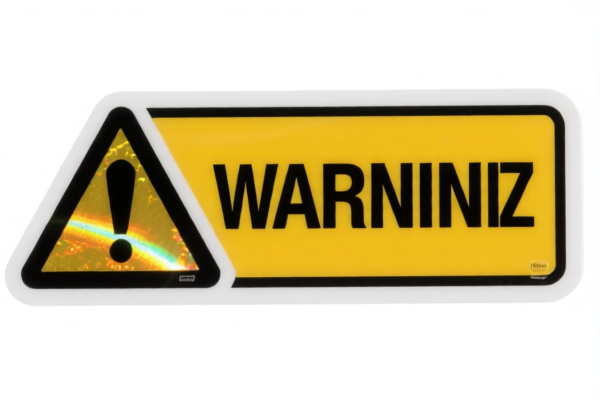
reflective warning sticker
CN → US| HS编码 | 关税税率 | 原产国 | 目的国 | 文档 |
|---|---|---|---|---|
| 5903102090 | 35.0% | CN | US | 官方文档 |
| 3919101010 | 41.5% | CN | US | 官方文档 |
| 3919905010 | 40.8% | CN | US | 官方文档 |
| 3921110000 | 40.3% | CN | US | 官方文档 |
| 5903102010 | 35.0% | CN | US | 官方文档 |
商品图片



AI分析
🌈 Reflective Warning Sticker (反光材料贴)
🌐 HS Code Reference & Customs Clearance Guide | 2026 Latest Tariff Analysis | Professional Clearance Strategy
📌 I. Product Definition & Classification: What Exactly is a "Reflective Warning Sticker"?
A Reflective Warning Sticker is a safety accessory designed to enhance visibility in low-light conditions. In international trade, its classification hinges on two critical factors: 1. Material Composition: Is it primarily a plastic/film (self-adhesive sheet) or a textile/fabric coated with plastic? 2. Form/State: Is it a simple roll/sheet of reflective material (Chapter 39) or a textile product impregnated/covered with plastic (Chapter 59)?
⚠️ Key Distinction:
- If the base is a plastic film/polymer with a self-adhesive backing and reflective layer (glass beads or prismatic film) → It is typically classified under Chapter 39 (Plastics).
- If the base is a textile/fabric that has been impregnated, coated, covered, or laminated with plastics → It is classified under Chapter 59 (Textiles impregnated/coated).
- Note: There is often a conflict between "Plastic Sheets" and "Textile Products" depending on the primary material's role. The summaries below reflect the most common interpretations based on standard import data.
📦 II. HS Code Classification Details (2026 Latest Tariff Authority Mapping)
| HS Code | Product Description | Matching Logic from Data | Tax Total |
|---|---|---|---|
5903.10.20.90 |
Textile fabrics impregnated/coated/laminated with plastics (Other) | Summary: Infers material is plastic/polymer coated, shape fits textile/film characteristics, no material conflict. | 35.0% |
3919.10.10.10 |
Self-adhesive plates, sheets, film, foil, tape, etc., of plastics (Reflective) | Summary: Matches "Reflective Material Sticker"; infers plastic/film material; "sticker" form fits self-adhesive; "reflective" matches glass bead feature. | 41.5% |
3919.90.50.10 |
Self-adhesive plates, sheets, film, etc., of plastics (Other) | Summary: "Reflective material" corresponds to "reflective sheets"; "sticker" form fits self-adhesive; material inferred as plastic. | 40.8% |
3921.11.00.00 |
Other plates, sheets, film, foil, and strip, of polymers of ethylene | Summary: Infers plastic material (common polymer film); form fits "strip/film"; no conflict with styrene polymers category. | 40.3% |
5903.10.20.10 |
Textile fabrics impregnated/coated/laminated with plastics (PVC) | Summary: Reflective stickers often consist of functional coatings (PVC or other plastics) on film/fabric; fits 5903 "impregnated/coated" feature. | 35.0% |
🔍 Critical Analysis:
- Chapter 39 Codes (3919/3921): These are generally preferred if the sticker is purely a plastic/polymer composite (e.g., PET/PC/PE film with reflective coating and adhesive). They carry higher duties (40-41.5%) but are often more accurate for modern synthetic reflective films.
- Chapter 59 Codes (5903): These apply if the product is fundamentally a textile (fabric) that has been coated with plastic to make it reflective. These carry lower base duties (35%) but require proof of textile base material.
- Conflict Risk: If you declare a plastic sticker as5903(textile), customs may reject it for lacking textile characteristics. Conversely, declaring a fabric-based reflective sheet as3919may trigger requests for material composition proofs.
💰 III. 2026 Latest Tariff Rate Breakdown (Including Additional Duties)
✅ Applicable Country: United States (US)
✅ Country of Origin: China (CN)
✅ Effective Date: November 10, 2025 (and subsequent imports)
🎯 1. 5903.10.20.90 & 5903.10.20.10 —— Textiles Impregnated with Plastics
| Item | Detail |
|---|---|
| Base Tariff | 0.0% (ad valorem) |
| USITC Additional Duty | +25% (under Section 301, USITC Footnote 9903.88.01) |
| IEEPA Additional Duty | +10% (Against China/HK products, effective Nov 10, 2025) |
| Total Duty Rate | 35.0% |
| Tax Calculation | CIF Value × 35% |
| De Minimis Exemption? | ❌ NO (deny_de_minimis) |
| Legal Basis Path | IEEPA:9903.01.25 → IEEPA:9903.01.24 → USITC:5903.10.20.90 → FOOTNOTE:9903.88.01 |
📌 Explanation:
- The 25% USITC duty is part of the ongoing Section 301 trade war tariffs.
- The 10% IEEPA duty is the new additional levy on Chinese goods under the International Emergency Economic Powers Act.
- Total 35% is significantly lower than the plastic alternatives, making this class attractive if the product is genuinely textile-based.
🎯 2. 3919.10.10.10 —— Self-Adhesive Reflective Plastic Sheets
| Item | Detail |
|---|---|
| Base Tariff | 6.5% |
| USITC Additional Duty | +25% |
| IEEPA Additional Duty | +10% |
| Total Duty Rate | 41.5% |
| Tax Calculation | CIF Value × 41.5% |
| De Minimis Exemption? | ❌ NO (deny_de_minimis) |
| Legal Basis Path | IEEPA:9903.01.25 → IEEPA:9903.01.24 → USITC:3919.10.10.10 → FOOTNOTE:9903.88.01 |
📌 Note:
- This code specifically targets reflective plastic sheets. The base rate of 6.5% pushes the total to 41.5%.
- This is the most common classification for standard DIY reflective warning stickers made of PET/PC film.
🎯 3. 3919.90.50.10 —— Other Self-Adhesive Plastic Sheets
| Item | Detail |
|---|---|
| Base Tariff | 5.8% |
| USITC Additional Duty | +25% |
| IEEPA Additional Duty | +10% |
| Total Duty Rate | 40.8% |
| Tax Calculation | CIF Value × 40.8% |
| De Minimis Exemption? | ❌ NO (deny_de_minimis) |
| Legal Basis Path | IEEPA:9903.01.25 → IEEPA:9903.01.24 → USITC:3919.90.50.10 → FOOTNOTE:9903.88.01 |
📌 Note:
- Slightly lower base rate (5.8%) than3919.10.10.10, but still results in a high total duty.
- Used if the specific "reflective" subheading does not strictly apply (e.g., non-standard reflective materials).
🎯 4. 3921.11.00.00 —— Polymer Plates/Sheets of Ethylene
| Item | Detail |
|---|---|
| Base Tariff | 5.3% |
| USITC Additional Duty | +25% |
| IEEPA Additional Duty | +10% |
| Total Duty Rate | 40.3% |
| Tax Calculation | CIF Value × 40.3% |
| De Minimis Exemption? | ❌ NO (deny_de_minimis) |
| Legal Basis Path | IEEPA:9903.01.25 → IEEPA:9903.01.24 → USITC:3921.11.00.00 → FOOTNOTE:9903.88.01 |
📌 Note:
- Only applicable if the plastic base is specifically polyethylene (PE) or other ethylene polymers. Most reflective stickers use PET (polyester), so this code is less common unless specified.
🛠️ IV. Customs Clearance Practical Advice (Avoiding Pitfalls)
✅ 1. Required Documentation Checklist (Essential)
| Document | Mandatory? | Description |
|---|---|---|
| ✅ Product Specification Sheet | ✔️ | Must detail material composition (e.g., "PVC coated fabric" vs. "PET film with acrylic adhesive"). |
| ✅ Material Composition Proof | ✔️ | Lab test reports or manufacturer declaration confirming if it is Textile (for 5903) or Plastic (for 3919/3921). |
| ✅ Product Photos | ✔️ | Clear images showing the adhesive backing, reflective surface, and cross-section if possible. |
| ✅ Commercial Invoice | ✔️ | Must accurately describe the item as "Reflective Warning Sticker" and state the material. |
| ✅ Packing List | ✔️ | Weight and dimensions for duty calculation. |
| ✅ Originality Certificate (if applicable) | ❌ | Not applicable for China origin under current tariffs, but good for supply chain audit. |
✅ 2. Declaration Tips (Key Rules)
🔥 “Material Dictates Code, Adhesive Defines Form”
| Scenario | Correct Declaration | Error Consequence |
|---|---|---|
| Standard Plastic Reflective Sticker (PET/PC film) | Use 3919.10.10.10 or 3919.90.50.10 |
Declaring as 5903 (Textile) → Rejection/Downgrade/Seizure. |
| Fabric-Based Reflective Tape (PVC coated cloth) | Use 5903.10.20.90 |
Declaring as 3919 (Plastic) → Potential fine for misclassification. |
| Sticker Rolls | Declare as "Self-adhesive sheets of plastic" | Declaring as "Stickers" (vague) → Customs request for further info, delays. |
| Mixed Packaging | Declare main item only | Splitting into parts → Higher duty on each part (up to 89.5% in other cases, but here consistently high). |
✅ 3. Special Situations
| Situation | Handling Advice |
|---|---|
| OEM Custom Designs | Provide design files to prove the material structure matches the declared HS Code. |
| Sample vs. Bulk | Samples are also subject to duties if over de minimis thresholds (which is impossible here due to deny_de_minimis). |
| Transshipment | Do not simply re-label goods from Vietnam to avoid Chinese tariffs. Rules of Origin still apply if Chinese content > de minimis. |
🌍 V. Global Market Comparison (2026 Latest)
| Country/Region | Recommended HS Code | Estimated Duty | Certification | Notes |
|---|---|---|---|---|
| 🇺🇸 USA | 3919.10.10.10 or 5903.10.20.90 |
35% - 41.5% | None specific for stickers | High Duty Environment. Pre-clearance recommended. |
| 🇨🇳 China | 3919.10.10.10 or 5903.10.20.90 |
~5-6% | CCC (if applicable) | Low import duty, no Section 301. |
| 🇪🇺 EU | 3919.10.10 or 5903.10.20 |
~4-6% | CE (if safety equipment) | No anti-dumping duties on stickers generally. |
| 🇬🇧 UK | 3919.10.10 or 5903.10.20 |
~4-6% | UKCA | Post-Brexit alignment with EU rates. |
| 🇯🇵 Japan | 3919.10.10 or 5903.10.20 |
~5-8% | PSE (if electrical/safety) | Stable tariff environment. |
📌 Conclusion:
- The USA remains the most expensive market for these goods due to the combination of Base Tariff + 25% Section 301 + 10% IEEPA.
- Cost Saving Tip: If the product can be manufactured in a non-China country (e.g., Vietnam, Thailand, India), you may avoid the IEEPA 10% and potentially the Section 301 25% duties, reducing the total tax to 0-6%.
📌 VI. Common Mistakes & Pitfalls (Lessons Learned)
❌ Mistake 1: Assuming "Sticker" = Low Duty
👉 Result: Ignoring the material composition. If it's plastic, it faces 41.5%.
❌ Mistake 2: Misclassifying Plastic as Textile (5903)
👉 Result: Customs will demand proof of textile base. If none exists, goods are seized or reclassified to 3919 with penalties.
❌ Mistake 3: Ignoring IEEPA 10% Surcharge
👉 Result: Budgeting only for 25% Section 301, leaving 10% uncovered. Total actual cost is 35-41.5%.
❌ Mistake 4: Declaring "Gift" or "Sample" to Avoid Duties
👉 Result: deny_de_minimis applies. No exemption for Chinese origin goods under this value threshold.
✅ Correct Approach:
"Self-Adhesive Reflective Warning Sticker, Made of PET Film with Acrylic Adhesive and Glass Bead Reflective Layer, Model XYZ."
🎯 VII. Conclusion: Precision in Classification Saves Money!
🎯 Key Takeaways:
🔹 "Plastic = 3919/3921 (40-41.5% Tax)"
🔹 "Textile-Coated = 5903 (35% Tax)"
🔹 "Origin China = IEEPA 10% + Section 301 25%"
🔹 "Total Cost Impact: Up to 41.5% of CIF Value"📌 Pro Tip:
If your volume is high, consider supply chain diversification. Moving production to Vietnam or Mexico can drastically reduce duties (potentially to <10% or even 0% under USMCA/FTA), saving significant margin.
📣 Immediate Action Required:
📞 Consult a Customs Broker: Provide product samples for Advance Ruling (Ruling Letter) to lock in the HS Code.
📊 Cost Analysis: Compare landed cost from China vs. alternative origins.
🚀 Ensure Accurate Documentation: Never leave material composition vague in commercial invoices.
✨ Professional Clearance Starts with Accurate Classification!
💼 Every Percent of Duty is a Percent of Profit Lost!
用户评价
关于 HS 编码归类
协调制度(HS)是由世界海关组织(WCO)制定的国际贸易商品分类标准。全球 200 多个国家采用 HS 系统作为海关关税、贸易统计和进出口监管的基础。
每个 HS 编码遵循以下层级结构:
- 章(2 位)——商品大类(例如:第 84 章:机器和机械设备)
- 品目(4 位)——章内的更具体分类
- 子目(6 位)——国际通用细分,所有 WCO 成员国统一使用
- 本国细分(8-10 位)——各国自行扩展的细分编码,如美国 HTSUS 10 位编码
正确的 HS 编码归类对于顺利通关、准确缴纳关税和遵守贸易法规至关重要。错误归类可能导致海关延误、多缴关税或罚款。
从CN进口到US时,适用的关税税率可能包括:
- 最惠国(MFN)税率——适用于 WTO 成员国的标准关税税率
- 普通税率——适用于无贸易协定国家
- 贸易救济关税——附加关税,如 301 条款(反倾销)、232 条款(国家安全)或反补贴税
本页内容仅供参考。如需正式归类,请咨询当地海关或持牌报关代理。