refractory mud low shrinkage
CN → US| HS编码 | 关税税率 | 原产国 | 目的国 | 文档 |
|---|---|---|---|---|
| 3816002010 | 38.0% | CN | US | 官方文档 |
| 3816002050 | 38.0% | CN | US | 官方文档 |
商品图片

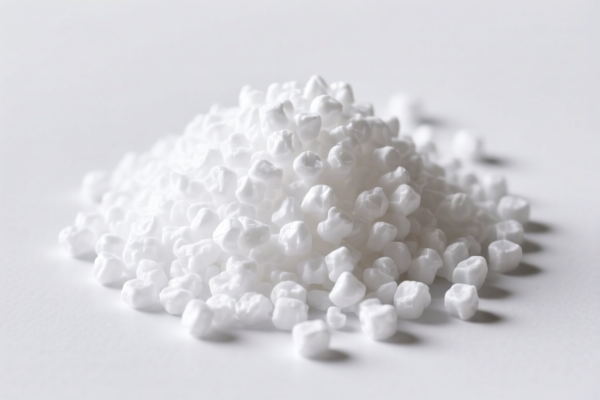


AI分析
🏭 Refractory Mud (Low Shrinkage)
🧱 Refractory Cements, Mortars, Concretes and Similar Compositions
🌐 HS Code Reference & Customs Clearance Guide | 2026 Latest Tariff Analysis | Professional-Level Strategy
📌 I. Product Definition & Classification: Do You Truly Understand "Refractory Mud"?
Refractory mud (often referred to as refractory cement, mortar, or plastic refractory) is a specialized construction material used in high-temperature industrial furnaces (such as blast furnaces, steel ladles, and glass kilns). It serves as the "glue" between refractory bricks or as a monolithic lining.
In international trade, specifically under US Customs regulations, products like "low shrinkage refractory mud" are classified under Heading 3816, not as simple construction materials or ceramics.
Key Distinction: * Refractory Mortars/Cements: Mixtures of refractory aggregates, binders, and water-retarding agents. These fall under 3816. * Ceramic Bricks/Tiles: Fired ceramic products. These fall under Chapter 69. * Chemical Preparations: Products of Heading 3801 (e.g., colloidal graphite). These fall under 3801.
⚠️ Critical Classification Point: * If the product is a pre-mixed dry powder or a ready-to-use paste composed of refractory aggregates and binders (excluding Heading 3801 products), it is classified under 3816.00.20. * The term "Low Shrinkage" describes the physical performance (thermal stability) but does not change the fundamental chemical/physical nature of the product as a refractory mortar/cement. It remains under 3816.
📦 II. HS Code Classification Details (2026 Latest Tariff Authority)
Based on the provided dataset, there are two specific sub-codes for Refractory Cements/Mortars under Heading 3816.
| HS Code | Product Description | Applicable Scenario | Tax Detail |
|---|---|---|---|
3816.00.20.10 |
Refractory cements, mortars, concretes and similar compositions (including dolomite ramming mix), other than products of heading 3801: Other Clay | Products containing clay-based binders or aggregates; common standard refractory mortars. | Total Tax: 28.0% (Base: 3.0%, Additional: 25.0%) |
3816.00.20.50 |
Refractory cements, mortars, concretes and similar compositions (including dolomite ramming mix), other than products of heading 3801: Other Other | Non-clay based refractory mortars; specialized low-shrinkage mixes using alumina, silica, or other non-clay binders; dolomite ramming mixes. | Total Tax: 28.0% (Base: 3.0%, Additional: 25.0%) |
🔍 Key Insight for "Low Shrinkage": * "Low shrinkage" is a performance characteristic. You must determine the raw material composition to choose between
.10and.50. * If the mud contains clay as a primary binder/component →3816.00.20.10* If the mud is non-clay (e.g., high-alumina, silica-based, or dolomite-based) →3816.00.20.50* Regardless of the sub-code, the total tariff rate is identical: 28.0%.
💰 III. 2026 Latest Tariff Rate Breakdown (Detailed Tax Clauses)
✅ Applicable Country: United States (US) ✅ Origin: China (CN) (Assumed based on typical trade context for these HS codes; verify if origin differs) ✅ Effective Time: Current rates apply
🎯 1. HS Code 3816.00.20.10 & 3816.00.20.50 —— Refractory Mortars/Cements
| Item | Content |
|---|---|
| Base Tariff Rate | 3.0% (Ad Valorem) |
| Section 301 Additional Tariff | +25.0% |
| Total Tariff Rate | 28.0% |
| Tax Calculation | CIF Value × 28.0% |
| De Minimis Exemption | ❌ Not Applicable (Generally, Section 301 goods are excluded from de minimis relief) |
| Legal Basis Path | HTSUS: 3816.00.20 → USITC Footnote 301 → Total 28% |
📌 Explanation: * The 3.0% is the standard Most Favored Nation (MFN) base duty for refractory preparations under Chapter 38. * The +25.0% is the Section 301 tariff applied to a wide range of Chinese-manufactured industrial goods, including refractory materials. * Total Cost Impact: For every $10,000 CIF value of imported refractory mud, the duty cost is $2,800. This is a significant cost factor that must be factored into pricing strategies.
🛠️ IV. Customs Clearance Practical Advice (Avoid Pitfalls)
✅ 1. Required Documentation List (Mandatory)
| Document | Must Provide | Explanation |
|---|---|---|
| ✅ Product Specification Sheet | ✔️ | Must explicitly state "Refractory Mortar," "Shrinkage Rate (< X%)," and Raw Material Composition (Clay vs. Non-Clay). |
| ✅ Safety Data Sheet (SDS) | ✔️ | Required for hazardous material assessment (e.g., silica content). |
| ✅ Commercial Invoice | ✔️ | Must clearly describe the product as "Refractory Cement/Mortar," not just "Mud" or "Paste." |
| ✅ HS Code Pre-Ruling | ✔️ | Highly recommended to confirm .10 (Clay) vs .50 (Other). |
| ✅ Proof of Origin | ✔️ | To determine if any exemptions apply (though unlikely for CN origin under 301). |
✅ 2. Declaration Tips (Key Mnemonics)
🔥 "Define the Binder, Specify the Use, Avoid 'Clay' Confusion!"
| Scenario | Correct Declaration | Incorrect Practice |
|---|---|---|
| Clay-based refractory | "Refractory Mortar, Clay-based, Low Shrinkage, for Furnace Lining" | "Ceramic Paste" → Misclassification Risk |
| Non-clay refractory | "Refractory Cement, High-Alumina, Low Shrinkage" | "Cement for Construction" → Wrong Chapter (38 vs 3801/69) |
| Dolomite Ramming Mix | "Dolomite Ramming Mix, Refractory" | "Dolomite Powder" → May fall under 2511 or 3816 depending on binding |
⚠️ Warning: Do not describe the product as "Building Cement" or "Tile Grout." These are different chapters (3801/3824 vs 3816) and may attract different duties or restrictions.
✅ 3. Special Cases
| Situation | Handling Advice |
|---|---|
| OEM Custom Formulation | Provide the formula or MSDS to prove it is a "refractory preparation" and not a simple ceramic powder. |
| Mixed with Other Goods | If shipped with tools or brushes, declare separately. Do not lump "refractory mud" with "construction tools" (8205/8206) which may have different rates. |
| Small Sample Shipments | Even small samples are subject to the 28% total duty if classified under 3816.00.20. Do not assume de minimis ($800) applies if the goods are subject to Section 301. |
🌍 V. Global Market Clearance Comparison (2026 Latest)
| Country/Region | Recommended HS Code | Tariff (China Origin) | Certification Requirements | Remarks |
|---|---|---|---|---|
| 🇺🇸 USA | 3816.00.20.10 / .50 |
28.0% (3% + 25% 301) | SDS, MSDS | High duty burden; verify origin carefully. |
| 🇨🇳 China | 3816.00.20 |
3.0% - 5% | CCC (if applicable) | Lower duty for export to China. |
| 🇪🇺 EU | 3816.00 |
3.0% - 5% | REACH Compliance | No Section 301 equivalent; lower total cost. |
| 🇯🇵 Japan | 3816.00 |
3.0% | JIS Standards | Generally low duty, high quality standards. |
📌 Conclusion: * The US market is the most expensive due to the 25% Section 301 surcharge. * For "Low Shrinkage Refractory Mud," the total landed cost in the US includes a 28% duty. * Consider pricing strategies to absorb or pass on this cost, or explore supply chain diversification if feasible.
📌 VI. Common Errors & Pitfalls (Blood Lessons)
❌ Error 1: Declaring as "Construction Cement" (3001.20 or 3824.99)
👉 Consequence: Incorrect classification, potential penalty, and missed duty payment. Refractory mortars are specifically in Chapter 38.
❌ Error 2: Ignoring the "Clay" vs "Other" distinction 👉 Consequence: While the tax rate is the same (28%) in this specific dataset, incorrect description can lead to customs audits or misclassification flags for inventory and regulatory compliance.
❌ Error 3: Assuming "Low Shrinkage" qualifies for a different chemical heading (3801) 👉 Consequence: Products of heading 3801 are excluded from 3816. If it's a refractory cement, it's 3816, not 3801. Misclassification leads to duty disputes.
✅ Correct Practice:
"Refractory Mortar, Low Shrinkage, High-Alumina Based, for Industrial Furnace Lining, HS Code 3816.00.20.50"
🎯 VII. Conclusion: Professional Declaration, Cost Control, Efficiency!
🎯 Remember the Mantra:
🔹 "Refractory Mud is 3816, Not Building Cement." 🔹 "Total Duty 28%, Base 3% + 301 25%." 🔹 "Specify Binder: Clay (.10) or Other (.50)."
📌 Pro Tip: * If your origin is not China, check if the 25% Section 301 tariff still applies. If the product is made in Vietnam, Mexico, or Thailand, the additional 25% may not apply, potentially reducing the total duty to just the 3.0% base rate. * Action: Always verify the Country of Origin before declaring.
📣 Immediate Action:
📞 Consult a licensed customs broker to confirm the Clay vs. Non-Clay classification based on your specific MSDS. 🚀 Accurate classification saves money and prevents delays!
✨ Professional Customs Clearance Starts with Precise Classification! 💼 Every cent of your duty is worth calculating precisely!
用户评价
关于 HS 编码归类
协调制度(HS)是由世界海关组织(WCO)制定的国际贸易商品分类标准。全球 200 多个国家采用 HS 系统作为海关关税、贸易统计和进出口监管的基础。
每个 HS 编码遵循以下层级结构:
- 章(2 位)——商品大类(例如:第 84 章:机器和机械设备)
- 品目(4 位)——章内的更具体分类
- 子目(6 位)——国际通用细分,所有 WCO 成员国统一使用
- 本国细分(8-10 位)——各国自行扩展的细分编码,如美国 HTSUS 10 位编码
正确的 HS 编码归类对于顺利通关、准确缴纳关税和遵守贸易法规至关重要。错误归类可能导致海关延误、多缴关税或罚款。
从CN进口到US时,适用的关税税率可能包括:
- 最惠国(MFN)税率——适用于 WTO 成员国的标准关税税率
- 普通税率——适用于无贸易协定国家
- 贸易救济关税——附加关税,如 301 条款(反倾销)、232 条款(国家安全)或反补贴税
本页内容仅供参考。如需正式归类,请咨询当地海关或持牌报关代理。