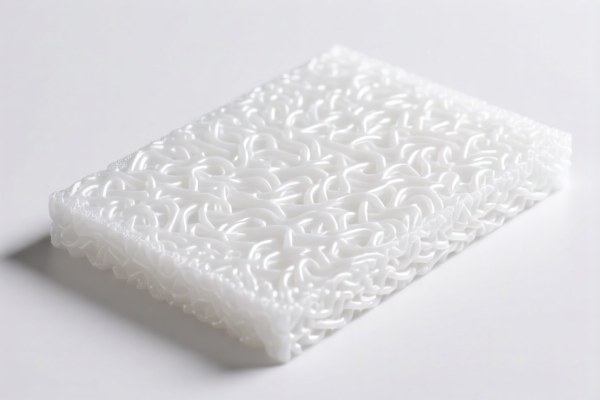
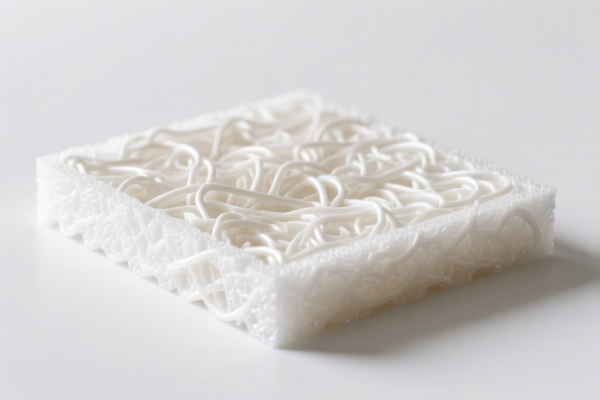
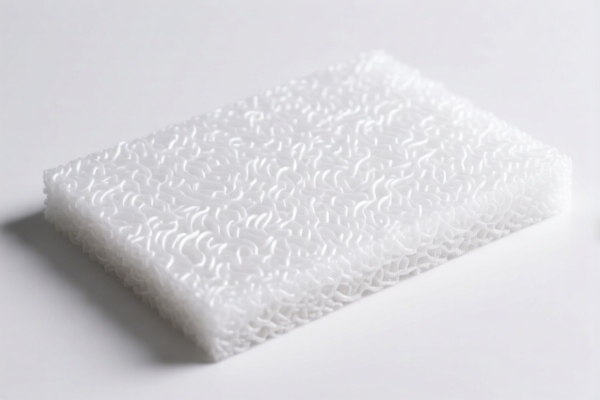
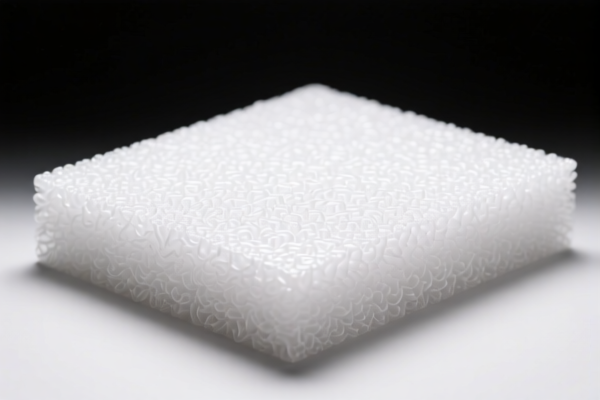
regenerated cellulose composite plastic board
CN → US| HS编码 | 关税税率 | 原产国 | 目的国 | 文档 |
|---|---|---|---|---|
| 4823908680 | 35.0% | CN | US | 官方文档 |
| 3921140000 | 41.5% | CN | US | 官方文档 |
| 3921905010 | 39.8% | CN | US | 官方文档 |
| 4823902000 | 35.0% | CN | US | 官方文档 |
| 3920992000 | 39.2% | CN | US | 官方文档 |
商品图片
AI分析
🪵 Regenerated Cellulose Composite Plastic Board (RCCPB)
🌐 HS Code Reference & Customs Clearance Guide | 2026 Latest Tariff Analysis | Professional Declassification Strategy
📌 I. Product Definition & Classification: What Exactly Is "Regenerated Cellulose Composite Plastic Board"?
Regenerated Cellulose Composite Plastic Board is a versatile industrial material, widely used in furniture surfaces, decorative laminates, and industrial packaging. It is not a single raw material but a composite or layered structure.
In international trade, its classification hinges on two critical factors: 1. Primary Material Composition: Is it dominated by cellulose fiber (paper-like) or plastic/polymer (synthetic)? 2. Structural Form: Is it a board/plate (rigid), a film/sheet (flexible), or a composite laminate?
⚠️ Key Distinction Point:
- If the board is primarily cellulose fiber with plastic coating or lamination, it often falls under Chapter 48 (Paper/Paperboard).
- If the board is primarily plastic with cellulose reinforcement or surface layer, it falls under Chapter 39 (Plastics).
- The physical morphology (board vs. film) and specific manufacturing process (impregnated vs. coated) dictate the exact HS Code.
📦 II. HS Code Classification Details (2026 Latest Tariff Authority Comparison)
| HS Code | Product Description | Application Scenario | Material Dominance |
|---|---|---|---|
4823.90.86.80 |
Other articles of paper, paperboard, cardboard, cellulose wadding or webs of cellulose fibers | Decorative boards made of regenerated cellulose, shaped as cardboard/boards | ✅ Cellulose-Dominant |
3921.14.00.00 |
Plates, sheets, film, foil and strip, of plastics... impregnated, coated, covered or laminated with paper or paperboard... | RCCPB where plastic impregnates cellulose, fully meeting plastic plate requirements | ✅ Plastic-Dominant |
3921.90.50.10 |
Other plates, sheets, film, foil and strip, of plastics... | Decorative laminate panels, classified as plastic sheets with cellulose surface | ✅ Plastic-Dominant |
4823.90.20.00 |
Other plates, sheets, film, foil, flat shapes and similar articles, of cellulose wadding or webs of cellulose fibers | RCCPB specifically identified as cellulose fiber web products in board form | ✅ Cellulose-Dominant |
3920.99.20.00 |
Other plates, sheets, film, foil and strip, of plastics... (Composite) | Plastic composite board, classified as a plastic composite material | ✅ Plastic-Dominant |
🔍 Key Reminder:
- "Regenerated Cellulose" (like Viscose/Rayon core) is chemically processed cellulose, often treated as Paper/Cellulose Web (Ch 48) if the structural integrity comes from the fiber web.
- However, if the board is laminated with plastic as the main protective/decorative layer, customs may lean toward Chapter 39 (Plastics).
- Misclassification Risk: Declaring a cellulose-dominant board as plastic (or vice versa) can lead to significant duty differences and potential penalties.
💰 III. 2026 Latest Tariff Rate Breakdown (Including Surcharges, Policy Add-ons)
✅ Applicable Country: United States (US)
✅ Origin: China (CN)
✅ Effective Date: November 10, 2025 (and subsequent imports)
🎯 1. 4823.90.86.80 & 4823.90.20.00 —— Regenerated Cellulose Boards (Cellulose-Dominant)
| Item | Content |
|---|---|
| Base Tariff | 0.0% (ad valorem) |
| USITC Surcharge (Section 301) | +25.0% |
| IEEPA Surcharge (Section 122/EO) | +10.0% |
| Total Tax Rate | 35.0% |
| Tax Calculation | CIF Value × 35% |
| De Minimis Exemption Available? | ❌ NO (deny_de_minimis) |
| Legal Basis Path | USITC:4823.90.86.80 → USITC:4823.90.20.00 → FOOTNOTE:301 → IEEPA:122 |
📌 Explanation:
- Since the base tariff for these cellulose products is 0%, the total tax burden is entirely driven by the 25% Section 301 surcharge and the 10% IEEPA surcharge.
- Total Cost Impact: 35% of the CIF value.
- This is a medium-high duty rate, but significantly lower than plastic-dominated alternatives in some cases.
🎯 2. 3921.14.00.00 —— Plastic-Impregnated Cellulose Boards (Plastic-Dominant)
| Item | Content |
|---|---|
| Base Tariff | 6.5% (ad valorem) |
| USITC Surcharge (Section 301) | +25.0% |
| IEEPA Surcharge (Section 122/EO) | +10.0% |
| Total Tax Rate | 41.5% |
| Tax Calculation | CIF Value × 41.5% |
| De Minimis Exemption Available? | ❌ NO (deny_de_minimis) |
| Legal Basis Path | USITC:3921.14.00.00 → FOOTNOTE:301 → IEEPA:122 |
📌 Explanation:
- This code carries a higher base tariff (6.5%) compared to cellulose codes.
- Total Cost Impact: 41.5% of the CIF value.
- This is the highest duty rate among the options provided, making it the most expensive classification for US importers.
🎯 3. 3921.90.50.10 —— Decorative Laminates/Plastic Sheets (Plastic-Dominant)
| Item | Content |
|---|---|
| Base Tariff | 4.8% (ad valorem) |
| USITC Surcharge (Section 301) | +25.0% |
| IEEPA Surcharge (Section 122/EO) | +10.0% |
| Total Tax Rate | 39.8% |
| Tax Calculation | CIF Value × 39.8% |
| De Minimis Exemption Available? | ❌ NO (deny_de_minimis) |
| Legal Basis Path | USITC:3921.90.50.10 → FOOTNOTE:301 → IEEPA:122 |
📌 Explanation:
- Often used for decorative layering panels where the plastic film/laminate is the key feature.
- Total Cost Impact: 39.8% of the CIF value.
- Slightly more expensive than cellulose-dominant codes but cheaper than the 6.5% base plastic code.
🎯 4. 3920.99.20.00 —— Plastic Composite Boards (Plastic-Dominant)
| Item | Content |
|---|---|
| Base Tariff | 4.2% (ad valorem) |
| USITC Surcharge (Section 301) | +25.0% |
| IEEPA Surcharge (Section 122/EO) | +10.0% |
| Total Tax Rate | 39.2% |
| Tax Calculation | CIF Value × 39.2% |
| De Minimis Exemption Available? | ❌ NO (deny_de_minimis) |
| Legal Basis Path | USITC:3920.99.20.00 → FOOTNOTE:301 → IEEPA:122 |
📌 Explanation:
- Classified as a general plastic composite.
- Total Cost Impact: 39.2% of the CIF value.
- Useful if the product is a true plastic composite with cellulose filler, but the plastic matrix is dominant.
🛠️ IV. Customs Clearance Practical Advice (Real-World Pitfall Avoidance Guide)
✅ 1. Required Documentation Checklist (Non-Negotiable)
| Document | Mandatory? | Purpose |
|---|---|---|
| ✅ Product Technical Data Sheet (TDS) | ✔️ | Must specify % of cellulose vs. plastic, manufacturing process (impregnated vs. coated), and core material. |
| ✅ Cross-Section Microscopy Report | ✔️ | Crucial! Visual proof of whether the board is a cellulose web with plastic coating (Ch 48) or a plastic sheet with cellulose layer (Ch 39). |
| ✅ Commercial Invoice | ✔️ | Must clearly state "Regenerated Cellulose Board" or "Decorative Lamination Board", avoiding vague terms like "Plastic Board". |
| ✅ Packing List | ✔️ | Ensure weight and dimensions match the invoice. |
| ✅ Certificate of Origin | ✔️ | Required for tariff calculations and potential exemptions. |
| ✅ Import License (if applicable) | ✔️ | Check if specific environmental or plastic restrictions apply. |
✅ 2. Declaration Strategy (Key Mantra)
🔥 "Cellulose Base = Ch 48; Plastic Base = Ch 39. Morphology Matters!"
| Scenario | Correct HS Code | Incorrect Practice | Consequence |
|---|---|---|---|
| Board is primarily cellulose fiber, plastic coated | 4823.90.86.80 or 4823.90.20.00 |
Declaring as 3921.14.00.00 |
Overpaying ~6.5% on base duty |
| Board is primarily plastic, cellulose reinforced | 3921.14.00.00 or 3920.99.20.00 |
Declaring as 4823.90.86.80 |
Under-declaration Risk, penalties |
| Decorative Laminate (Plastic Film + Paper) | 3921.90.50.10 |
Declaring as "Paper" | Customs Rejection, delay |
| Any Regenerated Cellulose Board | Apply Pre-Ruling | Guessing HS Code | High Risk of Audit |
✅ 3. Special Handling for "Regenerated Cellulose"
- Definition Clarification: "Regenerated Cellulose" (e.g., Viscose, Rayon core) is chemically different from "Wood Pulp". However, in HS Nomenclature, it often falls under Chapter 48 if it behaves like paper/board.
- Plastic Interaction: If the product is a laminate (e.g., HPL - High Pressure Laminate), it is often classified under Chapter 39 because the plastic resin (melamine-formaldehyde) binds the cellulose layers.
- Documentation Tip: Always provide a material breakdown (e.g., "80% Regenerated Cellulose, 20% Melamine Resin") to justify the HS Code choice.
🌍 V. Global Market Comparison (2026 Latest)
| Country/Region | Recommended HS Code | Base Tariff | Total US Duty (China Origin) | Notes |
|---|---|---|---|---|
| 🇺🇸 USA | 4823.90.86.80 |
0% | 35.0% | Lowest duty among options |
| 🇺🇸 USA | 3921.14.00.00 |
6.5% | 41.5% | Highest duty, avoid if possible |
| 🇪🇺 EU | 4823.90 |
4.5% | N/A | No Section 301/122 surcharges |
| 🇨🇳 China | 4823.90 |
7.5% | N/A | Import duty for domestic sales |
📌 Conclusion:
- For US Imports,4823.90.86.80or4823.90.20.00are the most cost-effective if the product qualifies as cellulose-dominant.
- Avoid3921.14.00.00unless the product is predominantly plastic, due to the 41.5% total tax burden.
- Pre-Ruling is Highly Recommended: Given the complexity of composite materials, applying for an Advance Ruling from US Customs (CBP) is the safest way to avoid post-import audits.
📌 VI. Common Mistakes & Pitfalls (Lessons Learned)
❌ Mistake 1: Calling it "Plastic Board" when it's 80% cellulose
👉 Result: Customs may reclassify it to Ch 48, but if you paid higher duties upfront, you might not get a refund easily.
👉 Correct: Use precise technical names like "Regenerated Cellulose Decorative Board".
❌ Mistake 2: Ignoring the "Regenerated" aspect
👉 Result: Customs may treat it as generic wood pulp board (different subheading).
👉 Correct: Explicitly state "Regenerated Cellulose" in the description.
❌ Mistake 3: Assuming "Film" and "Board" are interchangeable
👉 Result: 3921.90.50.10 (film/sheet) vs. 4823.90.86.80 (board). Thickness and rigidity matter.
👉 Correct: Provide thickness and rigidity data in specs.
✅ Correct Practice:
"Regenerated Cellulose Decorative Board, Impregnated with Melamine Resin, Rigid Board Form, 1.5mm Thickness, for Furniture Laminating, Model XYZ"
🎯 VII. Conclusion: Precision in Classification, Savings in Duty
🎯 Remember the Mantra:
🔹 "Cellulose Base = 35% Tax; Plastic Base = 39-41% Tax."
🔹 "Document the Material Split; Avoid the 6.5% Base Duty Trap."
📌 Pro Tip:
If your product can be technically classified under 4823.90.86.80 (35% total), STRIVE FOR THIS CODE. It saves 4.2% to 6.5% compared to plastic-dominated codes.
Work with your lab to confirm the cellulose dominance and provide a microscopy report to CBP.
📣 Immediate Action:
📞 Consult a customs broker + Provide TDS + Microscopy Report + Apply for CBP Advance Ruling
🚀 Secure the 35% rate, not the 41.5% rate!
✨ Professional Clearance Starts with Accurate Classification!
💼 Every percentage point of duty saved is profit added!
用户评价
关于 HS 编码归类
协调制度(HS)是由世界海关组织(WCO)制定的国际贸易商品分类标准。全球 200 多个国家采用 HS 系统作为海关关税、贸易统计和进出口监管的基础。
每个 HS 编码遵循以下层级结构:
- 章(2 位)——商品大类(例如:第 84 章:机器和机械设备)
- 品目(4 位)——章内的更具体分类
- 子目(6 位)——国际通用细分,所有 WCO 成员国统一使用
- 本国细分(8-10 位)——各国自行扩展的细分编码,如美国 HTSUS 10 位编码
正确的 HS 编码归类对于顺利通关、准确缴纳关税和遵守贸易法规至关重要。错误归类可能导致海关延误、多缴关税或罚款。
从CN进口到US时,适用的关税税率可能包括:
- 最惠国(MFN)税率——适用于 WTO 成员国的标准关税税率
- 普通税率——适用于无贸易协定国家
- 贸易救济关税——附加关税,如 301 条款(反倾销)、232 条款(国家安全)或反补贴税
本页内容仅供参考。如需正式归类,请咨询当地海关或持牌报关代理。