reusable rubber gloves
CN → US| HS编码 | 关税税率 | 原产国 | 目的国 | 文档 |
|---|---|---|---|---|
| 4015191150 | 38.0% | CN | US | 官方文档 |
| 4015195100 | 49.0% | CN | US | 官方文档 |
| 6116106500 | 24.5% | CN | US | 官方文档 |
| 3926204050 | 16.5% | CN | US | 官方文档 |
| 6116109500 | 24.5% | CN | US | 官方文档 |
商品图片
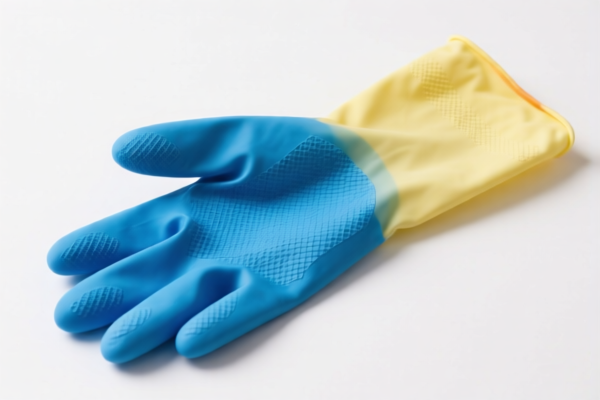



AI分析
🧤 Reusable Rubber Gloves: HS Code Classification & 2026 Customs Clearance Strategy
🌐 HS Code Reference & Customs Clearance Guide | 2026 Latest Tariff Analysis | Professional-Level Clearance Strategy
📌 1. Product Definition: What Are "Reusable Rubber Gloves"?
Reusable rubber gloves are protective handwear made primarily of rubber materials, designed for agricultural, industrial, or household use. They are characterized by their elasticity, chemical resistance, and durability. In international trade, their classification depends heavily on manufacturing details (knitted vs. molded) and material composition (natural rubber, synthetic rubber, or plastic-rubber blends).
⚠️ Key Classification Distinction:
- Molded Rubber Goods: If the gloves are solid, non-knitted, and made entirely of vulcanized rubber → Classified under Chapter 40.
- Knitted/Coated Gloves: If the gloves are knitted/fabric-based with rubber coating/impregnation → Classified under Chapter 61 or 39.
- Plastic-Like Rubber: If the material is interpreted as plastic-like polymers → Classified under Chapter 39.
📦 2. HS Code Classification Matrix (2026 Latest Tariff Authority)
Based on the provided dataset, here are the 5 possible HS Codes for Reusable Rubber Gloves, with corresponding tax details.
| HS Code | Product Description & Classification Logic | Total Tax Rate | Tax Breakdown |
|---|---|---|---|
| 4015.19.11.50 | Vulcanized Rubber Apparel: Gloves made of vulcanized rubber, classified as rubber garments/accessories. | 38.0% | Base Tariff: 3.0% Section 301 Tariff: 25.0% Section 122 Tariff: 10% |
| 4015.19.51.00 | Vulcanized Rubber Apparel (Variant): Similar to above, but different sub-heading for specific rubber glove types. | 49.0% | Base Tariff: 14.0% Section 301 Tariff: 25.0% Section 122 Tariff: 10% |
| 6116.10.65.00 | Knitted/Coated Rubber Gloves: Gloves made of rubber, knitted or crocheted, with rubber impregnation/coating. | 24.5% | Base Tariff: 7.0% Section 301 Tariff: 7.5% Section 122 Tariff: 10% |
| 3926.20.40.50 | Plastic-like Rubber Gloves: Gloves made of rubber but classified logically like plastic gloves. | 16.5% | Base Tariff: 6.5% Section 301 Tariff: 0.0% Section 122 Tariff: 10% |
| 6116.10.95.00 | Other Knitted/Coated Gloves: Other rubber gloves, knitted/crocheted, not elsewhere specified. | 24.5% | Base Tariff: 7.0% Section 301 Tariff: 7.5% Section 122 Tariff: 10% |
🔍 Critical Note:
- HS 4015 applies to solid, molded rubber gloves (like heavy-duty industrial or medical exam gloves).
- HS 6116 applies to knitted fabric gloves coated/impregnated with rubber (common in agriculture/light industry).
- HS 3926 is a low-tax alternative if the rubber is interpreted as a plastic polymer, but this requires careful material justification.
💰 3. 2026 Tariff Rate Detailed Explanation
✅ Applicable Country: United States (US)
✅ Origin: China (CN)
✅ Effective Time: 2025–2026 (Current Trade War Era)
🎯 A. High-Tariff Category: Chapter 40 (Vulcanized Rubber Goods)
1. 4015.19.11.50 – Total Tax: 38.0%
| Item | Detail |
|---|---|
| Base Tariff | 3.0% |
| Section 301 Tariff | 25.0% (USITC Footnote 9903.88.01) |
| Section 122 Tariff | 10% (International Emergency Economic Powers Act) |
| Total | 38.0% |
| De Minimis Exemption | ❌ Not Eligible |
| Legal Basis | IEEPA:9903.01.25 → USITC:4015.19.11.50 |
2. 4015.19.51.00 – Total Tax: 49.0%
| Item | Detail |
|---|---|
| Base Tariff | 14.0% |
| Section 301 Tariff | 25.0% |
| Section 122 Tariff | 10% |
| Total | 49.0% |
| De Minimis Exemption | ❌ Not Eligible |
| Legal Basis | IEEPA:9903.01.25 → USITC:4015.19.51.00 |
📌 Explanation:
- These high rates apply to solid rubber gloves (e.g., heavy-duty agricultural gloves, medical exam gloves).
- The 25% Section 301 tariff is the dominant cost driver.
- No de minimis exemption applies, meaning even small shipments face full taxation.
🎯 B. Mid-Tariff Category: Chapter 61 (Knitted/Crocheted Gloves)
3. 6116.10.65.00 & 5. 6116.10.95.00 – Total Tax: 24.5%
| Item | Detail |
|---|---|
| Base Tariff | 7.0% |
| Section 301 Tariff | 7.5% |
| Section 122 Tariff | 10% |
| Total | 24.5% |
| De Minimis Exemption | ❌ Not Eligible |
| Legal Basis | IEEPA:9903.01.25 → USITC:6116.10.xx |
📌 Explanation:
- These codes apply to knitted fabric gloves with rubber coating/impregnation.
- Common in agricultural gloves and light industrial gloves.
- Lower Section 301 rate (7.5%) makes this category more cost-effective than Chapter 40.
🎯 C. Low-Tariff Category: Chapter 39 (Plastic-like Rubber Gloves)
4. 3926.20.40.50 – Total Tax: 16.5%
| Item | Detail |
|---|---|
| Base Tariff | 6.5% |
| Section 301 Tariff | 0.0% |
| Section 122 Tariff | 10% |
| Total | 16.5% |
| De Minimis Exemption | ❌ Not Eligible |
| Legal Basis | IEEPA:9903.01.25 → USITC:3926.20.40.50 |
📌 Explanation:
- This code applies if the rubber is classified as a plastic polymer (e.g., certain synthetic rubbers).
- Zero Section 301 tariff makes this the most economical option.
- Risk: Must justify material as "plastic-like" to avoid reclassification by customs.
🛠️ 4. Customs Clearance Practical Advice (Real-World Pitfall Avoidance)
✅ 1. Document Checklist (Non-Negotiable)
| Document | Required? | Notes |
|---|---|---|
| ✅ Product Specifications | ✔️ | Material composition (natural/synthetic rubber), manufacturing process (molded vs. knitted). |
| ✅ Material Test Report | ✔️ | To support HS Code selection (e.g., plastic vs. rubber). |
| ✅ Product Photos | ✔️ | Show texture, coating, and structure (knitted vs. solid). |
| ✅ Commercial Invoice | ✔️ | Clear description: e.g., "Rubber-Coated Knitted Agricultural Gloves." |
| ✅ Packing List | ✔️ | Weight, dimensions, and unit count. |
| ✅ Origin Certificate | ✔️ | If non-China origin, may qualify for lower tariffs. |
✅ 2. Declaration Strategy (Key Rules)
🔥 “Material Defines Code, Structure Defines Chapter, Name Avoids Ambiguity!”
| Scenario | Correct HS Code | Incorrect HS Code | Consequence |
|---|---|---|---|
| Solid molded rubber glove | 4015.19.11.50 (38%) or 4015.19.51.00 (49%) |
6116.10.65.00 (24.5%) |
Underpayment → Penalties + Back Taxes |
| Knitted glove with rubber coating | 6116.10.65.00 (24.5%) |
3926.20.40.50 (16.5%) |
Overpayment → Lost Profit |
| Synthetic rubber (plastic-like) | 3926.20.40.50 (16.5%) |
4015.19.11.50 (38%) |
Underpayment → Penalties + Back Taxes |
✅ 3. Special Cases & Tips
| Case | Recommendation |
|---|---|
| Agricultural Gloves | Typically knitted + rubber coated → Use 6116.10.65.00 (24.5%). |
| Medical Exam Gloves | Typically solid vulcanized rubber → Use 4015.19.11.50 (38%). |
| Heavy-Duty Industrial Gloves | Often solid rubber → Use 4015.19.51.00 (49%) or 4015.19.11.50 (38%). |
| Plastic-Like Synthetic Gloves | Justify as plastic polymer → Use 3926.20.40.50 (16.5%). |
| De Minimis (Section 321) | ❌ Not Eligible for any of these HS codes if from China. |
🌍 5. Global Market Comparison (2026)
| Country/Region | Recommended HS Code | Tariff (China Origin) | Key Requirements |
|---|---|---|---|
| 🇺🇸 USA | 3926.20.40.50 (Lowest) |
16.5% – 49% | IEEPA + Section 301 |
| 🇨🇳 China | 4015.19.11.50 |
~5–10% | No extra tariffs |
| 🇪🇺 EU | 4015.19.11.50 |
~2.5% | CE Marking |
| 🇦🇺 Australia | 4015.19.11.50 |
~5% | No major restrictions |
| 🇯🇵 Japan | 4015.19.11.50 |
~3–5% | PSE Marking (if applicable) |
📌 Conclusion:
- USA is the highest-tariff market due to Section 301 and IEEPA.
- Chapter 39 (3926.20.40.50) offers the lowest tariff (16.5%) but requires strong material justification.
- Chapter 61 (6116.10.65.00) is a balanced option (24.5%) for knitted gloves.
📌 6. Common Mistakes & Pitfalls
❌ Mistake 1: Classifying knitted rubber-coated gloves as solid rubber gloves.
👉 Result: Paying 38–49% instead of 24.5%.
❌ Mistake 2: Classifying solid rubber gloves as plastic-like gloves.
👉 Result: Customs rejects, reclassifies, and imposes penalties + back taxes.
❌ Mistake 3: Ignoring Section 122 (10%) in tariff calculation.
👉 Result: Underestimating total cost by 10%.
❌ Mistake 4: Assuming De Minimis Exemption applies.
👉 Result: Shipments from China do not qualify for $800 de minimis if taxed >0%.
✅ Correct Approach:
“Rubber-Coated Knitted Agricultural Gloves, 100% Cotton Knit Base with Nitrile Rubber Coating, Model XYZ, CE Certified”
🎯 7. Conclusion: Professional Clearance, Cost Savings, Efficiency!
🎯 Remember the Rules:
🔹 “Knitted + Coated = Chapter 61 (24.5%)”
🔹 “Solid Rubber = Chapter 40 (38–49%)”
🔹 “Plastic-Like = Chapter 39 (16.5%)”
🔹 “Section 122 (10%) + Section 301 (0–25%)” = Final Tax
📌 Pro Tip:
If your gloves are knitted with rubber coating, use 6116.10.65.00 (24.5%).
If they are solid molded rubber, use 4015.19.11.50 (38%).
If they are synthetic plastic-like, use 3926.20.40.50 (16.5%).
📣 Immediate Action:
📞 Contact a professional customs broker + Provide product specs + Apply for HS Code Pre-Ruling
🚀 Ensure smooth clearance, avoid penalties, and maximize profit!
✨ Professional clearance starts with accurate classification!
💼 Every dollar saved is every dollar earned!
用户评价
关于 HS 编码归类
协调制度(HS)是由世界海关组织(WCO)制定的国际贸易商品分类标准。全球 200 多个国家采用 HS 系统作为海关关税、贸易统计和进出口监管的基础。
每个 HS 编码遵循以下层级结构:
- 章(2 位)——商品大类(例如:第 84 章:机器和机械设备)
- 品目(4 位)——章内的更具体分类
- 子目(6 位)——国际通用细分,所有 WCO 成员国统一使用
- 本国细分(8-10 位)——各国自行扩展的细分编码,如美国 HTSUS 10 位编码
正确的 HS 编码归类对于顺利通关、准确缴纳关税和遵守贸易法规至关重要。错误归类可能导致海关延误、多缴关税或罚款。
从CN进口到US时,适用的关税税率可能包括:
- 最惠国(MFN)税率——适用于 WTO 成员国的标准关税税率
- 普通税率——适用于无贸易协定国家
- 贸易救济关税——附加关税,如 301 条款(反倾销)、232 条款(国家安全)或反补贴税
本页内容仅供参考。如需正式归类,请咨询当地海关或持牌报关代理。