rhodium catalyst support
CN → US| HS编码 | 关税税率 | 原产国 | 目的国 | 文档 |
|---|---|---|---|---|
| 2835295100 | 39.1% | CN | US | 官方文档 |
| 3815110000 | 35.0% | CN | US | 官方文档 |
| 3815190000 | 35.0% | CN | US | 官方文档 |
| 2835100000 | 38.1% | CN | US | 官方文档 |
商品图片
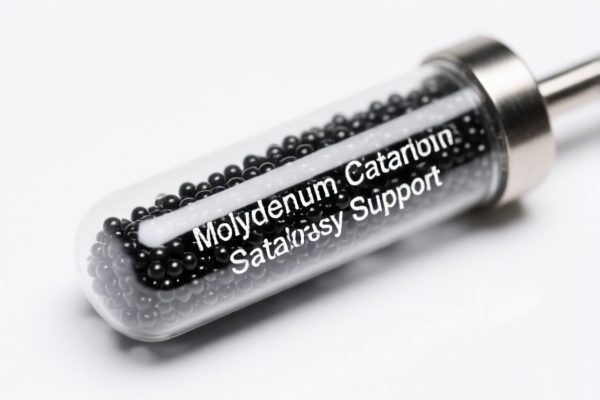
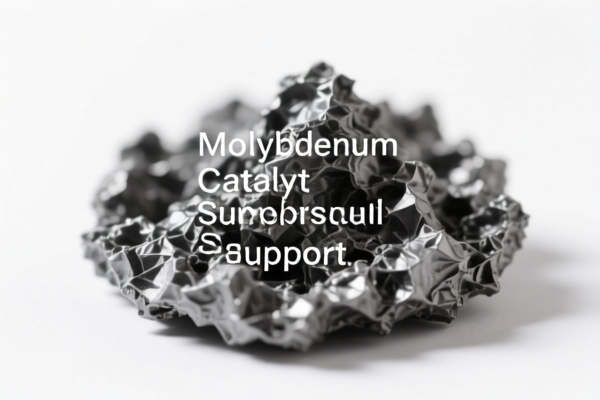
AI分析
🚀 Rhodium Catalyst Support: The "Invisible Engine" of Industrial Chemistry
🌐 HS Code Reference & Customs Clearance Guide | 2026 Latest Tariff Analysis | Professional Clearance Strategy
📌 I. Product Definition & Classification: What is a "Catalyst Support"?
A Rhodium Catalyst Support is a critical component in heterogeneous catalysis. Rhodium (Rh) is an expensive precious metal used in automotive catalytic converters, chemical synthesis, and petroleum refining. However, pure rhodium is inefficient; it must be dispersed onto a high-surface-area material to maximize contact with reactants.
This "Support" (Carrier) acts as the structural backbone. It is typically composed of inorganic compounds such as Alumina (Al₂O₃), Silica (SiO₂), Zeolites, or Ceria-Zirconia.
In international trade, the classification depends heavily on whether the product is considered a raw chemical material or a prepared catalyst preparation.
⚠️ Key Distinction Point:
- If the material is a raw inorganic compound (e.g., pure alumina beads, silica gel) used to make a catalyst later → Chapter 28 (Inorganic Chemicals)
- If the material is already processed/formulated specifically to serve as a catalyst carrier or supports a catalyst structure → Chapter 38 (Miscellaneous Chemical Products / Prepared Catalysts)
📦 II. HS Code Classification Details (2026 Latest Tariff Authority Comparison)
| HS Code | Product Description | Applicable Scenario | Key Characteristics |
|---|---|---|---|
| 2835.29.51.00 | Other Phosphates, Hypophosphites, and Phosphonates | Rarely applicable unless the support is specifically a phosphated alumina/silica carrier. Often used for inorganic chemical intermediates. | ✅ Inorganic Chemical Raw Material |
| 3815.11.00.00 | Supported Catalysts | Catalysts where the active metal (Rhodium) is already supported on a carrier. High relevance if "support" implies a pre-functionalized catalytic system. | ✅ Prepared Catalyst (Active Metal Present) |
| 3815.19.00.00 | Other Catalysts, including Catalyst Supports | Most Likely Fit for "Empty" Supports. Includes supports (like alumina/silica) that are specifically shaped/prepared for catalytic use, even without the active metal loaded yet. | ✅ Prepared Catalyst Support (No Active Metal) |
| 2835.10.00.00 | Phosphites, Hypophosphites, and their Salts | Potential classification if the support is a phosphite-based inorganic compound used as a chemical raw material. | ✅ Inorganic Chemical Intermediate |
🔍 Critical Reminder:
- "Support" vs. "Prepared Catalyst": If the product is just a porous alumina bead with no Rhodium loaded, it is generally classified under 3815.19.00.00 (Catalyst Supports) or potentially 2835 if it's a basic chemical.
- "Catalyst Preparation": If Rhodium is already deposited on the support, it must be 3815.11.00.00.
- Misclassification Risk: Declaring a "catalyst support" as a "raw chemical" (2835) when it is functionally a "catalyst preparation" (3815) can lead to customs audits. However, tax-wise, 3815 often offers a lower base tariff.
💰 III. 2026 Latest Tariff Rate Breakdown (Including Surcharges & Policy Add-ons)
✅ Applicable Country: United States (US)
✅ Origin: China (CN)
✅ Effective Time: 2025/2026 (Current Trade Regime)
🎯 1. 3815.19.00.00 —— Catalyst Supports (Prepared, Unloaded)
| Item | Content |
|---|---|
| Base Tariff | 0.0% (ad valorem) |
| USITC Additional Tariff | +25% (Section 301 Duties on Chinese Goods) |
| IEEPA Additional Tariff | +10% (Executive Order 14257 - "122 Clause" Targeting Strategic Sectors/Technology) |
| Total Tariff Rate | 35.0% |
| Tax Calculation | CIF Value × 35.0% |
| De Minimis Exemption | ❌ Not Eligible (Value exceeds $800 threshold for most industrial goods; Section 301/122 duties apply fully) |
| Legal Path | IEEPA:9903.01.25 → USITC:3815.19.00.00 → FOOTNOTE:9903.88.01 |
📌 Explanation:
- The base tariff is 0%, which is significantly cheaper than raw chemicals.
- The 25% is the standard Section 301 tariff for Chapter 38 goods from China.
- The 10% is the additional "122 Clause" tariff targeting strategic supply chains.
- Total: 35%. This is the most favorable classification among the options because it benefits from the 0% base rate.
🎯 2. 3815.11.00.00 —— Supported Catalysts (Pre-Loaded with Rhodium)
| Item | Content |
|---|---|
| Base Tariff | 0.0% (ad valorem) |
| USITC Additional Tariff | +25% (Section 301 Duties) |
| IEEPA Additional Tariff | +10% (Targeted Strategic Sectors) |
| Total Tariff Rate | 35.0% |
| Tax Calculation | CIF Value × 35.0% |
| De Minimis Exemption | ❌ Not Eligible |
| Legal Path | IEEPA:9903.01.24 → USITC:3815.11.00.00 |
📌 Note:
- Tax rate is identical to supports (35%).
- Value Difference: Rhodium is extremely expensive. If you classify pre-loaded catalysts here, the CIF value is higher, but the percentage remains 35%.
🎯 3. 2835.29.51.00 & 2835.10.00.00 —— Inorganic Chemicals (Raw Materials)
| Item | Content |
|---|---|
| Base Tariff | 4.1% (for 2835.29) / 3.1% (for 2835.10) |
| USITC Additional Tariff | +25% (Section 301 Duties) |
| IEEPA Additional Tariff | +10% (Targeted Strategic Sectors) |
| Total Tariff Rate | 38.1% / 38.1% |
| Tax Calculation | CIF Value × 38.1% |
| De Minimis Exemption | ❌ Not Eligible |
📌 Warning:
- Although these are "chemicals," they incur a higher total tax (38.1%) compared to catalyst preparations (35.0%).
- Customs may reject this classification if the product is clearly a "catalyst support" with specific porosity/surface area treatments, forcing you to pay the difference.
🛠️ IV. Customs Clearance Practical Advice (Real-World Pitfall Guide)
✅ 1. Documentation Checklist (Non-Negotiable)
| Document | Must Provide? | Description |
|---|---|---|
| ✅ Technical Data Sheet (TDS) | ✔️ | Must show Surface Area (m²/g), Pore Volume, and Chemical Composition (e.g., % Al₂O₃, % Silica). |
| ✅ Formulation Statement | ✔️ | Explicitly state: "Unloaded Support" (No Rhodium/Pt/Pd loaded) OR "Pre-Loaded Catalyst" (Specify Rhodium content in ppm/wt%). |
| ✅ Product Photos | ✔️ | Show pellets/beads/cords. Label must match commercial name. |
| ✅ Commercial Invoice | ✔️ | Description: "Catalyst Support, Alumina-based, Unloaded, for Chemical Synthesis." Avoid vague terms like "Chemical Powder." |
| ✅ Certificate of Origin (CO) | ✔️ | Required for Section 301/122 duty assessment. |
✅ 2. Declaration Strategy (The Golden Rule)
🔥 "Define Function, Not Just Composition!"
| Scenario | Correct HS Code | Reasoning |
|---|---|---|
| Empty Alumina Beads with high porosity, sold specifically for catalyst manufacturing | 3815.19.00.00 | Function is "Support." Base tariff 0%. Best Option. |
| Rhodium-loaded Honeycomb Monolith (Auto Catalytic Converter) | 3815.11.00.00 | Function is "Prepared Catalyst." Base tariff 0%. |
| Raw Alumina Powder (Generic, no specific catalytic treatment) | 2818.10.00.00 (Not in Data, but common) | If truly generic, might be lower tax, but risky if used for catalysts. Stick to Data: 2835.29.51.00 (38.1% tax) - Less Favorable. |
📌 Critical Insight:
- If the support has been calcined, shaped, or treated to have specific catalytic properties (acid sites, thermal stability), it is a 3815 product.
- Declaring it as 2835 (chemical raw material) to avoid "catalyst" scrutiny is risky because the tax is HIGHER (38.1% vs 35.0%).
✅ 3. Special Case Handling
| Situation | Handling Advice |
|---|---|
| Rhodium Content < 0.1% | If negligible, declare as Support (3815.19.00.00). Provide lab report proving Rhodium is absent or trace impurity only. |
| Rhodium Content > 0.1% | Must declare as Catalyst (3815.11.00.00). Rhodium is a strategic precious metal; under-reporting can lead to fraud allegations. |
| Exporting to US from China | Prepare for 35% Duty. Budget for cash flow. Consider Section 321 De Minimis if shipped as small parcels (< $800), but industrial shipments will pay full duty. |
🌍 V. Global Market Clearance Comparison (2026)
| Country/Region | Recommended HS Code | Tariff Rate (China Origin) | Certification | Notes |
|---|---|---|---|---|
| 🇺🇸 USA | 3815.19.00.00 (Support) | 35.0% (25% Sec 301 + 10% IEEPA) | None specific | Best Tax Rate. Avoid 2835 (38.1%). |
| 🇪🇺 EU | 3815.10.00 | 0% - 6.5% | REACH Registration | No Section 301. REACH compliance critical. |
| 🇨🇳 China | 3815.10.00 | 0% | N/A | Import duty often 0% for catalyst supports. |
| 🇮🇳 India | 3815.10.00 | 10% - 15% | BIS Standard | High anti-dumping duties on some catalysts. |
📌 Conclusion:
- The US market is the most expensive due to the 35% combined tariff.
- 3815.19.00.00 is the optimal classification for unloaded supports, saving 3.1% compared to raw chemical classifications (2835).
📌 VI. Common Errors & Pitfalls (Blood & Tears Lessons)
❌ Error 1: Declaring "Rhodium Catalyst Support" as "Rhodium Metal" (7116)
👉 Consequence: Tariff jumps to 77%+ + Strict Licensing. Rhodium metal is a controlled strategic resource.
❌ Error 2: Declaring unloaded supports as "General Alumina" (2818)
👉 Consequence: Customs may reclassify to 3815 anyway, but delay shipment for "Purpose of Use" verification. No tax saving.
❌ Error 3: Ignoring the 122 Clause (IEEPA 10%)
👉 Consequence: Unexpected 3.1% increase in total cost if not planned for. Many brokers miss this new 2025/2026 rule.
❌ Error 4: Mixing "Loaded" and "Unloaded" in one shipment
👉 Consequence: Customs Audit. Loaded items trigger precious metal reporting. Unloaded do not. Mixed shipments cause major delays.
✅ Correct Declaration Example:
"Catalyst Support, Alumina-Based, Extruded Beads, Unloaded, Surface Area 150m²/g, For Chemical Synthesis Use. HS: 3815.19.00.00."
🎯 VII. Conclusion: Professional Declaration Saves Money!
🎯 Memory Aid:
🔹 "Unloaded Support? Go 3815.19!"
🔹 "Base 0%, Total 35%. Better than 38% in 2835!"
🔹 "Rhodium Loaded? 3815.11!"
🔹 "Don't say 'Chemical Raw Material' if it's a 'Catalyst Part'!"
📌 Pro Tip:
- For US Imports, apply for an Advance Ruling from CBP if you are unsure whether your support is "prepared" (3815) or "raw" (2835). The ruling will lock in the 35% rate.
- Ensure your Technical Data Sheet explicitly mentions "Support for Catalysts" to justify 3815.
📣 Immediate Action:
📞 Contact Your Customs Broker
📄 Submit TDS & Label
💰 Budget for 35% Duty on CIF Value
🚀 Ensure Smooth Clearance & Maximized Profit Margins!
✨ Precision Classification is the Key to Cost Control!
💼 Your Supply Chain Efficiency Starts with the Right HS Code!
用户评价
关于 HS 编码归类
协调制度(HS)是由世界海关组织(WCO)制定的国际贸易商品分类标准。全球 200 多个国家采用 HS 系统作为海关关税、贸易统计和进出口监管的基础。
每个 HS 编码遵循以下层级结构:
- 章(2 位)——商品大类(例如:第 84 章:机器和机械设备)
- 品目(4 位)——章内的更具体分类
- 子目(6 位)——国际通用细分,所有 WCO 成员国统一使用
- 本国细分(8-10 位)——各国自行扩展的细分编码,如美国 HTSUS 10 位编码
正确的 HS 编码归类对于顺利通关、准确缴纳关税和遵守贸易法规至关重要。错误归类可能导致海关延误、多缴关税或罚款。
从CN进口到US时,适用的关税税率可能包括:
- 最惠国(MFN)税率——适用于 WTO 成员国的标准关税税率
- 普通税率——适用于无贸易协定国家
- 贸易救济关税——附加关税,如 301 条款(反倾销)、232 条款(国家安全)或反补贴税
本页内容仅供参考。如需正式归类,请咨询当地海关或持牌报关代理。