rigid pvc pipe
CN → US| HS编码 | 关税税率 | 原产国 | 目的国 | 文档 |
|---|---|---|---|---|
| 3917230000 | 38.1% | CN | US | 官方文档 |
| 3917290090 | 38.1% | CN | US | 官方文档 |
| 3926909987 | 22.8% | CN | US | 官方文档 |
| 3916200091 | 40.8% | CN | US | 官方文档 |
| 3916200020 | 40.8% | CN | US | 官方文档 |
| 3926909989 | 22.8% | CN | US | 官方文档 |
商品图片
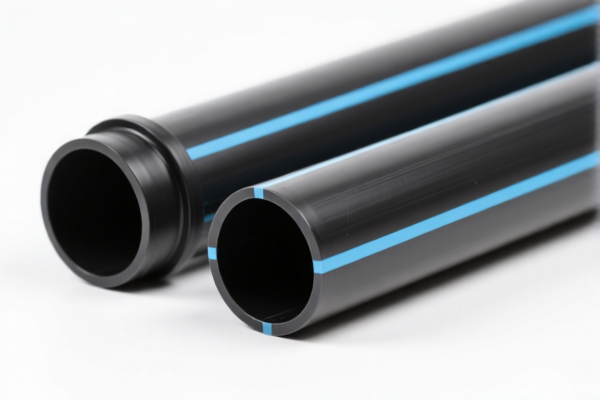

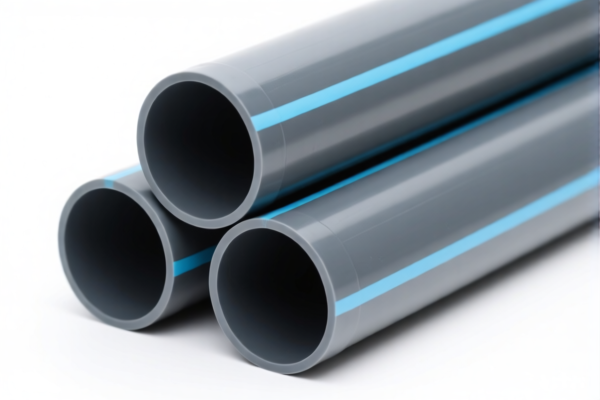
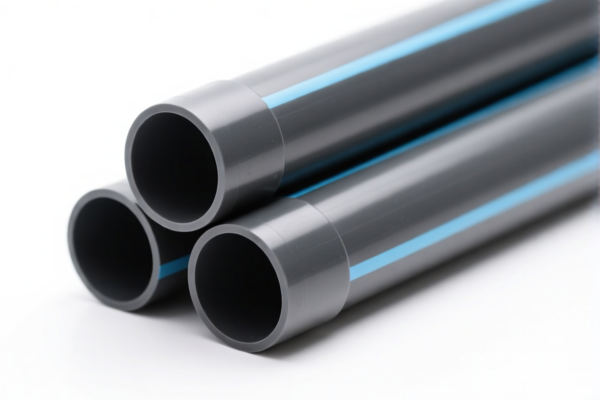
AI分析
🧱 Rigid PVC Pipe (Commercial Rigid PVC Tubing)
🌐 HS Code Reference & Customs Clearance Guide | 2026 Latest Tariff Analysis | Professional Clearance Strategy
📌 Part I: Product Definition & Classification – Do You Really Understand “Rigid PVC Pipe”?
Rigid PVC Pipe (Polyvinyl Chloride), a cornerstone material in modern construction, plumbing, and industrial fluid transport systems, is classified under Chapter 39 of the Harmonized System. In international trade, despite sharing the same core material (PVC) and form (rigid tube), subtle differences in chemical composition, physical structure, and functional application lead to distinct HS Code classifications.
Key Distinctions: - Polymer Type: Is it purely PVC resin or a Chlorinated Polyvinyl Chloride (CPVC) copolymer? - Physical Form: Is it a simple hollow tube, or does it fall under profiles/bars (3916)? - Usage Context: Does it serve as a general plumbing conduit, a structural profile, or a specialized plastic article?
⚠️ Critical Classification Point:
- If the pipe is explicitly defined as a chlorine-containing polymer (e.g., CPVC) → Goes to 3917.23.00.00.
- If it is a general rigid plastic tube made of standard PVC → Usually falls under 3917.29.00.90 or 3926.90.99.87/89 depending on shape and specific sub-category definitions.
- If the pipe is structurally categorized as a rod, bar, or profile (even if tubular in appearance) → It may be incorrectly or alternatively classified under 3916.20.00.91/20 (Profiles).
📦 Part II. HS Code Classification Details (2026 Latest Tariff Authority Comparison)
Based on the provided data, here are the specific HS Codes applicable to Commercial Rigid PVC Pipes, along with their descriptions and tax implications.
| HS Code | Product Description | Application Scenario | Tax Category Basis |
|---|---|---|---|
3917.23.00.00 |
Rigid PVC Pipe (Commercial), Material: Vinyl Chloride Polymer, Form: Rigid Tubing | CPVC pipes, high-temp plumbing, industrial chemical transport | Chlorine-containing polymer classification |
3917.29.00.90 |
Rigid PVC Pipe (Commercial), Material: PVC, Form: Rigid Tube, Matches Plastic Rigid Tube Category | Standard drainage/water supply PVC pipes, generic rigid tubes | General rigid plastic tube classification |
3926.90.99.87 |
Rigid PVC Pipe (Commercial), Material: PVC, Form: Rigid Tube, Matches Plastic Article Definition | Pipes classified as "Other Plastic Articles" rather than tubes/profiles | Plastic Article classification (Non-tube/non-profile) |
3916.20.00.91 |
Rigid PVC Pipe (Commercial), Material: PVC, Form: Tubing, Falls under Bars/Rods/Profiles Category | Pipes treated structurally as "profiles" or "bars" due to shape/usage | Profile/Bar classification |
3916.20.00.20 |
Rigid PVC Pipe (Commercial), Material: PVC, Form: Tubing, Usage Matches Profile Attributes | Similar to above, specific sub-code for profile-matching tubing | Profile/Bar classification |
3926.90.99.89 |
Rigid PVC Pipe (Commercial), Material: PVC, Form: Tubing, Matches Plastic Article Classification | Alternative "Other Plastic Articles" classification for PVC pipes | Plastic Article classification |
🔍 Key Reminder:
- The same product can have three different tax rates (22.8%, 38.1%, 40.8%) depending on how customs authorities interpret its chemical nature (PVC vs. Chlorinated PVC) and structural definition (Tube vs. Profile vs. Article).
- Misclassification risks: Classifying a standard PVC tube as a "Profile" (3916) instead of a "Tube" (3917) can lead to higher tariffs (40.8% vs. 38.1%). Conversely, classifying a specialized pipe as a generic "Article" (3926) may lower the rate to 22.8% but carries higher audit risk.
💰 Part III. 2026 Latest Tariff Rate Breakdown (Including Surtaxes, Policy Add-ons)
✅ Applicable Country: United States (US)
✅ Origin: China (CN)
✅ Effective Date: Current rates apply based on Section 301 and 122 Measures.
🎯 1. 3917.23.00.00 & 3917.29.00.90 — Rigid PVC Pipes (Tube Classification)
| Item | Content |
|---|---|
| Base Tariff | 3.1% (ad valorem) |
| Surtax (Section 301) | +25.0% (China-origin goods under USITC Footnote 9903.88.01 / Trade Act Section 301) |
| 122 Clause Tariff | +10.0% (Specific Section 122 duty on certain PVC-related items) |
| Total Tariff | 38.1% |
| Tax Calculation | CIF Value × 38.1% |
| De Minimis Eligibility | ❌ No (deny_de_minimis) |
| Legal Basis Path | USITC:3917.23.00.00 / USITC:3917.29.00.90 → SECTION301:Footnote9903.88.01 → SECTION122:10% |
📌 Explanation:
- The 25% surtax is the standard Section 301 penalty on Chinese PVC products.
- The 10% 122 Clause applies specifically to these PVC tube categories.
- Total 38.1% is a high barrier; ensure commercial invoices explicitly state "Rigid PVC Pipe, HS 3917."
🎯 2. 3926.90.99.87 & 3926.90.99.89 — Rigid PVC Pipes (Plastic Article Classification)
| Item | Content |
|---|---|
| Base Tariff | 5.3% (ad valorem) |
| Surtax (Section 301) | +7.5% (Reduced surtax for "Other Plastic Articles" under specific sub-categories) |
| 122 Clause Tariff | +10.0% (Applies to these article classifications) |
| Total Tariff | 22.8% |
| Tax Calculation | CIF Value × 22.8% |
| De Minimis Eligibility | ❌ No (deny_de_minimis) |
| Legal Basis Path | USITC:3926.90.99.87 / USITC:3926.90.99.89 → SECTION301:ReducedRate7.5% → SECTION122:10% |
📌 Note:
- This classification offers the lowest tariff (22.8%).
- However, it requires strong justification that the pipe is not a "tube" (3917) or "profile" (3916) but an "other plastic article."
- Use only if product design or packaging clearly deviates from standard tubing definitions.
🎯 3. 3916.20.00.91 & 3916.20.00.20 — Rigid PVC Pipes (Profile/Bar Classification)
| Item | Content |
|---|---|
| Base Tariff | 5.8% (ad valorem) |
| Surtax (Section 301) | +25.0% (Full Section 301 surtax applies to Profiles) |
| 122 Clause Tariff | +10.0% |
| Total Tariff | 40.8% |
| Tax Calculation | CIF Value × 40.8% |
| De Minimis Eligibility | ❌ No (deny_de_minimis) |
| Legal Basis Path | USITC:3916.20.00.91 / USITC:3916.20.00.20 → SECTION301:Footnote9903.88.01 → SECTION122:10% |
📌 Warning:
- This is the highest tariff (40.8%).
- Classifying a standard pipe as a "Profile" (3916) is often a misclassification error unless the pipe has a complex cross-section equivalent to structural profiles.
- Avoid unless specifically designed as a profiled conduit.
🛠️ Part IV. Customs Clearance Practical Advice (Battle-Tested Pitfall Avoidance)
✅ 1. Preparation Checklist (Non-Negotiable)
| Document | Required | Notes |
|---|---|---|
| ✅ Product Specifications | ✔️ | Must specify: Material (PVC/CPVC), Wall Thickness, Diameter, Pressure Rating, ASTM/ISO Standards |
| ✅ Material Safety Data Sheet (MSDS) | ✔️ | Confirms polymer type (Chlorinated vs. Standard PVC) |
| ✅ Product Photos | ✔️ | Clear shots of cross-section, markings, and packaging |
| ✅ Commercial Invoice | ✔️ | Must clearly state: "Rigid PVC Pipe, HS Code: [Selected Code]" |
| ✅ Packing List | ✔️ | Detail number of pieces, length per piece, total weight |
| ✅ Third-Party Test Report | ✔️ | ASTM D1784, D2239, or equivalent for PVC rigidity and durability |
✅ 2. Declaration Strategy (Key Mnemonic)
🔥 "Tube is 3917, Profile is 3916, Article is 3926. Get the shape right, save 18%!"
| Scenario | Correct Declaration | Wrong Action | Consequence |
|---|---|---|---|
| Standard Round PVC Pipe | 3917.29.00.90 (38.1%) |
Declare as 3916 (Profile) → 40.8% |
Overpay 2.7% |
| Complex Cross-Section Pipe | 3916.20.00.91 (40.8%) |
Declare as 3917 (Tube) → 38.1% |
Underpayment Risk + Penalty |
| Pipe as Part of a Kit | 3926.90.99.87 (22.8%) |
Declare separately as Pipe → 38.1% | Overpay 15.3% (if justified as article) |
| CPVC High-Temp Pipe | 3917.23.00.00 (38.1%) |
Declare as Standard PVC → 38.1% | Correct rate, but ensure MSDS matches |
✅ 3. Special Handling Cases
| Scenario | Recommendation |
|---|---|
| OEM Custom Pipes | Provide client design drawings to prove if it’s a standard tube or a profile. |
| Mixed Packaging | If pipes are bundled with fittings, declare the pipe separately if possible. Fittings may have different tariffs. |
| Colorant/Additives | Specify if the pipe is pure PVC or contains additives. Pure PVC may favor 3917; complex compounds might lean toward 3926. |
| Length/Coil Form | Coiled rigid PVC may be argued as "Profiles" (3916) in some interpretations. Stick to 3917 for rigid tubes unless coiling is extreme. |
🌍 Part V. Global Market Comparison (2026 Latest)
| Country/Region | Recommended HS Code | Tariff Rate | Certification | Notes |
|---|---|---|---|---|
| 🇺🇸 USA | 3917.29.00.90 |
38.1% | ASTM + USPTO | High surtax + 122 clause. Use 3926 only if justified. |
| 🇨🇳 China | 3917.29.00.00 |
~5-7% | GB Standard | No surtax. Lower entry barrier. |
| 🇪🇺 EU | 3917.21.00 |
0-4% | REACH + CE | No Section 301. Favorable if CE certified. |
| 🇦🇺 Australia | 3917.21.00 |
5% | SAA Mark | No additional surtaxes. |
| 🇯🇵 Japan | 3917.21.00 |
0-5% | JIS K6741 | Low tariffs, strict JIS compliance required. |
📌 Conclusion:
- USA is the most challenging market due to Section 301 and 122 tariffs.
- EU and Asia offer significantly lower barriers. Consider supply chain diversification if targeting the US with high-volume PVC imports.
📌 Part VI. Common Errors & Pitfall Avoidance (Blood-Tested Lessons)
❌ Error 1: Declaring all PVC pipes as 3916.20 (Profiles)
👉 Consequence: 40.8% tariff – Highest possible rate.
👉 Fix: Only use 3916 for pipes with complex, non-circular cross-sections acting as structural profiles.
❌ Error 2: Ignoring the "Chlorinated" distinction in MSDS
👉 Consequence: Customs may reclassify 3917.23 (CPVC) as 3917.29 (PVC) or vice versa, causing delayed clearance.
👉 Fix: Ensure MSDS explicitly states "Polyvinyl Chloride" or "Chlorinated Polyvinyl Chloride."
❌ Error 3: Claiming De Minimis Eligibility for PVC Pipes
👉 Consequence: Seizure or heavy penalties because PVC pipes are explicitly denied de minimis status.
👉 Fix: Always declare fully, regardless of value.
✅ Correct Declaration Example:
"Rigid PVC Pipe, Commercial Grade, ASTM D1784, 4-inch Diameter, Schedule 40, Unplasticized Polyvinyl Chloride (uPVC), HS Code: 3917.29.00.90"
🎯 Part VII. Conclusion: Professional Classification, Cost Efficiency!
🎯 Remember the Mnemonic:
🔹 "Tube 3917 (38.1%), Profile 3916 (40.8%), Article 3926 (22.8%). Shape defines tax!"
🔹 "MSDS must match, 122 Clause applies, De Minimis is denied!"
📌 Pro Tip:
If your PVC pipes are originating from Vietnam, Mexico, or Thailand, you may apply for IEEPA Exemptions or lower tariffs under USMCA/ASEAN agreements.
Recommendation: Apply for a Binding Ruling (Advance Ruling) from CBP to lock in the correct HS Code and tariff rate before shipment.
📣 Immediate Action:
📞 Contact a professional customs broker + Provide product specs + Apply for HS Code Advance Ruling
🚀 Ensure your Rigid PVC Pipes clear customs smoothly, reduce costs, and maximize profits!
✨ Professional Customs Clearance Starts with Accurate Classification!
💼 Every cent of your cost deserves precise calculation!
用户评价
关于 HS 编码归类
协调制度(HS)是由世界海关组织(WCO)制定的国际贸易商品分类标准。全球 200 多个国家采用 HS 系统作为海关关税、贸易统计和进出口监管的基础。
每个 HS 编码遵循以下层级结构:
- 章(2 位)——商品大类(例如:第 84 章:机器和机械设备)
- 品目(4 位)——章内的更具体分类
- 子目(6 位)——国际通用细分,所有 WCO 成员国统一使用
- 本国细分(8-10 位)——各国自行扩展的细分编码,如美国 HTSUS 10 位编码
正确的 HS 编码归类对于顺利通关、准确缴纳关税和遵守贸易法规至关重要。错误归类可能导致海关延误、多缴关税或罚款。
从CN进口到US时,适用的关税税率可能包括:
- 最惠国(MFN)税率——适用于 WTO 成员国的标准关税税率
- 普通税率——适用于无贸易协定国家
- 贸易救济关税——附加关税,如 301 条款(反倾销)、232 条款(国家安全)或反补贴税
本页内容仅供参考。如需正式归类,请咨询当地海关或持牌报关代理。