road safety reflective tape
CN → US| HS编码 | 关税税率 | 原产国 | 目的国 | 文档 |
|---|---|---|---|---|
| 3919901000 | 41.5% | CN | US | 官方文档 |
| 3919101010 | 41.5% | CN | US | 官方文档 |
| 5903102010 | 35.0% | CN | US | 官方文档 |
| 5903102090 | 35.0% | CN | US | 官方文档 |
| 5907006000 | 35.0% | CN | US | 官方文档 |
商品图片
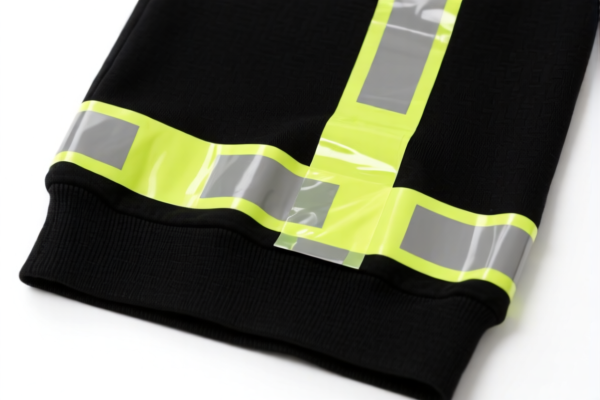
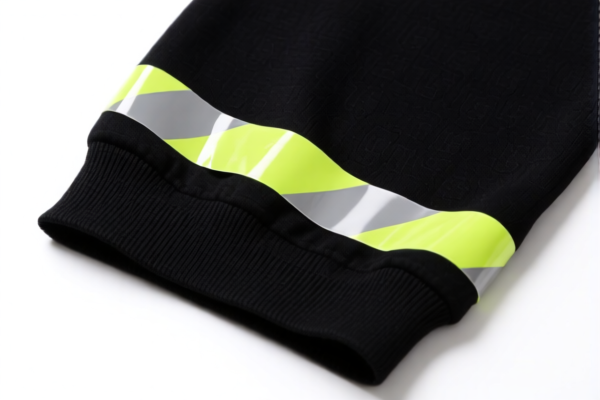
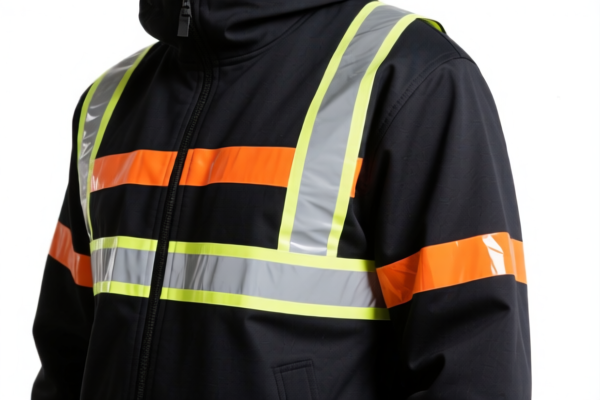
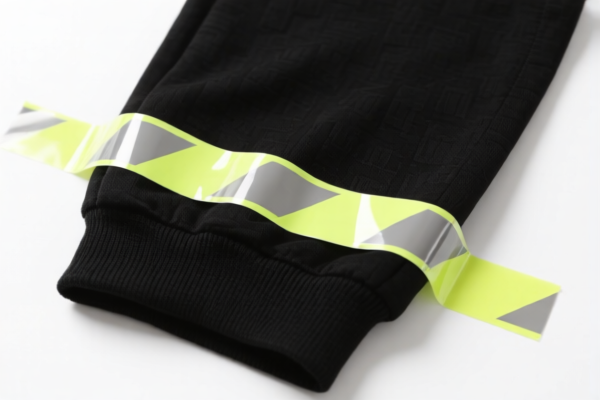
AI分析
🛣️ Road Safety Reflective Tape
🌐 HS Code Classification & Tariff Guide | 2026 Updated | U.S. Customs & Trade Compliance Handbook
📌 One-Stop Expert Reference for Exporters, Importers & Logistics Professionals
📦 1. Product Definition & Classification: What Exactly Is “Road Safety Reflective Tape”?
Road safety reflective tape is a high-visibility, retro-reflective material used on roads, highways, construction zones, and vehicles to enhance visibility during low-light or nighttime conditions. It is designed to reflect light back to its source (e.g., car headlights), significantly improving safety.
In international trade, this product is not classified as a simple adhesive tape, but rather as a specialized safety product with specific material composition and functional purpose.
⚠️ Key Determinants for HS Code Assignment: - Material base: Plastic film, PVC, or textile (synthetic/fiber) substrate
- Manufacturing method: Coated, laminated, or impregnated
- Functional design: Retro-reflective (microprismatic or glass bead)
- Form: Tape, strip, or sheet
🔍 2. HS Code Breakdown (2026 U.S. Tariff Schedule – China-Origin)
| HS Code | Product Description | Tax Rate | Base Tariff | Add-on Duties | Total Duty |
|---|---|---|---|---|---|
3919.90.10.00 |
Reflective tape, in tape form, functional for road safety, material inferred as plastic | 41.5% | 6.5% | 25.0% (Section 301) + 10.0% (Section 122) | ✅ 41.5% |
3919.10.10.10 |
Reflective tape, in tape form, used for traffic safety, made of plastic/self-adhesive | 41.5% | 6.5% | 25.0% (Section 301) + 10.0% (Section 122) | ✅ 41.5% |
5903.10.20.10 |
Reflective tape, coated, impregnated, or laminated, containing PVC or other plastics | 35.0% | 0.0% | 25.0% (Section 301) + 10.0% (Section 122) | ✅ 35.0% |
5903.10.20.90 |
Reflective tape made by impregnating PVC or plastic film onto textile substrate (e.g., polyester) | 35.0% | 0.0% | 25.0% (Section 301) + 10.0% (Section 122) | ✅ 35.0% |
5907.00.60.00 |
Reflective warning tape, coated with reflective material, base fabric: synthetic or man-made fiber | 35.0% | 0.0% | 25.0% (Section 301) + 10.0% (Section 122) | ✅ 35.0% |
📌 Note: All tariffs apply to goods originating from China (CN), effective November 10, 2025, under U.S. trade enforcement actions.
💰 3. Detailed Tariff Explanation (U.S. Trade Law & Enforcement)
🔹 Section 301 (USITC) – 25.0% Additional Duty
- Legal Basis: U.S. Trade Representative (USTR) Section 301 Investigation (China’s unfair trade practices)
- Applies to: All goods from China listed in List 3 & List 4A
- Impact: Applies to all 5 HS Codes above — regardless of material or form
- Key Point: Even if the base tariff is 0%, the 25% add-on is mandatory
✅ Example:
5903.10.20.10has 0% base tariff, but +25% under Section 301 → Still 35% total after adding 10% from Section 122
🔹 Section 122 (IEEPA) – 10.0% Additional Duty
- Legal Basis: International Emergency Economic Powers Act (IEEPA), enacted under Executive Order 13959
- Applies to: Goods from China (including Hong Kong), regardless of product type
- Effective Date: November 10, 2025
- Scope: Targets all imports from China with no exceptions for “low-value” or “non-strategic” goods
- Key Point: Cannot be waived, even for small shipments
✅ Why it matters:
- This 10% is in addition to the 25% Section 301 duty
- No de minimis exemption applies → Even $100 shipments face full duty
🔹 Base Tariff (Ad Valorem)
- Varies by HS Code:
- 6.5% for plastic-based tapes (
3919.90.10.00,3919.10.10.10) - 0.0% for coated/impregnated textile or PVC-based tapes (
5903.10.20.10,5903.10.20.90,5907.00.60.00)
⚠️ Critical Insight:
- A lower base tariff does not mean lower total cost
- The 25% + 10% add-ons dominate the final rate
- So, plastic tape (6.5% base) ends up at 41.5% total
- Textile-based tape (0% base) ends up at 35.0% total — still high!
🛠️ 4. Customs Clearance Best Practices (Pro Tips for 2026)
✅ 1. Documentation Checklist (MUST-HAVE)
| Document | Required? | Why It Matters |
|---|---|---|
| ✅ Commercial Invoice | ✔️ | Must clearly state: “Reflective Safety Tape, for Road Use” |
| ✅ Packing List | ✔️ | Include roll dimensions, weight, quantity |
| ✅ Product Specifications | ✔️ | Material type (PVC, polyester, plastic film), reflectivity class (ISO 23530), thickness |
| ✅ Test Report (e.g., ASTM D4956) | ✔️ | Prove retro-reflective performance |
| ✅ Certificate of Origin (CO) | ✔️ | Required for tariff eligibility |
| ✅ Sample Photo (with label) | ✔️ | Show product form, backing, reflective surface |
| ✅ Customs Broker Letter | ✔️ | For pre-clearance or classification request |
✅ 2.申报技巧 (Declaration Strategy)
🔥 “Material First, Form Second, Use Last” — The Golden Rule of Reflective Tape Classification
| Scenario | Correct HS Code | Why? |
|---|---|---|
| Tape made of PVC film with reflective coating | 5903.10.20.10 |
Coated/impregnated plastic → 5903 category |
| Tape made of plastic film with self-adhesive backing | 3919.10.10.10 |
Plastic + adhesive = 3919 category |
| Tape with PVC film laminated to polyester fabric | 5903.10.20.90 |
Textile substrate + plastic → 5903.10.20.90 |
| Tape with synthetic fiber base + reflective coating | 5907.00.60.00 |
Coated textile → 5907 category |
| Tape with no fabric, just plastic film + adhesive | 3919.90.10.00 |
Pure plastic tape → 3919.90.10.00 |
📌 Warning:
- Do not declare as “adhesive tape” or “signage material” — risk of misclassification
- Use precise terms: “Retro-reflective safety tape for road use”
- Avoid vague terms like “warning tape” or “reflective strip”
✅ 3. Special Cases & Risk Mitigation
| Situation | Recommended Action |
|---|---|
| Mixed material tape (PVC + fabric) | Classify under 5903.10.20.90 — textile base dominates |
| Tape with microprismatic reflectors | Still falls under same HS Codes — no special subheading |
| Tape for vehicles (e.g., trucks, buses) | Same HS Code — use case doesn’t change classification |
| Tape for temporary road signs | Still classified as road safety tape → same tariff |
| Tape imported via third country (e.g., Vietnam, Mexico) | Check origin rules: If not substantially transformed, may still be subject to China-origin tariffs |
📌 Pro Tip:
If your tape is manufactured in Vietnam or Mexico, and material is not Chinese, you may avoid Section 301 & 122 tariffs — but must prove with Form A (ASEAN) or USMCA Certificate.
🌍 5. Global Tariff Comparison (2026)
| Country | Recommended HS Code | Tariff | Key Certifications | Notes |
|---|---|---|---|---|
| 🇺🇸 United States | 3919.10.10.10 / 5903.10.20.90 |
35–41.5% | FCC, ASTM, ISO | High tariffs due to China origin |
| 🇨🇳 China | 3919.10.10.10 / 5907.00.60.00 |
5% | CCC, GB/T | No extra tariffs |
| 🇪🇺 European Union | 3919.10.10.10 / 5903.10.20.90 |
0% (if CE) | CE, REACH | No 301/122 tariffs |
| 🇦🇺 Australia | 5903.10.20.90 |
5% | RCM | No extra duties |
| 🇯🇵 Japan | 5907.00.60.00 |
0% | PSE | No additional tariffs |
📌 Insight:
- U.S. is the only market imposing 35–41.5% tariffs on Chinese-origin reflective tape
- EU, Japan, Australia, China have much lower or zero tariffs
🚨 6. Common Mistakes & Penalties (Avoid These!)
❌ Mistake 1: Declaring plastic-based tape as “textile tape” to avoid 6.5% base tariff
👉 Result: Misclassification → $50,000+ in penalties + seizure
❌ Mistake 2: Not including test report proving reflectivity
👉 Result: Customs delays, request for sample testing, or rejection
❌ Mistake 3: Using “adhesive tape” as description
👉 Result: Classification under wrong HS Code → higher duty, fines
❌ Mistake 4: Assuming “low value” = exempt from 301/122 tariffs
👉 Result: No de minimis exemption — full 35–41.5% duty applies
✅ 7. Final Recommendations: Smart Export Strategy
🔥 “Know Your Material, Declare Your Use, Avoid China, or Pay the Price”
✅ Recommended Actions:
- Verify material composition (PVC? Plastic film? Polyester?).
- Use exact product description: “Retro-reflective tape for road safety, made of [material], self-adhesive, ISO 23530 compliant”.
- Consider shifting manufacturing to Vietnam, Mexico, or Thailand to avoid 301/122 tariffs.
- Apply for Advance Ruling (Pre-Clearance) with U.S. Customs to lock in HS Code and tariff.
- Partner with a U.S.-based customs broker experienced in Section 301/122 compliance.
🎯 Summary: Key Takeaways
| Fact | Why It Matters |
|---|---|
| ✅ All 5 HS Codes face 25% + 10% add-ons | Total tax is 35–41.5%, not just base tariff |
| ✅ No de minimis exemption | Even $100 shipments pay full duty |
| ✅ Material base determines HS Code | Plastic vs. textile = different codes & rates |
| ✅ U.S. is the only high-tariff market | EU, Japan, Australia: 0–5% |
| ✅ Pre-clearance is your best defense | Avoid delays, penalties, and disputes |
📣 Act Now: Secure Your Supply Chain!
📞 Contact a U.S. Customs Broker + Submit product specs + Request HS Code Pre-Ruling
🚀 Avoid surprise tariffs, delays, or seizures
💼 Your product’s success depends on precise classification
✨ Pro Tip:
If your tape is not made in China, and not using Chinese materials, you may qualify for 0% tariffs under USMCA or ASEAN — prove it with documentation!
📌 Final Word:
"One wrong HS Code can cost you 40% of your revenue.
One smart classification can save you millions."
✅ Your Road Safety Tape. Your Global Market. Your Control.
🔐 Start with accurate classification. End with smooth customs clearance.
用户评价
关于 HS 编码归类
协调制度(HS)是由世界海关组织(WCO)制定的国际贸易商品分类标准。全球 200 多个国家采用 HS 系统作为海关关税、贸易统计和进出口监管的基础。
每个 HS 编码遵循以下层级结构:
- 章(2 位)——商品大类(例如:第 84 章:机器和机械设备)
- 品目(4 位)——章内的更具体分类
- 子目(6 位)——国际通用细分,所有 WCO 成员国统一使用
- 本国细分(8-10 位)——各国自行扩展的细分编码,如美国 HTSUS 10 位编码
正确的 HS 编码归类对于顺利通关、准确缴纳关税和遵守贸易法规至关重要。错误归类可能导致海关延误、多缴关税或罚款。
从CN进口到US时,适用的关税税率可能包括:
- 最惠国(MFN)税率——适用于 WTO 成员国的标准关税税率
- 普通税率——适用于无贸易协定国家
- 贸易救济关税——附加关税,如 301 条款(反倾销)、232 条款(国家安全)或反补贴税
本页内容仅供参考。如需正式归类,请咨询当地海关或持牌报关代理。