roll labels
CN → US| HS编码 | 关税税率 | 原产国 | 目的国 | 文档 |
|---|---|---|---|---|
| 3926909989 | 22.8% | CN | US | 官方文档 |
| 3926909905 | 22.8% | CN | US | 官方文档 |
| 4821902000 | 35.0% | CN | US | 官方文档 |
| 4821102000 | 35.0% | CN | US | 官方文档 |
| 3919102055 | 40.8% | CN | US | 官方文档 |
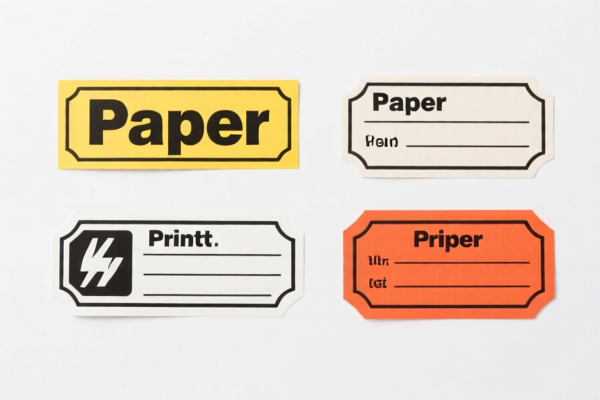
商品图片



AI分析
🏷️ Roll Labels (Adhesive Labels)
🌐 HS Code Reference & Customs Clearance Guide | 2026 Latest Tariff Analysis | Strategic Clearance Strategy
📌 I. Product Definition & Classification: What Exactly Are "Roll Labels"?
Roll labels (self-adhesive labels) are versatile packaging and identification components used in logistics, retail, and manufacturing. In international trade, their classification hinges on two critical factors:
1. Material Composition (Plastic vs. Paper)
2. Specific Subheading (General plastic goods vs. specific adhesive products)
⚠️ Key Distinction:
- Plastic Labels: Often fall under general plastic articles (3926) or specific adhesive tapes (3919).
- Paper Labels: Typically classified under paper products (4821).
- Self-Adhesive Property: Crucial for determining if they fit under specific adhesive headings or general "other" categories.
📦 II. HS Code Classification Details (2026 Latest Tariff Authority Comparison)
| HS Code | Product Description | Material Inference | Applicable Scenario |
|---|---|---|---|
3926.90.99.89 |
Self-adhesive roll labels, usually plastic or composite materials; classified as other plastic articles not specified elsewhere. | Plastic / Composite | General plastic labels, durable outdoor labels, composite material labels. |
3926.90.99.05 |
Self-adhesive roll labels; inferred material is plastic, consistent with the form characteristics of plastic articles, no material conflict. | Plastic | Standard plastic labels, PVC/PET labels, any plastic-based self-adhesive label. |
4821.90.20.00 |
Self-adhesive roll labels; form and self-adhesive attribute are consistent; inferred material is paper, aligning with common label categorization habits. | Paper | Paper-based labels, thermal paper labels, standard shipping labels. |
4821.10.20.00 |
Self-adhesive roll labels; inferred material is paper or cardboard, meeting the material requirements and label attributes for paper labels. | Paper / Cardboard | Heavy-duty paper labels, cardboard-backed labels, premium paper labels. |
3919.10.20.55 |
Self-adhesive roll labels; self-adhesive function matches characteristics; flat form; inferred material is plastic, fitting the "other" category fallback logic. | Plastic | Plastic adhesive tapes used as labels, specific adhesive plastic products not elsewhere classified. |
🔍 Critical Note:
- Material is King: The biggest risk is misdeclaring paper labels as plastic (or vice versa).
- "Other" Categories: Codes ending in.89,.05,.55are often "catch-all" subheadings. Ensure the label doesn't fit a more specific heading (like specific printed images on4821.10if applicable, though4821.10is for printed labels).
- Self-Adhesive: All these codes assume the product is self-adhesive. If it’s not, the classification changes drastically.
💰 III. 2026 Latest Tariff Rate Detailed Breakdown (Including Additional Taxes, Policy Surcharges)
✅ Applicable Country: United States (US)
✅ Origin: China (CN)
✅ Effective Date: 2025/2026 (Import entries from Nov 10, 2025 onwards)
🎯 1. Plastic-Based Labels (3926.90.99.89 & 3926.90.99.05)
| Item | Content |
|---|---|
| Base Tariff | 5.3% (ad valorem) |
| Section 301 Surcharge | +7.5% |
| Section 122 Tariff | +10% |
| Total Tariff Rate | 22.8% |
| Tax Calculation | CIF Value × 22.8% |
| De Minimis Eligibility | ❌ Not Eligible (Deny de minimis) |
| Legal Basis Path | Section 301 → Section 122 → USITC:3926.90.99.89/05 |
📌 Explanation:
- These plastic labels are subject to three layers of taxation: Base, Section 301 (Trade War), and Section 122 (Reciprocal Trade/Other).
- 22.8% is a moderate-high rate. It is significantly lower than paper labels due to different trade dynamics.
- No de minimis exemption: Even low-value shipments will face these duties.
🎯 2. Paper-Based Labels (4821.90.20.00 & 4821.10.20.00)
| Item | Content |
|---|---|
| Base Tariff | 0.0% |
| Section 301 Surcharge | +25.0% |
| Section 122 Tariff | +10% |
| Total Tariff Rate | 35.0% |
| Tax Calculation | CIF Value × 35.0% |
| De Minimis Eligibility | ❌ Not Eligible (Deny de minimis) |
| Legal Basis Path | Section 301 → Section 122 → USITC:4821.90.20.00/4821.10.20.00 |
📌 Explanation:
- Paper labels have a 0% base tariff, which sounds attractive, but the Section 301 surcharge is steep at 25%.
- Combined with Section 122, the total 35% is significantly higher than plastic labels (22.8%).
- Strategy: If possible, switching from paper to plastic labels can save 12.2% in duties, provided the product application allows it.
🎯 3. Specific Plastic Adhesive (3919.10.20.55)
| Item | Content |
|---|---|
| Base Tariff | 5.8% |
| Section 301 Surcharge | +25.0% |
| Section 122 Tariff | +10% |
| Total Tariff Rate | 40.8% |
| Tax Calculation | CIF Value × 40.8% |
| De Minimis Eligibility | ❌ Not Eligible (Deny de minimis) |
| Legal Basis Path | Section 301 → Section 122 → USITC:3919.10.20.55 |
📌 Explanation:
- This code has a higher base rate (5.8%) than other plastic labels and the highest Section 301 rate (25%).
- Total 40.8% is the most expensive option.
- Strategy: Avoid this code unless the label’s physical structure specifically requires it (e.g., it’s technically an adhesive tape roll). Try to classify under3926instead to save 18%.
🛠️ IV. Customs Clearance Practical Advice (实战避坑指南)
✅ 1. Documentation Checklist (Must-Haves)
| Document | Required? | Notes |
|---|---|---|
| ✅ Product Spec Sheet | ✔️ | Must specify material (Paper vs. Plastic), adhesive type, dimensions, and self-adhesive nature. |
| ✅ Material Certificate | ✔️ | Critical for proving paper vs. plastic. For plastic, specify polymer type (PVC, PET, PE). |
| ✅ Product Photos | ✔️ | Show the roll, the adhesive side, and any printed content. |
| ✅ Commercial Invoice | ✔️ | Clearly state "Self-Adhesive Roll Labels" and HS Code. |
| ✅ Packing List | ✔️ | Include net/gross weight, number of rolls per box. |
| ✅ FCC/ROHS Certs | ✔️ | If plastic labels contain electronic components or are used in regulated industries. |
✅ 2. Classification Strategy (Key Mnemonics)
🔥 “Paper High, Plastic Low, Avoid 3919 if you can!”
| Scenario | Correct HS Code | Tariff | Why? |
|---|---|---|---|
| Standard Paper Labels | 4821.90.20.00 or 4821.10.20.00 |
35% | Base 0% + 25% (301) + 10% (122). |
| Standard Plastic Labels | 3926.90.99.89 or 3926.90.99.05 |
22.8% | Base 5.3% + 7.5% (301) + 10% (122). Best option for plastic! |
| Plastic Adhesive Tape (Label-like) | 3919.10.20.55 |
40.8% | Base 5.8% + 25% (301) + 10% (122). Most expensive. |
| Composite Material (Plastic+Paper) | 3926.90.99.89 |
22.8% | If plastic is the dominant feature or not specifically listed elsewhere, plastic classification often wins lower tariffs. |
📌 Key Insight:
- Plastic labels (3926) are cheaper than paper labels (4821) due to lower Section 301 rates (7.5% vs. 25%).
- Avoid3919unless the product is clearly an adhesive tape roll. Misclassifying a label as3919risks penalties and higher duties.
✅ 3. Special Cases & Handling
| Scenario | Recommendation |
|---|---|
| Mixed Materials | If label is paper with a plastic film lamination, argue for plastic (3926) if the film is integral, or paper (4821) if paper is dominant. Check with customs broker. |
| Printed vs. Unprinted | Both 4821.10 and 4821.90 apply. Ensure the description matches. 4821.10 is for printed labels; 4821.90 is for other paper labels. |
| De Minimis | None of these codes qualify for de minimis exemption. All shipments, even low-value, will incur duties. |
| Section 122 | Applies to all China-origin goods in this category. Factor this into pricing. |
🌍 V. Global Market Clearance Comparison (2026 Latest)
| Country/Region | Recommended HS Code | Tariff (China Origin) | Notes |
|---|---|---|---|
| 🇺🇸 USA | 3926.90.99.05 (Plastic) |
22.8% | Lowest duty among options. Prefer plastic over paper. |
| 🇪🇺 EU | 3920.99 / 4821.90 |
~6.5% / ~2.7% | No Section 301. Paper is cheaper. |
| 🇨🇳 China | 4821.10 / 3926.90 |
~5% / ~5.3% | Low base duties. No surcharges. |
| 🇯🇵 Japan | 4821.90 / 3926.90 |
~3.3% / ~3.3% | Moderate duties. |
| 🇬🇧 UK | 4821.90 / 3926.90 |
~0% - 5% | Post-Brexit rates vary. Generally low. |
📌 Conclusion:
- USA: Plastic labels are tax-advantaged due to lower Section 301 rates.
- EU/UK/JP: Paper labels are often cheaper due to lower base duties and no surcharges.
- Strategy: Optimize material choice based on target market. For US imports, switch to plastic if feasible.
📌 VI. Common Mistakes & Pitfalls (Blood-Teaching Lessons)
❌ Mistake 1: Classifying plastic labels as paper (4821) to avoid Section 301.
👉 Consequence: Customs will reclassify, apply 35% tariff + penalties.
✅ Fix: Declare accurately. Use 3926 for plastic (22.8%).
❌ Mistake 2: Classifying labels as 3919 (Adhesive Tape) to avoid Section 301.
👉 Consequence: High base rate (5.8%) + 25% 301 + 10% 122 = 40.8%. Worse than paper!
✅ Fix: Use 3926 for plastic labels (22.8%).
❌ Mistake 3: Ignoring Section 122.
👉 Consequence: Missing 10% of duty, leading to underpayment and audits.
✅ Fix: Factor in 10% for all China-origin goods.
❌ Mistake 4: Declaring "Labels" without material specification.
👉 Consequence: Customs may assign a higher default rate or request reclassification.
✅ Fix: Always specify "Plastic Self-Adhesive Label" or "Paper Self-Adhesive Label".
✅ Correct Declaration Example:
"Plastic Self-Adhesive Roll Labels, PVC Material, 100mm x 50mm, Used for Product Identification, Model XYZ, HS Code: 3926.90.99.05"
🎯 VII. Conclusion: Precise Classification Saves Money!
🎯 Key Takeaways:
🔹 Plastic Labels (
3926) < Paper Labels (4821) < Adhesive Tape (3919) in terms of US tariff burden.
🔹 Total Rate: Plastic (22.8%) < Paper (35%) < Tape (40.8%).
🔹 No De Minimis: All shipments pay duties.
🔹 Section 122: 10% applies to all.
🔹 Section 301: 7.5% for plastic, 25% for paper/tape.📌 Pro Tip:
If your product can use plastic labels, do so for US imports to save 12.2% in duties compared to paper.
For non-US markets, paper labels may be more cost-effective due to lower base duties.
📣 Immediate Action:
📞 Consult a Customs Broker to confirm material classification.
📄 Prepare material certificates for plastic/paper distinction.
📊 Calculate landed cost using 22.8% (Plastic) or 35% (Paper).
🚀 Clear Customs Smoothly, Maximize Profits!
✨ Professional Clearance Starts with Accurate Classification!
💼 Every Percent of Duty Matters!
用户评价
关于 HS 编码归类
协调制度(HS)是由世界海关组织(WCO)制定的国际贸易商品分类标准。全球 200 多个国家采用 HS 系统作为海关关税、贸易统计和进出口监管的基础。
每个 HS 编码遵循以下层级结构:
- 章(2 位)——商品大类(例如:第 84 章:机器和机械设备)
- 品目(4 位)——章内的更具体分类
- 子目(6 位)——国际通用细分,所有 WCO 成员国统一使用
- 本国细分(8-10 位)——各国自行扩展的细分编码,如美国 HTSUS 10 位编码
正确的 HS 编码归类对于顺利通关、准确缴纳关税和遵守贸易法规至关重要。错误归类可能导致海关延误、多缴关税或罚款。
从CN进口到US时,适用的关税税率可能包括:
- 最惠国(MFN)税率——适用于 WTO 成员国的标准关税税率
- 普通税率——适用于无贸易协定国家
- 贸易救济关税——附加关税,如 301 条款(反倾销)、232 条款(国家安全)或反补贴税
本页内容仅供参考。如需正式归类,请咨询当地海关或持牌报关代理。