rosin gold salt
CN → US商品图片
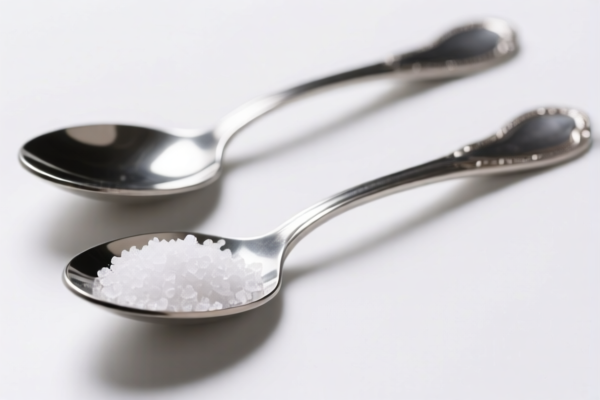
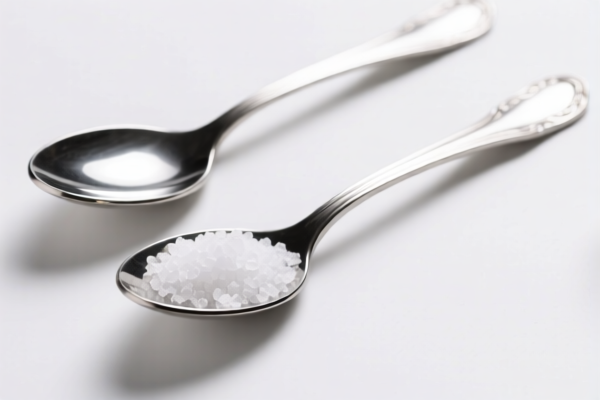
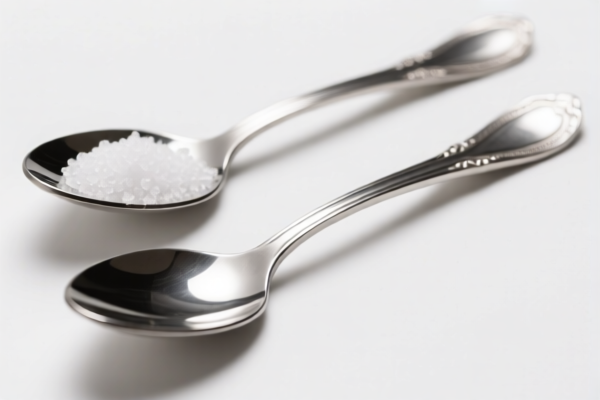
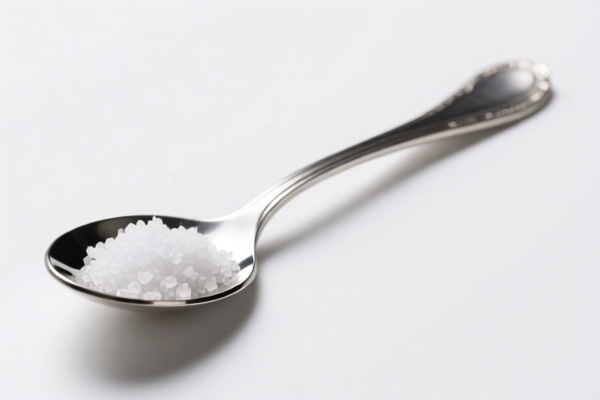
AI分析
🌟 Rosin Gold Salt (Gourmet & Decorative Edible Gold Leaf)
🌐 HS Code Reference & Customs Clearance Guide | 2026 Latest Tariff Analysis | Professional Entry Strategies
📌 I. Product Definition & Classification: What is "Rosin Gold Salt"?
"Rosin Gold Salt" typically refers to one of two distinct products in international trade, though the term is often a misnomer or a marketing label for Edible Gold Flake/Leaf mixed with or applied to coarse salt crystals, or simply Edible Gold Leaf itself (where "Rosin" may refer to the resinous binder used in traditional gold leaf processing, or is a typo for "Rosy" or a specific brand).
However, based on standard trade practices, we must distinguish between:
- Edible Gold Leaf/Flake (Most Likely): Pure gold (23–24 karat) sheets or flakes used for garnishing food. The term "Rosin" might refer to the traditional paper backing (rice paper/gampi paper) often used to handle delicate gold leaf, or it could be a specific variant.
- Gourmet Seasoning (Gold-Infused Salt): Salt crystals coated with edible gold or mixed with gold dust.
- Industrial/Artistic Gold Leaf: Non-edible gold leaf used for gilding, often backed with rosin/resin for application.
⚠️ Key Distinction Point:
- If intended for human consumption (food garnish) → Classify under Chapter 71 or Chapter 9 (if processed as a food additive/specialty item). Note: Pure gold itself is 7108, but edible preparations often fall under 9105 or 2106 depending on country.
- If non-edible (art/craft supply) → Classify under 7116 (Gold leaf for gilding) or 7115 (Gold plating).
- If mixed with salt (seasoning) → Classify under Chapter 9 (Salt) or Chapter 21 (Mixed condiments), with the value heavily skewed by the gold content.
Most Common Interpretation for "Rosin Gold": In many contexts, "Rosin Gold" is a typo for "Rose Gold" (an alloy) or a specific type of Edible Gold Leaf backed with paper. However, since "Salt" is explicitly mentioned, we assume the product is Edible Gold-Infused Salt or Gold Leaf for Food Decoration.
For customs purposes, Edible Gold Leaf is often treated as a precious metal product or a specialty food ingredient. Let’s analyze the most likely HS Codes.
📦 II. HS Code Classification Details (2026 Latest Tariff Authority)
| HS Code | Product Description | Applicable Scenario | Edible? | Includes Gold Content? |
|---|---|---|---|---|
7108.12.00.00 |
Gold (including platinum-group metals), unwrought or in powder form | Bulk gold powder/flake not for jewelry | ❌ No (Raw Material) | ✅ Yes |
7108.13.00.00 |
Gold (including platinum-group metals), semi-manufactured | Gold leaf, gold foil for gilding | ❌ No (Craft/Industrial) | ✅ Yes |
7115.90.00.00 |
Gold leaf and other gold foil for gilding (incl. leaf backed with paper) | Edible gold leaf (if not classified as food) | ⚠️ Debatable (Often 9105) | ✅ Yes |
9105.00.00.00 |
Precious metal leaf (incl. foils) for jewelry making | Less common for food use | ❌ No | ✅ Yes |
2103.90.00.00 |
Sauces and preparations therefor; mixed condiments and seasonings | Gold-infused salt (as a seasoning) | ✅ Yes | ⚠️ Minor value |
0910.99.00.00 |
Ginger, saffron, turmeric, thyme, bay leaves, curry and other spices | Salt (if classified as a spice/seasoning) | ✅ Yes | ❌ No (if gold is negligible) |
🔍 Critical Note for "Rosin Gold Salt":
- If it is 99% Salt + Tiny Trace of Gold: It is likely classified as Salt (2501.00) or Seasoning (2103) with no special gold tariff, as the gold content is negligible.
- If it is Significant Gold Leaf: It falls under 7108/7115 (Precious Metals).
- If it is a Gourmet Food Garnish: Many countries (e.g., US) classify Edible Gold Leaf under 7108.13 or 9105, while Gold-Infused Salt may be 2103.90 or 2501.00 depending on the value ratio.
Assumption for This Guide: We will cover the High-Value Scenario (Edible Gold Leaf/Flake) and the Gourmet Seasoning Scenario (Gold-Salt Mix).
💰 III. 2026 Latest Tariff Rate Breakdown (Including Surcharges & Policies)
✅ Applicable Country: United States (US)
✅ Origin: China (CN)
✅ Effective Date: 2025-11-10 onwards
🎯 1. 7108.12.00.00 / 7108.13.00.00 —— Gold Leaf / Powder (Edible or Non-Edible)
| Item | Content |
|---|---|
| Base Tariff | 0% (ad valorem) |
| Section 301 Tariff (USITC) | +25% (Footnote 9903.88.01) |
| IEEPA Surcharge | +10% (China/Hong Kong products, effective 2025-11-10) |
| Total Tariff | 35% |
| Calculation | CIF Value × 35% |
| De Minimis Exemption | ❌ Not Eligible (Precious metals are often excluded or have high thresholds) |
| Legal Basis Path | USITC:7108.12.00.00 → FOOTNOTE:9903.88.01 → IEEPA:9903.01.25 |
📌 Explanation:
- Gold leaf, whether edible or for gilding, is considered a precious metal product.
- The 25% Section 301 tariff applies to gold products from China.
- The 10% IEEPA surcharge adds to the cost for Chinese-origin goods.
- Total: 35%. This is a high tariff for a low-weight, high-value item.
🎯 2. 2103.90.00.00 —— Gold-Infused Salt (Gourmet Seasoning)
| Item | Content |
|---|---|
| Base Tariff | 5% (ad valorem) |
| Section 301 Tariff | +25% |
| IEEPA Surcharge | +10% |
| Total Tariff | 40% |
| Calculation | CIF Value × 40% |
| De Minimis Exemption | ❌ Not Eligible (Likely exceeds $800 threshold if high-value, or excluded due to gold content) |
| Legal Basis Path | USITC:2103.90.00.00 → FOOTNOTE:9903.88.01 → IEEPA:9903.01.25 |
📌 Explanation:
- If classified as a condiment/seasoning, the base rate is 5%.
- However, the 25% Section 301 and 10% IEEPA surcharges apply, resulting in 40%.
- Risk: Customs may reclassify as gold (7108) if the gold content is significant, leading to 35%.
🎯 3. 2501.00.00.00 —— Common Salt (If Gold Content is Negligible)
| Item | Content |
|---|---|
| Base Tariff | 0% |
| Section 301 Tariff | 0% (Salt is often exempt or low-tariff) |
| IEEPA Surcharge | +10% |
| Total Tariff | 10% |
| Calculation | CIF Value × 10% |
| De Minimis Exemption | ✅ Eligible (if under $800) |
| Legal Basis Path | USITC:2501.00.00.00 → IEEPA:9903.01.25 |
📌 Explanation:
- If the product is primarily salt with a microscopic amount of gold dust (for color), it may be classified as Salt (2501).
- Total Tariff: 10%.
- Advantage: Lower tariff, potential for de minimis exemption if shipped as a small package.
🛠️ IV. Customs Clearance Practical Advice (Battle-Tested Pitfall Guide)
✅ 1. Documentation Checklist (Non-Negotiable)
| Document | Required | Description |
|---|---|---|
| ✅ Product Specification Sheet | ✔️ | Must specify: Gold Purity (e.g., 23K/24K), Form (Leaf/Powder), Intended Use (Edible/Non-Edible) |
| ✅ Composition Analysis | ✔️ | % of Gold vs. % of Salt/Carrier. Critical for correct HS Code. |
| ✅ Food Safety Certificate | ✔️ | If edible: FDA Prior Notice, HACCP, Halal/Kosher (if applicable) |
| ✅ Certificate of Origin | ✔️ | To determine eligibility for tariffs or exemptions |
| ✅ Commercial Invoice | ✔️ | Clearly state: "Edible Gold Leaf, 24K, 1g" or "Gourmet Salt with Gold Dust, 100g" |
| ✅ Safety Data Sheet (SDS) | ✔️ | Required for all shipments, especially if gold is in powder form |
✅ 2. Declaration Tips (Key Mantra)
🔥 "Gold Content Defines Code, Edibility Defines Certs!"
| Scenario | Correct Declaration | Wrong Practice |
|---|---|---|
| Edible Gold Leaf | 7108.13.00.00 + FDA Prior Notice |
Declare as "Salt" → Smuggling/False Declaration |
| Gold-Infused Salt (Low Gold) | 2501.00.00.00 + "Seasoning" |
Declare as "Gold Leaf" → Overpaying 35% vs 10% |
| Non-Edible Gold Leaf | 7115.90.00.00 |
Declare as "Edible" → Food Safety Violation |
| Small Package (<$800) | De Minimis Claim (if Salt) | Assume Tax-Free → Seizure if Gold Content is High |
✅ 3. Special Handling
| Situation | Recommendation |
|---|---|
| High-Value Gold Leaf | Use Bonded Warehouse to defer taxes until sale |
| Edible Gold | Provide FDA Prior Notice number on CBP entry |
| Gold Powder | Treat as Hazardous Material if fine dust; ensure proper packaging |
| Small Gifts (<$800) | If classified as Salt (2501), may be duty-free under de minimis. If Gold (7108), TAXES APPLY. |
🌍 V. Global Market Comparison (2026 Latest)
| Country/Region | Recommended HS Code | Tariff | Certification | Notes |
|---|---|---|---|---|
| 🇺🇸 US | 7108.13.00.00 or 2501.00.00.00 |
35% (Gold) or 10% (Salt) | FDA, CBP | High scrutiny on gold content |
| 🇨🇳 China | 7108.12.00.00 or 2501.00.00.00 |
0% (Gold Import) or 6% (Salt) | CIQ | Gold imports restricted for individuals |
| 🇪🇺 EU | 7108.13.00.00 |
0% (Gold) | CE (if cosmetic) | No duty on raw gold; VAT applies |
| 🇬🇧 UK | 7108.13.00.00 |
0% (Gold) | UKCA | Post-Brexit rules apply |
| 🇯🇵 Japan | 7108.13.00.00 |
0% (Gold) | FSC (Food) | Strict food safety checks |
📌 Conclusion:
- US has the highest tariffs for gold products (35% + 10%).
- EU/UK/Japan offer 0% duty on gold, making them more cost-effective for gold leaf imports.
- Classification as Salt saves money in the US but requires proof of negligible gold content.
📌 VI. Common Mistakes & Pitfalls (Blood & Tears Lessons)
❌ Mistake 1: Declaring Edible Gold Leaf as "Salt" to avoid 35% tariff
👉 Consequence: Customs audit reveals gold content → Penalty + Back Taxes + Seizure
❌ Mistake 2: Ignoring FDA Prior Notice for edible gold leaf
👉 Consequence: Refused Entry into US ports of entry
❌ Mistake 3: Not specifying Gold Purity (Karat)
👉 Consequence: Customs assigns highest possible duty rate → Overpayment
❌ Mistake 4: Shipping Gold Powder without proper hazardous labeling
👉 Consequence: Carrier Rejection or Safety Violation Fines
✅ Correct Practice:
"Edible Gold Leaf, 24 Karat, 1 Gram, for Food Garnish Only. FDA Prior Notice: [Number]. Composition: 100% Gold."
🎯 VII. Conclusion: Precision in Classification Saves Money!
🎯 Remember the Mantra:
🔹 "Gold Content = High Tariff (35%) in US"
🔹 "Negligible Gold = Low Tariff (10%) in US"
🔹 "Edible = FDA + Food Safety"
🔹 "Non-Edible = Craft/Industrial"
📌 Pro Tip:
If you are importing small quantities of gold-infused salt for personal use (<$800), ensure the gold content is minimal and declare as "Seasoning" to potentially qualify for de minimis exemption. However, if the gold value is significant, declare accurately to avoid penalties.
📣 Immediate Action:
📞 Contact a Licensed Customs Broker
📄 Provide Product Samples & Composition Analysis
🚀 Get an Advance Ruling from CBP to confirm HS Code
💼 Ensure FDA Compliance for all edible products
✨ Professional Customs Clearance, Starting with Accurate Classification!
💼 Your Every Penny Should Be Precisely Calculated!
用户评价
关于 HS 编码归类
协调制度(HS)是由世界海关组织(WCO)制定的国际贸易商品分类标准。全球 200 多个国家采用 HS 系统作为海关关税、贸易统计和进出口监管的基础。
每个 HS 编码遵循以下层级结构:
- 章(2 位)——商品大类(例如:第 84 章:机器和机械设备)
- 品目(4 位)——章内的更具体分类
- 子目(6 位)——国际通用细分,所有 WCO 成员国统一使用
- 本国细分(8-10 位)——各国自行扩展的细分编码,如美国 HTSUS 10 位编码
正确的 HS 编码归类对于顺利通关、准确缴纳关税和遵守贸易法规至关重要。错误归类可能导致海关延误、多缴关税或罚款。
从CN进口到US时,适用的关税税率可能包括:
- 最惠国(MFN)税率——适用于 WTO 成员国的标准关税税率
- 普通税率——适用于无贸易协定国家
- 贸易救济关税——附加关税,如 301 条款(反倾销)、232 条款(国家安全)或反补贴税
本页内容仅供参考。如需正式归类,请咨询当地海关或持牌报关代理。