rough coniferous timber over 15 cm
CN → US| HS编码 | 关税税率 | 原产国 | 目的国 | 文档 |
|---|---|---|---|---|
| 4403250164 | 35.0% | CN | US | 官方文档 |
| 4407190056 | 35.0% | CN | US | 官方文档 |
| 4401110000 | 35.0% | CN | US | 官方文档 |
| 4403210130 | 35.0% | CN | US | 官方文档 |
| 4407110052 | 35.0% | CN | US | 官方文档 |
商品图片
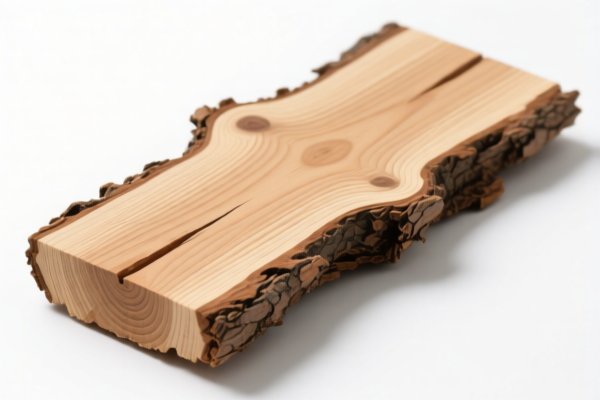
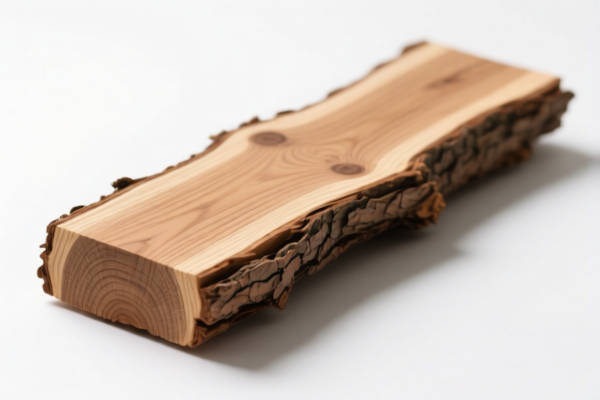
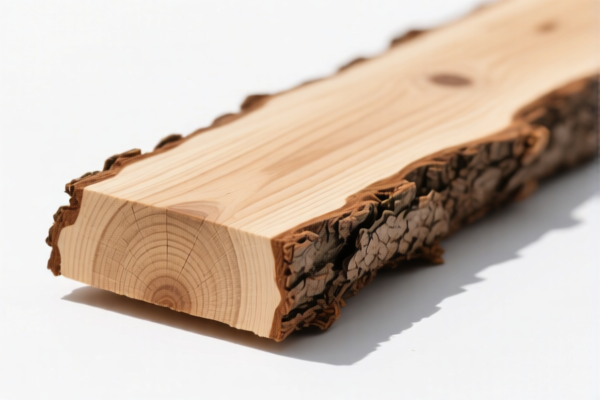
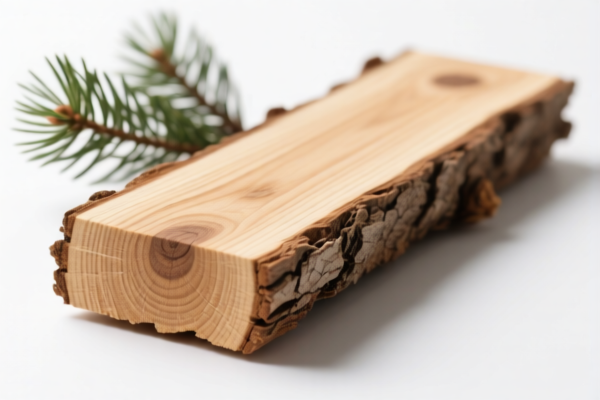
AI分析
🌲 Rough Coniferous Timber Over 15 cm (Cross-Sectional Dimension)
🌐 HS Code Reference & Customs Clearance Guide | 2026 Latest Tariff Analysis | Professional通关 Strategy
📌 I. Product Definition & Classification: What Exactly is "Rough Coniferous Timber"?
Rough coniferous timber refers to wood that has been sawn, chipped, or roughly squared but not planed, tongued, grooved, or otherwise finished. It is primarily used for construction, packaging, pulping, or further processing.
Key Distinction:
Cross-Sectional Dimensions: The critical factor here is the size. For coniferous timber, a cross-section where the greatest dimension exceeds 15 cm (approx. 6 inches) generally falls under heading 4403 (Wood treated with preservatives or rough sawn/chipped wood).
Less than 15 cm: Often falls under 4407 (Sawn wood) or 4401 (Fuel wood/Chips), depending on processing.
* Species: "Coniferous" refers to evergreen trees like Pine, Spruce, Fir, and Larch.
⚠️ Critical Compliance Point:
- If the timber is roughly squared (not fully processed into lumber) AND the cross-section is >15 cm, it is typically classified under 4403.25 or 4403.21.
- If it is roughly sawn (not squared) and >15 cm, it may fall under 4407.19 or 4407.11, depending on specific trade definitions and recent updates.
- Note: The provided contains multiple HS codes for similar descriptions due to slight variations in "rough sawn" vs. "roughly squared" and specific sub-category definitions. We will analyze each provided code below.
📦 II. HS Code Classification Details (Based on Provided )
The following HS codes are extracted directly from the provided data. All are subject to the same high tariff structure.
| HS Code | Product Description (Translated from ) | Key Characteristics | Cross-Section Limit |
|---|---|---|---|
4403.25.01.64 |
Roughly squared coniferous timber, dimensions ≥ 15 cm | Squared off, not planed | ≥ 15 cm |
4407.19.00.56 |
Roughly sawn coniferous wood, dimensions ≥ 12.7 cm | Sawed, not squared | ≥ 12.7 cm (5 inches) |
4401.11.00.00 |
Coniferous rough squared wood, fuel wood form | Specifically for fuel/biomass | N/A (Fuel form) |
4403.21.01.30 |
Rough sawn or roughly squared coniferous timber, cross-section ≥ 15 cm | Mixed processing (sawn/squared) | ≥ 15 cm |
4407.11.00.52 |
Roughly processed coniferous wood, consistent form & material | General rough wood | N/A (General) |
🔍 重点提醒 (Critical Reminder):
- All these codes are for Chinese-origin goods subject to US tariffs.
- The distinction between4403(Sawn wood, rough) and4407(Sawn wood, finished or further processed) can be complex. However, in this data, both are subject to the same 35% total tax rate.
- Size Matters:4407.19allows for ≥ 12.7 cm, while4403.25and4403.21require ≥ 15 cm. Misdeclaring size can lead to classification errors.
💰 III. 2026 Latest Tariff Rate Breakdown (Including Surtaxes & Policy Add-ons)
✅ Applicable Country: United States (US)
✅ Country of Origin: China (CN)
✅ Effective Date: Ongoing (Subject to Section 301 & IEEPA rules)
🎯 Universal Tax Structure for All Listed HS Codes
All HS codes in the provided data (4403.25.01.64, 4407.19.00.56, 4401.11.00.00, 4403.21.01.30, 4407.11.00.52) share the identical tariff structure:
| Tax Component | Rate | Legal Basis | Description |
|---|---|---|---|
| Base Tariff | 0.0% | USHTS | Standard MFN rate for these wood products is often 0% or very low. |
| Section 301 Surcharge | +25.0% | USITC Footnote 9903.88.01 | Trump/Biden era tariffs on Chinese goods under Section 301. |
| IEEPA Tariff (Section 122) | +10.0% | IEEPA:9903.01.25 | Executive Order tariffs on Chinese imports under International Emergency Economic Powers Act. |
| Total Tax Rate | 35.0% | Sum of 0% + 25% + 10% |
📌 Explanation:
- Base Tariff (0%): The standard US tariff for rough timber is minimal.
- Section 301 Tariff (25%): This is the significant penalty for Chinese-made wood products.
- IEEPA Tariff (10%): An additional layer of tariff applied specifically to Chinese goods.
- Total Impact: Importers face a 35% tax on the CIF (Cost, Insurance, Freight) value of the goods. This is a very high effective duty rate.🚫 De Minimis Exemption?
- ❌ NOT ELIGIBLE.
- Wood products are explicitly excluded from the $800 de minimis exemption (Section 321) when subject to Section 301 or IEEPA tariffs. All shipments must be formally entered with duties paid.
🛠️ IV. Customs Clearance Practical Advice (Real-World Pitfall Guide)
✅ 1. Documentation Checklist (Mandatory)
| Document | Required? | Notes |
|---|---|---|
| Commercial Invoice | ✅ Yes | Must clearly state "Rough Coniferous Timber," dimensions, and species. |
| Packing List | ✅ Yes | Detail cross-sectional dimensions (cm/inches) to justify HS Code. |
| Phytosanitary Certificate | ✅ Yes | Crucial! Required to prove wood is free from pests (ISPM 15 standards). |
| Fumigation Certificate | ✅ Yes | If wood is not ISPM 15 marked. |
| Bill of Lading (B/L) | ✅ Yes | Ensure description matches invoice. |
| HS Code Pre-Ruling | ✅ Recommended | Given the complexity, an advance ruling from US CBP is highly advised. |
✅ 2. Declaration Tips (Key Mantras)
🔥 "Size Defines Code, Species Defines Duty, Phytosanitary Prevents Rejection!"
| Scenario | Correct Declaration | Wrong Declaration | Consequence |
|---|---|---|---|
| Wood ≥ 15 cm, Roughly Squared | 4403.25.01.64 |
4407.19.00.56 |
Potential penalty, delay. |
| Wood ≥ 12.7 cm, Roughly Sawn | 4407.19.00.56 |
4403.25.01.64 |
Incorrect classification. |
| Fuel Wood Form | 4401.11.00.00 |
4403.21.01.30 |
Different use-case, same tax but wrong description. |
| No Phytosanitary Cert | N/A | Ship without cert | Goods Destroyed or Returned! |
✅ 3. Special Circumstances
| Situation | Handling Advice |
|---|---|
| Mixed Shipments | If a container has both <15 cm and >15 cm wood, split the shipment. <15 cm may have lower tariffs. |
| Treated Wood | If wood is chemically treated, ensure the treatment is declared. Some treatments may alter the HS code. |
| ISPM 15 Marking | Ensure all pallets and wood packaging bear the IPPC mark. Non-compliant packaging can lead to rejection. |
| Tariff Engineering | Consider if further processing (e.g., planing) changes the HS code. However, planed wood often falls under 4407.11 which may still have high tariffs. Consult a trade lawyer. |
🌍 V. Global Market Comparison (2026 Latest)
| Country/Region | Recommended HS Code | Tariff Rate (China Origin) | Certification | Notes |
|---|---|---|---|---|
| 🇺🇸 USA | 4403.25.01.64 etc. |
35% (25% Sec 301 + 10% IEEPA) | Phytosanitary, ISPM 15 | Highest cost. |
| 🇨🇳 China | 4403.25.01.64 etc. |
0% (Import duty) | N/A | Domestic trade. |
| 🇪🇺 EU | 4403.25.01.64 etc. |
0% - 6% (depending on species) | EUTR (EU Timber Regulation) | No Section 301, but strict EUTR compliance. |
| 🇬🇧 UK | 4403.25.01.64 etc. |
0% - 6% | UK TR (UK Timber Regulation) | Post-Brexit rules. |
| 🇨🇦 Canada | 4403.25.01.64 etc. |
0% (Under CUSMA/USMCA if Canadian origin) | CITES (if endangered species) | Preferential if from US/Mexico. |
📌 Conclusion:
- The US market is exceptionally expensive for Chinese rough timber due to the 35% total tax burden.
- Competitors from Vietnam, Thailand, or Canada (if origin allows) have a significant advantage.
- Strict phytosanitary compliance is non-negotiable in the US.
📌 VI. Common Mistakes & Pitfall Guide (Blood & Tears Lessons)
❌ Mistake 1: Declaring "Timber" without specifying cross-sectional size.
👉 Consequence: CBP may reclassify, leading to back-taxes and penalties.
❌ Mistake 2: Ignoring the 12.7 cm vs. 15 cm threshold.
👉 Consequence: Using 4407.19 (≥12.7 cm) for wood ≥15 cm may be incorrect if it's roughly squared. Misclassification risks audits.
❌ Mistake 3: Omitting Phytosanitary Certificate.
👉 Consequence: Immediate seizure and destruction of the cargo by USDA/APHIS.
❌ Mistake 4: Assuming "Rough Sawn" is cheaper than "Roughly Squared".
👉 Consequence: Both are taxed at 35% in this data set. Focus on logistics cost, not tariff saving via HS code.
✅ Correct Approach:
"Roughly Squared Coniferous Timber, Pine Species, Cross-Section 16cm x 16cm, Length 2.4m, ISPM 15 Marked, Phytosanitary Cert Attached"
🎯 VII. Conclusion: Professional Declaration, Save Money, Avoid Delays
🎯 Remember the Mantra:
🔹 "Size is King: >15 cm = 4403, ≥12.7 cm = 4407"
🔹 "35% Tax is Real: 25% Sec 301 + 10% IEEPA"
🔹 "Phytosanitary is Mandatory: No Cert = No Entry"
🔹 "Pre-Ruling is Wise: Avoid CBP Re-classification Fines"
📌 Pro Tip:
If your timber is sourced from Vietnam, Malaysia, or Indonesia, check for US Trade Act Section 301 exclusions or Country-of-Origin benefits. However, for Chinese-origin rough timber, the 35% tariff is unavoidable.
Recommendation:
📞 Consult a Customs Broker for an Advance Ruling.
📄 Ensure Phytosanitary Certs are flawless.
📦 Verify ISPM 15 marking on all wood packaging.
📣 Take Action Now:
🚀 Audit your supply chain: Can you source from non-China origins to avoid the 35% tax?
📝 Prepare documents: Invoice, B/L, Phytosanitary Cert, Packing List.
💼 Hire a professional: Don't risk $100,000+ in back-taxes and demurrage fees.
✨ Professional Customs Clearance Starts with Accurate Classification!
💼 Every Percent Saved is Profit Gained!
用户评价
关于 HS 编码归类
协调制度(HS)是由世界海关组织(WCO)制定的国际贸易商品分类标准。全球 200 多个国家采用 HS 系统作为海关关税、贸易统计和进出口监管的基础。
每个 HS 编码遵循以下层级结构:
- 章(2 位)——商品大类(例如:第 84 章:机器和机械设备)
- 品目(4 位)——章内的更具体分类
- 子目(6 位)——国际通用细分,所有 WCO 成员国统一使用
- 本国细分(8-10 位)——各国自行扩展的细分编码,如美国 HTSUS 10 位编码
正确的 HS 编码归类对于顺利通关、准确缴纳关税和遵守贸易法规至关重要。错误归类可能导致海关延误、多缴关税或罚款。
从CN进口到US时,适用的关税税率可能包括:
- 最惠国(MFN)税率——适用于 WTO 成员国的标准关税税率
- 普通税率——适用于无贸易协定国家
- 贸易救济关税——附加关税,如 301 条款(反倾销)、232 条款(国家安全)或反补贴税
本页内容仅供参考。如需正式归类,请咨询当地海关或持牌报关代理。