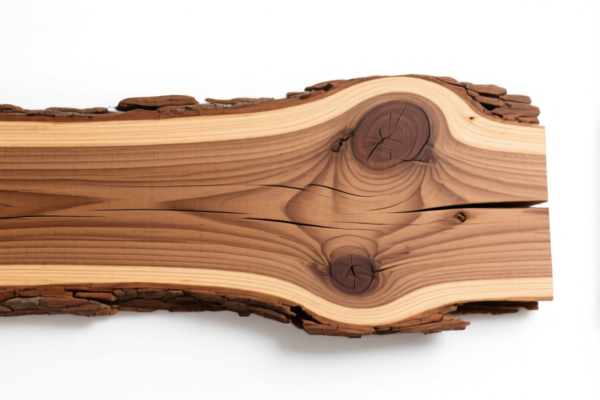
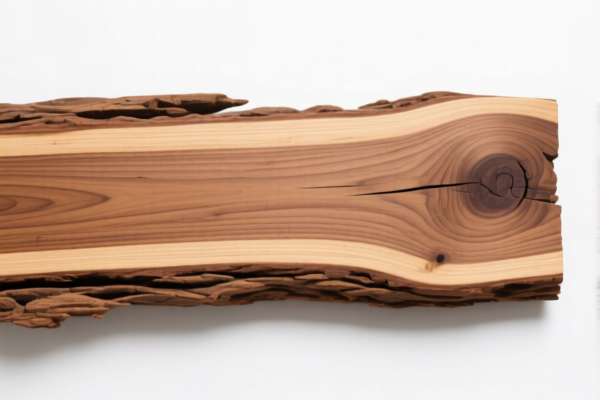
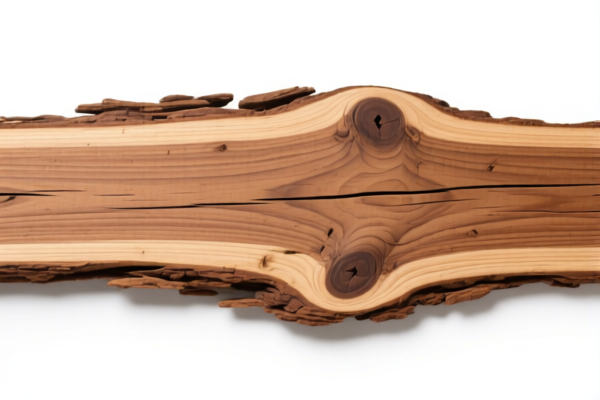
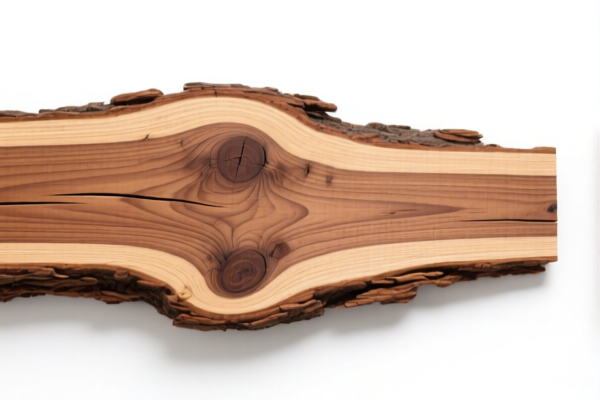
rough pine wood pile
CN → US| HS编码 | 关税税率 | 原产国 | 目的国 | 文档 |
|---|---|---|---|---|
| 4407110042 | 35.0% | CN | US | 官方文档 |
| 4407110044 | 35.0% | CN | US | 官方文档 |
商品图片
AI分析
🌲 Rough Pine Wood Pile (Unprocessed Sawnwood)
🌐 HS Code Reference & Customs Clearance Guide | 2026 Latest Tariff Analysis | Professional Entry Strategy
📌 I. Product Definition & Classification: Do You Know What "Rough Pine Wood" Really Is?
"Rough Pine Wood Pile" refers to coniferous wood that has been sawn, chipped, sliced, or peeled lengthwise. Crucially, it is not treated (chemically preserved) and remains in its "Rough" state (unplaned, unsanded, or end-jointed).
In international trade, this falls under Chapter 44: Wood and articles of wood. The classification depends entirely on the pine species and the state of processing (Rough vs. Treated/Planed).
⚠️ Key Distinction Point:
- If the wood is Rough (unplaned/un-sanded) and Not Treated: It is classified under 4407.11.
- If the wood is Planed/Sanded or Treated: It falls under different subheadings (not covered in this specific dataset).
- Species Matters: Different pine species (e.g., Eastern White Pine vs. Lodgepole Pine) have different tariff treatments, specifically regarding punitive "Additional Tariffs."
📦 II. HS Code Classification Details (Based on Provided Data)
| HS Code | Product Description | Condition | Species | Tax Rate |
|---|---|---|---|---|
| 4407.11.00.42 | Wood of Pine (Pinus spp.), Rough, Not Treated | Unplaned, Raw | Eastern White Pine (Pinus strobus) & Red Pine (Pinus resinosa) | 25.0% |
| 4407.11.00.44 | Wood of Pine (Pinus spp.), Rough, Not Treated | Unplaned, Raw | Lodgepole Pine (Pinus contorta) | 0.0% |
🔍 Critical Note:
- Both codes belong to 4407.11: "Wood sawn... of a thickness exceeding 6 mm: Coniferous: Of pine... Not treated: Rough."
- The only difference is the specific pine species and the resulting tax rate.
- 4407.11.00.42 carries a 25% Additional Tariff.
- 4407.11.00.44 has 0% Additional Tariff.
💰 III. 2026 Latest Tariff Rate Breakdown (Detailed Tax Clauses)
✅ Applicable Context: Based on the provided data, these rates reflect the total effective tax including base duties and additional levies.
🎯 1. 4407.11.00.42 — Rough Eastern White Pine & Red Pine
| Item | Content |
|---|---|
| Base Tariff | 0.0% |
| Additional Tariff | +25.0% |
| Total Tax Rate | 25.0% |
| Tax Calculation | CIF Value × 25% |
| Legal Basis | Derived from "Tax Detail: Base Tariff: 0.0%, Additional Tariff: 25.0%" |
📌 Explanation:
- This code applies specifically to Eastern White Pine (Pinus strobus) and Red Pine (Pinus resinosa).
- The 25% additional tariff is likely a punitive or safeguard measure (common for specific Chinese-origin or strategically sensitive timber imports in certain markets like the US under Section 301 or similar trade remedies).
- Cost Impact: High. You must budget for a 25% tax burden on the CIF value.
🎯 2. 4407.11.00.44 — Rough Lodgepole Pine
| Item | Content |
|---|---|
| Base Tariff | 0.0% |
| Additional Tariff | 0.0% |
| Total Tax Rate | 0.0% |
| Tax Calculation | $0 (Duty-Free) |
| Legal Basis | Derived from "Tax Detail: Base Tariff: 0.0%, Additional Tariff: 0.0%" |
📌 Explanation:
- This code applies specifically to Lodgepole Pine (Pinus contorta).
- No additional tariffs are applied. This is a duty-free entry for this specific species.
- Cost Advantage: Significant. If your wood is Lodgepole Pine, you save 25% in tariffs compared to Eastern White/Red Pine.
🛠️ IV. Customs Clearance Practical Advice (Avoiding Pitfalls)
✅ 1. Prepare Documentation Checklist (Mandatory)
| Document | Required? | Description |
|---|---|---|
| ✅ Commercial Invoice | ✔️ | Must clearly state "Rough Pine Wood," "Not Treated," and exact species (Pinus strobus, Pinus resinosa, or Pinus contorta). |
| ✅ Packing List | ✔️ | Detail weight, dimensions, and number of bundles/piles. |
| ✅ Phytosanitary Certificate | ✔️ | Critical for Wood: Issued by the country of origin, confirming the wood is free from pests and diseases (ISPM 15 standard). |
| ✅ Species Declaration | ✔️ | Provide botanical proof or supplier declaration specifying the exact Pinus species. Misidentification leads to wrong HS Code and penalties. |
| ✅ Mill Certificate | ✔️ | Proof of treatment status ("Not Treated") and roughness (unplaned/un-sanded). |
✅ 2. Classification Tips (Key Mnemonics)
🔥 "Species Decide, Rough vs. Planed, Tax Changes!"
| Scenario | Correct HS Code | Tax Rate | Why? |
|---|---|---|---|
| Eastern White/Red Pine + Rough + Not Treated | 4407.11.00.42 |
25% | Specific species trigger additional tariff. |
| Lodgepole Pine + Rough + Not Treated | 4407.11.00.44 |
0% | Specific species exempt from additional tariff. |
| Any Pine + Planed/Sanded | Not in Data | Varies | Changes from "Rough" to "Planed" → Different HS. |
| Any Pine + Treated | Not in Data | Varies | Changes from "Not Treated" to "Treated" → Different HS. |
| Thickness ≤ 6mm | Not in Data | Varies | Chapter 44.07 applies only if > 6mm. |
✅ 3. Special Handling & Risk Management
| Situation | Recommendation |
|---|---|
| Mixed Species Pile | If your shipment contains both Eastern White Pine and Lodgepole Pine, you cannot combine them under one HS Code. You must separate them or declare separately. Mis-mixing leads to 25% overpayment or underpayment penalties. |
| Thickness Verification | Ensure all planks are > 6mm. If any are ≤ 6mm, they may fall under 4407.90 or other headings. Check physical samples. |
| Treatment Status | "Not Treated" is key. If the wood has any chemical preservative (even surface spray), it is "Treated" → Not covered by this specific dataset. It will likely face different codes and phytosanitary rules. |
| Origin Declaration | Confirm the country of origin. While base tariffs are 0%, additional tariffs (like the 25%) may apply only to specific origins (e.g., China). Check local trade agreements. |
🌍 V. Global Market Comparison (2026 Outlook)
| Market | Recommended HS Code | Tariff (Approx.) | Key Requirement |
|---|---|---|---|
| 🇺🇸 US (for 4407.11.00.42) | 4407.11.00.42 |
25% | Phytosanitary Cert, Section 301 Compliance |
| 🇺🇸 US (for 4407.11.00.44) | 4407.11.00.44 |
0% | Phytosanitary Cert |
| 🇨🇳 China | 4407.11.00 |
Varies (MFN) | Fumigation Certificate |
| 🇪🇺 EU | 4407.11.00 |
Varies (0-20%) | EUTR Due Diligence (Timber Regulation) |
📌 Conclusion:
- The 25% tax difference between pine species is massive.
- Accurate species identification is the #1 priority for cost optimization.
- Phytosanitary compliance is non-negotiable for all wood products.
📌 VI. Common Errors & Pitfalls (Lessons Learned)
❌ Error 1: Labeling all pine wood as "Rough Pine" without specifying species.
👉 Consequence: Customs may assign the 25% rate by default or hold shipment for clarification.
❌ Error 2: Assuming "Pine" is one uniform category.
👉 Consequence: Lodgepole (0%) vs. Eastern White (25%) → 25% cost discrepancy.
❌ Error 3: Ignoring the "> 6mm" rule.
👉 Consequence: Thin plywood or sheets may be misclassified → Penalties + Retreatment.
❌ Error 4: Not declaring "Not Treated."
👉 Consequence: If treated, it falls under different regulations (e.g., ISPM 15 marking required differently, different chemical safety rules).
✅ Correct Practice:
"Rough Sawn Wood, Eastern White Pine (Pinus strobus), Not Treated, Thickness > 6mm, Raw Logs/Planks"
🎯 VII. Conclusion: Precision Classification Saves Money!
🎯 Remember the Rules:
🔹 "Species is King: Lodgepole = Free, White/Red = 25%."
🔹 "Rough & Untreated: Stick to 4407.11."
🔹 "Phytosanitary Cert is Mandatory – No Cert, No Entry."
📌 Pro Tip:
If you have a mixed shipment, consider sorting by species at origin. If Lodgepole Pine dominates, you can significantly reduce total tax burden. If Eastern White Pine dominates, factor the 25% cost into your pricing strategy.
📣 Immediate Action:
📞 Verify Species with your supplier (Botanical Name).
📄 Confirm Thickness (> 6mm).
🌿 Ensure Phytosanitary Certificate is in place.
🚀 Clear Customs Smoothly, Optimize Costs, Secure Supply Chain!
✨ Professional Classification, From Species Identification to Tax Savings!
💼 Your Timber, Your Terms, Your Compliance!
用户评价
关于 HS 编码归类
协调制度(HS)是由世界海关组织(WCO)制定的国际贸易商品分类标准。全球 200 多个国家采用 HS 系统作为海关关税、贸易统计和进出口监管的基础。
每个 HS 编码遵循以下层级结构:
- 章(2 位)——商品大类(例如:第 84 章:机器和机械设备)
- 品目(4 位)——章内的更具体分类
- 子目(6 位)——国际通用细分,所有 WCO 成员国统一使用
- 本国细分(8-10 位)——各国自行扩展的细分编码,如美国 HTSUS 10 位编码
正确的 HS 编码归类对于顺利通关、准确缴纳关税和遵守贸易法规至关重要。错误归类可能导致海关延误、多缴关税或罚款。
从CN进口到US时,适用的关税税率可能包括:
- 最惠国(MFN)税率——适用于 WTO 成员国的标准关税税率
- 普通税率——适用于无贸易协定国家
- 贸易救济关税——附加关税,如 301 条款(反倾销)、232 条款(国家安全)或反补贴税
本页内容仅供参考。如需正式归类,请咨询当地海关或持牌报关代理。