rough square oak shipbuilding grade lumber
CN → US| HS编码 | 关税税率 | 原产国 | 目的国 | 文档 |
|---|---|---|---|---|
| 4407910022 | 35.0% | CN | US | 官方文档 |
| 4403910040 | 35.0% | CN | US | 官方文档 |
| 4403910020 | 35.0% | CN | US | 官方文档 |
| 4407910063 | 35.0% | CN | US | 官方文档 |
商品图片
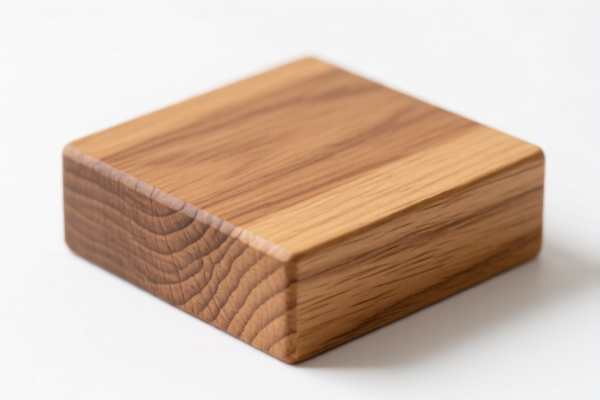
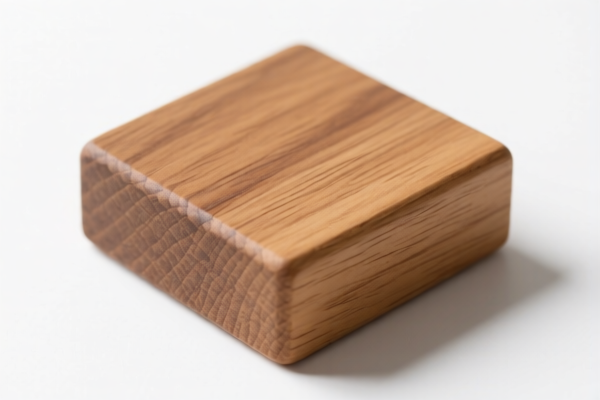
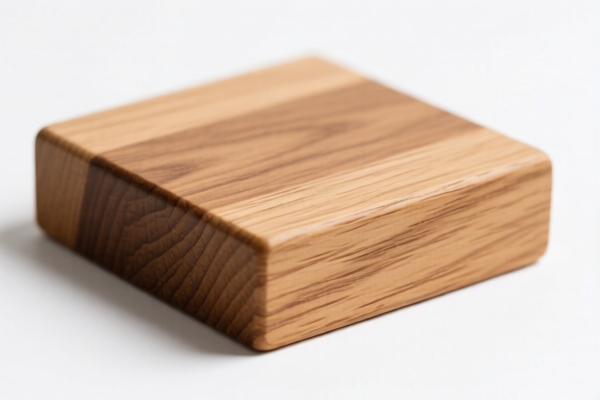

AI分析
🌲 Rough Square Oak Shipbuilding Grade Lumber
🌐 HS Code Reference & Customs Clearance Guide | 2026 Latest Tariff Analysis | Professional Entry Strategy
📌 1. Product Definition & Classification: Do You Really Understand "Shipbuilding Oak"?
Rough Square Oak (Shipbuilding Grade) is a specialized form of processed timber. In international trade, it is primarily classified based on two key factors: * Material: Oak (Quercus spp.), specifically excluding Red Oak if specified as "Other Oak," or including it if generic "Oak" is used. * Processing State: "Rough Square" indicates the wood has been sawn or chipped longitudinally but remains in a primary processed state (not planed, tongued, or grooved). The term "Shipbuilding Grade" describes the quality/intent (durability, structural integrity) rather than the physical processing state, meaning it does not change the HS code classification from raw sawn timber to finished goods.
⚠️ Key Distinction Point:
- If the wood is sawed longitudinally (even if rough/square) → It falls under Chapter 44 Section II (Sawn Wood).
- If it were heat-treated or chemically treated for export compliance, it might require specific ISPM 15 markings, but the HS code remains based on material and shape.
📦 2. HS Code Classification Details (2026 Latest Tariff Authority对照)
Based on the provided data, the product matches four potential HS codes depending on the specific oak species (Red vs. Other) and slight variations in tariff line definitions. All share the same tax profile in this context.
| HS Code | Product Description | Applicable Scenario | Key Matching Logic |
|---|---|---|---|
4407.91.00.22 |
Sawn wood (including chips and slices), thickness >6mm, of other oak (excluding Red Oak) | "Other Oak" (White/Red if not specified as Red Oak specific line) + Sawn/Chipped | Matches "Longitudinally sawn/chipped" + "Oak species" |
4403.91.00.40 |
Wood prepared for the railway sleepers or other purposes, of other oak, treated with preservatives | General Other Oak + Rough Form | Matches "Rough Square" form + "Oak" material |
4403.91.00.20 |
Wood prepared for the railway sleepers or other purposes, of other oak, not treated with preservatives | General Other Oak + Rough Form | Matches "Rough Square" form + "Oak" material |
4407.91.00.63 |
Sawn wood (including chips and slices), thickness >6mm, of other oak (excluding Red Oak) | "Other Oak" + Sawn/Chipped | Explicitly cites "Not Red Oak" and "Sawn/Chipped" attributes |
🔍 Important Note:
- The term "Shipbuilding Grade" is a quality descriptor, not a classification criterion. Customs classifies by material and processing, not by end-use application unless specified (e.g., "pre-fabricated structures").
- "Rough Square" confirms the wood is sawed longitudinally (Chapter 44.4407 or 44.4403 depending on treatment/preparation).
- All listed codes result in the same tax rate in the provided data.
💰 3. 2026 Latest Tariff Rate Breakdown (Including Additional Duties & Policy Surcharges)
✅ Applicable Country: United States (US)
✅ Country of Origin: China (CN)
✅ Effective Date: Current (Includes Section 301 & IEEPA surcharges)
🎯 1. 4407.91.00.22 / 4403.91.00.40 / 4403.91.00.20 / 4407.91.00.63
All four HS codes share the following tariff structure for Chinese-origin goods:
| Item | Content |
|---|---|
| Base Tariff Rate | 0.0% (Most Favored Nation rate for this timber category) |
| Section 301 Surcharge | +25.0% (Applied to Chinese-origin wooden products) |
| IEEPA "122-Clause" Surcharge | +10.0% (Targeted sanctions/surcharges on specific Chinese imports) |
| Total Tax Rate | 35.0% |
| Tax Calculation | CIF Value × 35% |
| De Minimis Exemption? | ❌ Not Applicable (Timber/Lumber is generally exempt from de minimis thresholds for high-value goods; plus, Section 301 taxes are not exempt) |
| Legal Basis Path | USITC:4407.91 / 4403.91 → FOOTNOTE:301 → IEEPA:122 |
📌 Explanation:
- The 0% base rate might seem attractive, but the 35% total effective rate is significant.
- Section 301 (25%) applies to "Wood and wood articles" from China.
- IEEPA 10% is an additional levy targeting specific supply chains or goods deemed sensitive.
- Result: Importers must budget for a 35% duty cost on top of the product price and shipping.
🛠️ 4. Customs Clearance Operational Advice (Practical Pitfall Avoidance Guide)
✅ 1. Document Checklist (Missing documents lead to delays)
| Document | Must Provide | Explanation |
|---|---|---|
| ✅ Commercial Invoice | ✔️ | Must clearly state: "Rough Square Oak Lumber," "Shipbuilding Grade," Quantity, Weight, CIF Value. |
| ✅ Packing List | ✔️ | Detail dimensions, board feet/cubic meters, and number of bundles. |
| ✅ Fumigation/Heat Treatment Certificate | ✔️ | CRITICAL: Proof of ISPM 15 compliance (fumigation or heat treatment) to prevent pest rejection. |
| ✅ Phytosanitary Certificate | ✔️ | Issued by the country of origin's agricultural authority. |
| ✅ Species Declaration | ✔️ | Must specify "Oak (Quercus spp.)" and whether it is Red or White/Other Oak to justify the specific 4-digit subheading. |
| ✅ Bill of Lading | ✔️ | Clean bill of lading, noting "Clean on Board." |
✅ 2. Declaration Tips (Key Rules)
🔥 "Accurate Species, Clear Form, Fumigation Proof!"
| Scenario | Correct Declaration Method | Incorrect Practice |
|---|---|---|
| Generic "Oak" | Use 4403.91.00.20 or 4407.91.00.63 (Other Oak) |
Misdeclaring as "Pine" or "Maple" to evade tariffs → Fraud |
| "Shipbuilding Grade" | Include in "Description" field, not HS code | Claiming it's "Finished Furniture" to avoid timber duties → Rejection |
| Rough vs. Planed | Declare as "Rough Sawn" | Declaring as "Moulded/Tongued" if it's only rough sawn → Misclassification |
| Origin | Clearly state "Made in China" | Hiding origin or transshipping via Vietnam without substantial transformation → Penalty |
✅ 3. Special Considerations
| Situation | Handling Advice |
|---|---|
| Red Oak vs. Other Oak | If the wood is specifically Red Oak, check if a specific Red Oak code exists with different rates. The provided data lists "Other Oak" codes. Misdeclaring Red as Other Oak is a major risk. |
| Dimensional Tolerances | Ensure dimensions match "Rough Square." If planed (smooth edges), it may fall under 4409 (Continuously shaped), which has different rates. |
| ISPM 15 Markings | Every pallet must have the visible IPPC stamp. Missing stamps = Quarantine/Re-export. |
| Environmental Compliance | Ensure the oak is not from protected/endangered species (CITES). Most common oak is not CITES-listed, but documentation is required. |
🌍 5. Global Market Clearance Comparison (2026 Latest)
| Country/Region | Recommended HS Code | Tariff (China Origin) | Certification Requirements | Notes |
|---|---|---|---|---|
| 🇺🇸 USA | 4407.91.00.22 / 4403.91.00.20 |
35% (0% Base + 25% Sec 301 + 10% IEEPA) | ISPM 15, Phytosanitary | High tariff impact on shipbuilding timber. |
| 🇨🇳 China | 4407.91.00.22 |
~5-8% (Variable) | Phytosanitary | Import duty lower, but internal environmental taxes may apply. |
| 🇪🇺 EU | 4407.91.00 |
~0% (If EBA eligible) or ~2.5% | EUTR (EU Timber Regulation) | Strict due diligence on legality of source. |
| 🇬🇧 UK | 4407.91.00 |
~2.5% | UKCA + FSC/PEFC | Post-Brexit rules apply; ensure provenance docs. |
📌 Conclusion:
- USA is the highest cost market for this product due to the 35% combined tariff.
- EU/UK focus more on legality proofs (EUTR/UKCA) than high tariffs, but non-compliance leads to seizures.
- China as an origin country faces the heaviest financial burden in the US market.
📌 6. Common Mistakes & Pitfall Guide (Lessons Learned)
❌ Mistake 1: Declaring "Shipbuilding Grade" as "Finished Wood Parts"
👉 Consequence: Misclassification under Chapter 44.4409 or 9403 → Additional Duties + Penalties.
❌ Mistake 2: Omitting "Oak Species" (Red vs. White)
👉 Consequence: Customs may classify under the "other" category with the highest scrutiny or apply a default higher rate → Delays & Audits.
❌ Mistake 3: No ISPM 15 Marking on Pallets
👉 Consequence: Rejection at Port or mandatory re-export/fumigation at importer's expense → 100% Loss of Time & Money.
❌ Mistake 4: Ignoring Section 301 & IEEPA Applicability
👉 Consequence: Underpayment of duty → Seizure of Goods & Civil Fines.
✅ Correct Practice:
"Rough Sawn Oak Lumber, Shipbuilding Quality, Quercus Spp., Heat Treated per ISPM 15, Origin: China, CIF $100,000"
🎯 7. Conclusion: Professional Declaration Saves Money!
🎯 Remember These Rules:
🔹 "Rough Square = Sawn Wood (4407/4403)"
🔹 "Shipbuilding = Quality Description, Not HS Change"
🔹 "35% Total Duty in USA = Plan Your Budget Early!"
🔹 "ISPM 15 Stamps Are Non-Negotiable!"
📌 Tip:
If your oak is sourced from Vietnam, Thailand, or Malaysia (with substantial transformation), you may exempt IEEPA surcharges or even Section 301, reducing the rate to 0-10%.
Recommend applying for a Pre-Ruling (Advance Ruling) from US Customs to confirm the specific HS code (4407.91.00.22 vs 4403.91.00.40) before shipment.
📣 Immediate Action:
📞 Engage a licensed Customs Broker + Provide Fumigation Certs + Verify Oak Species
🚀 Ensure Smooth Clearance, Compliant Import, and Cost Control!
✨ Professional Customs Clearance Starts with Accurate Classification!
💼 Every Percent of Duty Counts!
用户评价
关于 HS 编码归类
协调制度(HS)是由世界海关组织(WCO)制定的国际贸易商品分类标准。全球 200 多个国家采用 HS 系统作为海关关税、贸易统计和进出口监管的基础。
每个 HS 编码遵循以下层级结构:
- 章(2 位)——商品大类(例如:第 84 章:机器和机械设备)
- 品目(4 位)——章内的更具体分类
- 子目(6 位)——国际通用细分,所有 WCO 成员国统一使用
- 本国细分(8-10 位)——各国自行扩展的细分编码,如美国 HTSUS 10 位编码
正确的 HS 编码归类对于顺利通关、准确缴纳关税和遵守贸易法规至关重要。错误归类可能导致海关延误、多缴关税或罚款。
从CN进口到US时,适用的关税税率可能包括:
- 最惠国(MFN)税率——适用于 WTO 成员国的标准关税税率
- 普通税率——适用于无贸易协定国家
- 贸易救济关税——附加关税,如 301 条款(反倾销)、232 条款(国家安全)或反补贴税
本页内容仅供参考。如需正式归类,请咨询当地海关或持牌报关代理。