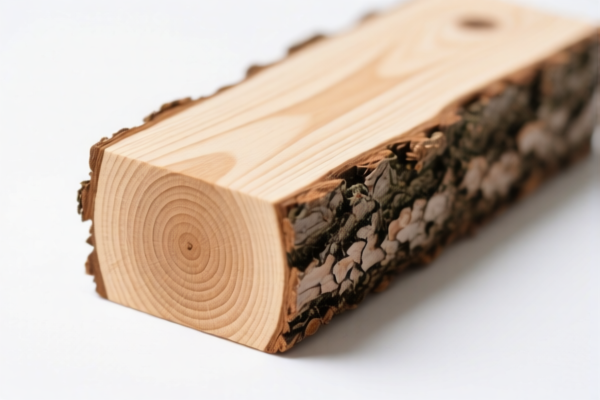
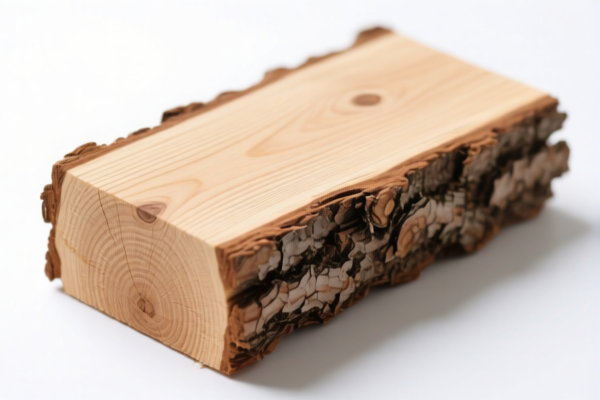
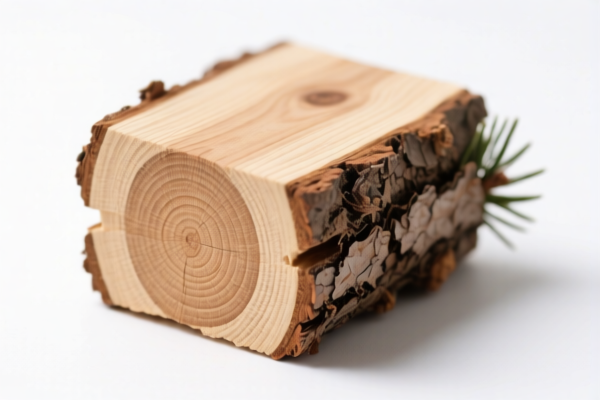
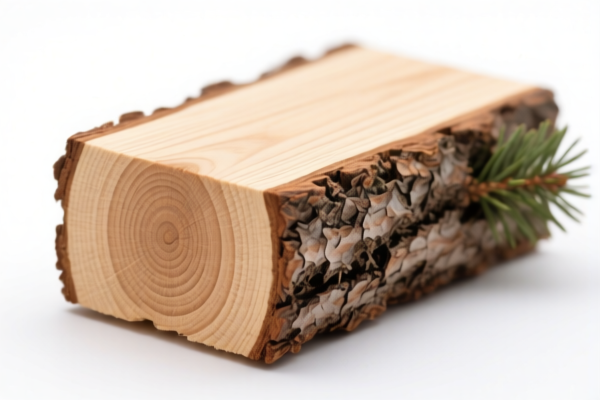
rough square pine and spruce wood
CN → US| HS编码 | 关税税率 | 原产国 | 目的国 | 文档 |
|---|---|---|---|---|
| 4407110042 | 35.0% | CN | US | 官方文档 |
| 4407120017 | 35.0% | CN | US | 官方文档 |
商品图片
AI分析
🪵 Rough Square Pine & Spruce Wood
(Pinus strobus, Pinus resinosa, Picea sitchensis)
🌐 HS Code Reference & Customs Clearance Guide | 2026 Latest Tariff Analysis | Professional Clearance Strategy
📌 I. Product Definition & Classification: What exactly is "Rough Square Wood"?
Rough square pine and spruce wood refers to sawn timber that has been cut to length and cross-section (square or rectangular) but remains unplaned and unsanded. It is the primary raw material for construction, furniture manufacturing, and pallet production.
In international trade, this category is strictly divided by tree species and surface treatment:
1. Eastern White Pine & Red Pine (Pinus strobus & Pinus resinosa)
- Species: Coniferous Pine.
- Treatment: Not treated.
- Surface: Rough (not planed/sanded).
2. Sitka Spruce (Picea sitchensis)
- Species: Coniferous Spruce/Fir.
- Treatment: Not treated.
- Surface: Rough (not planed/sanded).
⚠️ Critical Distinction:
- If the wood is planed, sanded, or end-jointed, it may fall under different subheadings (e.g., for furniture parts).
- If the thickness is ≤ 6 mm, it is classified as veneer sheets, not this category.
- "Rough" means the surface retains the marks of the saw; no fine finishing has been applied.
📦 II. HS Code Classification Details (2026 Official Tariff Match)
Based on the provided data, the specific HS codes for these products are strictly defined as follows:
| HS Code | Product Description | Key Characteristics |
|---|---|---|
| 4407.11.00.42 | Wood sawn lengthwise, of thickness > 6mm: Coniferous: Of pine (Pinus spp.) Other: Not treated: Eastern white pine (Pinus strobus) and red pine (Pinus resinosa): Rough | ✅ Pine species ✅ Thickness > 6mm ✅ Rough surface ✅ Not treated |
| 4407.12.00.17 | Wood sawn lengthwise, of thickness > 6mm: Coniferous: Of fir (Abies spp.) and spruce (Picea spp.) Other: Not treated: Sitka spruce (Picea sitchensis): Rough | ✅ Spruce species (Picea) ✅ Thickness > 6mm ✅ Rough surface ✅ Not treated |
🔍 Key Reminder:
- Species Accuracy is Paramount: Misidentifying Pinus strobus as general pine or Picea sitchensis as generic spruce can lead to incorrect HS code selection (e.g., using generic pine codes which may have different duty rates).
- "Rough" Definition: If you send these woods to a planer before declaration, the HS code must change. Do not declare planed wood as "Rough."
💰 III. 2026 Latest Tariff Rate Details (With Additional Duties)
✅ Applicable Country: United States (US)
✅ Origin: China (CN)
✅ Effective Date: Current trade policy applies
Both HS codes listed above carry the exact same tariff structure under current US-China trade regulations.
🎯 1. 4407.11.00.42 —— Eastern White Pine & Red Pine (Rough)
| Item | Content |
|---|---|
| Basic Tariff Rate | 0.0% |
| Additional Duty (Section 301 / Retaliatory) | +25.0% |
| Total Effective Tax Rate | 25.0% |
| Tax Calculation Basis | CIF Value × 25% |
| De Minimis Exemption | ❌ Not Applicable (Thresholds do not apply to large timber imports in this context) |
| Legal Basis | HTSUS 4407.11.00.42 + USITC Additional Duties Footnotes |
📌 Explanation:
- Although the base MFN (Most Favored Nation) tariff for wood is 0%, the 25% additional duty is applied due to Section 301 trade actions targeting Chinese goods.
- This is a high-cost import scenario. Profit margins must account for this significant levy.
🎯 2. 4407.12.00.17 —— Sitka Spruce (Rough)
| Item | Content |
|---|---|
| Basic Tariff Rate | 0.0% |
| Additional Duty (Section 301 / Retaliatory) | +25.0% |
| Total Effective Tax Rate | 25.0% |
| Tax Calculation Basis | CIF Value × 25% |
| De Minimis Exemption | ❌ Not Applicable |
| Legal Basis | HTSUS 4407.12.00.17 + USITC Additional Duties Footnotes |
📌 Note:
- Sitka Spruce is highly valued for musical instruments and aerospace applications. Despite its high unit value, it is subject to the same 25% additional duty as general pine timber.
- Ensure the botanical name (Picea sitchensis) is explicitly stated on the invoice to avoid classification disputes.
🛠️ IV. Customs Clearance Practical Advice (Avoid Pitfalls)
✅ 1. Required Documentation Checklist (Mandatory)
| Document | Must Provide? | Details |
|---|---|---|
| ✅ Commercial Invoice | ✔️ | Must explicitly state: "Rough Sawn Wood, Thickness > 6mm, Not Planed" |
| ✅ Bill of Lading | ✔️ | Check for "Clean on Board" status |
| ✅ Phytosanitary Certificate | ✔️ | Critical for Wood: Issued by origin country’s plant quarantine agency to confirm freedom from pests/disease |
| ✅ Fumigation Certificate | ✔️ | Often required in conjunction with the phytosanitary cert, showing ISPM 15 compliance (if pallets are used) |
| ✅ Packing List | ✔️ | Detail weight, dimensions, and number of bundles/pallets |
| ✅ Certificate of Origin | ✔️ | To prove origin (China) for duty calculation |
| ✅ Product Photos | ✔️ | Show rough texture and lack of planing/sanding to prove "Rough" classification |
📌 Warning:
- No Phytosanitary Cert = Automatic Rejection. US Customs and Border Protection (CBP) is extremely strict on wood imports to prevent invasive species.
- Ensure the thickness is clearly documented. If any piece is ≤ 6mm, it may be considered a veneer, complicating the shipment.
✅ 2. Declaration Tips (Key Mantras)
🔥 "Species Specific, Rough Surface, Thickness Clear, Phytosanitary Present!"
| Situation | Correct Declaration | Incorrect Practice |
|---|---|---|
| Pine Wood | 4407.11.00.42 + "Eastern White Pine/Rough" |
General "Pine Wood" → Risk of classification error |
| Spruce Wood | 4407.12.00.17 + "Sitka Spruce/Rough" |
Generic "Coniferous Wood" → Delayed inspection |
| Planed Wood | ❌ Do NOT use Rough HS Codes | Using Rough codes for planed wood → Smuggling accusation/Fines |
| Thickness < 6mm | ❌ Do NOT use these codes | Use Veneer HS codes (4408/4409) instead |
✅ 3. Special Cases Handling
| Case | Handling Advice |
|---|---|
| Mixed Shipments (Pine + Spruce) | Declare separately. Do not bundle different HS codes into one line item. |
| Moisture Content | Specify moisture content in specs. High moisture may require additional drying certificates or be rejected. |
| Origin Dispute | If wood is processed in a third country (e.g., Vietnam), it may lose Chinese origin preference/status. Ensure substatistical origin rules are met if exporting from China. |
| Tariff Exemption Claims | Currently, there are no broad exemptions for rough pine/spruce timber from China. Check for specific product exclusions lists annually, but expect 25%. |
🌍 V. Global Market Comparison (2026 Latest)
| Country/Region | Recommended HS Code | Tariff Rate (China Origin) | Certification Requirements | Notes |
|---|---|---|---|---|
| 🇺🇸 USA | 4407.11.00.42 / 4407.12.00.17 |
25% (Total) | Phytosanitary + ISPM 15 | High duty barrier. |
| 🇨🇳 China | 4407.11 / 4407.12 |
0% - 5% (Varies) | None for import (but strict for export) | Major consumer of such timber. |
| 🇪🇺 EU | 4407.10 / 4407.20 |
0% (If FLEGT/EUTR compliant) | EUTR Compliance (Due Diligence) | Strict legality proof required. |
| 🇯🇵 Japan | 4407.10 / 4407.20 |
0% - 3.2% | Fumigation Certificate | Preference for high-quality spruce. |
📌 Conclusion:
- The 25% additional duty makes China-origin rough pine and spruce wood significantly less competitive in the US market compared to domestic US or Canadian suppliers.
- Consider Value-Added Processing in a third country (if rules of origin allow) to mitigate duty, though this is complex for raw timber.
📌 VI. Common Errors & Pitfalls Guide (Blood-Letting Lessons)
❌ Error 1: Declaring "Planed" wood as "Rough"
👉 Consequence: Customs inspection reveals smooth surface → Reclassification + Penalty.
❌ Error 2: Missing Phytosanitary Certificate
👉 Consequence: Shipment quarantined or destroyed at port. No refunds.
❌ Error 3: Ignoring Thickness (< 6mm)
👉 Consequence: If any planks are thin veneers, the entire shipment may be audited for incorrect classification.
❌ Error 4: Vague Species Description ("Pine Wood")
👉 Consequence: CBP may classify under the most unfavorable generic code or hold shipment for botanical verification.
✅ Correct Practice:
"Rough Sawn Eastern White Pine Lumber, Pinus strobus, Thickness: 25mm, Not Planed, Fumigated, Phytosanitary Cert #XYZ Attached"
🎯 VII. Conclusion: Professional Declaration, Cost Control!
🎯 Remember the Mantra:
🔹 "Rough Surface, Raw Spec, Species Exact, Duty 25%!"
🔹 "No Phyto Cert, No Entry. 25% Tax, Budget Accordingly."
📌 Pro Tip:
If your timber is intended for construction framing, ensure it meets US Standard Grade or NDS (National Design Specification) requirements, which CBP may cross-check.
For musical instrument spruce, the 25% duty is a major cost driver; calculate carefully.
📣 Immediate Action:
📞 Contact a licensed customs broker to verify the latest ISPM 15 compliance.
🚀 Ensure Phytosanitary Certificates are issued by the official plant protection organization in the exporting country.
💼 Your timber shipment's success depends on precise species identification and rigorous documentation!
✨ Professional Clearance Starts with Accurate Classification!
💼 Every 25% counts. Plan wisely!
用户评价
关于 HS 编码归类
协调制度(HS)是由世界海关组织(WCO)制定的国际贸易商品分类标准。全球 200 多个国家采用 HS 系统作为海关关税、贸易统计和进出口监管的基础。
每个 HS 编码遵循以下层级结构:
- 章(2 位)——商品大类(例如:第 84 章:机器和机械设备)
- 品目(4 位)——章内的更具体分类
- 子目(6 位)——国际通用细分,所有 WCO 成员国统一使用
- 本国细分(8-10 位)——各国自行扩展的细分编码,如美国 HTSUS 10 位编码
正确的 HS 编码归类对于顺利通关、准确缴纳关税和遵守贸易法规至关重要。错误归类可能导致海关延误、多缴关税或罚款。
从CN进口到US时,适用的关税税率可能包括:
- 最惠国(MFN)税率——适用于 WTO 成员国的标准关税税率
- 普通税率——适用于无贸易协定国家
- 贸易救济关税——附加关税,如 301 条款(反倾销)、232 条款(国家安全)或反补贴税
本页内容仅供参考。如需正式归类,请咨询当地海关或持牌报关代理。