rough square timber post
CN → US| HS编码 | 关税税率 | 原产国 | 目的国 | 文档 |
|---|---|---|---|---|
| 4407190055 | 35.0% | CN | US | 官方文档 |
| 4407190056 | 35.0% | CN | US | 官方文档 |
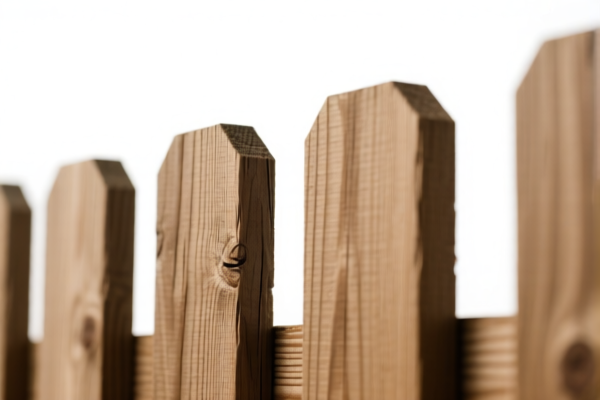
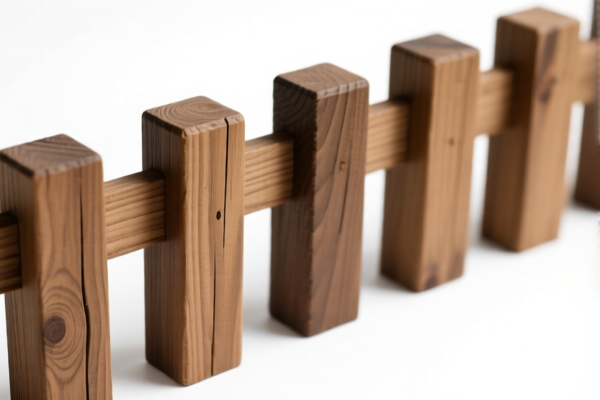
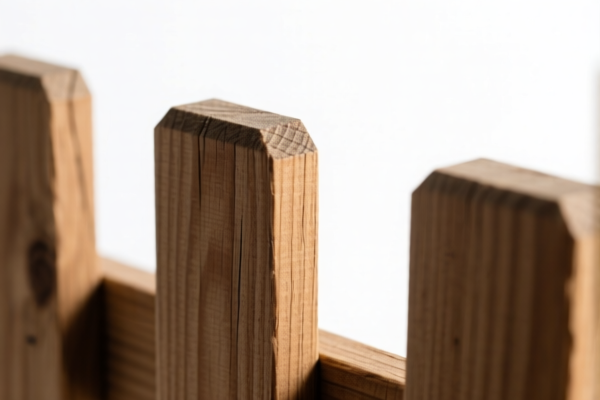
商品图片

AI分析
🪵 Rough Square Timber Post (Douglas-fir)
🌐 HS Code Reference & Customs Clearance Guide | 2026 Latest Tariff Analysis | Professional Strategy for Structural Wood
📌 I. Product Definition & Classification: What Exactly is a "Rough Square Timber Post"?
A Rough Square Timber Post refers to wood that has been sawn or chipped lengthwise, sliced, or peeled, with a thickness exceeding 6 mm, but remains in its "Rough" state (unplaned, unsanded, and not end-joined). Specifically, this analysis focuses on Douglas-fir (Pseudotsuga menziesii), a high-strength coniferous wood widely used for structural posts, beams, and railway ties.
In international trade, the classification hinges on two critical dimensions: 1. Processing Level: "Rough" (no surface planing/sanding). 2. Minimum Dimension: The smallest cross-sectional measurement (width or thickness).
⚠️ Key Distinction Point:
- If the minimum dimension is ≥ 12.7 cm (5 inches) → It is classified as structural timber.
- If the minimum dimension is ≥ 5.1 cm but < 12.7 cm → It is classified as smaller dimensional lumber/staves.
- Crucial: Both categories fall under Douglas-fir, Coniferous, Not Treated, and Rough.
📦 II. HS Code Classification Details (2026 Latest Tariff Authority Match)
Based on the provided data, there are two specific HS Codes for Rough Douglas-fir posts, differentiated strictly by their minimum dimension.
| HS Code | Product Description | Minimum Dimension Criteria | Common Application |
|---|---|---|---|
4407.19.00.55 |
Douglas-fir (Rough, Not Treated) | ≥ 5.1 cm but < 12.7 cm | Fencing posts, small structural supports, landscaping timbers |
4407.19.00.56 |
Douglas-fir (Rough, Not Treated) | ≥ 12.7 cm | Large structural posts, bridge pilings, heavy-duty construction beams |
🔍 Critical Reminder:
- "Rough" Definition: The wood must NOT be planed, sanded, or tongue-and-grooved. If it is planed, it moves to a different subheading (e.g.,4407.19.00.50for planed).
- "Not Treated": The wood must be chemically untreated. Preservative-treated wood falls under Chapter 44 heading 4403.
- Douglas-fir Specificity: You must confirm the species is Pseudotsuga menziesii. Misidentification as "Other Coniferous" could lead to incorrect tariff codes.
💰 III. 2026 Tariff Rate Details (Detailed Tax Breakdown)
✅ Applicable Country: United States (US)
✅ Origin: China (CN) (Assumed based on the "Additional Tariff" context typical in US-China trade data)
✅ Status: High Risk / High Duty
✅ Effective Time: Current applicable rates (Subject to USITC/USMCA adjustments)
🎯 1. 4407.19.00.55 — Rough Douglas-fir (Small Dimension: 5.1–12.7 cm)
| Item | Content |
|---|---|
| Base Tariff Rate | 0.0% (Free under most FTA/GSP, but subject to Section 301) |
| Section 301 Additional Tariff | +25.0% (Applied to most Chinese wood products) |
| Total Tax Rate | 25.0% |
| Tax Calculation | Ad Valorem (CIF Value × 25%) |
| De Minimis Exemption | ❌ Not Eligible (Wood products are generally excluded from $800 de minimis for duty calculation if they fall under specific restricted lists, but primarily: No duty-free entry for commercial shipments) |
| Legal Basis Path | HTSUS:4407.19.00.55 → USITC Footnote: 9903.03.08 (Section 301 List 3/4) |
📌 Explanation:
- The Base Rate is 0%, meaning no traditional customs duty applies for most origins.
- However, the 25% Additional Tariff is mandatory for goods originating in China.
- This is a Section 301 tariff, imposed due to trade tensions. It is not a "base" duty but a punitive addition.
🎯 2. 4407.19.00.56 — Rough Douglas-fir (Large Dimension: ≥ 12.7 cm)
| Item | Content |
|---|---|
| Base Tariff Rate | 0.0% |
| Section 301 Additional Tariff | +25.0% |
| Total Tax Rate | 25.0% |
| Tax Calculation | Ad Valorem (CIF Value × 25%) |
| De Minimis Exemption | ❌ Not Eligible |
| Legal Basis Path | HTSUS:4407.19.00.56 → USITC Footnote: 9903.03.08 |
📌 Note:
- Despite the size difference, the tariff rate is identical (25% total).
- Both codes are treated equally under current US-China trade regulations.
- Volume Matters: Larger posts (4407.19.00.56) are typically higher value per unit, so the absolute tax paid is higher, even if the percentage is the same.
🛠️ IV. Customs Clearance Practical Advice (Field Guide)
✅ 1. Documentation Checklist (Mandatory)
| Document | Required? | Explanation |
|---|---|---|
| ✅ Commercial Invoice | ✔️ | Must clearly state "Rough Douglas-fir (Pseudotsuga menziesii)". Avoid vague terms like "Wood Post". |
| ✅ Packing List | ✔️ | Must specify minimum dimension (e.g., "Min. Dim: 15cm") to justify 4407.19.00.56 vs 55. |
| ✅ Species Declaration | ✔️ | Must explicitly name the species. Customs may require a botanist’s certificate if disputed. |
| ✅ Phytosanitary Certificate | ✔️ | CRITICAL for wood imports. Must confirm no pests (e.g., Emerald Ash Borer, Pine Bark Beetle). Issued by the exporting country's agricultural authority. |
| ✅ Fumigation Certificate | ✔️ | Proof of heat treatment or methyl bromide fumigation to meet ISPM 15 standards (if packaged) or direct import requirements. |
| ✅ Bill of Lading/Air Waybill | ✔️ | Standard shipping document. |
✅ 2. Declaration Tips (Key Mnemonics)
🔥 "Rough means Unplaned, Size Dictates Code, Species Must Be Named!"
| Scenario | Correct Declaration | Incorrect Declaration | Consequence |
|---|---|---|---|
| Large Posts (≥12.7cm) | 4407.19.00.56 - "Rough Douglas-fir Posts, Min Dim 15cm" |
"Wood Posts" | Rejection for lack of specificity; potential penalty |
| Small Posts (5.1-12.7cm) | 4407.19.00.55 - "Rough Douglas-fir Staves, Min Dim 8cm" |
"Timber" | Misclassification; potential duty underestimation |
| Planed/Sanded Wood | Do NOT use these codes | Use 4407.19.00.55 |
25% Underpayment Penalty + Back Duties |
| Treated Wood | Do NOT use these codes | Use 4407.19.00.56 |
Code Error (Should be Ch 4403); fines |
✅ 3. Special Circumstances
| Situation | Handling Advice |
|---|---|
| Mixed Sizes in One Container | Split the declaration. If you have both ≥12.7cm and 5.1-12.7cm, you must declare two separate lines with separate HS codes. Mixing them can lead to the entire shipment being assessed at the highest rate or flagged for inspection. |
| Origin: Non-China (e.g., Canada/US) | If the Douglas-fir is grown in Canada or the US, the 25% Section 301 tariff does NOT apply. The rate may be 0% total. Ensure your Certificate of Origin is accurate. |
| IPPC Mark on Pallets | Ensure any wooden packaging has the IPPC stamp. If not, the packaging may be denied entry or require costly fumigation at the port. |
🌍 V. Global Market Comparison (2026)
| Country/Region | Recommended HS Code | Total Duty (China Origin) | Notes |
|---|---|---|---|
| 🇺🇸 USA | 4407.19.00.55 / .56 |
25.0% | High tariff due to Section 301. Strict phytosanitary checks. |
| 🇨🇳 China | 4407.19.00.55 / .56 |
Varies (0-10%) | Import duties on wood can be low, but VAT applies (13%). |
| 🇪🇺 EU | 4407.19.00 |
Varies | EU uses a different 8-digit code structure. May have anti-dumping duties on certain wood products. |
| 🇨🇦 Canada | 4407.19.00.00 |
0% (if Canadian origin) | CUSMA (USMCA) benefits apply if originating in North America. |
📌 Conclusion:
- The US market is the most expensive for Chinese-origin Douglas-fir due to the flat 25% surcharge.
- Phytosanitary compliance is the biggest non-tariff barrier. Failure to provide a valid Phytosanitary Certificate will result in immediate rejection or destruction of goods.
📌 VI. Common Mistakes & Pitfalls (Lessons Learned)
❌ Mistake 1: Declaring "Planed" wood as "Rough" to avoid higher inspection rates.
👉 Consequence: Customs will inspect and find planed surfaces. 25% back-duty + 20% penalty.
❌ Mistake 2: Ignoring the "Minimum Dimension" rule.
👉 Consequence: Declaring a 10cm post as 4407.19.00.56 (≥12.7cm). Customs will reclassify to .55 and may issue a misdeclaration notice.
❌ Mistake 3: Forgetting the Phytosanitary Certificate.
👉 Consequence: Cargo held at port. Daily storage fees accumulate rapidly. May be ordered to be re-exported or destroyed.
❌ Mistake 4: Assuming "Douglas-fir" is exempt from tariffs.
👉 Consequence: It is not exempt from the 25% Section 301 tariff if from China. Only US/Canadian origin wood is exempt.
✅ Correct Approach:
"Rough Douglas-fir (Pseudotsuga menziesii) Square Posts, Min Dim 15cm, Not Treated, Fumigated, Phytosanitary Cert Attached, HS 4407.19.00.56"
🎯 VII. Conclusion: Professional Declaration, Cost Control, Risk Mitigation
🎯 Remember the Mantra:
🔹 "Rough = Unplaned, Size = Code Split, Species = Critical, Phytosanitary = Mandatory!"
🔹 "25% Tax is Real for China, 0% if Canadian, Document Everything!"
📌 Pro Tip:
If your Douglas-fir is sourced from Canada or the USA, ensure your Certificate of Origin clearly states the harvesting location. This can save you the entire 25% tariff.
For Chinese-origin wood, budget for the 25% additional duty in your CIF price calculation. Do not underestimate the cost of phytosanitary compliance.
📣 Immediate Action:
📞 Verify the minimum dimension of your posts.
📞 Confirm the origin of the wood (Chinese vs. North American).
📞 Request the Phytosanitary Certificate from the supplier before shipment.
🚀 Clear Customs Smoothly, Avoid Delays, Protect Your Margin!
✨ Professional Clearance Starts with Precise Classification!
💼 Your timber investment deserves accurate tax planning!
用户评价
关于 HS 编码归类
协调制度(HS)是由世界海关组织(WCO)制定的国际贸易商品分类标准。全球 200 多个国家采用 HS 系统作为海关关税、贸易统计和进出口监管的基础。
每个 HS 编码遵循以下层级结构:
- 章(2 位)——商品大类(例如:第 84 章:机器和机械设备)
- 品目(4 位)——章内的更具体分类
- 子目(6 位)——国际通用细分,所有 WCO 成员国统一使用
- 本国细分(8-10 位)——各国自行扩展的细分编码,如美国 HTSUS 10 位编码
正确的 HS 编码归类对于顺利通关、准确缴纳关税和遵守贸易法规至关重要。错误归类可能导致海关延误、多缴关税或罚款。
从CN进口到US时,适用的关税税率可能包括:
- 最惠国(MFN)税率——适用于 WTO 成员国的标准关税税率
- 普通税率——适用于无贸易协定国家
- 贸易救济关税——附加关税,如 301 条款(反倾销)、232 条款(国家安全)或反补贴税
本页内容仅供参考。如需正式归类,请咨询当地海关或持牌报关代理。