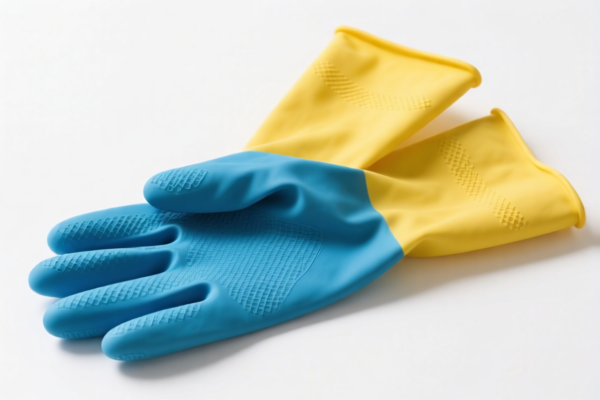
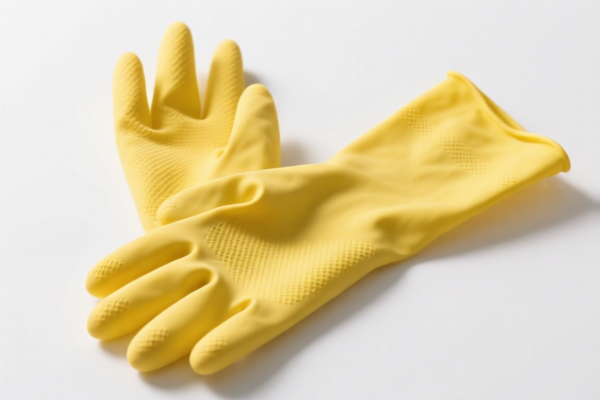
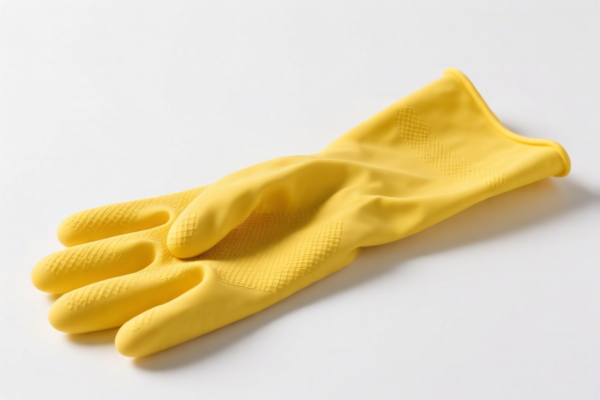
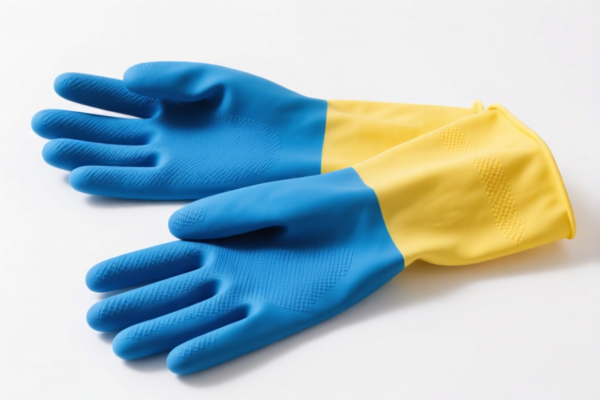
rubber aquaculture gloves
CN → US| HS编码 | 关税税率 | 原产国 | 目的国 | 文档 |
|---|---|---|---|---|
| 6116106500 | 24.5% | CN | US | 官方文档 |
| 4015195100 | 49.0% | CN | US | 官方文档 |
| 4015191150 | 38.0% | CN | US | 官方文档 |
| 6116109500 | 24.5% | CN | US | 官方文档 |
| 3926204050 | 16.5% | CN | US | 官方文档 |
商品图片
AI分析
🧤 Rubber Aquaculture Gloves (Rubber Farming Gloves)
🌐 HS Code Reference & Customs Clearance Guide | 2024/2025 Tariff Full Analysis | Professional Strategy for US Import
📌 I. Product Definition: What Are "Rubber Aquaculture Gloves"?
Rubber aquaculture gloves are protective handwear designed for aquatic farming (shrimp, crab, fish ponds), cleaning, and agricultural tasks. They are typically made of natural rubber or synthetic rubber, often lined with cotton or fabric for comfort, and feature a textured surface for grip.
In international trade, these gloves fall into a "grey area" between Knitted Apparel (Chapter 61) and Rub制品 (Chapter 40/39). The classification heavily depends on the manufacturing process (knitted then dipped vs. molded) and specific material composition.
⚠️ Key Classification Logic:
- Knitted & Dipped: If the base is knitted fabric coated/dipped with rubber/plastic → Generally Chapter 61.
- Solid Rubber/Molded: If the glove is entirely molded from solid rubber without a knitted base → Generally Chapter 40.
- Plastic Resemblance: Some rubber goods are classified under plastics if the manufacturing logic aligns more with plastic molding.
📦 II. HS Code Classification Details (Based on Provided Data)
| HS Code | Product Description | Logical Basis | Total Tax Rate |
|---|---|---|---|
6116.10.65.00 |
Rubber aquaculture gloves, rubber material, dipped/coated appearance | Fits Rubber Impregnation/Coating characteristics. Likely knitted base with rubber coating. | 24.5% |
4015.19.51.00 |
Rubber aquaculture gloves, solid rubber, classified as Vulcanized Rubber Apparel/Accessories | Fits Vulcanized rubber clothing classification. Solid mold, no knitted base. | 49.0% |
4015.19.11.50 |
Rubber aquaculture gloves, solid rubber, limited to Vulcanized Rubber Apparel/Accessories | Similar to above but different sub-category within vulcanized rubber clothing. | 38.0% |
6116.10.95.00 |
Rubber aquaculture gloves, Knitted or Crocheted logic applies | Fits logic of Plastics/Rubber with Knitted Base. General knitted rubber glove. | 24.5% |
3926.20.40.50 |
Rubber aquaculture gloves, High consistency with Plastic Products despite rubber material | Classification logic aligns more with Plastic Articles due to material/processing traits. | 16.5% |
🔍 Critical Insight:
- Lowest Tax Option:3926.20.40.50(16.5%) – Requires proving the item aligns with "Plastic Products" logic.
- Highest Tax Option:4015.19.51.00(49.0%) – Avoid this if possible; it carries the highest burden.
- Standard Option:6116.10.xxxxx(24.5%) – Common for knitted-and-dipped gloves.
💰 III. Detailed Tariff Breakdown (US Import from China)
✅ Applicable Country: United States (US)
✅ Origin: China (CN)
✅ Effective Time: Current tariffs include Section 301 & IEEPA surcharges.
🎯 1. 6116.10.65.00 & 6116.10.95.00 – Knitted/Dipped Rubber Gloves
Total Tax: 24.5%
| Component | Rate | Legal Basis |
|---|---|---|
| Base Tariff (MFN) | 7.0% | Harmonized Tariff Schedule (HTS) Standard Rate |
| Section 301 Surcharge | 7.5% | USTR List 4A / 4C (Depending on exact subheading) |
| IEEPA Surcharge (Section 122) | 10.0% | International Emergency Economic Powers Act (China-specific) |
| Total | 24.5% | 7% + 7.5% + 10% |
📌 Explanation:
- Base (7%): Standard duty for knitted gloves.
- Section 301 (7.5%): Additional tariff for Chinese goods under this subcategory.
- IEEPA (10%): Flat surcharge applied to many Chinese imports under current emergency powers.
🎯 2. 4015.19.51.00 – Vulcanized Rubber Apparel (High Tax)
Total Tax: 49.0%
| Component | Rate | Legal Basis |
|---|---|---|
| Base Tariff (MFN) | 14.0% | Higher base for solid rubber apparel |
| Section 301 Surcharge | 25.0% | USTR List 4C (Full rate for this category) |
| IEEPA Surcharge (Section 122) | 10.0% | International Emergency Economic Powers Act |
| Total | 49.0% | 14% + 25% + 10% |
📌 Warning:
- This is the most expensive classification.
- Avoid this code unless the product is strictly solid rubber with no knitted base and no alternative classification is viable.
🎯 3. 4015.19.11.50 – Vulcanized Rubber Apparel (Alternative Subcategory)
Total Tax: 38.0%
| Component | Rate | Legal Basis |
|---|---|---|
| Base Tariff (MFN) | 3.0% | Lower base rate for this specific sub-subheading |
| Section 301 Surcharge | 25.0% | USTR List 4C (Full rate applies) |
| IEEPA Surcharge (Section 122) | 10.0% | International Emergency Economic Powers Act |
| Total | 38.0% | 3% + 25% + 10% |
📌 Note:
- Still high due to the 25% Section 301 surcharge.
- Lower base (3%) saves 11% compared to4015.19.51.00, but still higher than Chapter 61 codes.
🎯 4. 3926.20.40.50 – Plastic-Like Rubber Articles (Lowest Tax!)
Total Tax: 16.5%
| Component | Rate | Legal Basis |
|---|---|---|
| Base Tariff (MFN) | 6.5% | Standard rate for plastic articles |
| Section 301 Surcharge | 0.0% | Exempt or not applied to this specific subheading |
| IEEPA Surcharge (Section 122) | 10.0% | International Emergency Economic Powers Act |
| Total | 16.5% | 6.5% + 0% + 10% |
📌 Strategic Advantage:
- No Section 301 Surcharge (0%) is the key here.
- Only IEEPA (10%) + Base (6.5%) applies.
- Eligibility: Requires justification that the product, though rubber, is classified under plastic articles due to material/processing consistency.
🛠️ IV. Customs Clearance Practical Advice (Avoiding Pitfalls)
✅ 1. Preparation Checklist
| Document | Required | Purpose |
|---|---|---|
| Product Samples | ✔️ | To prove knitted vs. solid rubber structure. |
| Technical Data Sheet | ✔️ | Must specify: % Rubber, Liner Material (Cotton/None), Manufacturing Process (Dipped vs. Molded). |
| Photos (Cross-section) | ✔️ | Crucial to show if there is a knitted base. If no knitted base → Chapter 40. If knitted → Chapter 61. |
| Commercial Invoice | ✔️ | Describe as "Rubber Aquaculture Gloves, Knitted with Rubber Coating" or "Vulcanized Rubber Gloves". |
| Packing List | ✔️ | Weight and dimensions to verify volume-based assessments. |
✅ 2. Classification Strategy & Tips
🔥 "Prove Knitting to Save Tax, or Prove Plastic for Lowest Rate!"
| Scenario | Recommended HS Code | Tax Rate | Strategy |
|---|---|---|---|
| Knitted Base + Rubber Dip | 6116.10.65.00 or 6116.10.95.00 |
24.5% | Provide photos showing knitted inner lining. |
| Solid Rubber (No Liner) | 4015.19.11.50 |
38.0% | If no knitted base exists, this is safer than 4015.19.51.00. |
| Solid Rubber (High Risk) | 4015.19.51.00 |
49.0% | Avoid unless no other option. High tax burden. |
| Plastic-Like Rubber | 3926.20.40.50 |
16.5% | Best Option if technically defensible. Argue material composition aligns with plastic articles. |
✅ 3. Special Handling
| Situation | Advice |
|---|---|
| OEM Custom Gloves | Clearly state material composition in specs. If cotton liner is present, must declare as knitted to avoid Chapter 40 high tax. |
| Mixed Containers | Ensure all gloves in the shipment are identical in composition. Mixed types can lead to audits and higher taxes on the entire lot. |
| Pre-Ruling Request | Apply for an Advance Ruling with CBP for 3926.20.40.50 or 6116.10.xxxxx to lock in the lower tax rate. |
🌍 V. Global Market Comparison (Snapshot)
| Market | Recommended HS Code | Est. Total Duty | Note |
|---|---|---|---|
| 🇺🇸 USA | 3926.20.40.50 |
16.5% | Best for profit margins. |
| 🇺🇸 USA | 6116.10.65.00 |
24.5% | Common alternative. |
| 🇺🇸 USA | 4015.19.51.00 |
49.0% | Avoid if possible. |
| 🇨🇳 China | Varies | ~5-10% | Lower base duties, no IEEPA/Section 301. |
| 🇪🇺 EU | Varies | ~0-6% | No Section 301/IEEPA. CE certification required. |
📌 Conclusion:
The US market has significantly higher duties due to trade wars.
Focus on3926.20.40.50(16.5%) or6116.10(24.5%) to remain competitive.
Avoid4015.19.51.00(49%) unless the product is uniquely solid rubber with no other classification path.
📌 VI. Common Mistakes & Pitfalls
❌ Mistake 1: Declaring solid rubber gloves as "Knitted Gloves"
👉 Result: Customs inspection reveals no knitted base → Rejection, penalty, or reclassification to 49%.
✅ Fix: Provide cross-section photos proving structure.
❌ Mistake 2: Ignoring IEEPA Surcharge
👉 Result: Underpaying duty by 10% → Audit and back taxes + interest.
✅ Fix: Always add 10% IEEPA to calculations for China-origin goods.
❌ Mistake 3: Using generic "Rubber Gloves" description
👉 Result: CBP may assign the highest duty code by default.
✅ Fix: Specify "Aquaculture," "Knitted with Rubber Coating," or "Vulcanized Rubber" in invoice.
🎯 VII. Final Recommendation
🎯 Optimal Strategy:
1. Aim for 3926.20.40.50 (16.5%) if the material/processing can be justified as plastic-like.
2. Fallback to 6116.10.65.00/95.00 (24.5%) if the gloves are knitted with rubber dip.
3. Avoid 4015.19.51.00 (49%) unless absolutely necessary.
💼 Pro Tip:
Submit a CBP Advance Ruling application with product photos and material specs before shipment to lock in the lower tax rate (16.5%or24.5%). This prevents surprise tariffs at the port of entry.
✨ Professional Customs Clearance Starts with Accurate Classification!
💼 Save 32.5% by choosing the right HS Code!
用户评价
关于 HS 编码归类
协调制度(HS)是由世界海关组织(WCO)制定的国际贸易商品分类标准。全球 200 多个国家采用 HS 系统作为海关关税、贸易统计和进出口监管的基础。
每个 HS 编码遵循以下层级结构:
- 章(2 位)——商品大类(例如:第 84 章:机器和机械设备)
- 品目(4 位)——章内的更具体分类
- 子目(6 位)——国际通用细分,所有 WCO 成员国统一使用
- 本国细分(8-10 位)——各国自行扩展的细分编码,如美国 HTSUS 10 位编码
正确的 HS 编码归类对于顺利通关、准确缴纳关税和遵守贸易法规至关重要。错误归类可能导致海关延误、多缴关税或罚款。
从CN进口到US时,适用的关税税率可能包括:
- 最惠国(MFN)税率——适用于 WTO 成员国的标准关税税率
- 普通税率——适用于无贸易协定国家
- 贸易救济关税——附加关税,如 301 条款(反倾销)、232 条款(国家安全)或反补贴税
本页内容仅供参考。如需正式归类,请咨询当地海关或持牌报关代理。