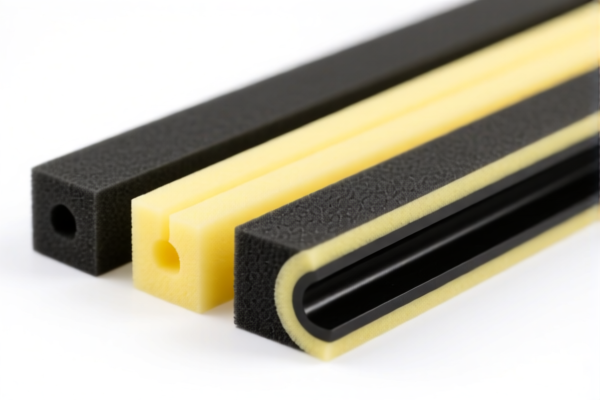
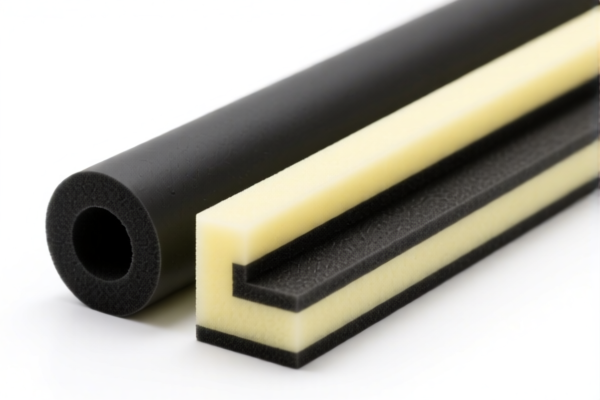
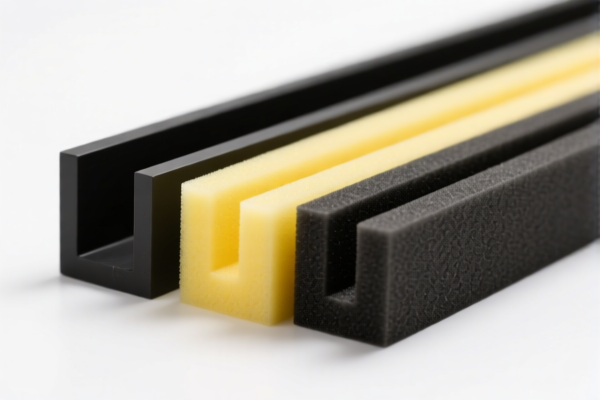
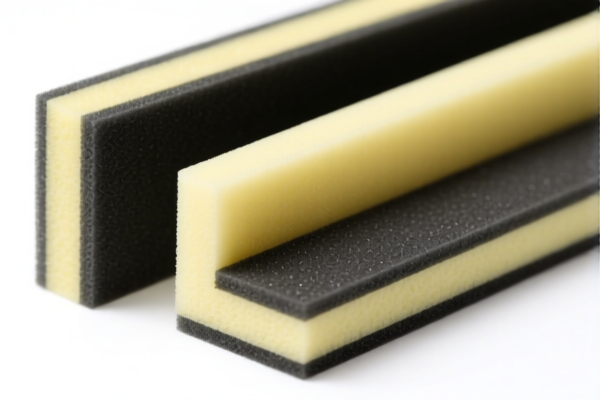
rubber foam profile
CN → US| HS编码 | 关税税率 | 原产国 | 目的国 | 文档 |
|---|---|---|---|---|
| 4006905000 | 37.7% | CN | US | 官方文档 |
| 4008111000 | 35.0% | CN | US | 官方文档 |
| 4006901000 | 35.0% | CN | US | 官方文档 |
| 4008115000 | 38.3% | CN | US | 官方文档 |
| 4016996050 | 37.5% | CN | US | 官方文档 |
商品图片
AI分析
🛡️ Rubber Foam Profile (Custom Profiles, Strips, & Sheets)
🌐 HS Code Classification & Customs Clearance Guide | 2026 Tax Analysis | Strategic Import Strategy
📌 I. Product Definition: What Exactly is "Rubber Foam Profile"?
In international trade, "Rubber Foam Profile" is a broad term referring to vulcanized or non-vulcanized rubber products with specific cross-sectional shapes (strips, tubes, seals, plates). The critical distinction for customs lies in the processing state (Vulcanized vs. Non-Vulcanized) and the physical form (Plate/Sheet vs. Strip/Profile).
Two Main Categories:
- Unvulcanized Rubber (Raw Material Stage): Rubber that has not yet been hardened through heat/pressure. Typically found as raw sheets or unformed shapes.
- Key HS Chapters: 4006 (Other articles of unvulcanized rubber).
- Vulcanized Rubber (Finished Goods): Rubber that has been processed to be elastic and durable. Includes foam sheets (plates) and shaped profiles (strips).
- Key HS Chapters: 4008 (Plates, sheets, and strip of vulcanized rubber) & 4016 (Other vulcanized rubber articles).
⚠️ Critical Distinction Point:
- If the product is a flat plate/sheet but is UNVULCANIZED → It usually falls under 4006.90.
- If the product is a flat plate/sheet and is VULCANIZED → It usually falls under 4008.11.
- If the product is a Strip/Profile (shaped cross-section) and is VULCANIZED → It generally falls under 4016.99 or 4008.11 (depending on thickness/format interpretation).
📦 II. HS Code Classification Matrix (Based on Provided Data)
| HS Code | Product Description | Classification Logic | Tax Rate Profile |
|---|---|---|---|
4006.90.10.00 |
Unvulcanized Rubber Foam Sheet/Plate | Rubber foam in plate form, not vulcanized. Falls under "Other articles of unvulcanized rubber." | 35.0% (0% Base + 25% Sec 301 + 10% IEEPA) |
4006.90.50.00 |
Unvulcanized Rubber Foam Plate | Rubber foam plate, not vulcanized. Specific subheading for other unvulcanized shapes. | 37.7% (2.7% Base + 25% Sec 301 + 10% IEEPA) |
4008.11.10.00 |
Vulcanized Rubber Foam Plate/Sheet | Rubber foam in plate/sheet form, vulcanized. "Foam plates, sheets, and strip." | 35.0% (0% Base + 25% Sec 301 + 10% IEEPA) |
4008.11.50.00 |
Vulcanized Rubber Foam Strip/Profile | Rubber foam in strip form, vulcanized. Fits definition of foam plates/shapes. | 38.3% (3.3% Base + 25% Sec 301 + 10% IEEPA) |
4016.99.60.50 |
Vulcanized Rubber Foam Strip (General) | Other vulcanized rubber articles (strips/profiles not specified elsewhere). "Other articles of vulcanized rubber." | 37.5% (2.5% Base + 25% Sec 301 + 10% IEEPA) |
🔍 Key Insight:
- Unvulcanized items often have 0% base duty (like4006.90.10.00), but still face heavy add-ons. - Vulcanized Foam Strips (4008.11.50.00) carry the highest base duty (3.3%), making their total cost higher despite being a "foam" product. - Vulcanized Foam Plates (4008.11.10.00) offer the lowest base duty (0%), making them tax-efficient for sheet materials.
💰 III. 2026 Tariff Rate Breakdown (Detailed Policy Analysis)
✅ Applicable Country: USA (US)
✅ Origin: China (CN)
✅ Effective Date: Post-November 2025 (Current Trade Policy)
🎯 1. 4006.90.10.00 & 4008.11.10.00 — The "0% Base" Advantage
| Item | Detail |
|---|---|
| Base Tariff | 0.0% (Ad Valorem) |
| Section 301 Tariff | +25.0% (Additional Duties) |
| IEEPA 122-Clause | +10.0% (Section 122 Tariff) |
| Total Effective Rate | 35.0% |
| Tax Calculation | CIF Value × 35% |
| De Minimis Exemption | ❌ NO (deny_de_minimis) |
| Legal Authority | USITC Harmonized Tariff Schedule → IEEPA Footnotes → Section 301 Lists |
📌 Explanation:
- These codes benefit from zero base duty due to their specific classification (unvulcanized or foam plates). - However, the 35% total burden is still significant. The 25% is a permanent trade war tariff; the 10% is a recent political add-on. - Strategic Value: If you can prove the product is Unvulcanized (4006) or Foam Plate (4008.11.10), you save on the base duty compared to profiles.
🎯 2. 4016.99.60.50 — The "General Article" Classification
| Item | Detail |
|---|---|
| Base Tariff | 2.5% |
| Section 301 Tariff | +25.0% |
| IEEPA 122-Clause | +10.0% |
| Total Effective Rate | 37.5% |
| Tax Calculation | CIF Value × 37.5% |
| De Minimis Exemption | ❌ NO |
| Legal Authority | USITC 4016 (Other vulcanized rubber articles) |
📌 Explanation:
- This is a catch-all code for vulcanized rubber items not specifically listed elsewhere. - It incurs a 2.5% base duty, making it more expensive than the 0% base options. - Use this only if the product shape doesn't fit neatly into "Strip" (4008.11.50) or "Plate" categories.
🎯 3. 4006.90.50.00 — The "Other Unvulcanized" Category
| Item | Detail |
|---|---|
| Base Tariff | 2.7% |
| Section 301 Tariff | +25.0% |
| IEEPA 122-Clause | +10.0% |
| Total Effective Rate | 37.7% |
| Tax Calculation | CIF Value × 37.7% |
| De Minimis Exemption | ❌ NO |
📌 Explanation:
- Slightly higher base duty than4006.90.10.00. - Likely used for unvulcanized foam products that are not "other shapes" (4006.90.10).
🎯 4. 4008.11.50.00 — The "Highest Base Duty" Trap
| Item | Detail |
|---|---|
| Base Tariff | 3.3% |
| Section 301 Tariff | +25.0% |
| IEEPA 122-Clause | +10.0% |
| Total Effective Rate | 38.3% |
| Tax Calculation | CIF Value × 38.3% |
| De Minimis Exemption | ❌ NO |
📌 Explanation:
- Avoid if possible. This code attracts the highest total tax (38.3%). - It classifies Vulcanized Rubber Foam Strips. If your product is a profile/strip, customs may insist on this code, leading to the highest cost. - Counter-Strategy: Can the strip be classified under4016.99.60.50(37.5%)? Only if it doesn't strictly meet the "foam strip" definition of 4008.11.50.
🛠️ IV. Customs Clearance Practical Advice (Pitfall Avoidance)
✅ 1. Documentation Checklist (Mandatory)
| Document | Required | Purpose |
|---|---|---|
| ✅ Product Specification Sheet | ✔️ | Must clearly state: Vulcanized vs. Unvulcanized, Material (e.g., NBR, EPDM, Silicone), Density, and Shape (Plate/Strip). |
| ✅ Cross-Sectional Diagrams | ✔️ | Critical for distinguishing between Plate (4008.11.10) and Strip/Profile (4008.11.50 or 4016.99). |
| ✅ Photos of Raw & Finished Goods | ✔️ | Show texture (foam vs. solid) and dimensions. |
| ✅ Commercial Invoice | ✔️ | Describe as "Vulcanized Rubber Foam Strip/Profile" or "Unvulcanized Rubber Sheet." Do NOT use vague terms like "Rubber Part." |
| ✅ Packing List | ✔️ | Ensure weight and dimensions match the declared HS Code logic. |
| ✅ IEC (Import Export Code) | ✔️ | Standard US importer ID. |
✅ 2. Declaration Strategy (Key Rules)
🔥 "Shape Dictates Code, Vulcanization Dictates Tax!"
| Scenario | Correct HS Code | Risk |
|---|---|---|
| Flat Sheet, Unvulcanized | 4006.90.10.00 |
Low Base Tax (0%) |
| Flat Sheet, Vulcanized | 4008.11.10.00 |
Low Base Tax (0%) |
| Shaped Strip, Vulcanized (Foam) | 4008.11.50.00 |
HIGH TAX (38.3%) |
| Shaped Strip, Vulcanized (Non-Foam/Other) | 4016.99.60.50 |
Medium Tax (37.5%) |
| Shaped Strip, Unvulcanized | 4006.90.50.00 |
Medium Tax (37.7%) |
📌 Critical Warning:
- If you import Vulcanized Foam Strips, Customs will likely classify them under4008.11.50.00(38.3%). - To reduce tax, verify if the product can be considered "Other Vulcanized Rubber Articles" (4016.99.60.50), but be prepared to justify why it’s not a "foam strip" under 4008.11. - Unvulcanized goods are cheaper to tax (0% base) but are rare for finished profiles. Most profiles are vulcanized.
✅ 3. Special Case Handling
| Situation | Recommendation |
|---|---|
| Customs Disputes Shape | Provide 3D CAD drawings showing cross-section. If it’s thin and flexible, argue for "Sheet/Plate" classification under 4008.11.10 (0% base) instead of "Strip" (4008.11.50). |
| Mixed Shipments | Do NOT mix vulcanized and unvulcanized goods in one shipment. Separate entries are required. |
| OEM Private Label | Ensure the supplier’s technical data sheet matches your declaration. Mismatches cause delays. |
| Duty Drawback | If these products are re-exported, check if duty drawback applies (unlikely for China-origin due to 301/122 tariffs, but verify). |
🌍 V. Global Market Comparison (2026)
| Country/Region | Recommended HS Code | Total Tax (China Origin) | Notes |
|---|---|---|---|
| 🇺🇸 USA | 4008.11.10.00 (Best Option) |
35.0% | Lowest total tax for foam plates. |
| 🇺🇸 USA | 4008.11.50.00 (Strip) |
38.3% | Highest tax for foam profiles. |
| 🇪🇺 EU | 4008.11 / 4016.99 | ~10-12% | No Section 301/IEEPA taxes. VAT applies. |
| 🇨🇳 China | 4008.11 / 4016.99 | ~5-7% | Import duty only. No trade war tariffs. |
| 🇬🇧 UK | 4008.11 / 4016.99 | ~5-10% | Post-Brexit tariffs. No US-style penalties. |
📌 Conclusion:
- USA is the most expensive market for rubber foam profiles due to the 25% + 10% add-ons. - Minimize tax by optimizing classification: Use4008.11.10.00(0% base) for flat foam sheets instead of strips. - Strategic Sourcing: If possible, source from Vietnam/Mexico to avoid IEEPA 122-Clause and Section 301 tariffs (check Rules of Origin carefully).
📌 VI. Common Mistakes & Pitfalls (Lessons Learned)
❌ Mistake 1: Calling all rubber foam products "Rubber Sheet"
👉 Consequence: If the product is a strip/profile, Customs will reclassify it to 4008.11.50.00 → Tax jumps from 35% to 38.3%.
❌ Mistake 2: Ignoring Vulcanization Status
👉 Consequence: Declaring vulcanized goods as "unvulcanized" (4006) is fraud. Seizure, fines, and blacklisting.
❌ Mistake 3: Assuming "Foam" Always Gets 0% Base Duty
👉 Consequence: 4008.11.50.00 (Vulcanized Foam Strip) has a 3.3% base duty. Only 4008.11.10.00 (Plate) and 4006.90.10.00 (Unvulcanized) have 0% base.
❌ Mistake 4: Missing the 122-Clause 10% Tax
👉 Consequence: Failing to account for the IEEPA 122-Clause tax leads to underpayment and penalties. The total is Base + 25% + 10%.
✅ Correct Approach:
"Vulcanized EPDM Rubber Foam Profile, Cross-section 10mm x 20mm, for Sealing. Classified under 4016.99.60.50 (if not strictly foam strip) or 4008.11.50.00 (if foam strip). Declare origin: China. Tax: 37.5% or 38.3%."
🎯 VII. Conclusion: Strategic Tax Optimization
🎯 Key Takeaway:
🔹 "Plates are Cheaper (0% Base), Strips are Expensive (3.3% Base)."
🔹 "Vulcanized is the Default. Unvulcanized is Rare but Cheaper (0% Base)."
🔹 "Total Tax = Base + 25% + 10%. Don't Forget the 10%!"
📌 Pro Tip:
If you import Rubber Foam Profiles, negotiate with your supplier to provide technical data that supports classification under 4016.99.60.50 (37.5%) rather than 4008.11.50.00 (38.3%) if the product doesn't strictly meet "foam strip" definitions. Even a 0.8% difference adds up on large volumes.
📣 Immediate Action:
📞 Contact your customs broker with cross-section diagrams.
📦 Verify if your product can be classified as "Plate/Sheet" (4008.11.10.00) instead of "Strip" to save 3.3% in base duty.
🚀 Accurate Classification = Lower Costs = Higher Margins.
✨ Professional Classification, Precision Clearance!
💼 Your Supply Chain’s Profitability Depends on This 0.1% Difference!
用户评价
关于 HS 编码归类
协调制度(HS)是由世界海关组织(WCO)制定的国际贸易商品分类标准。全球 200 多个国家采用 HS 系统作为海关关税、贸易统计和进出口监管的基础。
每个 HS 编码遵循以下层级结构:
- 章(2 位)——商品大类(例如:第 84 章:机器和机械设备)
- 品目(4 位)——章内的更具体分类
- 子目(6 位)——国际通用细分,所有 WCO 成员国统一使用
- 本国细分(8-10 位)——各国自行扩展的细分编码,如美国 HTSUS 10 位编码
正确的 HS 编码归类对于顺利通关、准确缴纳关税和遵守贸易法规至关重要。错误归类可能导致海关延误、多缴关税或罚款。
从CN进口到US时,适用的关税税率可能包括:
- 最惠国(MFN)税率——适用于 WTO 成员国的标准关税税率
- 普通税率——适用于无贸易协定国家
- 贸易救济关税——附加关税,如 301 条款(反倾销)、232 条款(国家安全)或反补贴税
本页内容仅供参考。如需正式归类,请咨询当地海关或持牌报关代理。