rubber plasticizer modifier
CN → US| HS编码 | 关税税率 | 原产国 | 目的国 | 文档 |
|---|---|---|---|---|
| 3801105090 | 35.0% | CN | US | 官方文档 |
| 3801105010 | 35.0% | CN | US | 官方文档 |
| 2803000010 | 35.0% | CN | US | 官方文档 |
| 2803000050 | 35.0% | CN | US | 官方文档 |
| 3824999397 | 40.0% | CN | US | 官方文档 |
商品图片
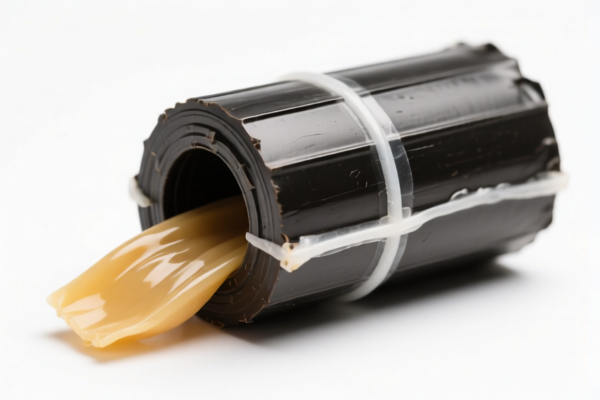

AI分析
🧪 Rubber Plasticizer Modifier
🌐 HS Code Classification & Customs Clearance Guide | 2026 Updated Tariff Analysis | Expert-Level Import Strategy
📌 One Product, Multiple HS Codes — Understand Why & How to Avoid 40%+ Tariffs!
📌 I. Product Definition & Classification: What Is a "Rubber Plasticizer Modifier"?
A Rubber Plasticizer Modifier is a chemical additive used to enhance the flexibility, processability, and durability of rubber materials. It is commonly used in automotive tires, industrial hoses, seals, footwear, and construction membranes.
⚠️ Key Distinction:
- If the product is primarily carbon-based, contains graphite or carbon derivatives, and functions as a reinforcing or modifying agent, it may be classified under carbon-based chemical additives.
- If it contains both rubber and graphite, and is formulated as a chemical mixture, it may fall under mixed chemical products.✅ Critical Insight:
The exact HS Code depends on composition, function, and material origin — not just the name. Misclassification can trigger 40%+ tariffs or even detention at U.S. ports.
📦 II. HS Code Breakdown (2026 Updated Tariff Table)
| HS Code | Product Description | Material Focus | Functional Role | Tax Rate |
|---|---|---|---|---|
3801.10.50.90 |
Graphite rubber modifier, made from artificial graphite, used to improve thermal conductivity and wear resistance | Artificial graphite | Reinforcing/Modifying Agent | 35.0% |
3801.10.50.10 |
Graphite rubber modifier, graphite-based, acts as a chemical additive for rubber enhancement | Graphite material | Chemical Additive | 35.0% |
2803.00.00.10 |
Rubber modifier derived from carbon/carbon black, core component: carbon | Carbon / Carbon Black derivative | Chemical additive | 35.0% |
2803.00.00.50 |
Rubber modifier with carbon as main component, fits "other forms of carbon" criteria | Carbon-based material | Functional modifier | 35.0% |
3824.99.93.97 |
Chemical modifier for rubber, contains graphite + rubber, used in industrial chemical mixtures | Graphite + Rubber mixture | Chemical industrial compound | 40.0% |
🔍 Why the Difference?
- Codes 3801.10.50.x0 & 2803.00.00.x0: Focus on carbon/graphite as primary material, even if used in rubber.
- Code 3824.99.93.97: Applies when the product is a deliberate chemical blend of rubber and graphite — treated as a mixed chemical substance under industrial use.
💰 III. 2026 Tariff Breakdown: The Full Tax Story (U.S. Market)
✅ Applicable Country: United States (US)
✅ Origin: China (CN)
✅ Effective Date: November 10, 2025 (including all future imports)
🎯 1. 3801.10.50.90 & 3801.10.50.10 — Graphite-Based Rubber Modifiers
| Item | Detail |
|---|---|
| Base Tariff | 0% (ad valorem) |
| USITC Section 301 Tariff | +25% (from U.S. Trade Act 301) |
| IEEPA Section 101 Tariff | +10% (under International Emergency Economic Powers Act) |
| Total Effective Rate | 35.0% |
| Tax Calculation | CIF Value × 35% |
| De Minimis Exemption | ❌ Not eligible (denied under U.S. 2025 regulations) |
| Legal Pathway | IEEPA:9903.01.25 → IEEPA:9903.01.24 → USITC:3801.10.50.x0 → FOOTNOTE:9903.88.01 |
📌 Explanation:
- 25% USITC Tariff: Applies to all Chinese-origin goods under Section 301 of the Trade Act (targeting unfair trade practices).
- 10% IEEPA Tariff: Imposed under national emergency powers for China-specific trade restrictions.
- Total: 35% — High-risk category, especially if used in automotive or industrial applications.
🎯 2. 2803.00.00.10 & 2803.00.00.50 — Carbon-Based Derivative Modifiers
| Item | Detail |
|---|---|
| Base Tariff | 0% |
| USITC Section 301 Tariff | +25% |
| IEEPA Section 101 Tariff | +10% |
| Total Effective Rate | 35.0% |
| Tax Calculation | CIF × 35% |
| De Minimis Exemption | ❌ Not eligible |
| Legal Pathway | IEEPA:9903.01.25 → IEEPA:9903.01.24 → USITC:2803.00.00.x0 → FOOTNOTE:9903.88.01 |
📌 Key Point:
- Even if the product is not pure graphite, but carbon-based (e.g., carbon black, carbon nanotubes, or carbon-coated particles), it still falls under carbon material classification.
- Same 35% rate applies — no relief based on form or particle size.
🎯 3. 3824.99.93.97 — Chemical Mixture (Graphite + Rubber)
| Item | Detail |
|---|---|
| Base Tariff | 5% (standard chemical tariff) |
| USITC Section 301 Tariff | +25% |
| IEEPA Section 101 Tariff | +10% |
| Total Effective Rate | 40.0% |
| Tax Calculation | CIF × 40% |
| De Minimis Exemption | ❌ Not eligible |
| Legal Pathway | IEEPA:9903.01.25 → IEEPA:9903.01.24 → USITC:3824.99.93.97 → FOOTNOTE:9903.88.01 |
📌 Why Higher?
- This code applies to formulated chemical mixtures where rubber and graphite are blended intentionally for industrial performance.
- Treated as a chemical compound, not a raw material → higher base tariff (5%) + full附加 taxes → 40% total.⚠️ Red Flag:
If your product is a pre-mixed rubber compound with graphite, even in powder or paste form, this code applies — don’t assume it’s a “material”.
🛠️ IV. Customs Clearance Best Practices (Real-World Pro Tips)
✅ 1. Required Documentation (MUST-HAVE)
| Document | Required? | Why It Matters |
|---|---|---|
| ✅ Product Specification Sheet | ✔️ | Shows composition: % graphite, carbon, rubber, additives |
| ✅ Material Safety Data Sheet (MSDS) | ✔️ | Proves chemical identity and safety |
| ✅ Chemical Composition Report | ✔️ | Critical for proving whether it’s a mixture or raw material |
| ✅ Product Photos (with labels) | ✔️ | Helps customs verify form (powder, paste, granules) |
| ✅ Commercial Invoice | ✔️ | Must state: “Graphite Rubber Modifier” or “Chemical Additive for Rubber” |
| ✅ Certificate of Origin (CO) | ✔️ | If from Vietnam, Mexico, or Thailand, IEEPA exemption possible |
| ✅ Test Reports (e.g., ASTM, ISO) | ✔️ | Proves intended use and function |
✅ 2.申报技巧(申报口诀)
🔥 “成分定税,混合加税,纯碳35,混合40,别拆别混,一错全赔!”
| Scenario | Correct HS Code | Wrong Approach | Risk |
|---|---|---|---|
| Pure graphite powder used in rubber | 3801.10.50.90 or 2803.00.00.50 |
Misclassify as 3824.99.93.97 |
+5% tariff |
| Graphite + rubber pre-mixed in paste | 3824.99.93.97 |
Misclassify as 3801.10.50.10 |
+5% tariff + penalties |
| Carbon black-based modifier | 2803.00.00.10 |
Claim as “rubber additive” | Misclassification → seizure |
| OEM compound (custom blend) | 3824.99.93.97 |
Break into parts | Each part taxed at 40%+ |
✅ 3. Special Cases & Workarounds
| Situation | Recommended Action |
|---|---|
| Product is 100% graphite | Use 3801.10.50.90 — 35% tariff |
| Product is 70% carbon, 30% rubber | Use 3824.99.93.97 — 40% tariff |
| Origin is Vietnam/Mexico | Apply for IEEPA exemption — 0% additional tax |
| Used in non-industrial applications | Provide proof of end-use — may qualify for exemption |
| Custom formulation with proprietary blend | Apply for Advance Ruling (Pre-Review) — avoid disputes |
🌍 V. Global Market Tariff Comparison (2026)
| Country/Region | Recommended HS Code | Base Tariff | Additional Taxes | Total Effective Rate | Notes |
|---|---|---|---|---|---|
| 🇺🇸 USA | 3801.10.50.90 / 3824.99.93.97 |
0%–5% | +25% +10% | 35%–40% | No de minimis |
| 🇨🇳 China | 3801.10.50.90 |
5% | None | 5% | No附加税 |
| 🇪🇺 EU | 3801.10.50.90 |
0% | None | 0% | CE/REACH compliance |
| 🇦🇺 Australia | 3801.10.50.90 |
5% | None | 5% | No附加税 |
| 🇯🇵 Japan | 3801.10.50.90 |
0% | None | 0% | No附加税 |
📌 Insight:
- The U.S. is the only market with 35–40% tariffs on this product.
- China, EU, Japan, and Australia have much lower or zero additional taxes.
📌 VI. Common Mistakes & How to Avoid Them (Real Cases)
❌ Mistake 1: Treating a graphite-rubber paste as a "graphite powder"
👉 Result: Misclassified → 40% instead of 35% → $20,000+ extra tax on $500k shipment.
❌ Mistake 2: Not providing chemical composition report
👉 Result: Customs delays → 2-week hold, potential seizure.
❌ Mistake 3: Using "rubber additive" as product name without details
👉 Result: Customs assumes it’s a chemical mixture → 3824.99.93.97 → 40% tariff.
❌ Mistake 4: Splitting shipment into “graphite” + “rubber” parts
👉 Result: Each part taxed at 40%+ → total over 80% → financial disaster.
✅ Correct Way:
“Graphite Rubber Modifier, 60% artificial graphite, 40% synthetic rubber, chemical additive for tire compounds, for industrial use, Form: Powder, Origin: China”
🎯 VII. Final Verdict: How to Win the Tariff Battle
🎯 Golden Rule:
🔹 "If it’s graphite → 35%
🔹 If it’s mixed → 40%
🔹 If it’s pure carbon → 35%
🔹 If it’s from Vietnam/Mexico → 0% extra!"🚨 Warning:
- Do not rely on product name alone — composition and function decide the code.
- Always verify with a chemical analysis report.
- Apply for pre-ruling if unsure — save thousands in penalties.
📣 Call to Action: Protect Your Profit Today!
📞 Contact a U.S.-licensed customs broker + submit product data + request HS Code pre-determination
🚀 Avoid 40% tariffs, prevent delays, and secure your supply chain
💼 Your margins depend on accurate classification — don’t gamble!
✨ Pro Tip:
If your product is produced in Vietnam, Mexico, or Thailand, you may qualify for IEEPA exemption — tariff drops to 5% or 0%.
✅ Apply for Certificate of Origin (CO) and pre-approve your HS Code.
📌 Summary:
📦 Graphite Rubber Modifier = 35%–40% tariffs in the U.S.
🧪 Key to success: Know your composition, function, and origin
🛑 Never guess — verify with experts!
🔐 Your product. Your risk. Your profit.
✅ Accurate HS Code = Lower Tariff = Faster Clearance = Higher ROI!
用户评价
关于 HS 编码归类
协调制度(HS)是由世界海关组织(WCO)制定的国际贸易商品分类标准。全球 200 多个国家采用 HS 系统作为海关关税、贸易统计和进出口监管的基础。
每个 HS 编码遵循以下层级结构:
- 章(2 位)——商品大类(例如:第 84 章:机器和机械设备)
- 品目(4 位)——章内的更具体分类
- 子目(6 位)——国际通用细分,所有 WCO 成员国统一使用
- 本国细分(8-10 位)——各国自行扩展的细分编码,如美国 HTSUS 10 位编码
正确的 HS 编码归类对于顺利通关、准确缴纳关税和遵守贸易法规至关重要。错误归类可能导致海关延误、多缴关税或罚款。
从CN进口到US时,适用的关税税率可能包括:
- 最惠国(MFN)税率——适用于 WTO 成员国的标准关税税率
- 普通税率——适用于无贸易协定国家
- 贸易救济关税——附加关税,如 301 条款(反倾销)、232 条款(国家安全)或反补贴税
本页内容仅供参考。如需正式归类,请咨询当地海关或持牌报关代理。