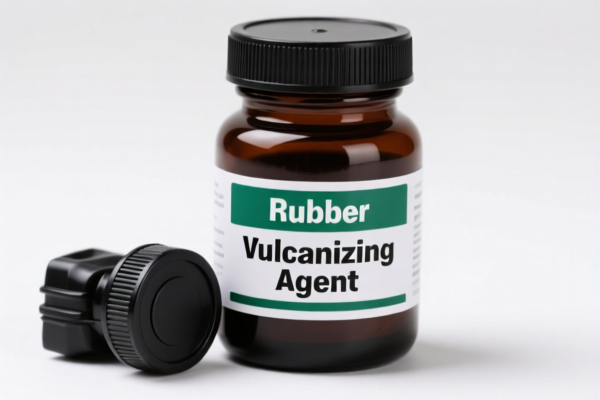
rubber vulcanizing agents
CN → US| HS编码 | 关税税率 | 原产国 | 目的国 | 文档 |
|---|---|---|---|---|
| 3815905000 | 40.0% | CN | US | 官方文档 |
| 3815903000 | 35.0% | CN | US | 官方文档 |
| 3824993200 | 41.5% | CN | US | 官方文档 |
| 3824993990 | 35.0% | CN | US | 官方文档 |
| 2830901500 | 37.8% | CN | US | 官方文档 |
商品图片



AI分析
🏭 Rubber Vulcanizing Agents (Curing Agents)
🌐 HS Code Reference & Customs Clearance Guide | 2026 Latest Tariff Breakdown | Professional Import Strategy
📌 I. Product Definition & Classification: Do You Truly Understand "Vulcanizing Agents"?
Rubber Vulcanizing Agents, often referred to as curing agents or accelerators, are critical chemical additives in the rubber industry. They facilitate the cross-linking of polymer chains, transforming soft, sticky raw rubber into durable, elastic, and heat-resistant finished products.
In international trade, these substances are not a single homogeneous entity. They are classified based on their chemical composition (organic vs. inorganic) and primary function (catalyst vs. chemical compound). Misclassification is common and can lead to significant tariff discrepancies.
⚠️ Key Distinction Points:
- If the substance is primarily a catalyst (reaction initiator/accelerator) without a specific inorganic composition → Likely 3815;
- If the substance is an inorganic sulfide (e.g., zinc sulfide, calcium sulfide) → Likely 2830;
- If the substance is a mixture of inorganic compounds not excluded elsewhere → Likely 3824.
📦 II. HS Code Classification Details (2026 Latest Harmonized System Authority Comparison)
| HS Code | Product Description | Applicability Scenario | Material/Function Basis |
|---|---|---|---|
3815.90.50.00 |
Catalysts: Reaction initiators, accelerators, and catalytic preparations (Other) | Organic or mixed organic/inorganic catalysts; general-purpose rubber curing agents | ✅ Function-based: Classified as a "catalyst" for reaction initiation. No specific inorganic material constraint. |
3815.90.30.00 |
Catalysts: Based on Inorganic Sulfides | Catalysts specifically composed of inorganic sulfides (e.g., ZnS, CaS) | ✅ Material-based: Composed entirely of inorganic substances, specifically sulfides. |
3824.99.32.00 |
Prepared Binders for Metal Foundry Molds & Core: Other Chemical Preparations | Complex mixtures of inorganic compounds used as catalysts; hydrogen sulfites, sulfites, or inorganic compound mixtures | ✅ Chemical Preparation: Fits "inorganic compound mixtures" used in chemical industry preparations. |
3824.99.39.90 |
Other Chemical Preparations: Inorganic Chemical Preparations (Other) | Mixtures of two or more inorganic compounds (e.g., multi-metal sulfides) not listed elsewhere | ✅ Mixture-based: "Other" category for inorganic chemical preparations; excludes specific lithium/nickel/cobalt compounds. |
2830.90.15.00 |
Sulfides, Polysulfides, and Thio-sulfates (Other) | Pure or dominant sulfide chemicals used as curing agents or raw materials | ✅ Material-based: Core material is explicitly "Sulfide/Polysulfide." |
🔍 Key Reminder:
- 3815 vs. 2830: If the primary function is catalytic activity (accelerating cure time), 3815 is often preferred. If the substance is primarily valued for its chemical identity as a sulfide, 2830 may apply.
- 3824 vs. 3815: 3824 is for "prepared binders and other chemical preparations." If the product is a complex mixture of inorganics not fitting other specific headings, 3824 acts as a residual category for chemical preparations.
- Do not split declarations: A single bag of mixed curing agents should be declared as one HS Code, not split into components.
💰 III. 2026 Latest Tariff Rate Breakdown (Including Duties, Surcharges, Policy Add-ons)
✅ Applicable Country: United States (US)
✅ Country of Origin: China (CN)
✅ Effective Date: November 10, 2025 onwards (for subsequent imports)
🎯 1. 3815.90.50.00 —— Catalysts: Other (Organic/Mixed)
| Item | Content |
|---|---|
| Base Duty Rate | 5.0% |
| Section 301 Surcharge | +25% |
| IEEPA Surcharge (122 Clause) | +10% |
| Total Duty Rate | 40.0% |
| Tax Calculation | CIF Value × 40% |
| De Minimis Eligibility | ❌ No (deny_de_minimis) |
| Legal Basis Path | USITC:3815.90.50.00 → Section301:301.68 → IEEPA:9903.01.25 |
📌 Explanation:
- This code falls under "Catalysts" where the specific inorganic composition isn't the defining factor for a lower duty.
- The 40% total rate is high due to the combination of base duties and multiple surcharges.
- Critical for Costing: This is the standard rate for most generic organic-based rubber accelerators.
🎯 2. 3815.90.30.00 —— Catalysts: Based on Inorganic Sulfides
| Item | Content |
|---|---|
| Base Duty Rate | 0.0% |
| Section 301 Surcharge | +25% |
| IEEPA Surcharge (122 Clause) | +10% |
| Total Duty Rate | 35.0% |
| Tax Calculation | CIF Value × 35% |
| De Minimis Eligibility | ❌ No |
| Legal Basis Path | USITC:3815.90.30.00 → Section301:301.68 → IEEPA:9903.01.24 |
📌 Explanation:
- Savings Alert: By specifying that the catalyst is inorganic sulfide-based, the base duty drops to 0%.
- Total Rate: Still 35%, which is 5% cheaper than the general catalyst code (3815.90.50.00).
- Requirement: You must provide technical data sheets proving the primary material is an inorganic sulfide (e.g., Zinc Sulfide).
🎯 3. 3824.99.32.00 —— Other Chemical Preparations (Inorganic Mixtures)
| Item | Content |
|---|---|
| Base Duty Rate | 6.5% |
| Section 301 Surcharge | +25% |
| IEEPA Surcharge (122 Clause) | +10% |
| Total Duty Rate | 41.5% |
| Tax Calculation | CIF Value × 41.5% |
| De Minimis Eligibility | ❌ No |
| Legal Basis Path | USITC:3824.99.32.00 → Section301:301.68 → IEEPA:9903.01.25 |
📌 Explanation:
- This is a higher cost option. It is used for complex mixtures of inorganic compounds where the catalyst function is secondary to the chemical preparation nature.
- Avoid if possible: Unless your product is a complex foundry binder or specific inorganic mix, this rate is less favorable.
🎯 4. 3824.99.39.90 —— Other Chemical Preparations (Inorganic, Other)
| Item | Content |
|---|---|
| Base Duty Rate | 0.0% |
| Section 301 Surcharge | +25% |
| IEEPA Surcharge (122 Clause) | +10% |
| Total Duty Rate | 35.0% |
| Tax Calculation | CIF Value × 35% |
| De Minimis Eligibility | ❌ No |
| Legal Basis Path | USITC:3824.99.39.90 → Section301:301.68 → IEEPA:9903.01.24 |
📌 Explanation:
- Competitive Rate: Like3815.90.30.00, this code has a 0% base duty.
- Use Case: Suitable for multi-metal sulfide mixtures that don't fit strictly under "catalyst" definitions or are considered "other inorganic preparations."
- Strategy: If technical data supports "inorganic mixture" rather than "pure catalyst," this is a viable 35% option.
🎯 5. 2830.90.15.00 —— Sulfides and Polysulfides (Other)
| Item | Content |
|---|---|
| Base Duty Rate | 2.8% |
| Section 301 Surcharge | +25% |
| IEEPA Surcharge (122 Clause) | +10% |
| Total Duty Rate | 37.8% |
| Tax Calculation | CIF Value × 37.8% |
| De Minimis Eligibility | ❌ No |
| Legal Basis Path | USITC:2830.90.15.00 → Section301:301.68 → IEEPA:9903.01.25 |
📌 Explanation:
- Material-Heavy Classification: If your product is primarily Sulfide/Polysulfide chemical raw material (e.g., Zinc Sulfide, Calcium Sulfide) used as a curing agent or filler, this code applies.
- Rate Comparison: 37.8% is higher than the 35% codes but lower than the 40% code.
- Risk: If customs determines the product is a "preparation" (mixture) rather than a "chemical substance," they may reject this code. Requires strong COA (Certificate of Analysis) showing high purity of sulfides.
🛠️ IV. Customs Clearance Practical Advice (Pitfall Avoidance Guide)
✅ 1. Documentation Checklist (Non-Negotiable)
| Document | Required? | Explanation |
|---|---|---|
| ✅ Technical Data Sheet (TDS) | ✔️ | Must explicitly state: "Vulcanizing Agent," "Curing Accelerator," or "Sulfide Compound." |
| ✅ Certificate of Analysis (COA) | ✔️ | Proves chemical composition (e.g., % Zinc Sulfide, % organic accelerators). Critical for distinguishing between 2830 and 3815. |
| ✅ Formula/Composition Breakdown | ✔️ | Detailed list of ingredients. If >50% inorganic sulfide, lean towards 2830 or 3815.90.30.00. |
| ✅ Product Photographs | ✔️ | Show packaging, labeling, and physical form (powder, liquid, pellets). |
| ✅ Commercial Invoice | ✔️ | Describe as "Rubber Vulcanizing Agent (Inorganic Sulfide)" or "Chemical Catalyst for Rubber Curing." Avoid vague terms like "Chemical Powder." |
| ✅ HS Code Ruling (Optional but Recommended) | ✔️ | If uncertain, obtain a US Customs Pre-Ruling to lock in the 35% rate. |
✅ 2. Declaration Tips (Key Mnemonics)
🔥 "Function Defines 3815, Composition Defines 2830/3824!"
| Scenario | Correct Declaration | Incorrect Practice |
|---|---|---|
| Organic Accelerator (e.g., CBS, MBT) | 3815.90.50.00 (40%) |
Misdeclare as "Sulfide" → 37.8% (Risk of rejection if no sulfide content) |
| Inorganic Sulfide Catalyst (e.g., ZnS) | 3815.90.30.00 (35%) |
Declare as "Other Chemical Prep" → 41.5% (Overpaying) |
| Complex Inorganic Mixture | 3824.99.39.90 (35%) |
Declare as "Catalyst" → 40% (If not strictly a catalyst function) |
| Pure Sulfide Raw Material | 2830.90.15.00 (37.8%) |
Declare as "Vulcanizing Agent" → 40% (If function is not primary) |
| Mixture of Organic & Inorganic | 3815.90.50.00 (40%) |
Split declaration → Penalty + Back Taxes! |
✅ 3. Special Circumstances Handling
| Situation | Handling Advice |
|---|---|
| Multi-Metal Sulfide Mix | Use 3824.99.39.90 (35%). Provide formula showing it's a mixture of inorganic compounds, not a single substance. |
| Organic Catalyst (No Sulfide) | Must use 3815.90.50.00 (40%). Do not attempt to classify under 2830. |
| Sample Shipment | Even small samples are subject to the same duties. No de minimis exemption for China-origin goods. |
| Bonds & Liquidity | Given the 35-41.5% duty rate, ensure your customs bond is sufficient to cover the duty value. |
🌍 V. Global Market Comparison (2026 Latest)
| Country/Region | Recommended HS Code | Tariff (China Origin) | Certification Requirements | Notes |
|---|---|---|---|---|
| 🇺🇸 USA | 3815.90.30.00 or 3824.99.39.90 |
35% (Lowest Effective) | None specific | High scrutiny on "Sulfide" claims. |
| 🇨🇳 China | 3815.90.50.00 |
5% | None | Domestic trade not affected by US surcharges. |
| 🇪🇺 EU | 3815.90.10 |
0% - 6% | REACH Registration | EU does not have Section 301/IEEPA surcharges. |
| 🇬🇧 UK | 3815.90.10 |
0% - 6% | UK REACH | Post-Brexit rules apply, but generally lower tariffs. |
| 🇻🇳 Vietnam | 3815.90.90 |
0% (if VN origin) | None | Consider supply chain shift to avoid US tariffs. |
📌 Conclusion:
- The US is the most expensive market due to the 35-41.5% effective duty rate.
- EU/UK/Asia offer significant cost advantages (0-6%).
- Strategic Move: If volume is high, consider substantial transformation in Vietnam or Mexico to qualify for preferential rates, though rubber chemicals often require significant processing to change origin.
📌 VI. Common Mistakes & Pitfall Guide (Lessons Learned)
❌ Mistake 1: Declaring all rubber chemicals as 2830.90.15.00 (37.8%)
👉 Consequence: If the product contains organic accelerators (e.g., Thiurams, Dithiocarbamates), customs will reclassify to 3815.90.50.00 (40%) and impose penalties.
❌ Mistake 2: Using vague descriptions like "Chemical Powder" on the Invoice
👉 Consequence: Customs may assign a general "Chemical" code with higher duties or hold the shipment for inspection.
❌ Mistake 3: Ignoring the "Inorganic Sulfide" distinction
👉 Consequence: Paying 40% (3815.90.50.00) when 35% (3815.90.30.00) was available. 5% savings is significant on high-volume shipments.
❌ Mistake 4: Assuming de minimis applies to small samples
👉 Consequence: No exemption. All China-origin chemical goods are subject to full duty.
✅ Correct Approach:
"Rubber Vulcanizing Agent, Inorganic Sulfide Based, Powder, HS 3815.90.30.00, Made in China"
🎯 VII. Conclusion: Precision in Classification Saves Money!
🎯 Remember This Mantra:
🔹 "Inorganic Sulfide? Go for 3815.90.30 (35%). Organic? 3815.90.50 (40%). Pure Sulfide? 2830.90.15 (37.8%)."
🔹 "Function is King for Catalysts, Composition is King for Chemicals."
🔹 "40% vs 35%: That 5% is your profit margin!"
📌 Pro Tip:
If your product is a complex mixture, request a Customs Ruling from U.S. Customs and Border Protection (CBP) before the first shipment. A binding ruling on 3824.99.39.90 or 3815.90.30.00 can lock in the 35% rate and prevent costly disputes.
📣 Immediate Action:
📞 Consult your customs broker today.
📄 Provide TDS and COA.
🚀 Optimize your HS Code from 40% to 35% and save thousands on every container!
✨ Professional Clearance Starts with Accurate Classification!
💼 Your bottom line depends on the digits of your HS Code!
用户评价
关于 HS 编码归类
协调制度(HS)是由世界海关组织(WCO)制定的国际贸易商品分类标准。全球 200 多个国家采用 HS 系统作为海关关税、贸易统计和进出口监管的基础。
每个 HS 编码遵循以下层级结构:
- 章(2 位)——商品大类(例如:第 84 章:机器和机械设备)
- 品目(4 位)——章内的更具体分类
- 子目(6 位)——国际通用细分,所有 WCO 成员国统一使用
- 本国细分(8-10 位)——各国自行扩展的细分编码,如美国 HTSUS 10 位编码
正确的 HS 编码归类对于顺利通关、准确缴纳关税和遵守贸易法规至关重要。错误归类可能导致海关延误、多缴关税或罚款。
从CN进口到US时,适用的关税税率可能包括:
- 最惠国(MFN)税率——适用于 WTO 成员国的标准关税税率
- 普通税率——适用于无贸易协定国家
- 贸易救济关税——附加关税,如 301 条款(反倾销)、232 条款(国家安全)或反补贴税
本页内容仅供参考。如需正式归类,请咨询当地海关或持牌报关代理。