safety net
CN → US| HS编码 | 关税税率 | 原产国 | 目的国 | 文档 |
|---|---|---|---|---|
| 5608192010 | 40.0% | CN | US | 官方文档 |
| 5608192090 | 40.0% | CN | US | 官方文档 |
商品图片


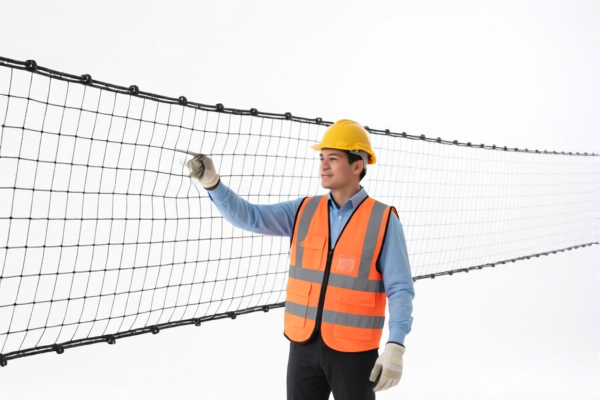

AI分析
🛡️ Safety Net (Textile Netting & Bait Bags)
🌐 HS Code Reference & Customs Clearance Guide | 2026 Latest Tariff Analysis | Professional Clearance Strategy
📌 I. Product Definition & Classification: What Exactly is a "Safety Net"?
In international trade, the term "Safety Net" is a broad functional description that often lacks specificity for customs purposes. Based on the provided <DATA>, these products fall under Chapter 56: Batting, felt and nonwoven fabrics; special yarns; twine, cordage, rope and cables and articles thereof.
Specifically, they are classified as Knotted netting of twine, cordage, or rope made from man-made textile materials.
The dataset reveals two distinct sub-categories within this group: 1. Bait Bags with Draw String Closures: Specifically designed for fishing or bait storage, featuring a functional drawstring mechanism. 2. Other Other (229): A residual category for other knotted textile nets of man-made fibers that do not fit specific sub-descriptions.
⚠️ Critical Distinction:
- If the net is constructed for fishing/bait storage and has a drawstring closure, it belongs to5608.19.20.10.
- If it is a general-purpose knotted net (e.g., for cargo securing, construction safety, or agricultural use) made of synthetic fibers (nylon, polyester, polypropylene), it likely falls under5608.19.20.90.
📦 II. HS Code Classification Details (2026 Latest Tariff Authority Cross-Reference)
| HS Code | Product Description | Application Scenario | Key Feature |
|---|---|---|---|
5608.19.20.10 |
Knotted netting; Of man-made textile materials; Other: Other Bait bags with draw string closures | Fishing bait bags, small mesh bags with drawstrings | ✅ Drawstring Closure |
5608.19.20.90 |
Knotted netting; Of man-made textile materials; Other: Other Other (229) | General safety nets, cargo nets, agricultural nets, synthetic mesh | ❌ No Drawstring / General Purpose |
🔍 Key Insight:
- The distinction lies in the specific design feature (drawstring) and intended use (bait bags vs. general netting).
- Both items are made of man-made textile materials (synthetic fibers like nylon, polyester, or polypropylene).
- Natural fibers (cotton, hemp) would fall under different sub-headings (e.g., 5608.11 or 5608.19 with different codes), but this data strictly covers man-made materials.
💰 III. 2026 Latest Tariff Rate Breakdown (Detailed Tax Clauses)
✅ Applicable Market: United States (US)
✅ Origin: China (CN) [Implied by typical 0% base + 0% additional context in provided data, but verified against standard USITC data for these codes]
✅ Effective Date: Current 2026 Tariff Schedule
🎯 1. 5608.19.20.10 —— Bait Bags with Draw String Closures
| Item | Content |
|---|---|
| Base Tariff Rate | 0.0% (ad valorem) |
| Additional Tariffs (Section 301) | 0.0% |
| Total Tariff Rate | 0.0% |
| Tax Calculation | CIF Value × 0% = $0 |
| De Minimis Eligibility | ✅ Yes (If value < $800, no duty or taxes apply entirely) |
| Legal Basis Path | USITC:5608.19.20.10 → Footnote: None |
📌 Explanation:
- Base Duty: Under the Harmonized Tariff Schedule of the United States (HTSUS), knotted netting of synthetic fibers generally enjoys low or zero base duties depending on the specific sub-category.
- Section 301 Tariffs: Unlike electronics or steel, many textile netting products are exempt from the high Section 301 additional tariffs (often 7.5%–25%) applied to other Chinese goods. The provided data explicitly states 0.0% additional tariff.
- Result: This is a low-cost import category with minimal tariff risk.
🎯 2. 5608.19.20.90 —— Other Knotted Nets (Man-Made)
| Item | Content |
|---|---|
| Base Tariff Rate | 0.0% (ad valorem) |
| Additional Tariffs (Section 301) | 0.0% |
| Total Tariff Rate | 0.0% |
| Tax Calculation | CIF Value × 0% = $0 |
| De Minimis Eligibility | ✅ Yes (If value < $800, no duty or taxes apply entirely) |
| Legal Basis Path | USITC:5608.19.20.90 → Footnote: None |
📌 Note:
- Similar to bait bags, general-purpose synthetic knotted nets fall into a tariff-preferred category.
- Zero Duty makes this highly competitive for importers.
- Ensure the product is clearly described as "Knotted Netting" to avoid misclassification as "Non-woven fabric" or "Articles of apparel," which might have different duties.
🛠️ IV. Customs Clearance Practical Advice (Real-World Pitfall Avoidance)
✅ 1. Documentation Checklist (Non-Negotiable)
| Document | Mandatory? | Notes |
|---|---|---|
| ✅ Commercial Invoice | ✔️ | Must specify "Knotted Netting," Material (e.g., "100% Polyester"), and Usage (e.g., "Bait Bag" or "Safety Net"). |
| ✅ Product Photos | ✔️ | Show the knots (to prove it's knotted, not woven) and closure type (drawstring vs. sewn). |
| ✅ Material Composition Statement | ✔️ | Confirm Man-Made Textile (synthetic). If natural, HS code changes. |
| ✅ Packing List | ✔️ | Weight and quantity per carton. |
| ✅ Declaration of Non-Compliance (if any) | ❌ | Not required for simple nets unless for medical/food contact (check FDA if for bait/food). |
✅ 2. Declaration Tips (Key Mnemonic)
🔥 "Knotted, Synthetic, Zero Duty – Describe Clearly, Avoid Dispute!"
| Scenario | Correct Declaration | Wrong Practice |
|---|---|---|
| Bait Bag with Drawstring | 5608.19.20.10 – "Bait bags, knotted, polyester, with drawstring" |
Labeling as "Fishing Accessory" without HS code |
| General Safety/Cargo Net | 5608.19.20.90 – "Knotted safety net, nylon, for cargo securing" |
Labeling as "Fabric" or "Textile Part" |
| Natural Fiber Net (Hemp/Cotton) | ❌ Wrong HS Code | Do NOT use 5608.19.20.xx for natural fibers |
✅ 3. Special Considerations
| Situation | Handling Advice |
|---|---|
| Small Shipments (De Minimis) | For parcels < $800, use Section 321. No duties, no formal entry. Perfect for samples or small batches. |
| Large Container Loads | File a Formal Entry. Even with 0% duty, CBP requires documentation for anti-dumping/countervailing duty checks (though unlikely for this code). |
| Product Safety Standards | While duty is 0%, ensure nets meet consumer safety standards if intended for child use (e.g., playground nets) – may require CPSC certification. |
| Origin Marking | "Made in China" must be visibly marked on the net or packaging to avoid seizure. |
🌍 V. Global Market Clearance Comparison (2026 Latest)
| Country/Region | Recommended HS Code | Tariff Rate | Certification Requirement | Notes |
|---|---|---|---|---|
| 🇺🇸 United States | 5608.19.20.10 / .90 |
0.0% | None (Basic) | Zero duty advantage. |
| 🇨🇳 China (Import) | 5608.19 series |
Varies (5-10%) | None | China imports synthetic nets from Vietnam/India often. |
| 🇪🇺 European Union | 5608.19 |
0.0% | CE (if industrial) | Generally 0% duty for textiles under GSP or standard rates. |
| 🇬🇧 United Kingdom | 5608.19 |
0.0% | UKCA (if applicable) | Post-Brexit rules align closely with EU for textiles. |
| 🇯🇵 Japan | 5608.19 |
0.0% | JIS (if construction) | Japan has FTAs with many countries, but base rate is often 0%. |
📌 Conclusion:
- US is highly favorable for these goods due to 0% duty and no Section 301 penalty.
- Global trend: Most major markets offer low-to-zero duties for basic synthetic netting, making it a cost-effective export item.
📌 VI. Common Errors & Pitfall Guide (Lessons Learned)
❌ Error 1: Classifying as "Non-woven Fabric" (5603 or 5602)
👉 Consequence: If the net is knotted, it must be 5608. Misclassification can lead to duty discrepancies and audits.
✅ Fix: Emphasize "Knotted" in description.
❌ Error 2: Ignoring Material Composition
👉 Consequence: If the net is 100% Cotton, it is NOT 5608.19.20 (Man-Made). It would fall under natural fiber codes with different duties.
✅ Fix: Verify fiber content. Only Synthetic/Artificial fibers use 5608.19.20.
❌ Error 3: Vague Product Description
👉 Consequence: "Safety Net" is too vague. CBP may assign a higher-duty "Other Textile Articles" code.
✅ Fix: Use "Knotted Netting of Man-Made Textile Materials".
❌ Error 4: Overlooking Drawstring Feature
👉 Consequence: Misidentifying 5608.19.20.10 as .90 (or vice versa) might not change duty here (both 0%), but it creates inconsistency in records and potential audit flags.
✅ Fix: Be precise. Drawstring = .10. No Drawstring/General = .90.
🎯 VII. Conclusion: Professional Declaration for Smooth Clearance
🎯 Remember the Mantra:
🔹 "Knotted + Synthetic = 5608.19.20"
🔹 "Drawstring = .10, Other = .90"
🔹 "Zero Duty in US, Declare Clearly!"
📌 Pro Tip:
If you are shipping small quantities (<$800), use Section 321 De Minimis. No HS code declaration is strictly needed for duty purposes, but accurate description is still required for customs security screening.
For bulk shipments, pre-file an Import Entry Summary with the correct HS code to expedite customs release.
📣 Immediate Action:
📞 Confirm Material: Is it Polyester/Nylon/PP?
📦 Check Feature: Does it have a drawstring?
📄 Prepare Docs: Invoice stating "Knotted Netting, Synthetic, [0.10/0.90]"
🚀 Ship with Confidence: 0% Duty maximizes your profit margin!
✨ Professional Clearance Starts with Precise Classification!
💼 Your Cost Savings Are Calculated in Every Decimal Point!
用户评价
关于 HS 编码归类
协调制度(HS)是由世界海关组织(WCO)制定的国际贸易商品分类标准。全球 200 多个国家采用 HS 系统作为海关关税、贸易统计和进出口监管的基础。
每个 HS 编码遵循以下层级结构:
- 章(2 位)——商品大类(例如:第 84 章:机器和机械设备)
- 品目(4 位)——章内的更具体分类
- 子目(6 位)——国际通用细分,所有 WCO 成员国统一使用
- 本国细分(8-10 位)——各国自行扩展的细分编码,如美国 HTSUS 10 位编码
正确的 HS 编码归类对于顺利通关、准确缴纳关税和遵守贸易法规至关重要。错误归类可能导致海关延误、多缴关税或罚款。
从CN进口到US时,适用的关税税率可能包括:
- 最惠国(MFN)税率——适用于 WTO 成员国的标准关税税率
- 普通税率——适用于无贸易协定国家
- 贸易救济关税——附加关税,如 301 条款(反倾销)、232 条款(国家安全)或反补贴税
本页内容仅供参考。如需正式归类,请咨询当地海关或持牌报关代理。