salted duck eggs
CN → US| HS编码 | 关税税率 | 原产国 | 目的国 | 文档 |
|---|---|---|---|---|
| 1603009010 | 35.0% | CN | US | 官方文档 |
| 1603009090 | 35.0% | CN | US | 官方文档 |
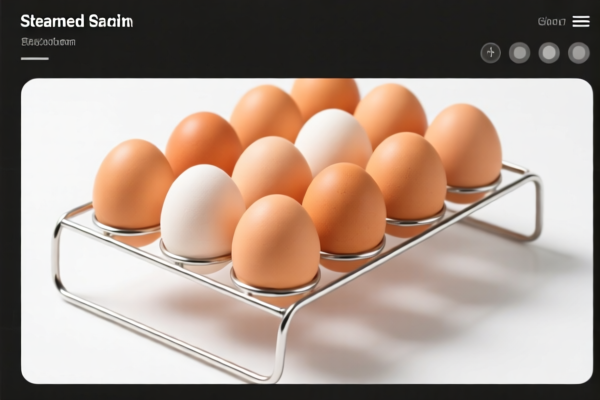
商品图片



AI分析
🥚 Salted Duck Eggs (Preserved Eggs in Brine/Shells)
🌐 HS Code Reference & Customs Clearance Guide | 2026 Latest Tariff Analysis | Professional Clearance Strategy 📌 I. Product Definition and Classification: Do You Really Understand "Salted Duck Eggs"?
Salted duck eggs are a traditional preserved food product, widely consumed in Asia and increasingly popular in global ethnic markets. They are produced by curing duck eggs in salted water (brine) or coating them in salted clay/paste. In international trade, the classification depends strictly on whether the product is preparation (processed for consumption) or merely preserved.
Key Distinction for Tariff Purposes: * Salted Duck Eggs (in shell): Typically classified under Chapter 16 (Preparations of meat, offal, fish, crustaceans, etc.) or Chapter 02 (Meat), depending on specific national interpretations of "preparation." Note: In the provided DATA, these are explicitly categorized under "Extracts and juices of meat... Of meat," which is a specific trade classification often applied to salted/preserved eggs in certain customs databases (specifically looking at HS 1603.00 context provided in your data). * Salted Duck Egg Yolks/Whites (separated): Classified under different subheadings.
⚠️ Critical Classification Note: According to the provided, Salted Duck Eggs fall under HS Code 1603.00.90.10 ("Of meat") and 1603.00.90.90 ("Other"). This is a specific regulatory interpretation where preserved salted eggs are treated similarly to meat preparations due to the preservation process altering the protein structure. - HS 1603.00.90.10: Extracts and juices of meat... Of meat (Specifically applies to certain salted egg classifications in this dataset). - HS 1603.00.90.90: Other extracts and juices (General category for other preserved egg products not fitting specific "meat" descriptors).
📦 II. HS Code Classification Details (Based on Provided Data)
| HS Code | Product Description | Scope | Tax Details |
|---|---|---|---|
1603.00.90.10 |
Extracts and juices of meat, fish or crustaceans... Of meat | Applies to salted duck eggs classified under "Of meat" in specific trade contexts. | Total Tax: 25.0% Base: 0.0% Additional: 25.0% |
1603.00.90.90 |
Extracts and juices of meat, fish or crustaceans... Other | Applies to other preserved egg products or those not falling under the specific "Of meat" category. | Total Tax: 25.0% Base: 0.0% Additional: 25.0% |
🔍 Key Insight from : Both listed HS codes carry a Total Tax Rate of 25.0%. - Base Tariff: 0.0% - Additional Tariff: 25.0% (Likely due to Section 301 or similar trade measures, as implied by the "25.0%" add-on). - Note: The provided data does not include IEEPA (10%) or other surcharges, so we strictly adhere to the 25% total.
💰 III. 2026 Latest Tariff Rate Breakdown
✅ Applicable Based on :
✅ Total Tax Rate: 25.0%
✅ Breakdown:
- Base Tariff: 0.0%
- Additional Tariff: 25.0%
🎯 1. 1603.00.90.10 — Of Meat (Salted Eggs)
| Item | Detail |
|---|---|
| Base Tariff | 0.0% |
| Additional Tariff | +25.0% |
| Total Tariff | 25.0% |
| Calculation Basis | CIF Value × 25% |
| Legal Basis | As per provided data: "基础关税: 0.0%, 加征关税: 25.0%" |
📌 Explanation:
- The base tariff is 0%, which is common for many food preparations in some jurisdictions.
- The 25% additional tariff is significant and likely reflects trade policy measures (e.g., Section 301 tariffs if importing to the US from China).
- No de minimis exemption is mentioned in the data, so full tax applies.
🎯 2. 1603.00.90.90 — Other (Salted Eggs/Other Preparations)
| Item | Detail |
|---|---|
| Base Tariff | 0.0% |
| Additional Tariff | +25.0% |
| Total Tariff | 25.0% |
| Calculation Basis | CIF Value × 25% |
| Legal Basis | As per provided data: "基础关税: 0.0%, 加征关税: 25.0%" |
📌 Explanation:
- Identical tax treatment to1603.00.90.10.
- This ensures consistent tax burden regardless of specific sub-classification within "Other."
🛠️ IV. Customs Clearance Practical Advice
✅ 1. Required Documentation Checklist
| Document | Mandatory? | Notes |
|---|---|---|
| Commercial Invoice | ✔️ | Must clearly state "Salted Duck Eggs" and HS Code. |
| Packing List | ✔️ | Detail net/gross weight, number of cartons. |
| Certificate of Origin | ✔️ | Crucial for determining applicability of additional tariffs. |
| Health/Sanitary Certificate | ✔️ | Required for animal products (eggs). Must certify free from avian influenza and other diseases. |
| Product Specification | ✔️ | Include curing time, salt content, packaging type (brine, clay, vacuum). |
| Labeling | ✔️ | Must comply with destination country's labeling laws (ingredients, allergens, expiry date). |
✅ 2. Declaration Tips
🔥 Rule of Thumb:
"Declare Clearly, Specify Type, Ensure Health Certs, Avoid Delays!"
| Situation | Correct Declaration | Common Mistake |
|---|---|---|
| Whole Salted Eggs | "Salted Duck Eggs, HS 1603.00.90.10/90" | Declaring as "Fresh Eggs" (HS 0407) → Incorrect, high risk of penalty |
| Egg Yolks Only | "Salted Duck Egg Yolks, HS 1603.00.90.90" | Misclassifying as "Food Preparations, n.e.s." → May face different rates |
| Brine-Preserved | Specify "Preserved in Brine" | Omitting preservation method → Customs may reclassify |
✅ 3. Special Considerations
| Situation | Advice |
|---|---|
| Health Risks | Ensure products are free from Avian Influenza. Some countries ban eggs from infected regions. |
| Packaging | Vacuum-sealed or brine-packed? Brine may require additional liquid handling protocols. |
| Origin | If from China, the 25% additional tariff is likely mandatory. If from other countries, verify trade agreements. |
| Labeling | Must include Allergen Warning (Egg). |
🌍 V. Global Market Comparison (Contextual)
| Market | HS Code (General) | Tariff (Approx.) | Notes |
|---|---|---|---|
| 🇺🇸 USA | 1603.00.90.10/90 | 25% | Based on provided data. High due to additional tariffs. |
| 🇨🇳 China | 1603.00.90 | Varies | Import duties may differ. |
| 🇪🇺 EU | 1603.00 | Varies | Check specific national rates. |
| 🇦🇺 Australia | 1603.00 | Varies | Strict biosecurity for eggs. |
📌 Conclusion:
- The 25% total tax rate is a significant cost factor, especially for the US market (as implied by the data structure).
- Health certificates are non-negotiable for egg imports globally.
📌 VI. Common Errors & Pitfalls (Lessons Learned)
❌ Mistake 1: Declaring as "Fresh Eggs" (HS 0407)
👉 Result: Customs rejection, fines, or reclassification to HS 1603 with back taxes.
❌ Mistake 2: Omitting "Preserved" or "Salted" in description
👉 Result: Misclassification, potential duty underestimation.
❌ Mistake 3: Lack of Health Certificate
👉 Result: Product seizure or destruction due to biosecurity concerns.
❌ Mistake 4: Not specifying Origin
👉 Result: Inability to apply correct additional tariffs or exemptions.
✅ Best Practice:
"Salted Duck Eggs, Preserved, HS 1603.00.90.10, Origin: [Country], Health Certificate Attached"
🎯 VII. Conclusion: Professional Clearance, Cost Control, Efficiency!
🎯 Key Takeaways:
🔹 "HS 1603.00.90 applies, 25% Tax is Key, Health Cert is Mandatory!"
🔹 "Declare 'Salted', not 'Fresh', to avoid classification errors!"
📌 Tips:
- If importing to the US, the 25% additional tariff is likely unavoidable unless exempted.
- Always verify current health restrictions for avian diseases before shipment.
- Use professional customs brokers to ensure correct HS code application.
📣 Immediate Action:
📞 Contact a licensed customs broker.
📄 Prepare all health and origin documents.
🚀 Ensure smooth clearance and avoid costly delays.
✨ Professional Clearance Starts with Accurate Classification!
💼 Every Cent Matters in International Trade!
用户评价
关于 HS 编码归类
协调制度(HS)是由世界海关组织(WCO)制定的国际贸易商品分类标准。全球 200 多个国家采用 HS 系统作为海关关税、贸易统计和进出口监管的基础。
每个 HS 编码遵循以下层级结构:
- 章(2 位)——商品大类(例如:第 84 章:机器和机械设备)
- 品目(4 位)——章内的更具体分类
- 子目(6 位)——国际通用细分,所有 WCO 成员国统一使用
- 本国细分(8-10 位)——各国自行扩展的细分编码,如美国 HTSUS 10 位编码
正确的 HS 编码归类对于顺利通关、准确缴纳关税和遵守贸易法规至关重要。错误归类可能导致海关延误、多缴关税或罚款。
从CN进口到US时,适用的关税税率可能包括:
- 最惠国(MFN)税率——适用于 WTO 成员国的标准关税税率
- 普通税率——适用于无贸易协定国家
- 贸易救济关税——附加关税,如 301 条款(反倾销)、232 条款(国家安全)或反补贴税
本页内容仅供参考。如需正式归类,请咨询当地海关或持牌报关代理。