salted raw cowhide for leather processing
CN → US| HS编码 | 关税税率 | 原产国 | 目的国 | 文档 |
|---|---|---|---|---|
| 4101501010 | 17.5% | CN | US | 官方文档 |
| 4101201010 | 17.5% | CN | US | 官方文档 |
| 4101501091 | 17.5% | CN | US | 官方文档 |
| 4104115080 | 13.3% | CN | US | 官方文档 |
| 4104195080 | 13.3% | CN | US | 官方文档 |
商品图片
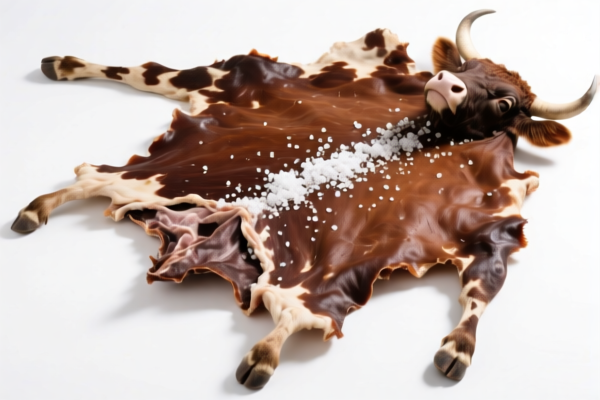
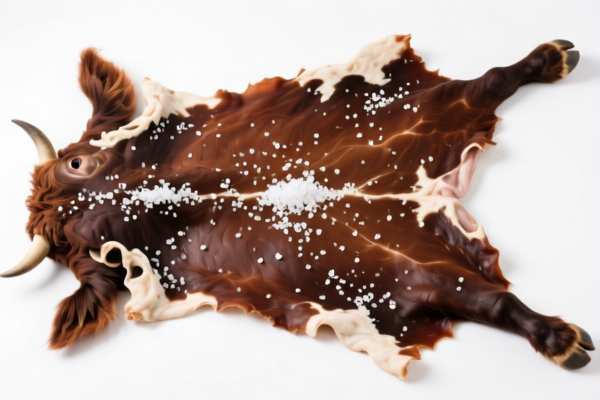

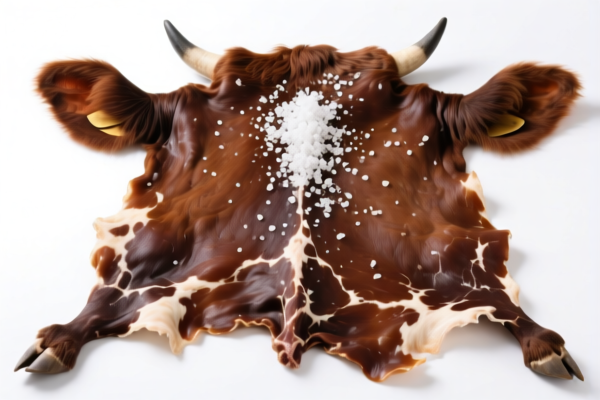
AI分析
🐄 Salted Raw Cowhide (Leather Processing Grade)
HS Code Classification & Customs Clearance Guide | 2024/2025 Tariff Regime
🌐 HS Code Reference & Customs Strategy | Precise Classification for Raw Hides
📌 一、Product Definition & Classification: What is "Salted Raw Cowhide"?
Salted Raw Cowhide refers to the fresh skin of cattle, preserved through salting to prevent decomposition. It is the primary raw material for the leather industry. In international trade, its classification depends heavily on: 1. Species: Is it strictly Cow/Cattle (Bos taurus) or Horse (Equus)? 2. Processing State: Is it Raw/Preserved (Ungreased, uncurried) or Partially Tanned/Dressed?
⚠️ Critical Distinction: - Raw/Hides (Chapter 41): Salting is a preservation method, not a tanning process. These fall under 4101 (Raw Hides) or 4104 (Leather). - If it is Horse Hide: Even if "salted," if it is considered "tanned or semi-tanned" in some jurisdictions, it may fall under 4104. However, based on the provided data, salted horse hides are split between 4101 (Raw) and 4104 (Tanned/Semi-tanned categories).
📦 二、HS Code Classification Matrix (Based on Provided Data)
| HS Code | Product Description | Classification Logic | Tax Rate (Total) |
|---|---|---|---|
4101.50.10.10 |
Salted Cowhide | Belongs to raw cattle hides; salting is for preservation. | 17.5% |
4101.20.10.10 |
Salted Cowhide | Meets classification criteria for raw cattle hides. | 17.5% |
4101.50.10.91 |
Salted Horsehide | Belongs to raw equine hides; salting is a preliminary form. | 17.5% |
4104.11.50.80 |
Salted Horsehide | Categorized under tanned or semi-tanned leather scope. | 13.3% |
4104.19.50.80 |
Salted Horsehide | Other equine leather; wet state or preliminary processing. | 13.3% |
🔍 Key Observation: - Cowhide is strictly classified under 4101 (Raw Hides) with a total tax of 17.5%. - Horsehide has a bifurcated classification: - If treated as Raw (
4101): 17.5% tax. - If treated as Semi-tanned/Processed (4104): 13.3% tax. - Note: Ensure the product specification explicitly states "Cowhide" to avoid misclassification as Horsehide, which has different regulatory nuances.
💰 三、2024/2025 Tariff Structure Breakdown
✅ Applicable Market: United States (US)
✅ Origin: Likely China/Global (Subject to Section 301 & IEEPA)
✅ Total Tax Rates: 17.5% (Cow/Horse Raw) & 13.3% (Horse Semi-tanned)
🎯 1. For Cowhide: HS Codes 4101.50.10.10 & 4101.20.10.10
| Item | Detail |
|---|---|
| Base Duty | 0.0% |
| Section 301 / Additional Duty | 7.5% |
| IEEPA / 122 Clause Duty | 10.0% |
| Total Effective Tax Rate | 17.5% |
| Calculation Basis | CIF Value × 17.5% |
📌 Explanation: - The base duty for raw hides is often 0%. - The 7.5% is likely a specific trade remedy duty (e.g., Section 301 or similar bilateral restrictions). - The 10% is an IEEPA (International Emergency Economic Powers Act) surcharge, commonly applied to Chinese-origin goods. - Result: A flat 17.5% effective rate. No de minimis exemption.
🎯 2. For Horsehide (Raw): HS Code 4101.50.10.91
| Item | Detail |
|---|---|
| Base Duty | 0.0% |
| Section 301 / Additional Duty | 7.5% |
| IEEPA / 122 Clause Duty | 10.0% |
| Total Effective Tax Rate | 17.5% |
| Calculation Basis | CIF Value × 17.5% |
📌 Explanation: - Same tax structure as cowhide. - Caution: Do not misdeclare horsehide as cowhide to avoid penalties. Customs can verify species through physical inspection or DNA testing.
🎯 3. For Horsehide (Semi-Tanned/Processed): HS Codes 4104.11.50.80 & 4104.19.50.80
| Item | Detail |
|---|---|
| Base Duty | 3.3% |
| Section 301 / Additional Duty | 0.0% |
| IEEPA / 122 Clause Duty | 10.0% |
| Total Effective Tax Rate | 13.3% |
| Calculation Basis | CIF Value × 13.3% |
📌 Explanation: - Lower base duty (3.3%) for processed leather categories. - No additional 7.5% trade remedy duty in this specific dataset, but the 10% IEEPA surcharge still applies. - Savings: $4.2\%$ lower than raw hides, but requires proof of "semi-tanned" status.
🛠️ 四、Customs Clearance Practical Advice
✅ 1. Documentation Checklist (Mandatory)
| Document | Required | Purpose |
|---|---|---|
| Commercial Invoice | ✔️ | Must clearly state: "Salted Raw Cowhide," Species, Weight (Net/Gross), Country of Origin. |
| Packing List | ✔️ | Detail number of hides, weight per hide, and palletization method. |
| Species Declaration | ✔️ | Explicitly state "Bos Taurus" (Cattle) or "Equus" (Horse). Misdeclaration leads to severe penalties. |
| Treatment Certificate | ✔️ | Proof of salting process to confirm "Raw" status (not tanned leather). |
| Phytosanitary/Veterinary Cert | ✔️ | Many countries require health certificates to prevent disease transmission. |
| Bill of Lading (B/L) | ✔️ | Ensure HS Codes match invoice. |
✅ 2. Declaration Tips (Crucial for Accuracy)
🔥 "Species Matters, Salt = Raw, Not Tanned!"
| Scenario | Correct HS Code | Incorrect Action |
|---|---|---|
| Raw Cowhide (Salted) | 4101.50.10.10 / 4101.20.10.10 |
Misclassify as Tanned Leather (4104) → Audit risk |
| Raw Horsehide (Salted) | 4101.50.10.91 |
Misclassify as Cowhide → Species mismatch penalty |
| Semi-Tanned Horsehide | 4104.11.50.80 |
Declare as Raw → Overpay tax or Underpay tax (if audited) |
| Wet Blue (Chromed Tanned) | Not in Data | Do NOT use raw hide codes. WET BLUE is a different chemical state. |
✅ 3. Special Considerations
| Situation | Advice |
|---|---|
| Mixing Hides | If a shipment contains both Cow and Horse hides, they must be declared separately on different line items to apply correct HS Codes and taxes. |
| Moisture Content | Salted hides often contain moisture. Ensure weight is declared as Net Weight of the hide + salt, not including packaging. |
| Origin Verification | Ensure the Certificate of Origin matches the IEEPA surcharge applicability. If from a country exempt from IEEPA (e.g., some ASEAN countries under certain FTAs), the 10% surcharge may be reduced. |
| Environmental Compliance | Salted hides may be subject to environmental regulations regarding brine disposal. Ensure the exporter complies with local disposal laws. |
🌍 五、Global Market Comparison (2024/2025)
| Market | Recommended HS Code | Total Tax Rate | Key Requirement |
|---|---|---|---|
| 🇺🇸 USA | 4101.50.10.10 |
17.5% | IEEPA 10% + Sec 301 7.5%. Strict species verification. |
| 🇨🇳 China | 4101.20.10.10 |
0% - 10% | Varies by trade agreement. Check FTA benefits. |
| 🇪🇺 EU | 4101 |
0% - 6.5% | CE marking not required for raw hides, but veterinary cert is. |
| 🇬🇧 UK | 4101 |
0% - 6.5% | Post-Brexit rules apply. Check UK Tariff. |
📌 Conclusion: - The US market has a unique high-tax structure (17.5%) due to trade policies. - Horsehide has a complex dual-path: Raw (17.5%) vs. Semi-Tanned (13.3%). Ensure accurate processing description. - Cowhide is straightforward: Always 17.5% under the provided data.
📌 六、Common Mistakes & Pitfalls
❌ Mistake 1: Declaring Horsehide as Cowhide to simplify paperwork. 👉 Consequence: Customs inspection reveals species mismatch → Fine, seizure, or back-taxes.
❌ Mistake 2: Classifying Salted Hides under Leather (4104) instead of Raw Hides (4101).
👉 Consequence:
- For Cowhide: Correct tax is 17.5%. If misdeclared as 4104 (hypothetically), you might underpay or overpay depending on the specific subheading.
- For Horsehide: Misdeclaring Raw (4101) as Semi-tanned (4104) to save 4.2% tax is high risk if the hides are not chemically treated.
❌ Mistake 3: Ignoring the IEEPA 10% Surcharge. 👉 Consequence: Underestimating landed cost by 10%, leading to budget overruns.
✅ Correct Approach:
"Salted Raw Cowhide, Bovine Species, Preserved with Salt, for Leather Manufacturing. HS Code: 4101.50.10.10."
🎯 七、Conclusion: Precision Saves Money
🎯 Key Takeaway:
🔹 "Raw is Raw: Salt = 4101. Tanned = 4104. Species = Critical."
🔹 "US Tax = 17.5% for Raw. Don't forget the 10% IEEPA."
🔹 "Horsehide has two paths: Raw (17.5%) vs. Semi-Tanned (13.3%). Choose wisely."
📌 Pro Tip: If your supplier is from Vietnam, India, or Turkey, check if they qualify for lower IEEPA duties or FTAs. The 10% surcharge is US-specific. For other markets, the base duty may be lower.
📣 Immediate Action:
📞 Verify Species: Confirm if hides are Cattle or Horse.
📄 Get Certificate: Obtain a Treatment Certificate proving "Raw/Salted" status.
📝 Accurate Declaration: Use the exact HS Code provided above to avoid customs delays.
✨ Clear Classification, Smooth Clearance, Maximized Profit!
💼 Every HS Code digit counts in global trade.
用户评价
关于 HS 编码归类
协调制度(HS)是由世界海关组织(WCO)制定的国际贸易商品分类标准。全球 200 多个国家采用 HS 系统作为海关关税、贸易统计和进出口监管的基础。
每个 HS 编码遵循以下层级结构:
- 章(2 位)——商品大类(例如:第 84 章:机器和机械设备)
- 品目(4 位)——章内的更具体分类
- 子目(6 位)——国际通用细分,所有 WCO 成员国统一使用
- 本国细分(8-10 位)——各国自行扩展的细分编码,如美国 HTSUS 10 位编码
正确的 HS 编码归类对于顺利通关、准确缴纳关税和遵守贸易法规至关重要。错误归类可能导致海关延误、多缴关税或罚款。
从CN进口到US时,适用的关税税率可能包括:
- 最惠国(MFN)税率——适用于 WTO 成员国的标准关税税率
- 普通税率——适用于无贸易协定国家
- 贸易救济关税——附加关税,如 301 条款(反倾销)、232 条款(国家安全)或反补贴税
本页内容仅供参考。如需正式归类,请咨询当地海关或持牌报关代理。