sample book
CN → US| HS编码 | 关税税率 | 原产国 | 目的国 | 文档 |
|---|---|---|---|---|
| 4911100080 | 17.5% | CN | US | 官方文档 |
| 4911100020 | 17.5% | CN | US | 官方文档 |
| 3926908700 | 40.3% | CN | US | 官方文档 |
| 4820500000 | 35.0% | CN | US | 官方文档 |
| 4820900000 | 35.0% | CN | US | 官方文档 |
| 3926904800 | 13.4% | CN | US | 官方文档 |
商品图片
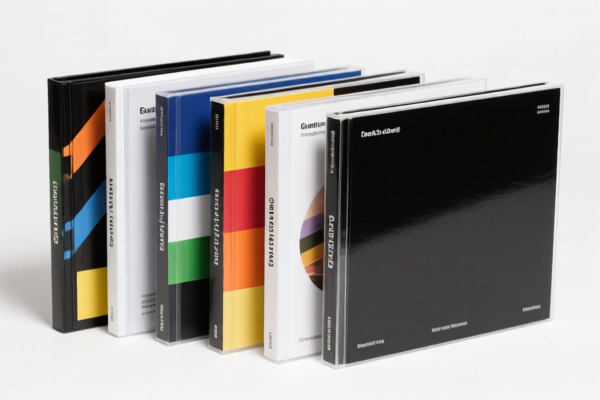
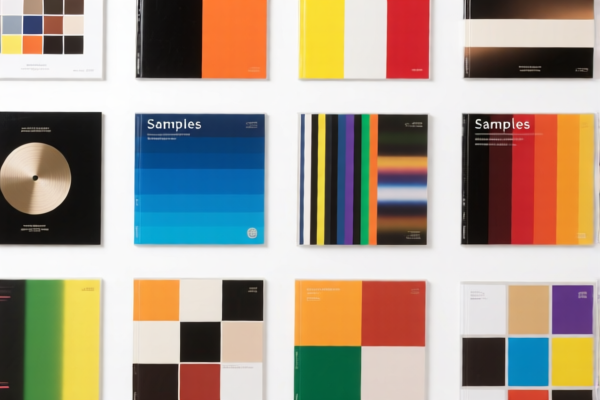
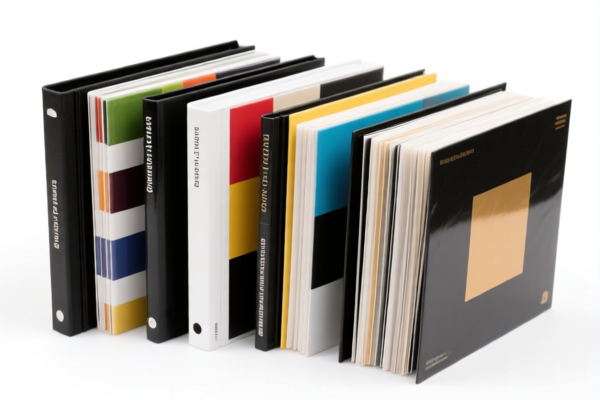
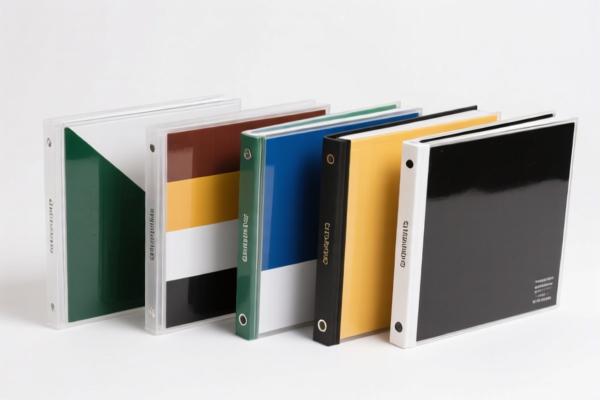
AI分析
📚 Sample Book (Trade Catalogues & Product Displays)
🌐 HS Code Reference & Customs Clearance Guide | 2026 Latest Tariff Analysis | Professional Strategy for Global Trade
📌 I. Product Definition & Classification: What Exactly is a "Sample Book"?
In international trade, a "Sample Book" is a broad term that can refer to various formats depending on its material composition and primary purpose. It is crucial to distinguish between:
- Paper-Based Catalogs/Sample Books: Printed materials used for commercial advertising, displaying product information, or serving as commercial directories. These fall under Chapter 49.
- Plastic/Flexible Binder Sample Books: Files or binders made of plastic materials used to hold samples or collections. These fall under Chapter 39.
- Paper/Cardboard Albums/File Holders: Books or folders made of paper or cardboard specifically designed for storing specimens or collections, often structured as albums. These fall under Chapter 48.
⚠️ Key Distinction Point:
- If the primary content is printed information (ads, catalogs) → Look at 4911.10
- If the primary form is a plastic file/binder holding samples → Look at 3926.90
- If it is a paper/cardboard album/folder for collections → Look at 4820.50 / 4820.90
📦 II. HS Code Classification Details (2026 Latest Tariff Authoritative Comparison)
| HS Code | Product Description | Applicable Scenario | Primary Material |
|---|---|---|---|
4911.10.00.80 |
Trade advertising material or commercial catalogue in printed form | Printed sample books, catalogs for trade shows | 📄 Paper/Printed |
4911.10.00.20 |
Sample book in printed form, used for displaying product information (trade ad/commercial directory) | Printed promotional sample books | 📄 Paper/Printed |
3926.90.87.00 |
Sample book in file binding form, material possibly flexible plastic or paper-plastic composite | Plastic binders, file folders for samples | 🧪 Plastic |
4820.50.00.00 |
Sample book used for storing samples or collections, material usually paper or cardboard | Paper albums, cardstock file holders | 📃 Cardboard/Paper |
4820.90.00.00 |
Sample book belongs to albums for samples or collections, material usually paper or cardboard | Other paper/cardboard albums | 📃 Cardboard/Paper |
3926.90.48.00 |
Sample book usage highly consistent with albums, material possibly plastic or related paper/composite | Plastic/paper-composite sample holders | 🧪 Plastic/Composite |
🔍 Important Reminder:
- If the item is primarily a printed advertisement or catalog showcasing products, it must be classified under 4911.10. - If the item is a physical container/binder (like a plastic sleeve or plastic folder) meant to hold samples, it falls under 3926.90. - Misclassification leads to significant tax differences (e.g., 17.5% vs 40.3%).
💰 III. 2026 Latest Tariff Rate Breakdown (Including Surtaxes & Policy Surcharges)
✅ Applicable Country: United States (US)
✅ Origin: China (CN)
✅ Effective Time: Current Trade Policy (Section 301 & IEEPA)
🎯 1. 4911.10.00.80 & 4911.10.00.20 —— Printed Sample Books (Trade Ads/Catalogs)
These two codes cover the most common "printed sample books" used in business marketing.
| Item | Details |
|---|---|
| Base Tariff | 0.0% (ad valorem) |
| Section 301 Surtax | +7.5% (USITC Footnote for Chapter 49) |
| IEEPA Surtax | +10% (Targeting Chinese/ HK products under IEEPA) |
| Total Tariff | 17.5% |
| Tax Calculation | CIF Value × 17.5% |
| De Minimis Eligibility | ❌ No (Section 321 exemption generally does not apply to goods subject to Section 301 or IEEPA surcharges above certain thresholds, or strictly denied for these specific surcharge codes). |
| Legal Basis Path | IEEPA:9903.01.25 → USITC:4911.10.00.80 → FOOTNOTE:9903.88.01 |
📌 Explanation:
- The 7.5% is the standard Section 301 surcharge for many Chinese imports. - The 10% is the additional IEEPA surcharge applied to Chinese goods. - Total: 17.5%. This is a moderate-high tariff, significantly higher than the base 0%.
🎯 2. 3926.90.87.00 —— Plastic/Flexible Sample Books
| Item | Details |
|---|---|
| Base Tariff | 5.3% |
| Section 301 Surtax | +25.0% (High-level Section 301 surcharge) |
| IEEPA Surtax | +10% |
| Total Tariff | 40.3% |
| Tax Calculation | CIF Value × 40.3% |
| De Minimis Eligibility | ❌ No |
| Legal Basis Path | IEEPA:9901.25 → IEEPA:9903.01.24 → USITC:3926.90.87.00 → FOOTNOTE:9903.88.01 |
📌 Warning:
- This tariff is very high (40.3%). - If your sample book has a plastic cover or is made of flexible plastic, customs may classify it here. - Strategy: If possible, emphasize the printed content (advertising/catalogue nature) to argue for classification under 4911.10 (17.5%) rather than 3926.90 (40.3%), provided the primary character is the information contained.
🎯 3. 4820.50.00.00 & 4820.90.00.00 —— Paper/Cardboard Albums/Folders
| Item | Details |
|---|---|
| Base Tariff | 0.0% |
| Section 301 Surtax | +25.0% (High-level Section 301 surcharge) |
| IEEPA Surtax | +10% |
| Total Tariff | 35.0% |
| Tax Calculation | CIF Value × 35.0% |
| De Minimis Eligibility | ❌ No |
| Legal Basis Path | IEEPA:9903.01.24 → USITC:4820.50.00.00 → FOOTNOTE:9903.88.01 |
📌 Note:
- Even though the base tariff is 0%, the 35% total tariff is still high due to surcharges. - These codes apply to purely paper/cardboard albums or file holders without significant plastic components.
🎯 4. 3926.90.48.00 —— Plastic/Paper Composite Sample Books (Alternative Plastic Code)
| Item | Details |
|---|---|
| Base Tariff | 3.4% |
| Section 301 Surtax | 0.0% (Specific subheading exemption or lower rate application) |
| IEEPA Surtax | +10% |
| Total Tariff | 13.4% |
| Tax Calculation | CIF Value × 13.4% |
| De Minimis Eligibility | ❌ No (Check specific ruling, but generally surcharges apply) |
| Legal Basis Path | IEEPA:9901.25 → USITC:3926.90.48.00 |
📌 Optimization Opportunity:
- This code has the lowest total tariff (13.4%) among plastic-based options. - It applies if the material is a plastic or paper-composite that fits this specific subheading description. - Strategy: If your product is a composite binder, verify if it fits 3926.90.48.00 instead of 3926.90.87.00 to save 27% in tariffs.
🛠️ IV. Customs Clearance Practical Advice (Pitfall Avoidance Guide)
✅ 1. Preparation Checklist (Essential Documents)
| Document | Required | Explanation |
|---|---|---|
| ✅ Product Specification | ✔️ | Clearly state dimensions, material (paper/plastic), and binding type. |
| ✅ Material Composition Statement | ✔️ | Specify % of paper vs. plastic vs. adhesive. Critical for Chapter 48 vs 39 vs 49. |
| ✅ Product Photos | ✔️ | Show the book open, closed, and any plastic components clearly. |
| ✅ Commercial Invoice | ✔️ | Description must match HS Code reasoning (e.g., "Printed Trade Catalogue" vs "Plastic Binder"). |
| ✅ Content Sample | ✔️ | Provide a copy of the pages to prove it is a "catalogue/advertisement" (supports 4911). |
✅ 2. Declaration Tips (Key Mantra)
🔥 "Material Dictates Code, Content Drives Value!"
| Scenario | Correct Declaration | Risk of Error |
|---|---|---|
| Printed book with plastic covers | 4911.10.00.80 (if printing is essential character) |
Misclassified as plastic file → 40.3% tax |
| Pure plastic binder with no print | 3926.90.87.00 |
Misclassified as paper → 35% tax |
| Paper album for collections | 4820.50.00.00 |
Misclassified as plastic → 40.3% tax |
| Composite plastic/paper file | 3926.90.48.00 (if eligible) |
Misclassified as 87.00 → Higher tax |
✅ 3. Special Handling
| Situation | Recommendation |
|---|---|
| Mixed Materials | If the book is 80% paper, 20% plastic, argue under 4911 (Chapter 49) as the essential character is the printed information. |
| OEM Custom Books | Provide design proofs to show it is a "trade advertisement" rather than a generic "file". |
| Plastic-Only Samples | If it is just a plastic sleeve with no print, it is 3926.90. Cannot be classified as 4911. |
🌍 V. Global Market Clearance Comparison (2026 Latest)
| Country/Region | Recommended HS Code | Tariff (China Origin) | Notes |
|---|---|---|---|
| 🇺🇸 USA | 4911.10.00.80 |
17.5% | Includes 7.5% Sec 301 + 10% IEEPA |
| 🇺🇸 USA | 3926.90.87.00 |
40.3% | High tariff for plastic binders |
| 🇺🇸 USA | 4820.50.00.00 |
35.0% | High tariff for paper albums |
| 🇪🇺 EU | 4911.10 |
0% - 6% | No Section 301/IEEPA surcharges |
| 🇨🇳 China | 4911.10 |
0% | No additional surcharges |
📌 Conclusion:
- USA is the most critical market for tariff optimization. - Classification as Printed Material (4911) saves ~23-27% compared to Plastic (3926) or Paper Albums (4820). - Ensure your product is printed and used for advertising/catalogue purposes to justify 4911.10.
📌 VI. Common Errors & Pitfalls (Lessons Learned)
❌ Error 1: Calling a "Plastic Binder" a "Sample Book" without specifying content
👉 Consequence: Customs classifies as plastic file (3926.90.87.00) → 40.3% tax.
❌ Error 2: Classifying a printed catalog as "Paper Album" (4820)
👉 Consequence: Tax rises from 17.5% to 35.0% → Unnecessary cost increase.
❌ Error 3: Not distinguishing between "Flexible Plastic" and "Composite"
👉 Consequence: Missed opportunity to use 3926.90.48.00 (13.4% tariff) instead of 3926.90.87.00 (40.3%).
✅ Correct Approach:
"Printed Trade Catalogue, Paper-Based, 2026 Model, Used for Product Display, with Plastic Covers (Minor Component)"
→ Justifies 4911.10.00.80 (17.5%).
🎯 VII. Conclusion: Precise Classification for Cost Savings
🎯 Remember the Mantra:
🔹 "Printed = 17.5%, Plastic Binder = 40.3%, Paper Album = 35%, Composite File = 13.4%!"
🔹 "HS Code decides tax rate, classify correctly, save thousands!"
📌 Pro Tip:
If your sample book is OEM printed and primarily serves as a marketing tool, insist on 4911.10.00.80.
If it is a generic plastic file holder with no specific print, accept 3926.90.87.00 or seek 3926.90.48.00 if materials allow.
Consider applying for an Advance Ruling from US Customs to lock in the 17.5% rate for printed materials.
📣 Immediate Action:
📞 Contact a licensed customs broker + Provide material samples + Request HS Code Advance Ruling
🚀 Ensure your sample books clear customs smoothly, minimize costs, and maximize profit!
✨ Professional Clearance Starts with Accurate Classification!
💼 Every percent of tariff saved is pure profit!
用户评价
关于 HS 编码归类
协调制度(HS)是由世界海关组织(WCO)制定的国际贸易商品分类标准。全球 200 多个国家采用 HS 系统作为海关关税、贸易统计和进出口监管的基础。
每个 HS 编码遵循以下层级结构:
- 章(2 位)——商品大类(例如:第 84 章:机器和机械设备)
- 品目(4 位)——章内的更具体分类
- 子目(6 位)——国际通用细分,所有 WCO 成员国统一使用
- 本国细分(8-10 位)——各国自行扩展的细分编码,如美国 HTSUS 10 位编码
正确的 HS 编码归类对于顺利通关、准确缴纳关税和遵守贸易法规至关重要。错误归类可能导致海关延误、多缴关税或罚款。
从CN进口到US时,适用的关税税率可能包括:
- 最惠国(MFN)税率——适用于 WTO 成员国的标准关税税率
- 普通税率——适用于无贸易协定国家
- 贸易救济关税——附加关税,如 301 条款(反倾销)、232 条款(国家安全)或反补贴税
本页内容仅供参考。如需正式归类,请咨询当地海关或持牌报关代理。