sbr solution for adhesive applications
CN → US| HS编码 | 关税税率 | 原产国 | 目的国 | 文档 |
|---|---|---|---|---|
| 3913901000 | 35.0% | CN | US | 官方文档 |
| 3506915000 | 37.1% | CN | US | 官方文档 |
| 4002190016 | 35.0% | CN | US | 官方文档 |
| 3506990000 | 37.1% | CN | US | 官方文档 |
商品图片
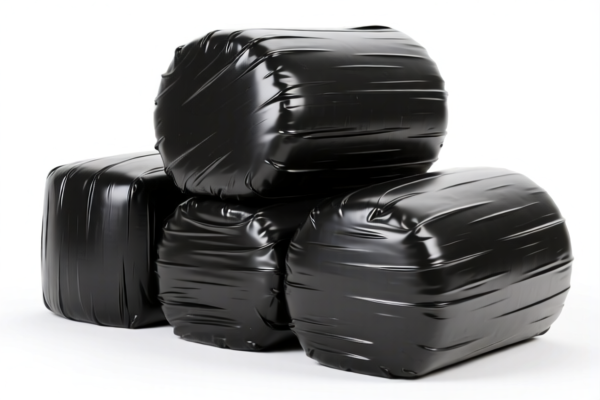
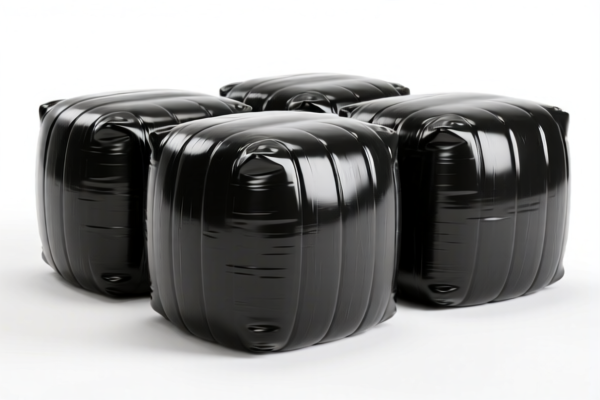
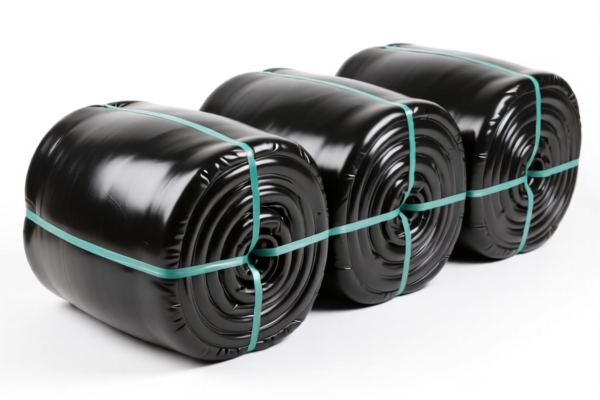
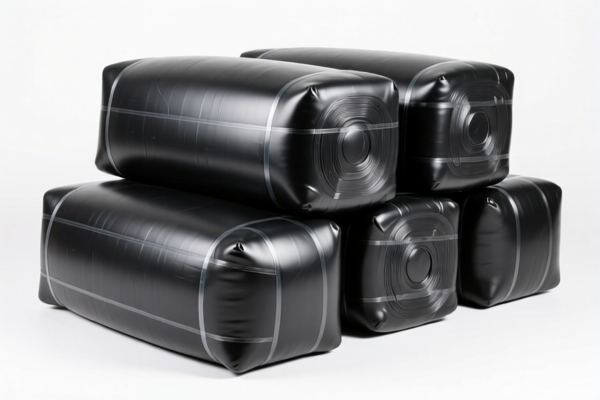
AI分析
🧪 SBR Solution for Adhesive Applications (Styrene-Butadiene Rubber)
🌐 HS Code Reference & Customs Clearance Guide | 2026 Latest Tariff Analysis | Professional Clearance Strategy
📌 1. Product Definition & Classification: What Exactly is "SBR Solution"?
SBR Solution for Adhesive Applications refers to Styrene-Butadiene Rubber produced via solution polymerization, specifically formulated or designated for use in adhesives. In international trade, this material sits at a crossroads between raw rubber materials and prepared adhesives.
The classification depends heavily on whether the product is declared as: 1. Raw Material (Unprepared Rubber): The SBR latex or solid rubber concentrate before final adhesive formulation. 2. Prepared Adhesive: The SBR already mixed with solvents, resins, or additives to form a ready-to-use adhesive or a specific adhesive base.
⚠️ Key Distinction Point:
- If it is pure SBR rubber (latex or solid) intended for adhesive manufacturing → It is a Rubber Product (Chapter 40).
- If it is SBR mixed with solvents/additives to be used as an adhesive → It is a Prepared Adhesive (Chapter 35).
📦 2. HS Code Classification Details (2026 Latest Tariff Authority对照)
Based on the provided data, there are four primary HS Codes applicable, split between Raw Rubber and Prepared Adhesives.
| HS Code | Product Description | Category | Tax Rate | Basis for Classification |
|---|---|---|---|---|
4002.19.00.16 |
Solution Polymerized SBR for Adhesive Use | Raw Rubber | 35.0% | Material is Styrene-Butadiene Rubber. Form is solution-polymerized. Used for adhesives but classified as the raw polymer material. |
3913.90.10.00 |
SBR (Chemical Derivative of Natural Rubber) for Adhesive Use | Raw Rubber | 35.0% | Material is SBR. Form is solution-method. Classified under chemical derivatives of natural rubber for adhesive applications. |
3506.91.50.00 |
Prepared Adhesive Containing SBR Solution | Prepared Adhesive | 37.1% | Material contains SBR but is defined as a "prepared adhesive" (mixture). Meets polymer/rubber requirements for adhesive formulation. |
3506.99.00.00 |
SBR Solution Used as Adhesive | Prepared Adhesive | 37.1% | Defined as "Other prepared adhesives." SBR solution is the base, but the product is functionally an adhesive. |
🔍 Critical Note:
- HS 4002/3913 (Raw Rubber): Lower tax rate (35%). Choose if you are importing the pure rubber polymer to manufacture adhesives later.
- HS 3506 (Prepared Adhesive): Higher tax rate (37.1%). Choose if you are importing a mixture that is already ready for adhesive use.
- Misclassification Risk: Declaring a pre-mixed adhesive as raw rubber (3506 vs 4002) can lead to audits and penalties.
💰 3. 2026 Latest Tariff Rate Breakdown (Including Surcharge & Policy Additions)
✅ Applicable Country: United States (US)
✅ Origin: China (CN)
✅ Effective Date: November 10, 2025 (and subsequent imports)
🎯 1. Raw Rubber Classification (4002.19.00.16 & 3913.90.10.00)
| Item | Content |
|---|---|
| Base Duty Rate | 0.0% (ad valorem) |
| Section 301 Surcharge | +25.0% (USITC Footnote 9903.88.01 equivalent for chemicals/rubbers) |
| 122 Clause Tariff | +10.0% (Specific Chinese trade policy surcharge) |
| Total Tax Rate | 35.0% |
| Tax Calculation | CIF Value × 35% |
| De Minimis Eligibility | ❌ No (deny_de_minimis) |
| Legal Basis Path | IEEPA:9903.01.25 → Section 301: 9903.88.01 → 122 Clause → HS Code |
📌 Explanation:
- The 0% base rate is offset by high political surcharges.
- Total 35% is a significant cost factor for raw material importers.
- This rate applies if the product is strictly SBR rubber (latex or solid) without additional adhesive formulations.
🎯 2. Prepared Adhesive Classification (3506.91.50.00 & 3506.99.00.00)
| Item | Content |
|---|---|
| Base Duty Rate | 2.1% (ad valorem) |
| Section 301 Surcharge | +25.0% |
| 122 Clause Tariff | +10.0% |
| Total Tax Rate | 37.1% |
| Tax Calculation | CIF Value × 37.1% |
| De Minimis Eligibility | ❌ No (deny_de_minimis) |
| Legal Basis Path | IEEPA:9903.01.25 → Section 301: 9903.88.01 → 122 Clause → HS Code |
📌 Explanation:
- Prepared adhesives have a slightly higher base duty (2.1% vs 0%).
- Total 37.1% is the cost for ready-to-use or semi-finished adhesive products.
- Warning: Even if the product is "just SBR in solution," if it is marketed as an "Adhesive Solution," Customs may classify it under Chapter 35, increasing the tax by 2.1%.
🛠️ 4. Customs Clearance Practical Advice (Real-World Pitfall Guide)
✅ 1. Required Documentation Checklist (Non-Negotiable)
| Document | Must Provide | Explanation |
|---|---|---|
| ✅ Product Specification Sheet | ✔️ | Must clearly state: "Styrene-Butadiene Rubber, Solution Polymerized." Include % Solids, Solvent Type (if any). |
| ✅ Formula/Composition Report | ✔️ | Critical for distinguishing between Raw Rubber (Chapter 40/39) and Prepared Adhesive (Chapter 35). |
| ✅ MSDS (Material Safety Data Sheet) | ✔️ | Must list chemical composition. If solvents/resins are added, it leans toward Chapter 35. |
| ✅ Commercial Invoice | ✔️ | Description must match HS Code logic: e.g., "SBR Latex for Adhesive Manufacturing" vs. "SBR Adhesive Solution." |
| ✅ Certificate of Origin | ✔️ | To confirm China origin for surcharge application. |
| ✅ Production Process Description | ✔️ | Explain if the product is "Unprepared" or "Prepared." |
✅ 2. Declaration Strategy (Key Mantra)
🔥 "Raw Rubber = Chapter 40/39 (35%); Prepared Adhesive = Chapter 35 (37.1%)! Misclassification = Penalty!"
| Scenario | Correct Declaration | Wrong Practice |
|---|---|---|
| Importing pure SBR latex/solids to mix later | 4002.19.00.16 or 3913.90.10.00 |
Declaring as "Adhesive" → Higher tax |
| Importing SBR mixed with solvents for direct use | 3506.91.50.00 or 3506.99.00.00 |
Declaring as "Raw Rubber" → Audit risk |
| SBR in Solution (Solvent + Rubber) | Check Formula: If only solvent+rubber, may be Chapter 35. | Assuming all "solution" products are Chapter 40 |
✅ 3. Special Cases Handling
| Case | Handling Advice |
|---|---|
| OEM Custom Adhesive | Provide customer formula + design specs. Avoid generic "Adhesive" names; use specific chemical names. |
| SBR Latex vs. Solid Rubber | Latex is often 4002.19. Solid rubber may be 4002.51 or 3913.90. Confirm physical state. |
| Duty Drawback | If imported as Raw Rubber (35%) and later exported as finished goods, potential for duty drawback exists. |
| Section 301 Exemption | No general exemption for SBR from China. Check for specific UFLPA compliance if supply chain is complex. |
🌍 5. Global Market Comparison (2026 Latest)
| Country/Region | Recommended HS Code | Tariff (China Origin) | Certification Requirements | Notes |
|---|---|---|---|---|
| 🇺🇸 USA | 4002.19.00.16 / 3506.91.50.00 |
35.0% - 37.1% | TSCA (Toxic Substances Control Act) | High surcharges due to 301 & 122 Clauses. |
| 🇨🇳 China | 4002.19.00.00 / 3506.91.00.00 |
Low (2-5%) | CCC (if applicable) | No 301 surcharges. |
| 🇪🇺 EU | 4002.19.00 / 3506.91.00 |
Varies (0-5%) | REACH Registration | REACH compliance is critical for chemicals. |
| 🇦🇺 Australia | 4002.19.00 / 3506.91.00 |
5% | ADR (Transport) | Generally lower tariffs than US. |
📌 Conclusion:
- The USA is the most expensive market for SBR due to Section 301 + 122 Clause surcharges.
- Chapter 35 (Prepared Adhesives) is slightly more expensive than Chapter 40 (Raw Rubber).
- Ensure your MSDS and Formula align perfectly with the declared HS Code.
📌 6. Common Errors & Pitfalls (Blood & Tears Lessons)
❌ Error 1: Declaring Prepared Adhesive as Raw Rubber
👉 Consequence: Customs may assess 37.1% instead of 35%, plus penalties for misclassification.
👉 Avoid: Provide a detailed formula showing if it is "prepared" or "unprepared."
❌ Error 2: Misidentifying Solution Polymerized SBR as Emulsion SBR
👉 Consequence: Different HS Code subheadings. Solution SBR is often 4002.19 or 3913.90. Emulsion is 4002.51.
👉 Avoid: Specify "Solution Polymerized" in the description.
❌ Error 3: Ignoring the 122 Clause
👉 Consequence: Failing to account for the 10% surcharge leads to budget miscalculations.
👉 Avoid: Always include 122 Clause in cost analysis for China-origin goods.
❌ Error 4: Vague Product Description ("SBR Rubber")
👉 Consequence: Customs detention for unclear classification.
👉 Avoid: Use precise terms: "Solution Polymerized Styrene-Butadiene Rubber, Latex Form."
✅ Correct Practice:
"SBR Solution Rubber, Solution Polymerized, Latex Form, For Adhesive Manufacturing, TSCA Compliant, HS: 4002.19.00.16"
🎯 7. Conclusion: Professional Declaration, Cost Optimization!
🎯 Remember the Mantra:
🔹 "Raw Rubber = 35%, Prepared Adhesive = 37.1%. 301+122 = 35%+."
🔹 "Chapter 40 vs 35: One small shift, big tax difference!"
📌 Pro Tip:
If your SBR solution is originating from Vietnam, Malaysia, or Thailand, you may qualify for IEEPA Exemptions, reducing tariffs to 0-5%.
Recommend applying for an Advance Ruling with US Customs if your product is on the borderline between Chapter 40 and 35.
📣 Immediate Action:
📞 Contact a licensed Customs Broker + Provide MSDS/Formula + Apply for HS Code Advance Ruling
🚀 Ensure smooth clearance, avoid audits, and protect your profit margins!
✨ Professional clearance starts with precise classification!
💼 Every cent of cost must be accurately calculated!
用户评价
关于 HS 编码归类
协调制度(HS)是由世界海关组织(WCO)制定的国际贸易商品分类标准。全球 200 多个国家采用 HS 系统作为海关关税、贸易统计和进出口监管的基础。
每个 HS 编码遵循以下层级结构:
- 章(2 位)——商品大类(例如:第 84 章:机器和机械设备)
- 品目(4 位)——章内的更具体分类
- 子目(6 位)——国际通用细分,所有 WCO 成员国统一使用
- 本国细分(8-10 位)——各国自行扩展的细分编码,如美国 HTSUS 10 位编码
正确的 HS 编码归类对于顺利通关、准确缴纳关税和遵守贸易法规至关重要。错误归类可能导致海关延误、多缴关税或罚款。
从CN进口到US时,适用的关税税率可能包括:
- 最惠国(MFN)税率——适用于 WTO 成员国的标准关税税率
- 普通税率——适用于无贸易协定国家
- 贸易救济关税——附加关税,如 301 条款(反倾销)、232 条款(国家安全)或反补贴税
本页内容仅供参考。如需正式归类,请咨询当地海关或持牌报关代理。