schoolbag
CN → US| HS编码 | 关税税率 | 原产国 | 目的国 | 文档 |
|---|---|---|---|---|
| 4202128910 | 52.6% | CN | US | 官方文档 |
| 4202923120 | 52.6% | CN | US | 官方文档 |
| 4820104000 | 35.0% | CN | US | 官方文档 |
| 4202110030 | 43.0% | CN | US | 官方文档 |
| 4202128920 | 52.6% | CN | US | 官方文档 |
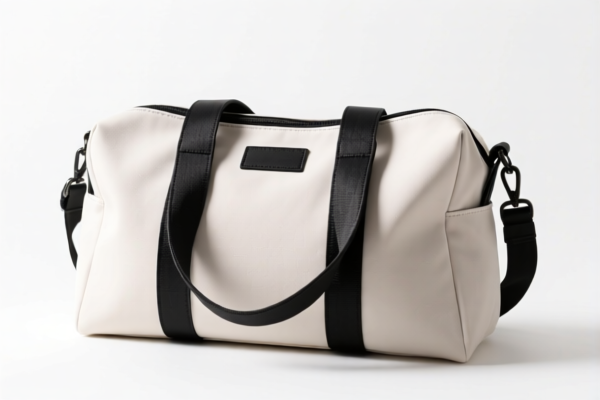
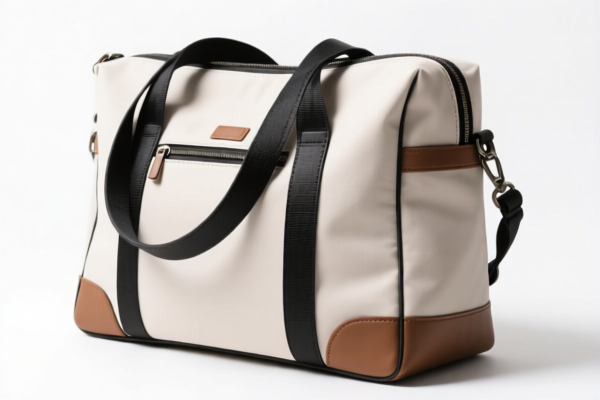
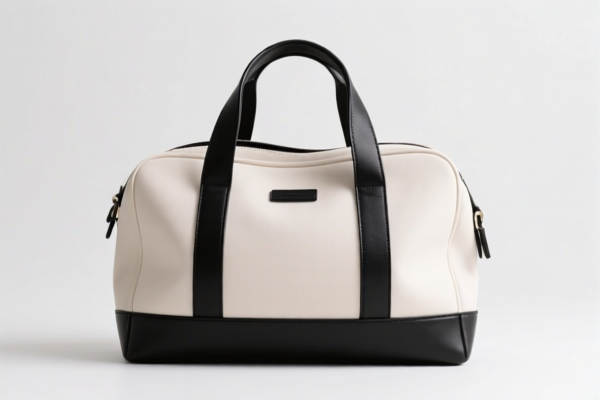
商品图片
AI分析
🎒 Schoolbags (Backpacks & Bags for Carrying Articles)
🌐 HS Code Reference & Customs Clearance Guide | 2026 Latest Tariff Analysis | Professional-Level Strategy 📌 I. Product Definition & Classification: Do You Really Understand "Schoolbags"?
In international trade, "schoolbags" are not a single HS code. They are classified based on surface material and specific shape/use. The most common classification falls under Chapter 42 (Articles of leather or synthetic leather), specifically Heading 42.02 (Trunks, suitcases, handbags, backpacks, etc.).
However, material dictates the code. A "schoolbag" made of paper goes to Chapter 48. One made of leather goes to a different subheading than one made of synthetic fibers or textile materials.
⚠️ Key Distinction Points: - Leather/Synthetic Leather Surface → 4202.11 (e.g., PU leather, genuine leather backpacks) - Textile Material Surface → 4202.12 (e.g., Nylon, Polyester, Canvas backpacks) - Paper/Cardboard → 4820.10 (e.g., Paper folders, cardboard storage bags)
📦 II. HS Code Classification Details (2026 Latest Tariff Authority Match)
Based on the provided data for "Schoolbags," here is the precise mapping of materials to HS Codes and Tax Rates.
| HS Code | Product Summary | Material/Shape Match | Total Tax Rate |
|---|---|---|---|
4202.12.89.10 |
Fabric Schoolbag | Textile Material Surface (General) | 52.6% |
4202.92.31.20 |
Fabric Backpack | Synthetic Fibers Material (Backpack Shape) | 52.6% |
4820.10.40.00 |
Student Bag | Paper/Cardboard Material or Stationery Use | 35.0% |
4202.11.00.30 |
Student Bag | Leather or Synthetic Leather Surface | 43.0% |
4202.12.89.20 |
Student Bag | Textile Material Surface (Specific Sub-use) | 52.6% |
🔍 Critical Note: - Textile bags (Nylon/Polyester) are subject to the highest tariff (52.6%) due to specific duty structures. - Leather bags have a lower base rate (8%), resulting in a lower total tax (43.0%). - Paper bags fall under a completely different chapter (Chapter 48) with a 35.0% total tax.
💰 III. 2026 Latest Tariff Rate Breakdown (Including Surcharges & Policy Add-ons)
✅ Applicable Market: United States (US)
✅ Origin: China (CN)
✅ Effective Time: Ongoing (Includes Section 301 and Section 122 tariffs)
🎯 1. 4202.12.89.10 & 4202.12.89.20 & 4202.92.31.20
(Textile/Synthetic Fiber Schoolbags & Backpacks)
| Item | Content |
|---|---|
| Base Duty Rate | 17.6% (Standard MFN Duty for Textile Bags) |
| Section 301 Surcharge | +25.0% (Added tariff under Trade Act Section 301) |
| Section 122 Surcharge | +10.0% (Additional tariff under Section 122) |
| Total Tax Rate | 52.6% |
| Tax Calculation | CIF Value × 52.6% |
| De Minimis Exemption | ❌ Not Eligible (Deny De Minimis) |
| Legal Basis Path | Section 301 → Section 122 → USITC:4202.12/4202.92 |
📌 Explanation: - "Base Duty 17.6%": This is the standard Most-Favored-Nation (MFN) duty for textile bags. - "Section 301 Surcharge 25%": This is the famous US-China trade war tariff, applicable to most Chinese-made goods. - "Section 122 Surcharge 10%": An additional national security-related tariff imposed on specific categories of imports. - Total 52.6%: This is a very high tax burden. Importers must price accordingly.
🎯 2. 4202.11.00.30
(Leather or Synthetic Leather Student Bags)
| Item | Content |
|---|---|
| Base Duty Rate | 8.0% (Standard MFN Duty for Leather Bags) |
| Section 301 Surcharge | +25.0% |
| Section 122 Surcharge | +10.0% |
| Total Tax Rate | 43.0% |
| Tax Calculation | CIF Value × 43.0% |
| De Minimis Exemption | ❌ Not Eligible |
| Legal Basis Path | Section 301 → Section 122 → USITC:4202.11 |
📌 Comparison: - Compared to textile bags, leather bags save 9.6% in total tax due to the lower base rate (8% vs. 17.6%). - However, both are still subject to the 35% combined surcharge (25% + 10%).
🎯 3. 4820.10.40.00
(Paper/Cardboard Student Bags)
| Item | Content |
|---|---|
| Base Duty Rate | 0.0% (Duty-free for many paper products) |
| Section 301 Surcharge | +25.0% |
| Section 122 Surcharge | +10.0% |
| Total Tax Rate | 35.0% |
| Tax Calculation | CIF Value × 35.0% |
| De Minimis Exemption | ❌ Not Eligible |
| Legal Basis Path | Section 301 → Section 122 → USITC:4820.10 |
📌 Note: - While the base duty is 0%, the surcharges still apply. - This is the lowest total tax rate among the options, making paper-based school supplies more tax-efficient in this specific regulatory environment.
🛠️ IV. Customs Clearance Practical Advice (Pitfall Avoidance Guide)
✅ 1. Preparation Checklist (Must-Have)
| Document | Required | Description |
|---|---|---|
| ✅ Product Spec Sheet | ✔️ | Must clearly state material composition (e.g., 100% Nylon, PU Leather, Paper). |
| ✅ Material Breakdown | ✔️ | Customs will check if "Textile" vs. "Leather" is accurate. Misclassification leads to penalties. |
| ✅ Product Photos | ✔️ | Clear images of the bag, including lining, zippers, and labels. |
| ✅ Commercial Invoice | ✔️ | Must specify: "Schoolbag/Backpack," Material, Country of Origin (China). |
| ✅ Packing List | ✔️ | Weight and dimensions for accurate duty calculation. |
| ✅ Origin Certificate | ✔️ | Proof of Chinese origin to apply correct Section 301/122 tariffs. |
✅ 2. Declaration Tips (Key Mantras)
🔥 "Material Defines Code, Surcharge Adds 35%, Don't Split Shipment!"
| Scenario | Correct Declaration | Wrong Practice |
|---|---|---|
| Nylon Backpack | HS: 4202.12.89.10Name: "Nylon Backpack" |
Misdeclare as "Textile Tote" → Lower base rate but wrong code. |
| PU Leather Bag | HS: 4202.11.00.30Name: "PU Leather Student Bag" |
Misdeclare as "Fabric Bag" → Risk of audit & back taxes. |
| Paper Folder/Bag | HS: 4820.10.40.00Name: "Paper Student Storage Bag" |
Misdeclare as "Leather" → High tax + compliance issue. |
| Mixed Materials | Determine Outer Surface Material | Guessing material → Clearance delay. |
📌 Crucial Rule: - The HS Code is determined by the outer surface material. - If a bag has a textile outer but a leather trim, it is still classified as Textile (
4202.12). - If a bag has a leather outer with textile lining, it is Leather (4202.11).
✅ 3. Special Circumstances
| Situation | Handling Advice |
|---|---|
| OEM Custom Bags | Provide client design specs to prove material type. Avoid vague terms like "Synthetic" without specifying "Polyester" or "Nylon." |
| Bag with Electronics | If it contains a USB port or battery, it may be classified as a "Case for Electronics" (Chapter 85), not Chapter 42. High Risk! |
| Small Quantity (De Minimis) | ❌ Cannot use De Minimis (Section 321). Section 301 and 122 tariffs deny the $800 de minimis exemption for Chinese goods. Even small shipments are taxed. |
| Re-Export | If re-exporting to a non-US country, consider duty drawback programs, but tariffs are usually paid at import. |
🌍 V. Global Market Clearance Comparison (2026)
| Country/Region | Recommended HS Code | Tax Rate (China Origin) | Key Certification | Notes |
|---|---|---|---|---|
| 🇺🇸 USA | 4202.12.89.10 (Textile) |
52.6% | None (but C-TPAT helpful) | Highest Tariff due to 301+122. |
| 🇨🇳 China | 4202.12.89.10 |
17.6% (Base) | CCC (if applicable) | No Section 301/122 surcharges domestically. |
| 🇪🇺 EU | 4202.12.89.10 |
12% (Standard) | CE (if electronics) | No Section 301/122. Lower tax than US. |
| 🇦🇺 Australia | 4202.12.89.10 |
5% | SAA Certification | Lower tax burden. |
| 🇯🇵 Japan | 4202.12.89.10 |
8-10% | PSE (if electronics) | No extra surcharges. |
📌 Conclusion: - USA is the most expensive market for Chinese schoolbags due to Section 301 (+25%) and Section 122 (+10%) tariffs. - EU, Australia, and Japan offer significantly lower tax rates (5-12%), making them more competitive for Chinese exporters.
📌 VI. Common Errors & Pitfall Guide (Blood & Tears Lessons)
❌ Error 1: Declaring a "Textile Bag" as "Leather" to avoid 25% tariff
👉 Consequence: Customs audit → Back taxes + Penalties + Delay.
❌ Error 2: Ignoring Section 122 Tariff
👉 Consequence: Underpayment of 10% → Seizure of goods.
❌ Error 3: Assuming De Minimis ($800) applies
👉 Consequence: Goods held at border, taxed on every item. Chinese goods do not qualify for de minimis under current US trade policies.
❌ Error 4: Misidentifying "Synthetic Leather" as "Textile"
👉 Consequence: Tax discrepancy (43% vs. 52.6%). Small difference, but compliance risk.
✅ Correct Practice:
"Backpack, Nylon Outer, Polyester Lining, Zipper Closure, Model XYZ, Made in China"
🎯 VII. Conclusion: Professional Declaration, Save Costs!
🎯 Remember the Mantra:
🔹 "Textile 52%, Leather 43%, Paper 35%, Surcharge 35% Fixed!"
🔹 "De Minimis is Dead for China! Declare Accurately!"📌 Tip: - If you are shipping to the USA, consider supply chain diversification (e.g., manufacturing in Vietnam or India) to avoid Section 301 tariffs. - For non-US markets, leverage lower tariff rates by adjusting export destinations.
📣 Immediate Action:
📞 Contact a professional customs broker
📄 Prepare detailed material composition sheets
🚀 Accurate classification = Lower Risk + Predictable Costs
✨ Professional Clearance, Start with Accurate Classification! 💼 Every Cent in Tax Matters!
用户评价
关于 HS 编码归类
协调制度(HS)是由世界海关组织(WCO)制定的国际贸易商品分类标准。全球 200 多个国家采用 HS 系统作为海关关税、贸易统计和进出口监管的基础。
每个 HS 编码遵循以下层级结构:
- 章(2 位)——商品大类(例如:第 84 章:机器和机械设备)
- 品目(4 位)——章内的更具体分类
- 子目(6 位)——国际通用细分,所有 WCO 成员国统一使用
- 本国细分(8-10 位)——各国自行扩展的细分编码,如美国 HTSUS 10 位编码
正确的 HS 编码归类对于顺利通关、准确缴纳关税和遵守贸易法规至关重要。错误归类可能导致海关延误、多缴关税或罚款。
从CN进口到US时,适用的关税税率可能包括:
- 最惠国(MFN)税率——适用于 WTO 成员国的标准关税税率
- 普通税率——适用于无贸易协定国家
- 贸易救济关税——附加关税,如 301 条款(反倾销)、232 条款(国家安全)或反补贴税
本页内容仅供参考。如需正式归类,请咨询当地海关或持牌报关代理。