sealing clip
CN → US| HS编码 | 关税税率 | 原产国 | 目的国 | 文档 |
|---|---|---|---|---|
| 4016931010 | 37.5% | CN | US | 官方文档 |
| 4016935010 | 37.5% | CN | US | 官方文档 |
| 3926904590 | 38.5% | CN | US | 官方文档 |
| 3926904510 | 38.5% | CN | US | 官方文档 |
| 3926904590 | 38.5% | CN | US | 官方文档 |
商品图片

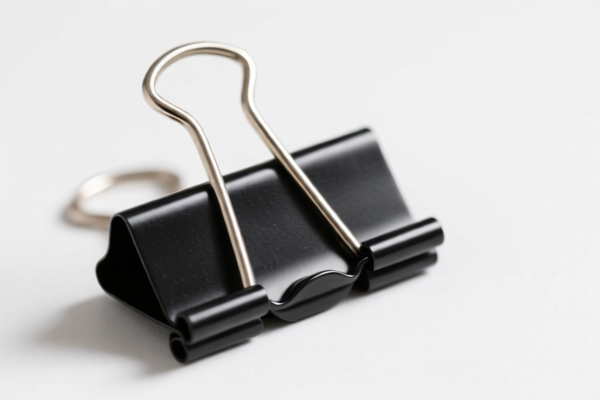

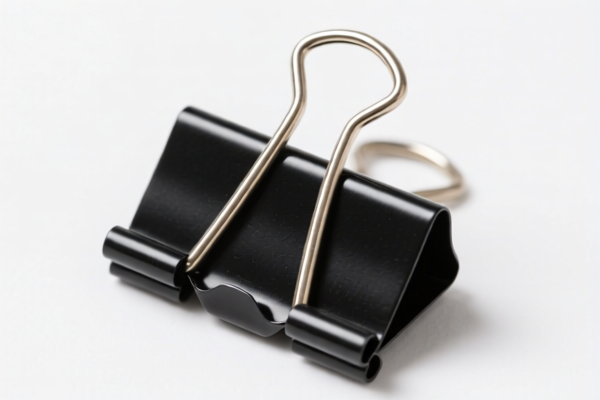
AI分析
🔒 Sealing Clip (Sealing Strip / Gasket)
🌐 HS Code Reference & Customs Clearance Guide | 2024/2025 Latest Tariff Analysis | Professional Compliance Strategy
📌 1. Product Definition & Classification: Do You Truly Understand "Sealing Clips"?
Sealing clips (also referred to as sealing strips, gaskets, or seals) are critical components used to prevent the leakage of fluids, gases, or dust, and to provide cushioning between surfaces. In international trade, they are broadly categorized under Gaskets, Washers, and Similar Articles (HS Chapter 40 or 39), depending on their material composition.
Since the input "Sealing Clip" does not explicitly specify the material, customs classification relies on functional inference and material presumption:
- Rubber/Synthetic Rubber Seals: If the clip is flexible, elastic, and used for dynamic/static sealing, it is likely rubber-based.
- Plastic/Polymer Seals: If the clip is rigid, semi-rigid, or made of thermoplastics, it falls under plastic articles.
⚠️ Key Distinction:
- If material is unknown/unspecified: Customs tends to infer based on common usage. For general-purpose sealing strips, Rubber (Chapter 40) or Plastic (Chapter 39) are the two primary competing categories.
- Misclassification Risk: Declaring a rubber seal as plastic (or vice versa) can lead to incorrect duty assessments and potential penalties.
📦 2. HS Code Classification Details (Latest Tariff Reference)
Based on the provided data, the following HS Codes are applicable for Sealing Clips, inferred from their usage (sealing components) and presumed material.
| HS Code | Product Description | Inferred Material | Functional Category |
|---|---|---|---|
4016.93.10.10 |
Sealing clips classified as seals, not specified by material but tending toward the scope of seals under this category. | Rubber (Implied by Ch. 40) | Gaskets, Washers, & Seals |
4016.93.50.10 |
Sealing clips belong to the seal category; inferred as rubber due to lack of specific material description. | Rubber | Gaskets, Washers, & Seals |
3926.90.45.90 |
Sealing clips fall under gaskets, washers, and seals; inferred as plastic material, no conflict with other plastic seal categories. | Plastic | Gaskets, Washers, & Seals |
3926.90.45.10 |
Sealing clips shape belongs to seal category; material inferred as plastic or rubber, no conflict with Chapter 39. | Plastic/Rubber | Gaskets, Washers, & Seals |
3926.90.45.90 |
Sealing kits/components belong to gaskets, washers, and seals; inferred as plastic, rubber, or synthetic materials. | Mixed/Synthetic | Gaskets, Washers, & Seals |
🔍 Critical Note:
- HS Code4016.93applies if the product is rubber-based.
- HS Code3926.90applies if the product is plastic-based.
- Total Duty Rate varies slightly based on whether the base rate is 2.5% (Rubber) or 3.5% (Plastic), but the additional tariffs remain consistent.
💰 3. 2024/2025 Latest Tariff Rate Breakdown (Including Additional Duties)
✅ Applicable Country: United States (US)
✅ Origin: China (CN)
✅ Effective Time: Current Trade War Tariffs (Section 301 & IEEPA)
🎯 1. Rubber-Based Sealing Clips (4016.93.10.10 / 4016.93.50.10)
| Item | Content |
|---|---|
| Base Duty Rate | 2.5% (ad valorem) |
| Section 301 Additional Duty | +25.0% |
| 122 Clause Duty (IEEPA) | +10.0% |
| Total Tariff Rate | 37.5% |
| Tax Calculation | CIF Value × 37.5% |
| De Minimis Exemption | ❌ Not Eligible |
| Legal Basis Path | USITC:4016.93 → SECTION301:Footnote 9903.88.01 → IEEPA:122Clause |
📌 Explanation:
- Rubber sealing products are subject to the standard 2.5% MFN duty.
- They face a 25% Section 301 tariff (trade war penalty).
- An additional 10% tariff is applied under 122 Clause (often related to specific import restrictions or emergency measures).
- Total: 37.5%. This is a high-cost category for Chinese-origin rubber seals.
🎯 2. Plastic-Based Sealing Clips (3926.90.45.10 / 3926.90.45.90)
| Item | Content |
|---|---|
| Base Duty Rate | 3.5% (ad valorem) |
| Section 301 Additional Duty | +25.0% |
| 122 Clause Duty (IEEPA) | +10.0% |
| Total Tariff Rate | 38.5% |
| Tax Calculation | CIF Value × 38.5% |
| De Minimis Exemption | ❌ Not Eligible |
| Legal Basis Path | USITC:3926.90 → SECTION301:Footnote 9903.88.01 → IEEPA:122Clause |
📌 Explanation:
- Plastic sealing products have a slightly higher base duty of 3.5%.
- They also face the 25% Section 301 tariff and 10% 122 Clause duty.
- Total: 38.5%. Slightly higher than rubber due to the base rate difference.
🛠️ 4. Customs Clearance Practical Advice (Pitfall Avoidance Guide)
✅ 1. Required Documentation Checklist (Mandatory)
| Document | Must Provide | Description |
|---|---|---|
| ✅ Product Specification Sheet | ✔️ | Must clearly state Material (Rubber, Plastic, Silicone, EPDM, etc.) and Hardness (Shore A). |
| ✅ Material Declaration | ✔️ | Explicitly state: "Made of Nitrile Rubber" or "Polyvinyl Chloride (PVC)". Ambiguity leads to misclassification. |
| ✅ Product Photos (Labeled) | ✔️ | Show cross-section, dimensions, and any branding. |
| ✅ Commercial Invoice | ✔️ | HS Code must be listed with full description matching the invoice. |
| ✅ Bill of Lading | ✔️ | Ensure weight and volume match the invoice. |
| ✅ Origin Certificate | ❌ (Not for US) | Note: China-origin goods do not qualify for US free trade agreements. |
✅ 2. Declaration Tips (Key Mantra)
🔥 "Material First, Function Second, Name Precise, Tax Clear!"
| Scenario | Correct Declaration | Incorrect Practice |
|---|---|---|
| Rubber Seal | "Rubber Sealing Clip, EPDM, for Automotive Use" | "Sealing Clip" (Too vague → Risk of audit) |
| Plastic Seal | "Plastic Sealing Strip, PVC, for Window Frame" | "Plastic Part" (Misclassification risk) |
| Mixed Material | Specify dominant material or declare as "Mixed" | Guessing material → High penalty risk |
| Kit/Set | Declare components separately or as a set if value is minor | Over-valuing seals → Duty evasion suspicion |
✅ 3. Special Case Handling
| Situation | Handling Advice |
|---|---|
| Unknown Material | Provide lab test results or supplier certification. If unavailable, customs may assign the highest applicable duty or detain for inspection. |
| OEM Custom Seals | Include customer PO and design drawings to prove specific use, but HS code remains based on material. |
| High-Value Silicone Seals | Verify if they fall under Ch. 40 (Rubber) or Ch. 39 (Plastic). Silicone is often classified under Ch. 40 if vulcanized. |
| Sealing Kits | If a kit contains multiple items, the essential character rule applies. If seals are the main value, classify as seals. |
🌍 5. Global Market Clearance Comparison (2024/2025)
| Country/Region | Recommended HS Code | Base Duty | Additional Tariffs (China Origin) | Total Est. Rate | Notes |
|---|---|---|---|---|---|
| 🇺🇸 USA | 4016.93 (Rubber) / 3926.90 (Plastic) |
2.5% / 3.5% | +25% (Sec 301) +10% (122) | 37.5% / 38.5% | Very High. Plan cost accordingly. |
| 🇨🇳 China | 4016.93 / 3926.90 |
2.0% - 5% | None | ~2-5% | Low cost for domestic sale. |
| 🇪🇺 EU | 4016.93 / 3926.90 |
0% - 4% | None (General Preference) | 0-4% | No trade war tariffs. Competitive. |
| 🇬🇧 UK | 4016.93 / 3926.90 |
0% - 4% | None | 0-4% | Post-Brexit, no additional China tariffs. |
| 🇨🇦 Canada | 4016.93 / 3926.90 |
0% - 5% | None | 0-5% | FTA benefits if origin qualifies. |
📌 Conclusion:
- The USA is the most challenging market due to 37.5%-38.5% total tariffs.
- EU/UK/Asia markets offer significantly lower duty burdens (0-5%).
- Strategy: If exporting to the US, consider supply chain diversification (e.g., sourcing from Vietnam or Mexico if possible) to avoid Section 301 tariffs, provided origin rules are met.
📌 6. Common Mistakes & Pitfall Guide (Lessons Learned)
❌ Mistake 1: Using generic terms like "Plastic Part" or "Rubber Piece"
👉 Consequence: Customs may classify under a higher-tariff generic category or request reclassification, causing delays.
✅ Fix: Use precise terms: "Nitrile Rubber Sealing Clip" or "PVC Plastic Gasket".
❌ Mistake 2: Ignoring Material Composition
👉 Consequence: If material is not specified, customs may assign the higher duty rate or detain goods for lab testing.
✅ Fix: Always declare material explicitly.
❌ Mistake 3: Misclassifying Silicone as Plastic
👉 Consequence: Silicone is often classified under Chapter 40 (Rubber). Misclassification leads to underpayment and penalties.
✅ Fix: Verify if the silicone is vulcanized (Rubber) or thermoplastic (Plastic).
❌ Mistake 4: Overlooking the "122 Clause"
👉 Consequence: Assuming only Section 301 (25%) applies, leading to a 10% underpayment.
✅ Fix: Always check for 122 Clause or other emergency tariffs. Total is 35-38.5%.
🎯 7. Conclusion: Precision in Classification Saves Money!
🎯 Remember the Mantra:
🔹 "Material Defines HS, Tariff Defines Cost."
🔹 "Rubber: 37.5%, Plastic: 38.5% in the US."
🔹 "Vague Description = High Risk, High Cost."
📌 Pro Tip:
- If your sealing clips are not primarily from China, verify if they qualify for Section 301 exclusions (if applicable) or lower tariff rates.
- Pre-Import Consultation: For high-volume shipments, consider applying for a Binding Tariff Information (BTI) or US CBP Ruling to lock in the correct HS code and duty rate.
📣 Immediate Action:
📞 Contact your customs broker with product specs (Material, Shape, Use).
🚀 Calculate landed cost with 37.5%-38.5% duty included.
💡 Optimize packaging to reduce CIF value where possible (legally).
✨ Professional Clearance Starts with Accurate Classification!
💼 Every Percentage Point of Duty Matters!
用户评价
关于 HS 编码归类
协调制度(HS)是由世界海关组织(WCO)制定的国际贸易商品分类标准。全球 200 多个国家采用 HS 系统作为海关关税、贸易统计和进出口监管的基础。
每个 HS 编码遵循以下层级结构:
- 章(2 位)——商品大类(例如:第 84 章:机器和机械设备)
- 品目(4 位)——章内的更具体分类
- 子目(6 位)——国际通用细分,所有 WCO 成员国统一使用
- 本国细分(8-10 位)——各国自行扩展的细分编码,如美国 HTSUS 10 位编码
正确的 HS 编码归类对于顺利通关、准确缴纳关税和遵守贸易法规至关重要。错误归类可能导致海关延误、多缴关税或罚款。
从CN进口到US时,适用的关税税率可能包括:
- 最惠国(MFN)税率——适用于 WTO 成员国的标准关税税率
- 普通税率——适用于无贸易协定国家
- 贸易救济关税——附加关税,如 301 条款(反倾销)、232 条款(国家安全)或反补贴税
本页内容仅供参考。如需正式归类,请咨询当地海关或持牌报关代理。