self adhesive plastic sheets
CN → US| HS编码 | 关税税率 | 原产国 | 目的国 | 文档 |
|---|---|---|---|---|
| 3926909989 | 22.8% | CN | US | 官方文档 |
| 3920992000 | 39.2% | CN | US | 官方文档 |
| 3920200015 | 39.2% | CN | US | 官方文档 |
| 3919102055 | 40.8% | CN | US | 官方文档 |
| 3919905060 | 40.8% | CN | US | 官方文档 |
商品图片

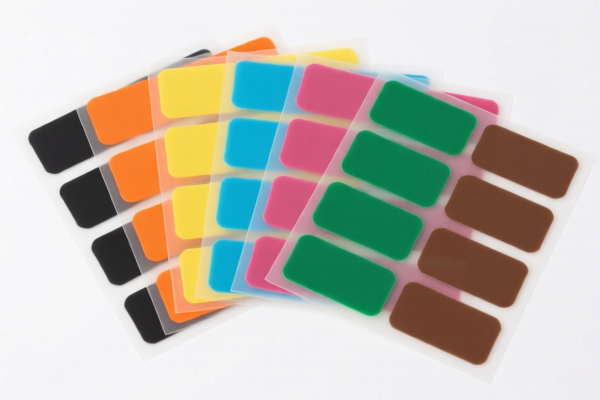
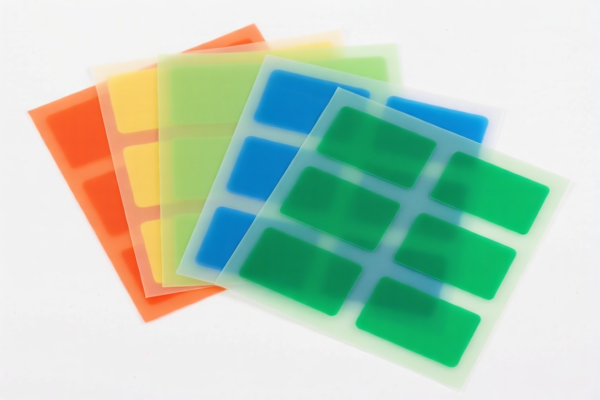
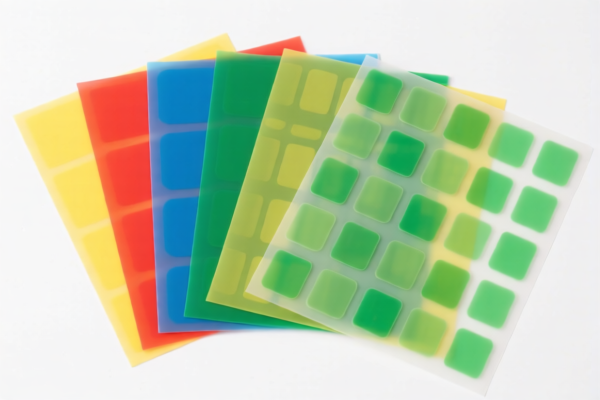
AI分析
🏷️ Self-Adhesive Plastic Sheets: HS Code Classification & Customs Clearance Guide (2026 Latest)
🌐 HS Code Reference & Customs Strategy | 2026 Tariff Analysis | Professional Clearance Guide
📌 1. Product Definition: Do You Really Know "Self-Adhesive Plastic Sheets"?
In international trade, "Self-Adhesive Plastic Sheets" are versatile polymer products, typically used for signage, vehicle wrapping, labeling, decoration, or industrial insulation. Their classification hinges on material composition, physical form, and specific characteristics (e.g., sticky backing, sheet vs. tape form).
⚠️ Key Classification Criteria:
- Material: Is it PVC, PE, PP, or other polymers?
- Form: Is it a continuous roll (tape/strip), a discrete sheet, or a film?
- Function: Is it primarily for adhesion (e.g., labels) or structural/decorative use (e.g., wall panels)?
📦 2. HS Code Classification Matrix (2026 Latest Tariff Schedule)
Based on the provided data, here is the detailed breakdown of HS codes and tax implications for self-adhesive plastic products:
| HS Code | Product Summary & Classification Logic | Total Tax Rate | Tax Breakdown (US Market) |
|---|---|---|---|
| 3926.90.99.89 | Plastic Material, Self-Adhesive Strip Form, Classified as "Other Plastic Articles" | 22.8% | Base: 5.3% Section 301: 7.5% Section 122: 10% |
| 3920.99.20.00 | Plastic Material, Self-Adhesive Strip Form, Fits Film/Strip/Sheet Characteristics | 39.2% | Base: 4.2% Section 301: 25.0% Section 122: 10% |
| 3920.20.00.15 | Acrylic Polymer (PP), Plate/Sheet/Film/Strip Form | 39.2% | Base: 4.2% Section 301: 25.0% Section 122: 10% |
| 3919.10.20.55 | Plastic Material, Self-Adhesive Strip Form, Classification Explanation Fully Consistent | 40.8% | Base: 5.8% Section 301: 25.0% Section 122: 10% |
| 3919.90.50.60 | Plastic Material, Strip Form, Meets Classification Requirements | 40.8% | Base: 5.8% Section 301: 25.0% Section 122: 10% |
| 3926.90.25.00 | Plastic Material, Self-Adhesive Strip Form, Belongs to "Other Plastic Articles" Catch-All Category | 24.0% | Base: 6.5% Section 301: 7.5% Section 122: 10% |
| 3920100000 | Plastic Material, Sheet Form, Self-Adhesive Attribute Fits Ethylene Polymer & Sheet/Film Characteristics | 39.2% | Base: 4.2% Section 301: 25.0% Section 122: 10% |
🔍 Key Observation:
- Section 301 Tariffs (7.5% vs. 25%) are the primary driver of tax differences. Codes in 3926 (Other plastic articles) generally enjoy lower Section 301 rates (7.5%) compared to codes in 3920 and 3919 (Plastic plates, sheets, film, tape, strip, of plastics) which face the full 25% rate.
- Section 122 Tariffs (10%) apply uniformly across all listed codes in this dataset.
💰 3. Detailed Tax Analysis (2026 Latest Rates)
✅ Applicable Region: USA
✅ Origin: China (CN)
✅ Effective Date: From November 10, 2025 onwards
🎯 1. Low-Tax Category: 3926.90.99.89 / 3926.90.25.00
(Plastic Articles, Not Elsewhere Specified)
| Item | Details |
|---|---|
| Base Tariff | 5.3% / 6.5% |
| Section 301 Tariff | +7.5% |
| Section 122 Tariff | +10% |
| Total Effective Rate | 22.8% / 24.0% |
| De Minimis Exemption | ❌ Not Eligible |
| Legal Basis | IEEPA: 9903.01.25 → Section 122 → USITC: 3926.90.xxxxx |
📌 Explanation:
- These codes fall under "Other plastic articles". If your product can be argued to be a specific accessory or decorative item rather than a raw sheet/film, it may qualify for this lower rate.
- Critical: You must prove the product is not primarily a "sheet/film" for general use but a specific "article" (e.g., a finished sign blank, not a roll of wrapping film).
🎯 2. High-Tax Category: 3920.99.20.00 / 3920.100000 / 3920.20.00.15
(Plastic Plates, Sheets, Film, etc.)
| Item | Details |
|---|---|
| Base Tariff | 4.2% |
| Section 301 Tariff | +25% |
| Section 122 Tariff | +10% |
| Total Effective Rate | 39.2% |
| De Minimis Exemption | ❌ Not Eligible |
| Legal Basis | IEEPA: 9903.01.25 → Section 301 → USITC: 3920.xx.xxxxx |
📌 Explanation:
- These codes cover plastic sheets, films, and strips in their raw or semi-processed form.
- If the product is a continuous roll of self-adhesive plastic film (e.g., vinyl wrap), it likely falls here.
- Risk: High tariff burden. Must ensure accurate declaration of material (e.g., PE vs. PVC) and form.
🎯 3. Highest-Tax Category: 3919.10.20.55 / 3919.90.50.60
(Self-Adhesive Plates, Sheets, Film, Tape, Strip, etc.)
| Item | Details |
|---|---|
| Base Tariff | 5.8% |
| Section 301 Tariff | +25% |
| Section 122 Tariff | +10% |
| Total Effective Rate | 40.8% |
| De Minimis Exemption | ❌ Not Eligible |
| Legal Basis | IEEPA: 9903.01.25 → Section 301 → USITC: 3919.xx.xxxxx |
📌 Explanation:
- Chapter 3919 is specifically for self-adhesive products.
- If your product is explicitly marketed and used as "self-adhesive tape" or "label stock," this is the most precise classification, but it carries the highest tariff rate.
- Strategy: Can the product be reclassified under 3926 (as an "article") to save 16-18% in tariffs? This requires strong technical justification.
🛠️ 4. Customs Clearance Practical Advice
✅ 1. Documentation Checklist (Non-Negotiable)
| Document | Required | Notes |
|---|---|---|
| ✅ Product Specification Sheet | ✔️ | Must detail material (e.g., PVC, PE, Acrylic), thickness, width, length, adhesive type (pressure-sensitive, hot-melt). |
| ✅ Material Safety Data Sheet (MSDS) | ✔️ | For chemical composition verification. |
| ✅ Product Photos (Clear & Detailed) | ✔️ | Show the adhesive side, backing paper, and any packaging. Highlight if it's a roll or sheet. |
| ✅ Commercial Invoice | ✔️ | Clearly describe the product as "Plastic Sheet" or "Plastic Article," avoiding ambiguous terms like "wrap" if possible. |
| ✅ Certificate of Origin (CO) | ✔️ | Mandatory for origin verification. |
| ✅ Packaging List | ✔️ | Detail net/gross weight and dimensions. |
✅ 2. Classification Strategy & Tips
🔥 "Form Defines Form, Function Defines Function!"
| Scenario | Recommended HS Code | Why? |
|---|---|---|
| Finished Sign Blanks (cut to size, decorative) | 3926.90.99.89 (22.8%) | Classified as "other plastic articles," not raw sheets. Lower Section 301 rate. |
| Raw Rolls of Vinyl Wrap (for vehicle wrapping) | 3920.99.20.00 (39.2%) | Fits "plastic film/sheet" definition. High tariff. |
| Self-Adhesive Labels (on rolls) | 3919.10.20.55 (40.8%) | Specific for self-adhesive tapes/strips. Highest precision, highest tax. |
| Acrylic Self-Adhesive Sheets | 3920.20.00.15 (39.2%) | Specific to acrylic polymers in sheet form. |
📌 Pro Tip:
- If your product is a self-adhesive plastic sheet that is cut into specific shapes for a particular use (e.g., protective film for a specific device, decorative sticker sheets), argue for 3926 classification.
- If it is a generic roll for industrial/consumer use, expect 3919 or 3920.
✅ 3. Special Cases & Mitigation
| Situation | Action |
|---|---|
| OEM Custom Products | Provide design drawings and end-use declaration. If it's a component of a larger product, consider harmonization with the final product's HS code. |
| Mixed Materials | If the adhesive layer is significant, it may still fall under plastic headings. Declare the principal material clearly. |
| High Value, Low Volume | Consider Section 301 Exclusions. Check if your specific HTS code is eligible for exclusion (requires application). |
| Transshipment via Third Country | ⚠️ Caution: US Customs enforces strict rules of origin. Simply passing through Vietnam/Malaysia does not exempt Section 301/122 tariffs if the product is substantially transformed in China. |
🌍 5. Global Market Comparison (2026)
| Market | Recommended HS Code | Estimated Tax (CN Origin) | Certification |
|---|---|---|---|
| 🇺🇸 USA | 3926.90.99.89 (Preferred) | 22.8% (vs. 40.8% for 3919) | None required for plastic sheets |
| 🇨🇳 China | 3926.90.99.00 | ~5-10% | None |
| 🇪🇺 EU | 3926.90.97 | ~0-4.5% | REACH Compliance |
| 🇬🇧 UK | 3926.90.97 | ~0-4.5% | UKCA Marking (if applicable) |
📌 Conclusion:
- USA is the highest-tax market for these products due to Section 301 (7.5%-25%) and Section 122 (10%) tariffs.
- EU and UK are significantly more favorable, with no Section 301/122 equivalent for most plastic articles.
- Strategy: If targeting the US, prioritize 3926 classification to save ~18% in duties. If volume is high, explore duty drawback or bonded warehouse options.
📌 6. Common Pitfalls & Avoidance Guide
❌ Pitfall 1: Declaring "Self-Adhesive Film" as "Plastic Sheet" without justification.
👉 Result: Customs may reclassify to 3919 (40.8%) or 3920 (39.2%), leading to back taxes and penalties.
✅ Fix: Provide technical data showing the product is an "article" (3926) or a specific polymer (3920).
❌ Pitfall 2: Ignoring Section 122 Tariffs.
👉 Result: Underpayment by 10%.
✅ Fix: Always include 10% Section 122 in your landed cost calculation for US imports from China.
❌ Pitfall 3: Using vague descriptions like "Plastic Product."
👉 Result: Customs detention, inspection delays, and potential misclassification.
✅ Fix: Use precise descriptions: "PVC Self-Adhesive Vinyl Sheet, 0.5mm Thickness, 1.22m Width, for Wall Decoration, Model XYZ."
🎯 7. Conclusion: Precision is Profit
🎯 Key Takeaway:
🔹 "3926 Saves 18%: Argue 'Article,' Not 'Sheet'."
🔹 "Always Add 10% for Section 122."
🔹 "HS Code Choice = Tax Bill Choice."
📌 Action Plan:
1. Audit Your Product: Is it a raw sheet/film (3919/3920) or a finished article (3926)?
2. Gather Evidence: Specs, photos, MSDS, and end-use statements.
3. Calculate Landed Cost: Include Base + Section 301 + Section 122.
4. Consult a Broker: For complex cases, seek an Advance Ruling from US Customs.
📣 Immediate Action:
📞 Engage a licensed customs broker + Prepare detailed product specs + Consider 3926 classification strategy.
🚀 Optimize your supply chain, minimize tariffs, and maximize profit!
✨ Professional Classification, Seamless Clearance!
💼 Every Tax Percent Counts!
用户评价
关于 HS 编码归类
协调制度(HS)是由世界海关组织(WCO)制定的国际贸易商品分类标准。全球 200 多个国家采用 HS 系统作为海关关税、贸易统计和进出口监管的基础。
每个 HS 编码遵循以下层级结构:
- 章(2 位)——商品大类(例如:第 84 章:机器和机械设备)
- 品目(4 位)——章内的更具体分类
- 子目(6 位)——国际通用细分,所有 WCO 成员国统一使用
- 本国细分(8-10 位)——各国自行扩展的细分编码,如美国 HTSUS 10 位编码
正确的 HS 编码归类对于顺利通关、准确缴纳关税和遵守贸易法规至关重要。错误归类可能导致海关延误、多缴关税或罚款。
从CN进口到US时,适用的关税税率可能包括:
- 最惠国(MFN)税率——适用于 WTO 成员国的标准关税税率
- 普通税率——适用于无贸易协定国家
- 贸易救济关税——附加关税,如 301 条款(反倾销)、232 条款(国家安全)或反补贴税
本页内容仅供参考。如需正式归类,请咨询当地海关或持牌报关代理。