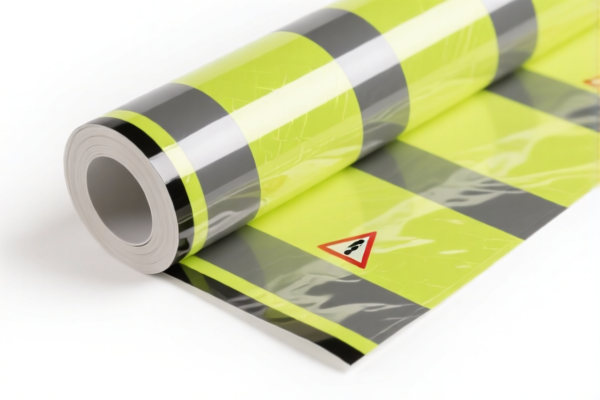
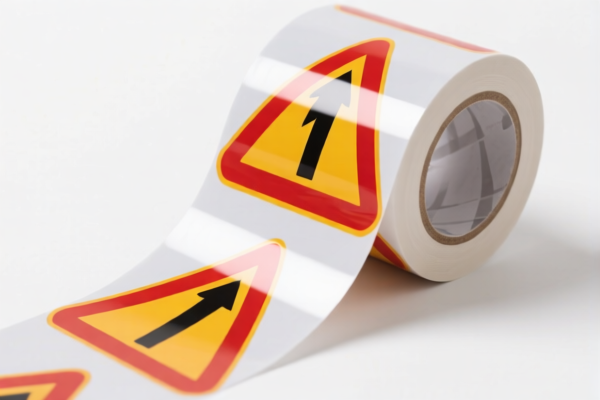
self adhesive traffic materials
CN → US| HS编码 | 关税税率 | 原产国 | 目的国 | 文档 |
|---|---|---|---|---|
| 7607205000 | 17.5% | CN | US | 官方文档 |
| 3919101010 | 41.5% | CN | US | 官方文档 |
| 3919905010 | 40.8% | CN | US | 官方文档 |
商品图片


AI分析
🚧 Self-adhesive Traffic Materials: HS Code Classification & US Customs Clearance Guide (2026)
🌐 HS Code Reference & Clearance Guide | 2026 Latest Tariff Analysis | Professional Clearance Strategy
📌 I. Product Definition & Classification: Do You Really Know "Self-Adhesive Traffic Materials"?
Self-adhesive traffic materials are critical components for road safety, marking, and traffic control. In international trade, these products are not classified uniformly. The Harmonized System (HS) Code depends heavily on two factors: 1. Material Composition (Plastic vs. Aluminum). 2. Physical Form (Flat sheets/membranes vs. strips/tapes).
Misclassification can lead to severe tariff penalties, customs delays, or cargo rejection. Below is the precise breakdown based on the provided data.
⚠️ Key Distinction Point:
- If the material is Plastic/Polymer-based (e.g., reflective sheets) → Refer to Chapter 39.
- If the material is Aluminum/Alloy-based (e.g., reflective backings) → Refer to Chapter 76.
- If the form is Strip/Tape (linear application for road lines) → Specific subheadings apply.
📦 II. HS Code Classification Details (2026 Latest Tariff Authority Comparison)
| HS Code | Product Description | Applicable Scenario | Material/Form |
|---|---|---|---|
| 3919.90.50.10 | Self-adhesive plates, sheets, film, strip, tape, and other flat shapes, of plastics | Reflective plastic sheets, plastic-based traffic markers | ✅ Plastic (Plates/Sheets/Films) |
| 7607.20.50.00 | Self-adhesive plates, sheets, and film, of aluminium | Aluminum backing for traffic signs, metallic reflective layers | ✅ Aluminum/Alloy |
| 3919.10.10.10 | Self-adhesive plates, sheets, film, strip, tape and other flat shapes, of plastics, whether or not in rolls | Road marking tapes, linear self-adhesive strips for pavement | ✅ Plastic (Strips/Tapes) |
🔍 Critical Reminder:
- Plastic vs. Aluminum: The material determines whether you look at Chapter 39 (Plastics) or Chapter 76 (Aluminum).
- Form Matters: Even if the material is the same, "Flat Sheets" (3919.90) and "Strip/Tape" (3919.10) may have different tariff treatments due to specific trade notes.
- "Self-Adhesive" is Key: All these codes require the product to be self-adhesive. Non-adhesive traffic signs fall under different codes (e.g., 7326 for metal signs).
💰 III. 2026 Latest Tariff Rate Breakdown (Including Surcharges & Policy Add-ons)
✅ Applicable Country: United States (US)
✅ Origin: China (CN)
✅ Effective Date: 2025/2026 (Post-Trade War Adjustments)
🎯 1. 3919.90.50.10 —— Self-Adhesive Plastic Sheets/Films (Non-Specific)
| Item | Content |
|---|---|
| Base Tariff | 5.8% (Ad Valorem) |
| Section 301 Surcharge | +25.0% (USITC Footnote regarding Chinese imports) |
| Section 122 Clause Tariff | +10.0% (Specific clause for certain plastic/traffic materials) |
| Total Tariff Rate | 40.8% |
| Tax Calculation | CIF Value × 40.8% |
| De Minimis Eligibility | ❌ Not Eligible (High tariff rate excludes low-value exemption benefits in many cases) |
| Legal Basis Path | Base: 3919.90.50.10 → Section 301: 25% → Section 122: 10% |
📌 Explanation:
- This code captures general self-adhesive plastic traffic materials (e.g., large reflective decals).
- The 40.8% total rate is extremely high. Importers must factor this into landed cost calculations.
- The "Section 122" tariff adds a specific layer of cost for this subtype.
🎯 2. 7607.20.50.00 —— Self-Adhesive Aluminum Plates/Sheets
| Item | Content |
|---|---|
| Base Tariff | 0.0% (Ad Valorem) |
| Section 301 Surcharge | +7.5% (Reduced Section 301 rate for specific aluminum products) |
| Section 122 Clause Tariff | +10.0% (Specific clause for aluminum traffic materials) |
| Total Tariff Rate | 17.5% |
| Tax Calculation | CIF Value × 17.5% |
| De Minimis Eligibility | ❌ Not Eligible |
| Legal Basis Path | Base: 7607.20.50.00 → Section 301: 7.5% → Section 122: 10% |
📌 Key Insight:
- Aluminum-based traffic materials enjoy a significantly lower tariff (17.5%) compared to plastics.
- The base tariff is 0%, making it more competitive.
- If your product can be legally defined as "Aluminum-backed" rather than "Plastic," this code offers substantial savings.
🎯 3. 3919.10.10.10 —— Self-Adhesive Plastic Strips/Tapes (Road Markings)
| Item | Content |
|---|---|
| Base Tariff | 6.5% (Ad Valorem) |
| Section 301 Surcharge | +25.0% (USITC Footnote) |
| Section 122 Clause Tariff | +10.0% (Specific clause) |
| Total Tariff Rate | 41.5% |
| Tax Calculation | CIF Value × 41.5% |
| De Minimis Eligibility | ❌ Not Eligible |
| Legal Basis Path | Base: 3919.10.10.10 → Section 301: 25% → Section 122: 10% |
📌 Comparison:
- This code applies to linear self-adhesive materials (like tape for painting road lines).
- It has the highest total tariff (41.5%) among the three options.
- The base tariff (6.5%) is higher than the sheet version (5.8%), and the Section 301 surcharge is at the maximum (25%).
- Strategic Note: If possible, verifying if the product can be classified as "Sheet/Film" (3919.90) rather than "Strip" (3919.10) might save 0.7% in base tariff, though the impact is marginal.
🛠️ IV. Customs Clearance Practical Advice (Combat Pitfall Guide)
✅ 1. Required Documentation Checklist (Non-Negotiable)
| Document | Mandatory? | Description |
|---|---|---|
| ✅ Product Specification Sheet | ✔️ | Must detail: Material (Plastic/Aluminum), Adhesive Type, Reflectivity Index, Thickness. |
| ✅ Product Photos (Unopened) | ✔️ | Clear images showing the adhesive side, roll/sheet form, and packaging. |
| ✅ Commercial Invoice | ✔️ | Must explicitly state: "Self-Adhesive Traffic Material" + Specific HS Code. |
| ✅ Certificate of Origin | ✔️ | Proof of China origin is critical for calculating Section 301 and 122 tariffs. |
| ✅ Bill of Lading | ✔️ | Consistency with invoice description. |
| ✅ Labeling Samples | ✔️ | If labeled in English, ensure no false claims (e.g., "Made in USA"). |
✅ 2. Declaration Tips (Critical Keywords)
🔥 “Material Defines Code, Form Defines Subcode!”
| Scenario | Correct Declaration | Error Risk |
|---|---|---|
| Reflective Decal (Plastic) | 3919.90.50.10 |
Mislabeling as "Strip" → Higher tariff (41.5%) |
| Aluminum Backing | 7607.20.50.00 |
Mislabeling as "Plastic" → Higher tariff (40.8%) |
| Road Marking Tape | 3919.10.10.10 |
Mislabeling as "Sheet" → Potential duty evasion penalty |
| Mixed Packaging | Declare by Primary Material | Splitting shipment incorrectly → Customs seizure |
📌 Important:
- Do NOT use vague terms like "Traffic Signs" or "Road Supplies."
- DO use precise terms: "Self-Adhesive Reflective Plastic Sheet" or "Self-Adhesive Aluminum Tape."
✅ 3. Special Cases & Mitigation
| Scenario | Handling Advice |
|---|---|
| Hybrid Materials (Plastic + Aluminum Foil) | Usually classified under the principal material or the material that gives essential character. Consult a customs broker to argue for the lower tariff (Aluminum) if the aluminum layer is functional. |
| Sample Shipments | Even for samples, HS Codes apply. Do not claim "Gift" status to avoid tariffs; use correct HS code with small quantity disclosure. |
| Re-imports | If returning defective goods, you may apply for duty drawback. Ensure original export HS Code matches. |
🌍 V. Global Market Comparison (2026 Snapshot)
| Country/Region | Recommended HS Code | Est. Tariff (China Origin) | Key Certification | Notes |
|---|---|---|---|---|
| 🇺🇸 USA | 3919.90.50.10 / 7607.20.50.00 |
17.5% – 41.5% | No specific, but DOT/ASTM standards apply | Highest duty burden due to Sec 301 & 122 |
| 🇨🇳 China | 3919.90.90 / 3919.10.90 |
~5% | CCC (if applicable) | Lower duties, domestic market access |
| 🇪🇺 EU | 3919.90 / 3919.10 |
~6.5% | CE Mark (if electrical) | No Section 301 equivalent, but anti-dumping may apply |
| 🇲🇽 Mexico | 3919.90 |
Varies (USMCA benefits possible) | NOM Certification | Check USMCA origin rules |
📌 Conclusion:
- The USA is the most expensive market for self-adhesive traffic materials from China.
- Aluminum-based products (7607.20.50.00) are the most tariff-efficient (17.5%).
- Importers should consider supply chain diversification (e.g., Vietnam, Mexico) if volume is high, to mitigate US tariff risks.
📌 VI. Common Errors & Pitfalls (Lessons Learned)
❌ Error 1: Classifying Aluminum-backed sheets as Plastic.
👉 Consequence: Paying 40.8% instead of 17.5%.
💡 Fix: Provide material composition certificates to prove aluminum content.
❌ Error 2: Calling Rolls/Tapes "Sheets" to avoid the higher base tariff.
👉 Consequence: Customs inspection reveals physical form mismatch → Penalties + Delay.
💡 Fix: Accurately describe physical form (Sheet vs. Strip/Tape).
❌ Error 3: Ignoring Section 122.
👉 Consequence: Under-declaring taxes by 10%.
💡 Fix: Always check for specific clause add-ons on plastic/aluminum traffic goods.
✅ Correct Practice:
"Self-Adhesive Reflective Tape, Plastic Base, 2-inch Width, for Road Marking, HS 3919.10.10.10"
🎯 VII. Conclusion: Precision Saves Money!
🎯 Remember the Strategy:
🔹 "Aluminum is Cheaper (17.5%), Plastic is Expensive (40-41%)."
🔹 "Strips are more taxed than Sheets (slightly)."
🔹 "Always Declare Material and Form Accurately."
📌 Pro Tip:
If your product is Aluminum-based, aggressively push for 7607.20.50.00.
If it is Plastic, prepare for 40%+ duties and consider Advance Rulings from CBP to confirm classification before shipment.
📣 Take Action Now:
📞 Contact a Licensed Customs Broker + Provide Material Specs + Request HS Code Pre-Ruling
🚀 Optimize Your Landed Cost, Clear Customs Smoothly, Maximize Profits!
✨ Professional Clearance Starts with Accurate Classification!
💼 Every Percentage Point of Tariff Impacts Your Bottom Line!
用户评价
关于 HS 编码归类
协调制度(HS)是由世界海关组织(WCO)制定的国际贸易商品分类标准。全球 200 多个国家采用 HS 系统作为海关关税、贸易统计和进出口监管的基础。
每个 HS 编码遵循以下层级结构:
- 章(2 位)——商品大类(例如:第 84 章:机器和机械设备)
- 品目(4 位)——章内的更具体分类
- 子目(6 位)——国际通用细分,所有 WCO 成员国统一使用
- 本国细分(8-10 位)——各国自行扩展的细分编码,如美国 HTSUS 10 位编码
正确的 HS 编码归类对于顺利通关、准确缴纳关税和遵守贸易法规至关重要。错误归类可能导致海关延误、多缴关税或罚款。
从CN进口到US时,适用的关税税率可能包括:
- 最惠国(MFN)税率——适用于 WTO 成员国的标准关税税率
- 普通税率——适用于无贸易协定国家
- 贸易救济关税——附加关税,如 301 条款(反倾销)、232 条款(国家安全)或反补贴税
本页内容仅供参考。如需正式归类,请咨询当地海关或持牌报关代理。