semiconductor silicon wafer doped
CN → US| HS编码 | 关税税率 | 原产国 | 目的国 | 文档 |
|---|---|---|---|---|
| 3818000020 | 60.0% | CN | US | 官方文档 |
| 2804691000 | 15.3% | CN | US | 官方文档 |
| 2804695000 | 15.5% | CN | US | 官方文档 |
| 3824991100 | 35.0% | CN | US | 官方文档 |
| 3824991900 | 41.5% | CN | US | 官方文档 |
商品图片
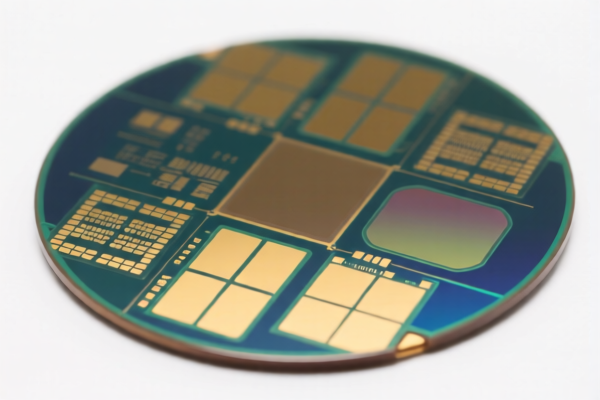
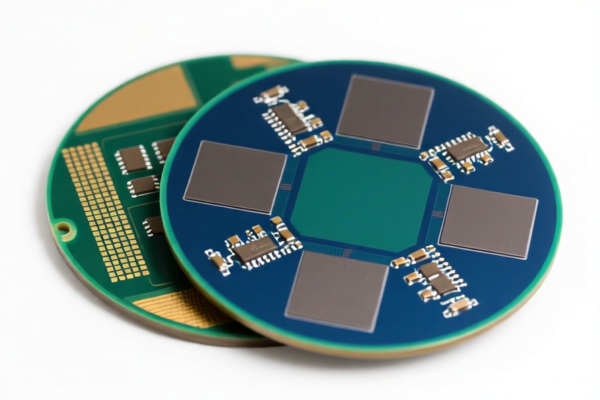
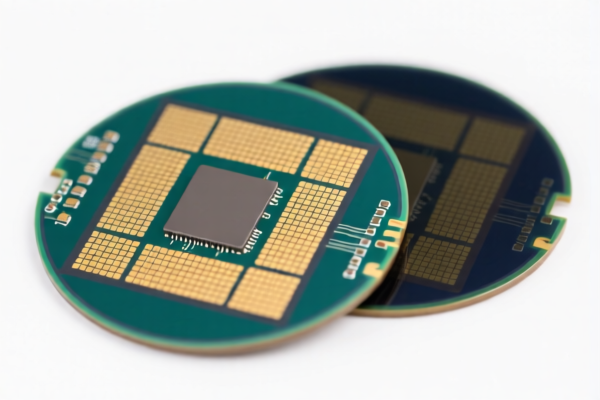
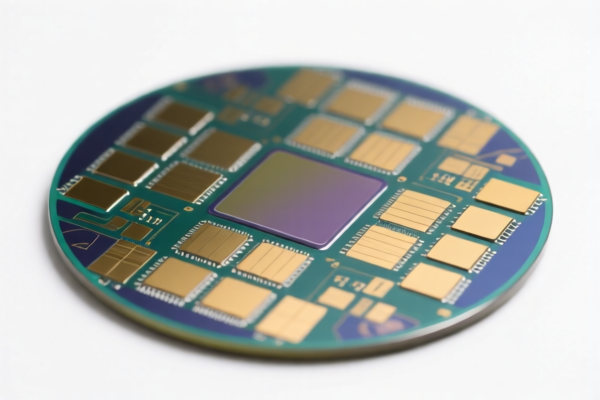
AI分析
🧪 Semiconductor Silicon Wafer Doped (掺杂硅晶圆)
🌐 HS Code Classification & Customs Clearance Guide | 2026 Tax Analysis | Strategic Compliance Strategy
📌 I. Product Definition & Core Logic: What is a "Doped Silicon Wafer"?
A Doped Silicon Wafer is a critical raw material in the semiconductor industry. It starts as a high-purity silicon ingot, is sliced into thin wafers, and then undergoes a doping process (introducing impurities like Boron, Phosphorus, or Arsenic) to alter its electrical conductivity.
In international trade, the classification depends heavily on form and processing depth: 1. Raw Material Stage: If the silicon is merely sliced into wafers (even if doped) without being integrated into a specific device or complex chemical制剂, it may be classified under Chapter 28 (Inorganic Chemicals). 2. Industrial/Chemical Stage: If the doping process is viewed as a complex chemical preparation or if the wafer is part of a broader "chemical product" category, it may fall under Chapter 38 (Miscellaneous Chemical Products). 3. Specific Semiconductor Category: Specialized semiconductor materials sometimes have dedicated codes in Chapter 38.
⚠️ Key Distinction:
- Form Factor: "Wafer" (thin, disc-shaped) vs. "Raw Silicon" (crude, lumps).
- Processing Level: "Doped" implies a chemical change. Is this a "chemical preparation" (Ch 38) or a "semi-finished semiconductor material" (Ch 28/38)?
- Country of Origin: US Tariffs differ significantly based on 122 Clauses and Section 301 duties.
📦 II. HS Code Classification Details (2026 Latest Tariff Schedule)
| HS Code | Product Description | Applicability / Reason for Classification | Doping Status |
|---|---|---|---|
3818.00.00.20 |
Doped Silicon Wafers | Silicon material; form and use match polycrystalline silicon wafer characteristics. Often classified as specific semiconductor preparations. | ✅ Doped |
2804.69.10.00 |
Doped Silicon Wafer | Silicon material; form is thin sheets; classified as "Other Forms of Silicon." | ✅ Doped |
2804.69.50.00 |
Doped Silicon Wafer | Silicon material; form is sheet-like primary shape; fits other sub-category details. | ✅ Doped |
3824.99.11.00 |
Doped Silicon Wafer | Semiconductor raw material; doping process fits "Chemical Products and Preparations" scope. | ✅ Doped |
3824.99.19.00 |
Doped Silicon Wafer | Silicon material; form is wafer; fits "Chemical Industry Preparations" scope. | ✅ Doped |
🔍 Critical Note:
- Chapter 28 Codes (2804...) treat silicon as a chemical element. If the wafer is considered a "primary form" of silicon, even if sliced, it might fall here.
- Chapter 38 Codes (3818...,3824...) treat the product as a prepared chemical or specific industrial product. The doping process is key here—it transforms the silicon into a specific functional material, pushing it into Chapter 38.
- Customs Authorities often scrutinize whether the "doping" constitutes a "chemical preparation" (Ch 38) or a "semi-finished good" (Ch 28). This determines the tax rate!
💰 III. 2026 Latest Tariff Rate Breakdown (Including Add-ons & Policy Surcharges)
✅ Applicable Country: United States (US)
✅ Origin: China (CN)
✅ Effective Date: Post-2025 policies (including 122 Clauses & Section 301)
🎯 1. 3818.00.00.20 —— Doped Silicon Wafer (Semiconductor Preparation)
| Item | Content |
|---|---|
| Base Tariff | 0.0% |
| Section 301 Additional Tariff | +50.0% |
| Section 122 Tariff | +10.0% |
| Total Tax Rate | 60.0% |
| Calculation Basis | CIF Value × 60% |
| De Minimis Exemption | ❌ Denied (High-value industrial goods) |
| Legal Path | USITC:3818.00.00.20 → Section 301: Footnote 9903.88.01 → Section 122 |
📌 Explanation:
- This code is often used for specific semiconductor materials.
- Despite a 0% base rate, the 50% Section 301 duty makes it extremely expensive.
- The 10% Section 122 adds another layer of cost.
- Total: 60% is the highest among the listed options!
🎯 2. 2804.69.10.00 —— Doped Silicon Wafer (Other Forms of Silicon)
| Item | Content |
|---|---|
| Base Tariff | 5.3% |
| Section 301 Additional Tariff | 0.0% |
| Section 122 Tariff | +10.0% |
| Total Tax Rate | 15.3% |
| Calculation Basis | CIF Value × 15.3% |
| De Minimis Exemption | ❌ Denied |
| Legal Path | USITC:2804.69.10.00 → Section 122 |
📌 Explanation:
- Best Option for Cost!
- The 0% Section 301 duty is crucial. If customs accepts this code (treating it as "other silicon forms"), you save 45% compared to the3818code.
- Risk: Customs may challenge the "wafer" form as not being a "primary silicon shape," potentially reclassifying to3818or3824.
🎯 3. 2804.69.50.00 —— Doped Silicon Wafer (Sheet-like Primary Shape)
| Item | Content |
|---|---|
| Base Tariff | 5.5% |
| Section 301 Additional Tariff | 0.0% |
| Section 122 Tariff | +10.0% |
| Total Tax Rate | 15.5% |
| Calculation Basis | CIF Value × 15.5% |
| De Minimis Exemption | ❌ Denied |
| Legal Path | USITC:2804.69.50.00 → Section 122 |
📌 Explanation:
- Very similar to2804.69.10.00.
- Slightly higher base rate (5.5% vs 5.3%) but still significantly cheaper than Chapter 38 codes.
- Risk: Similar to above, customs must accept "sheet-like primary shape" for doped wafers.
🎯 4. 3824.99.11.00 —— Doped Silicon Wafer (Chemical Preparation)
| Item | Content |
|---|---|
| Base Tariff | 0.0% |
| Section 301 Additional Tariff | +25.0% |
| Section 122 Tariff | +10.0% |
| Total Tax Rate | 35.0% |
| Calculation Basis | CIF Value × 35% |
| De Minimis Exemption | ❌ Denied |
| Legal Path | USITC:3824.99.11.00 → Section 301 → Section 122 |
📌 Explanation:
- Middle ground.
- 25% Section 301 is lower than the 50% for3818.
- Useful if customs rejects2804codes but accepts a broader "chemical preparation" category.
🎯 5. 3824.99.19.00 —— Doped Silicon Wafer (Other Chemical Preparations)
| Item | Content |
|---|---|
| Base Tariff | 6.5% |
| Section 301 Additional Tariff | +25.0% |
| Section 122 Tariff | +10.0% |
| Total Tax Rate | 41.5% |
| Calculation Basis | CIF Value × 41.5% |
| De Minimis Exemption | ❌ Denied |
| Legal Path | USITC:3824.99.19.00 → Section 301 → Section 122 |
📌 Explanation:
- "Other" chemical preparations.
- Higher base rate than3824.99.11.00.
- Use only if3824.99.11.00is not applicable for your specific doping profile.
🛠️ IV. Customs Clearance Practical Advice (Avoid Pitfalls)
✅ 1. Documentation Checklist (Mandatory)
| Document | Required | Purpose |
|---|---|---|
| ✅ Product Specification Sheet | ✔️ | Must detail: Material (Si), Doping Type (B/P/As), Concentration, Wafer Diameter, Thickness, Orientation. |
| ✅ Technical Data Sheet (TDS) | ✔️ | Proves the "doping" process and electrical properties. |
| ✅ Product Photos | ✔️ | Show wafer stack, packaging, and any labels. |
| ✅ Certificate of Origin (CO) | ✔️ | Critical for determining Section 301 applicability. |
| ✅ Commercial Invoice | ✔️ | Clearly state "Doped Silicon Wafer" and HS Code. |
| ✅ Bill of Lading/Air Waybill | ✔️ | Standard shipping docs. |
✅ 2. Classification Strategy (Key Takeaways)
🔥 “Silicon as Element (Ch 28) vs. Silicon as Chemical Prep (Ch 38)”
| Scenario | Recommended HS Code | Why? |
|---|---|---|
| Lowest Tax Strategy | 2804.69.10.00 / 2804.69.50.00 |
0% Section 301 Duty. Total tax ~15.3-15.5%. Risk: Customs may dispute "wafer" as not "primary silicon". |
| Standard Semiconductor Strategy | 3818.00.00.20 |
Specific code for semiconductor materials. High risk: 60% Total Tax. |
| Fallback Chemical Strategy | 3824.99.11.00 |
If 2804 is rejected, this is the next best Ch 38 option. Medium risk: 35% Total Tax. |
✅ 3. Special Handling Tips
| Situation | Advice |
|---|---|
| Pre-Ruling Application | HIGHLY RECOMMENDED. Apply for a US Customs Pre-Ruling to confirm if 2804 codes are acceptable for doped wafers. This saves millions in potential back-taxes. |
| Packaging | Ensure wafers are packaged in clean, static-free boxes. Label clearly as "Silicon Semiconductor Wafers, Doped." |
| Value Declaration | Declare accurate CIF value. Undervaluation leads to severe penalties and audits. |
| Section 301 Exclusions | Check if your specific doping type/industry use is on the US Section 301 Exclusion List. Some semiconductor materials may have been excluded in past years, though many were not. Check current 2026 status. |
🌍 V. Global Market Comparison (2026)
| Country/Region | Recommended HS Code | Estimated Total Tariff | Key Requirement |
|---|---|---|---|
| 🇺🇸 USA | 2804.69.10.00 |
15.3% | Section 301 Exclusion Check |
| 🇨🇳 China | 2804.69.10.00 |
5.3% | CCC Certification (if applicable) |
| 🇪🇺 EU | 2804.69.10.00 |
5.3% | REACH Compliance, CE (if electronic) |
| 🇯🇵 Japan | 2804.69.10.00 |
3.8% | PSE (if part of device) |
| 🇰🇷 South Korea | 2804.69.10.00 |
0% - 5% | KCC Certification |
📌 Conclusion:
- USA is the most challenging market due to Section 301 and 122 tariffs.
- Chapter 28 (2804) is the golden ticket for US imports if accepted, cutting costs by ~45% compared to Chapter 38 codes.
📌 VI. Common Mistakes & Pitfalls
❌ Mistake 1: Using 3818.00.00.20 without checking for Section 301 exclusions.
👉 Result: Paying 60% tax when 15.3% might have been possible.
❌ Mistake 2: Declaring "Silicon Metal" instead of "Silicon Wafer."
👉 Result: Customs rejects "wafer" form as not matching "metal" description → Delays & Re-inspection.
❌ Mistake 3: Ignoring the "Doped" aspect.
👉 Result: If you declare "Undoped Silicon," but the product is doped, customs may reclassify to 3824 or impose penalties for false declaration.
✅ Best Practice:
"Provide full technical specs. Argue for Chapter 28 (
2804) based on 'primary form' logic. Apply for Pre-Ruling if value is high."
🎯 VII. Conclusion: Strategic Cost Optimization
🎯 Remember the Key Rule:
🔹 "Silicon Element (Ch 28) = Lower Tax (15.3%)"
🔹 "Semiconductor Prep (Ch 38) = Higher Tax (35-60%)"
🔹 "Section 301 is the Big Enemy (0% vs 25-50%)"
📌 Pro Tip:
If your silicon wafers are not originally from China (e.g., from Thailand, Malaysia, Vietnam), you may avoid Section 301 duties entirely!
Check Substantial Transformation Rules.
📣 Immediate Action:
📞 Contact your customs broker.
📄 Request a Pre-Ruling for HS Code2804.69.10.00.
💡 Document the doping process as a physical slicing of silicon, not a chemical compound.
✨ Precise Classification, Massive Savings!
💼 Don't let 45% of your profit vanish at the border!
用户评价
关于 HS 编码归类
协调制度(HS)是由世界海关组织(WCO)制定的国际贸易商品分类标准。全球 200 多个国家采用 HS 系统作为海关关税、贸易统计和进出口监管的基础。
每个 HS 编码遵循以下层级结构:
- 章(2 位)——商品大类(例如:第 84 章:机器和机械设备)
- 品目(4 位)——章内的更具体分类
- 子目(6 位)——国际通用细分,所有 WCO 成员国统一使用
- 本国细分(8-10 位)——各国自行扩展的细分编码,如美国 HTSUS 10 位编码
正确的 HS 编码归类对于顺利通关、准确缴纳关税和遵守贸易法规至关重要。错误归类可能导致海关延误、多缴关税或罚款。
从CN进口到US时,适用的关税税率可能包括:
- 最惠国(MFN)税率——适用于 WTO 成员国的标准关税税率
- 普通税率——适用于无贸易协定国家
- 贸易救济关税——附加关税,如 301 条款(反倾销)、232 条款(国家安全)或反补贴税
本页内容仅供参考。如需正式归类,请咨询当地海关或持牌报关代理。