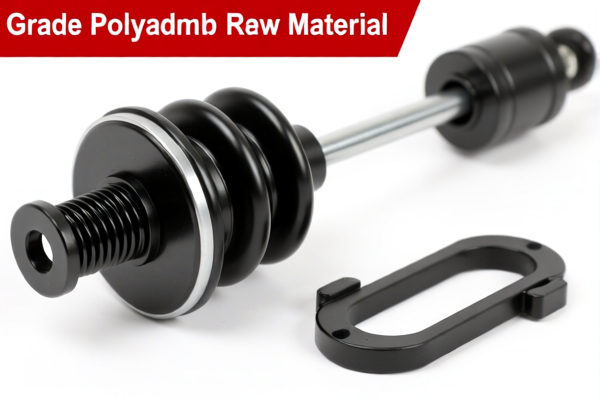
shock absorber grade polyamide raw material
CN → US商品图片

AI分析
🛠️ Shock Absorber Grade Polyamide Raw Material (PA)
🌐 HS Code Reference & Customs Clearance Guide | 2026 Latest Tariff Analysis | Professional Clearance Strategy
📌 1. Product Definition and Classification: What is "Shock Absorber Grade Polyamide"?
Shock Absorber Grade Polyamide refers to high-performance engineering plastics, primarily Nylon 6 (PA6) or Nylon 66 (PA66), specially formulated with additives (such as glass fiber, impact modifiers, or lubricants) to meet the high mechanical strength, heat resistance, and fatigue resistance requirements of automotive suspension systems.
In international trade, it is categorized based on its physical form and polymer type: * Polyamide Raw Material: Generally refers to the resin pellets/granules before molding. * Unmixed: Pure polyamide resin without any additives. * Mixed/Compounded: Polyamide resin blended with other materials (e.g., glass fibers, carbon fibers, plasticizers).
⚠️ Key Distinction:
- If it is pure resin pellets (no fibers added) → Classify under 3908.10 or 3908.90.
- If it contains glass fiber reinforcement (composite) → Classify under 3917.39 (sometimes) or remain 3908/3909 depending on the percentage and form. Note: Most "engineered" shock absorber grades are considered "mixed" polyamides but still fall under Chapter 39 as primary shapes.
- Crucial Note: Do NOT classify as "Auto Parts" (Chapter 87). Raw material is classified under Chapter 39 (Plastics).
📦 2. HS Code Classification Details (2026 Latest Tariff Authority Comparison)
| HS Code | Product Description | Application Scenario | Reinforcement Type |
|---|---|---|---|
3908.10.00.00 |
Polyamides-6 (Nylon 6), -10, -11, -12, -6,6, -6,9, -6,10, -6,12 in primary forms | Pure Nylon 6/66 resin pellets, unmodified | ✅ None (Pure) |
3908.90.00.00 |
Other polyamides in primary forms | Other nylons (PA46, PA12, etc.) or unmixed blends | ✅ None (Pure) |
3917.39.00.00 |
Other tubes, pipes and hoses, rigid, with one outer covering of plastics | Incorrect for raw resin. Only for finished rigid tubes/hoses. | N/A |
3909.40.00.00 |
Amino-resins, phenolic resins, polyurethanes | Incorrect. Polyamides are NOT amino/phenolic resins. | N/A |
3926.90.90.90 |
Other articles of plastics | Incorrect. Only for finished molded parts (e.g., bushings, mounts). | N/A |
🔍 Important Reminder:
- Raw Material vs. Finished Part: If the item is already molded into a specific shape (e.g., a bushing), it must be classified under Chapter 87 (Auto Parts). If it is still in pellet/granule form, it is Chapter 39.
- "Grade" Does Not Change HS Code: The term "Shock Absorber Grade" describes performance, not physical form. Customs looks at the physical state (pellets) and chemical composition (polyamide).
- Glass Fiber Content: If the polyamide is compounded with >20% glass fiber, some countries may reclassify it, but generally, polyamide resins with fillers still fall under 3908/3909 unless they become composite sheets/plates.
💰 3. 2026 Latest Tariff Rate Details (Including Surcharges)
✅ Applicable Country: United States (US)
✅ Origin: China (CN)
✅ Effective Date: November 10, 2025 onwards
🎯 1. 3908.10.00.00 – Polyamides-6, -6,6, etc., in primary forms
| Item | Content |
|---|---|
| Base Tariff Rate | 5.7% (ad valorem) |
| USITC Surcharge (Section 301) | +7.5% (Standard for most plastics from China) |
| IEEPA Surcharge | +10% (Targeting China/HK products, effective Nov 2025) |
| Total Tariff Rate | 23.2% |
| Tax Calculation | CIF Value × 23.2% |
| De Minimis Eligibility | ❌ Not Eligible (Section 301 and IEEPA surcharges apply regardless of value) |
| Legal Basis Path | USITC:3908.10.00.00 → FOOTNOTE:9903.01.03 (Section 301) → IEEPA:9903.01.24 |
📌 Explanation:
- Polyamides are critical for automotive lightweighting. The US imposes significant tariffs to protect domestic chemical manufacturing.
- Total 23.2% is substantial. Importers should consider supply chain diversification.
🎯 2. 3908.90.00.00 – Other Polyamides in primary forms
| Item | Content |
|---|---|
| Base Tariff Rate | 5.7% |
| USITC Surcharge (Section 301) | +7.5% |
| IEEPA Surcharge | +10% |
| Total Tariff Rate | 23.2% |
| Tax Calculation | CIF Value × 23.2% |
| De Minimis Eligibility | ❌ Not Eligible |
| Legal Basis Path | Same as above |
📌 Note:
- PA66 and PA12 (often used in shock absorbers) fall under this code if not listed in 3908.10.
- Tariff burden is identical to PA6.
🛠️ 4. Customs Clearance Practical Advice (Real-World Pitfall Avoidance Guide)
✅ 1. Documentation Checklist (None Can Be Skipped)
| Document | Mandatory | Description |
|---|---|---|
| ✅ Certificate of Analysis (COA) | ✔️ | Specifies PA type (PA6, PA66), molecular weight, moisture content. |
| ✅ Material Safety Data Sheet (MSDS) | ✔️ | Required for chemical transport and hazard classification. |
| ✅ Commercial Invoice | ✔️ | Must clearly state: "Polyamide Resin Pellets, Unmolded, for Automotive Shock Absorber Manufacturing." |
| ✅ Packing List | ✔️ | Detail gross/net weight, bag count. |
| ✅ Origin Certificate (CO) | ✔️ | If shipped from China, confirm origin to apply correct tariffs. |
| ✅ Letter of Guarantee | ✔️ | If "Glass Fiber" is added, provide % composition to justify Chapter 39 classification. |
✅ 2. Declaration Tips (Key Mantra)
🔥 "Pellets are Chapter 39, Parts are Chapter 87. Name it clearly, avoid delays!"
| Scenario | Correct Declaration | Wrong Practice |
|---|---|---|
| Raw Resin Pellets (PA6) | 3908.10.00.00 "Polyamide-6 Resin" |
Misdeclared as "Auto Parts" → Delayed clearance. |
| Compounded PA (with GF) | 3908.10.00.00 (if <20% GF) or specific subheading |
Misdeclared as "Composite Material" → Rejection. |
| Molded Bushings | Chapter 87 (e.g., 8708.99.90) |
Misdeclared as "Resin" → Severe penalty for incorrect HS. |
| PA6 Granules from Vietnam | 3908.10.00.00 + IEEPA Exemption |
Assume same as China → Incorrect tariff. |
✅ 3. Special Case Handling
| Scenario | Handling Advice |
|---|---|
| PA with Additives (Talc, GF) | Declare as "Polyamide Resin, Mixed." Provide formulation if requested. |
| Food-Grade vs. Auto-Grade | Auto-grade is standard. If food-grade, add "Food-Contact Compliant" to docs. |
| Recycled PA | If >50% recycled content, may require different declaration. Check local rules. |
| Small Sample Shipments | Even small samples of chemicals require MSDS and precise HS. |
🌍 5. Global Market Comparison (2026 Latest)
| Country/Region | Recommended HS Code | Tariff (China Origin) | Certification | Notes |
|---|---|---|---|---|
| 🇺🇸 USA | 3908.10.00.00 |
23.2% | REACH (if EU transhipped) | High tariffs, consider Vietnam/Malaysia origin. |
| 🇨🇳 China | 3908.10.00.00 |
5% | None | Low tariff for domestic use. |
| 🇪🇺 EU | 3908.10.00.00 |
6.5% | REACH Registration | No Section 301, but REACH compliance needed. |
| 🇲🇽 Mexico | 3908.10.00.00 |
0% (under USMCA if originating) | NOM | Beneficial if using North American PA. |
| 🇻🇳 Vietnam | 3908.10.00.00 |
0% (if US origin) | None | Potential tariff avoidance hub. |
📌 Conclusion:
- USA imposes the highest burden (23.2%).
- EU has moderate tariffs (6.5%) but strict REACH compliance.
- Supply Chain Strategy: Consider sourcing PA from Vietnam, Mexico, or Thailand to mitigate US tariffs.
📌 6. Common Mistakes & Pitfall Guide (Lessons Learned)
❌ Mistake 1: Declaring "Shock Absorber" in the product name for raw resin.
👉 Consequence: Customs may suspect it's an auto part (Chapter 87) or flag for IP issues.
Fix: Use "Polyamide Resin Pellets" as the primary description.
❌ Mistake 2: Ignoring the "Mixed" status.
👉 Consequence: If glass fiber is present, simple PA codes may be challenged.
Fix: Specify "Polyamide 66, Glass Fiber Reinforced" in the details, but keep HS under 3908 unless the form changes.
❌ Mistake 3: Missing MSDS.
👉 Consequence: Shipment held at port due to hazardous chemical regulations.
Fix: Always provide MSDS and a statement of non-hazardousness if applicable.
✅ Correct Declaration Example:
"POLYAMIDE-6 RESIN PELLETS, UNMODIFIED, FOR AUTOMOTIVE APPLICATIONS, NON-FOOD GRADE, NOT FRESH/FROZEN, MODEL XYZ, MANUFACTURER ABC"
🎯 7. Conclusion: Professional Declaration, Cost Efficiency
🎯 Remember the Mantra:
🔹 "Pellets = Chapter 39, Parts = Chapter 87."
🔹 "Raw Material HS is stable, but Tariffs are High in US."
🔹 "Provide MSDS, Avoid Delays!"
📌 Pro Tip:
If your PA is sourced from Vietnam, Mexico, or Malaysia, you may qualify for IEEPA Exemption or lower tariffs in the US.
Consider Advance Ruling (Ruling Letter) from US Customs (CBP) to confirm the exact HS code and tariff applicability for your specific compounded formulation.
📣 Immediate Action:
📞 Contact a licensed customs broker + Provide COA + Apply for CBP Ruling
🚀 Ensure smooth clearance, minimize tariff costs, and boost your automotive supply chain efficiency!
✨ Professional Clearance Starts with Accurate Classification!
💼 Every cent in tariff savings counts!
用户评价
关于 HS 编码归类
协调制度(HS)是由世界海关组织(WCO)制定的国际贸易商品分类标准。全球 200 多个国家采用 HS 系统作为海关关税、贸易统计和进出口监管的基础。
每个 HS 编码遵循以下层级结构:
- 章(2 位)——商品大类(例如:第 84 章:机器和机械设备)
- 品目(4 位)——章内的更具体分类
- 子目(6 位)——国际通用细分,所有 WCO 成员国统一使用
- 本国细分(8-10 位)——各国自行扩展的细分编码,如美国 HTSUS 10 位编码
正确的 HS 编码归类对于顺利通关、准确缴纳关税和遵守贸易法规至关重要。错误归类可能导致海关延误、多缴关税或罚款。
从CN进口到US时,适用的关税税率可能包括:
- 最惠国(MFN)税率——适用于 WTO 成员国的标准关税税率
- 普通税率——适用于无贸易协定国家
- 贸易救济关税——附加关税,如 301 条款(反倾销)、232 条款(国家安全)或反补贴税
本页内容仅供参考。如需正式归类,请咨询当地海关或持牌报关代理。