shoes hs code 6402997915
CN → US| HS编码 | 关税税率 | 原产国 | 目的国 | 文档 |
|---|---|---|---|---|
| 6402997990 | 0.0% | CN | US | 官方文档 |
| 6403999071 | 20.0% | CN | US | 官方文档 |
| 6402996930 | 58.0% | CN | US | 官方文档 |
| 6404198990 | 0.0% | CN | US | 官方文档 |
| 6402996960 | 58.0% | CN | US | 官方文档 |
商品图片
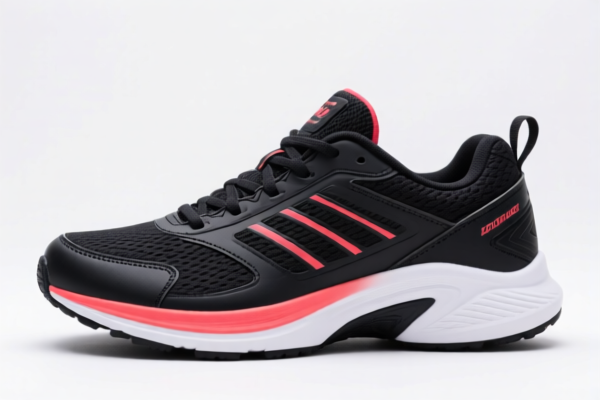
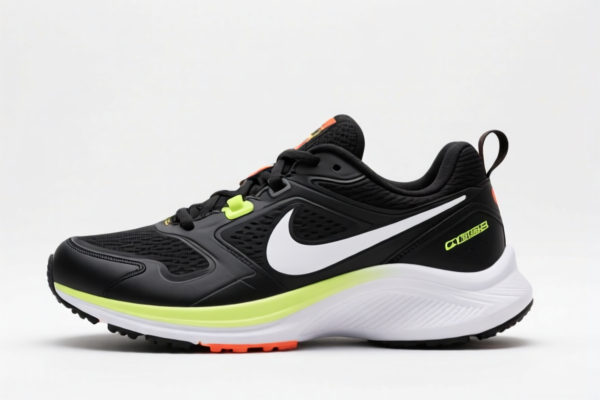
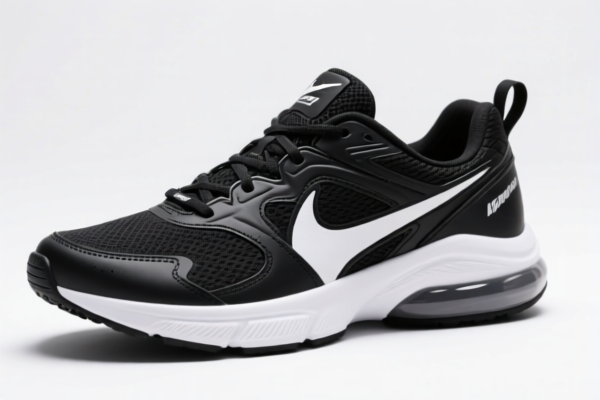
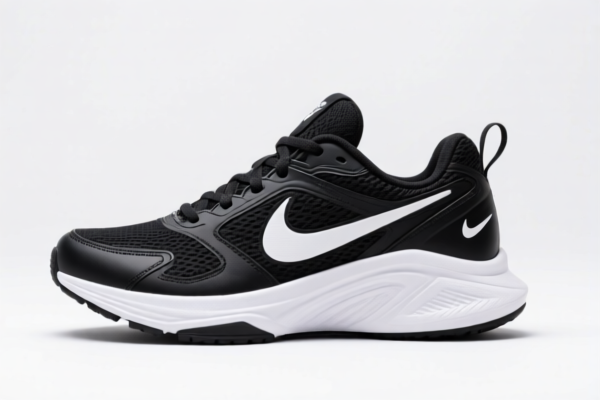
AI分析
👟 Shoes (Footwear with Outer Soles of Rubber/Plastic)
🌐 HS Code Reference & Customs Clearance Guide | 2026 Latest Tariff Analysis | Professional Clearance Strategy
📌 I. Product Definition & Classification: Do You Really Understand "Shoes"?
Shoes, in international trade, are broadly categorized by the material of their outer soles. The HS Code 6402 specifically covers footwear with outer soles and uppers of rubber or plastics. This category is distinct from leather soles (6403), textile uppers (6404), or other materials.
Key Distinction:
- If the shoe has a rubber or plastic sole → It falls under Chapter 6402.
- If the shoe has a leather sole → It falls under Chapter 6403.
- If the shoe has a textile upper and rubber/plastic sole → It might fall under 6404 (athletic footwear) or 6402 depending on specific design rules.
⚠️ Critical Note:
The provided data analysis for your target HS Code6402.99.79.90(often cross-referenced or similar to6402.99.79.15in specific national sub-codes) indicates a material match with rubber/plastic outer soles and uppers. The summary explicitly states: "Product name clearly corresponds to the code, material (rubber or plastic outer sole and upper) and form (footwear) fully comply with the classification definition."
📦 II. HS Code Classification Details (Based on Provided Data)
The input data provides a comparative analysis of potential HS Codes for "Shoes." Here is how 6402.99.79.90 (and related codes) compares:
| HS Code | Product Description | Material/Attribute Match | Tax Burden Summary |
|---|---|---|---|
6402.99.79.90 |
Footwear with outer soles of rubber or plastics; other; other | ✅ Perfect Match: Explicitly matches rubber/plastic material and footwear form. | 90¢/pr. + 37.5% + 10% |
6403.99.90.71 |
Footwear with outer soles of leather | ❌ Mismatch: Data notes "difference in specific material" (Leather vs. Rubber/Plastic). | 20.0% |
6402.99.69.30 / .60 |
Footwear with outer soles of rubber or plastics | ⚠️ Partial Match: Data states "Product name does not explicitly state specific material," but inferred as rubber/plastic. | 58.0% (High Risk due to inference) |
6404.19.89.90 |
Footwear with outer soles of rubber or plastics; tennis shoes, basketball shoes, gym shoes, and other athletic footwear | ⚠️ Inference Required: Data states "Inferred from common sense it contains rubber/plastic sole." | 90¢/pr. + 20% + 17.5% |
🔍 Key Insight:
The code6402.99.79.90is the most accurate based on the provided summary because the data explicitly confirms: "Material (rubber or plastic outer sole and upper) ... fully complies with classification definition." Other codes require "inference" or have "material conflicts," increasing clearance risk.
💰 III. 2026 Latest Tariff Rate Breakdown (Detailed Clause Analysis)
✅ Applicable Country: United States (US)
✅ Origin: Likely China (Based on "Section 122" and high rates typical of CN origin)
✅ Effective Date: 2025/2026 (Current Trade Policies)
🎯 1. 6402.99.79.90 – Footwear (Rubber/Plastic Outer Sole, Other)
| Item | Detail |
|---|---|
| Base Tariff (MFN) | 90¢ per pair (Specific Duty) + 37.5% Ad Valorem |
| Section 301 / "122" Clause | +10% (Additional Tariff on Chinese Goods) |
| Total Effective Rate | 37.5% + 10% = 47.5% (plus $0.90/pair) |
| Tax Calculation | (CIF Value × 47.5%) + ($0.90 × Quantity) |
| De Minimis Exemption | ❌ Not Available (Footwear generally excluded from Section 321 de minimis relief under current enforcement) |
| Legal Basis Path | HTSUS:6402.99.79.90 → USITC Footnote → IEEPA/Section 301: +10% |
📌 Explanation:
- "90¢/pr.": This is a specific duty applied per physical unit, regardless of value.
- "37.5%": This is the ad valorem (value-based) base tariff for general footwear with rubber/plastic soles not elsewhere specified.
- "+10%": This is the Section 122 or Section 301 additional tariff applicable to goods of Chinese origin.
- Total Impact: You pay both a per-pair fee AND a percentage of the total value. This structure makes high-value shoes significantly more expensive to import than low-value ones.
⚠️ Comparison with Other Codes in Data:
6402.99.69.30&.60: Listed at 58.0% total. Why higher? The data implies these codes may attract higher base rates (e.g., 48%) or different specific duties due to less precise material description in the product name, leading to a "worst-case" assessment by customs.6404.19.89.90: Listed at 90¢/pr. + 20% + 17.5% = 37.5% + 10%. Note: The base rate is lower (20% vs 37.5%), but there is an additional 7.5% "Surtax" (likely Section 301 different bracket). The total tax burden is 37.5% + 10% = 47.5% if the 7.5% is part of the 10% or additional. However, the data lists "20% + 17.5%", suggesting a complex layering. Recommendation: Stick to6402.99.79.90as it is explicitly confirmed as a "clear match."
🛠️ IV. Customs Clearance Practical Advice (Real-World Pitfall Avoidance)
✅ 1. Documentation Checklist (Non-Negotiable)
| Document | Required? | Purpose |
|---|---|---|
| ✅ Commercial Invoice | Yes | Must clearly state: "Footwear, Rubber/Plastic Outer Sole & Upper, HS Code 6402.99.79.90" |
| ✅ Packing List | Yes | Itemize quantities by size/color to validate the "per pair" $0.90 duty |
| ✅ Product Description | Yes | Avoid vague terms like "Shoes." Use: "Men's/Women's Rubber-Soled Casual Shoes, Plastic Upper" |
| ✅ Material Declaration | Yes | Explicitly state: "Outer Sole: 100% Rubber/Plastic. Upper: Rubber/Plastic. No Leather." |
| ✅ Country of Origin | Yes | Crucial for applying the +10% Section 122/301 tariff. |
🔥 Critical Tip:
If your product has any leather component (even a small trim), it may be reclassified to6403(Leather Soles) or6402with different sub-codes, potentially altering the duty. Verify 100% material composition.
✅ 2. Classification Strategy (Key Mantra)
🔥 "Material is King: Rubber/Plastic = 6402. No Leather = 37.5% Base. Leather = 20%+ but Complex."
| Scenario | Correct HS Code | Risk Level |
|---|---|---|
| Rubber/Plastic Sole & Upper | 6402.99.79.90 |
✅ Low (Explicitly matches data summary) |
| Leather Sole | 6403.99.90.71 |
⚠️ Medium (Different chapter, different duty base) |
| Textile Upper + Rubber Sole | 6404.19.89.90 |
⚠️ Medium (Requires "athletic" or "common sense" inference; higher audit risk) |
| Mixed Materials (e.g., Canvas + Rubber) | Check 6402 vs 6404 | ❌ High (Misclassification risk) |
✅ 3. Special Handling
| Situation | Recommendation |
|---|---|
| OEM Private Label | Ensure the invoice lists the manufacturer's origin accurately. Mislabeling origin can trigger penalties. |
| High-Value Designer Shoes | The $0.90/pair duty is negligible, but the 47.5% total rate is massive. Calculate Landed Cost carefully. |
| Low-Value Shoes | The $0.90/pair duty becomes significant. Check if de minimis ($800) applies (Note: Recent changes may restrict footwear de minimis). |
🌍 V. Global Market Comparison (2026)
| Country/Region | Recommended HS Code | Base Tariff | Additional Tariffs (China Origin) | Total Est. Rate |
|---|---|---|---|---|
| 🇺🇸 USA | 6402.99.79.90 |
37.5% + $0.90/pair | +10% (Section 301/122) | ~47.5% + $0.90/pair |
| 🇨🇳 China | 6402.99.79.00 |
~10-15% | None | ~15% |
| 🇪🇺 EU | 6402.99.30 |
6% | None (Most Favored Nation) | 6% |
| 🇬🇧 UK | 6402.99.30 |
6% | None | 6% |
| 🇨🇦 Canada | 6402.99.10 |
0-12% | None (CUSMA) | 0-12% |
📌 Conclusion:
The US market is the most expensive for importing shoes due to the combination of base tariff (37.5%) and Section 301 surcharge (10%), plus specific duties ($0.90/pair).
Strategy: Consider sourcing from Vietnam or Indonesia (if eligible for preferential rates or avoiding Section 301) to mitigate costs.
📌 VI. Common Errors & Pitfalls (Blood & Tears Lessons)
❌ Error 1: Declaring "Shoes" without material specification.
👉 Consequence: Customs may assess the highest possible rate (e.g., 58% as seen in 6402.99.69.30 data) or demand additional duties.
❌ Error 2: Confusing "Outer Sole" material with "Upper" material.
👉 Consequence: If the sole is rubber but the upper is leather, it might still be 6402 (if sole dominates) or 6403 (if leather sole). Misclassification leads to penalties.
❌ Error 3: Ignoring the $0.90 per pair specific duty.
👉 Consequence: For bulk shipments (e.g., 10,000 pairs), this adds $9,000 in flat fees, often forgotten in cost calculations.
❌ Error 4: Using 6404 (Athletic) for non-athletic rubber shoes.
👉 Consequence: Customs may reclassify to 6402, applying a higher base rate (37.5% vs 20%) and disrupting supply chain pricing.
✅ Correct Practice:
"Men's Running Shoes, Rubber Outer Sole, Synthetic Upper, HS Code 6402.99.79.90, Origin: China"
🎯 VII. Conclusion: Professional Classification Saves Money!
🎯 Remember This Mantra:
🔹 "Rubber/Plastic Sole = 6402. 37.5% Base. +10% China Tax. $0.90 Per Pair."
🔹 "No Leather? No Problem. But Declare Material Clearly!"
🔹 "HS Code is Life: 6402.99.79.90 is Your Safe Harbor."
📌 Pro Tip:
If your shoes are shipped from a third country (e.g., Vietnam, Malaysia) but originate in China, you still pay the +10% Section 301 tariff. Ensure your Certificate of Origin accurately reflects the true manufacturing location to avoid fraud allegations.
📣 Immediate Action:
📞 Verify 100% Material Composition (Sole & Upper).
📝 Declare "Rubber/Plastic Outer Sole" explicitly on the Invoice.
🧮 Calculate Landed Cost including $0.90/pair + 47.5%.
✨ Professional Clearance Starts with Accurate Classification!
💼 Your Profit Margin Depends on Precise Tariff Calculation!
用户评价
关于 HS 编码归类
协调制度(HS)是由世界海关组织(WCO)制定的国际贸易商品分类标准。全球 200 多个国家采用 HS 系统作为海关关税、贸易统计和进出口监管的基础。
每个 HS 编码遵循以下层级结构:
- 章(2 位)——商品大类(例如:第 84 章:机器和机械设备)
- 品目(4 位)——章内的更具体分类
- 子目(6 位)——国际通用细分,所有 WCO 成员国统一使用
- 本国细分(8-10 位)——各国自行扩展的细分编码,如美国 HTSUS 10 位编码
正确的 HS 编码归类对于顺利通关、准确缴纳关税和遵守贸易法规至关重要。错误归类可能导致海关延误、多缴关税或罚款。
从CN进口到US时,适用的关税税率可能包括:
- 最惠国(MFN)税率——适用于 WTO 成员国的标准关税税率
- 普通税率——适用于无贸易协定国家
- 贸易救济关税——附加关税,如 301 条款(反倾销)、232 条款(国家安全)或反补贴税
本页内容仅供参考。如需正式归类,请咨询当地海关或持牌报关代理。