shoes without upper
CN → US| HS编码 | 关税税率 | 原产国 | 目的国 | 文档 |
|---|---|---|---|---|
| 6406200000 | 20.2% | CN | US | 官方文档 |
| 6402994980 | 55.0% | CN | US | 官方文档 |
| 6402994960 | 55.0% | CN | US | 官方文档 |
| 6406109040 | 22.0% | CN | US | 官方文档 |
商品图片
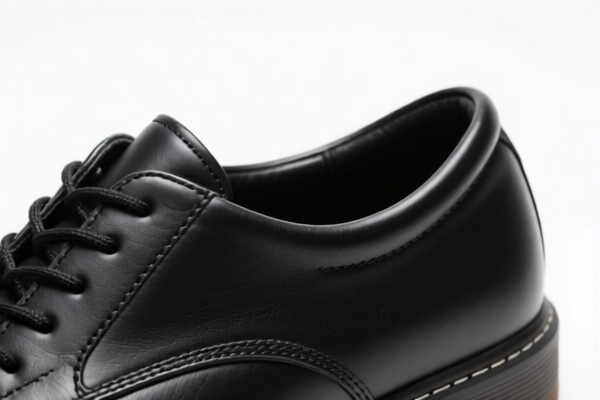


AI分析
👟 Shoes Without Upper (Footwear Components & Slip-ons)
🌐 HS Code Reference & Customs Clearance Guide | 2024/2025 Latest Tariff Analysis | Professional Clearance Strategy
📌 I. Product Definition & Classification: What Exactly Are "Shoes Without Upper"?
In international trade, "Shoes Without Upper" is a broad term that can refer to two distinct categories depending on the structure: 1. Footwear Parts (Components): Discrete parts of footwear that constitute the "upper" or its structural equivalents (e.g., unsewn shoe uppers, insoles, heels). These are classified as Parts. 2. Slip-on Shoes (Finished Goods): Complete footwear designed to be slipped on without laces or fasteners, where the "upper" is integrated into a seamless or elastic structure (often rubber/plastic). These are classified as Finished Footwear.
⚠️ Critical Distinction:
- If the item is a loose component (e.g., a pre-formed shoe upper made of material, ready to be assembled) → It is a Part (Heading 6406).
- If the item is a complete shoe that is put on by slipping the foot in (no laces/buttons) → It is Finished Footwear (Heading 6402).
- Misclassification Risk: Declaring a complete slip-on shoe as a "part" to avoid higher finished-goods tariffs is a common customs violation.
📦 II. HS Code Classification Details (Based on Provided Data)
Based on the provided dataset, here are the specific HS Codes, their definitions, and tax implications.
| HS Code | Product Description | Classification Logic | Material/Type |
|---|---|---|---|
| 6406.20.00.00 | Shoe Uppers (Parts): Refers to shoe parts without an upper, i.e., components of footwear classified as parts. | Part/Component | Any material (as it's a part) |
| 6402.99.49.80 | Slip-on Shoes: Slip-on style, no fastening devices, typically made of rubber or plastic. | Finished Footwear | Rubber/Plastic |
| 6402.99.49.60 | Women's Slip-on Shoes: Slip-in style, no fasteners, made of rubber or plastic, for women. | Finished Footwear | Rubber/Plastic |
| 6406.10.90.40 | Shoe Parts (Non-Textile): Interpreted as parts related to the upper or unfinished upper components, not made of cotton textile. | Part/Component | Non-cotton textile (e.g., leather, synthetic) |
🔍 Key Interpretation:
- 6406.xxxx codes are for Parts. If you are importing a "shoe upper" that is not yet assembled into a shoe, use these.
- 6402.99.49.xx codes are for Complete Shoes. If you are importing a finished slip-on sandal or clog, use these.
- The tax burden differs drastically between Parts (low base rate) and Finished Footwear (high base rate).
💰 III. 2024/2025 Tariff Rate Breakdown (US Imports from China)
✅ Applicable Country: United States (US)
✅ Origin: China (CN)
✅ Note: Rates include Base Tariff, Section 301 Additional Tariff, and Section 122 Tariff.
🎯 1. 6406.20.00.00 — Shoe Uppers (Parts)
| Item | Detail |
|---|---|
| Base Tariff | 2.7% (Low rate for parts) |
| Section 301 Additional | 7.5% (Standard 301 rate for many footwear parts) |
| Section 122 Tariff | 10% (Specific surcharge on certain footwear components) |
| Total Effective Tax Rate | 20.2% |
| Tax Calculation | CIF Value × 20.2% |
| De Minimis Exemption | ❌ Not Applicable (Section 301 and 122 tariffs usually negate de minimis benefits for this category) |
| Legal Basis Path | USITC:6406.20.00.00 → FOOTNOTE:301 → IEEPA:122 |
📌 Explanation:
- This is the most cost-effective route if you are importing discrete parts (e.g., pre-cut uppers for assembly).
- The "Part" classification avoids the high base tariff of finished shoes.
- Warning: Do not mix parts with finished goods in the same shipment to avoid scrutiny.
🎯 2. 6402.99.49.80 — Slip-on Shoes (General/Rubber-Plastic)
| Item | Detail |
|---|---|
| Base Tariff | 37.5% (High base rate for finished rubber/plastic footwear) |
| Section 301 Additional | 7.5% |
| Section 122 Tariff | 10% |
| Total Effective Tax Rate | 55.0% |
| Tax Calculation | CIF Value × 55.0% |
| De Minimis Exemption | ❌ Not Applicable |
| Legal Basis Path | USITC:6402.99.49.80 → FOOTNOTE:301 → IEEPA:122 |
📌 Explanation:
- This code applies to complete slip-on shoes made of rubber or plastic (e.g., Crocs-style, shower shoes).
- The high base tariff (37.5%) makes this significantly more expensive than importing parts.
- Crucial: If you declare a finished shoe as a "part" to pay 20.2%, you risk severe penalties.
🎯 3. 6402.99.49.60 — Women's Slip-on Shoes (Rubber-Plastic)
| Item | Detail |
|---|---|
| Base Tariff | 37.5% |
| Section 301 Additional | 7.5% |
| Section 122 Tariff | 10% |
| Total Effective Tax Rate | 55.0% |
| Tax Calculation | CIF Value × 55.0% |
| De Minimis Exemption | ❌ Not Applicable |
| Legal Basis Path | USITC:6402.99.49.60 → FOOTNOTE:301 → IEEPA:122 |
📌 Explanation:
- Specific sub-category for Women’s rubber/plastic slip-ons.
- Identical tax burden to general slip-ons. The distinction is purely for statistical/regulatory tracking.
🎯 4. 6406.10.90.40 — Shoe Parts (Non-Cotton Textile)
| Item | Detail |
|---|---|
| Base Tariff | 4.5% |
| Section 301 Additional | 7.5% |
| Section 122 Tariff | 10% |
| Total Effective Tax Rate | 22.0% |
| Tax Calculation | CIF Value × 22.0% |
| De Minimis Exemption | ❌ Not Applicable |
| Legal Basis Path | USITC:6406.10.90.40 → FOOTNOTE:301 → IEEPA:122 |
📌 Explanation:
- For parts made of materials other than cotton textile (e.g., leather uppers, synthetic leather).
- Slightly higher base rate (4.5% vs 2.7%) than6406.20, but still much lower than finished shoes.
- Use this if your "upper" parts are made of leather or non-cotton synthetics.
🛠️ IV. Customs Clearance Practical Advice (Real-World Pitfall Guide)
✅ 1. Documentation Checklist (Non-Negotiable)
| Document | Required | Purpose |
|---|---|---|
| ✅ Product Photographs | ✔️ | Must clearly show if the item is a loose part or a complete shoe. |
| ✅ Technical Data Sheet | ✔️ | Define materials, assembly status, and whether fasteners are present. |
| ✅ Bill of Lading / Invoice | ✔️ | Accurate description: "Shoe Parts (Uppers)" vs. "Slip-on Shoes". |
| ✅ Origin Certificate | ✔️ | Essential for verifying Chinese origin (triggers 301/122 tariffs). |
| ✅ Material Declaration | ✔️ | Specify if rubber, plastic, leather, or textile (affects sub-classification). |
✅ 2. Declaration Strategy (Key Mnemonics)
🔥 "Parts are Parts, Shoes are Shoes. Don't Mix, Don't Lie!"
| Scenario | Correct HS Code | Risk if Misdeclared |
|---|---|---|
| Loose shoe uppers (to be assembled later) | 6406.20.00.00 (20.2%) |
Misdeclaring as "Shoes" → Pay 55%. |
| Finished Slip-ons (Ready to wear) | 6402.99.49.xx (55.0%) |
Misdeclaring as "Parts" → Severe Penalty/Seizure. |
| Leather/Non-Cotton Parts | 6406.10.90.40 (22.0%) |
Confusing material leads to wrong 6406 subcode. |
⚠️ Critical Warning:
Customs officers will physically inspect if the documentation says "Part" but the item looks like a "Shoe". If you import a complete slip-on shoe and label it as a "shoe upper," you will face: 1. Reclassification to 6402.99 (55% tax). 2. Back-taxes on the difference (34.8% per unit). 3. Fines for misdeclaration.
✅ 3. Special Cases
| Case | Handling Advice |
|---|---|
| Kit Assemblies | If you import "upper + sole + laces" in one box, it is Finished Footwear (55%). Do not split the declaration artificially. |
| Custom/Non-Standard | If the slip-on has unique design features, provide detailed sketches to justify the HS code. |
| Material Changes | If your "upper" is made of cotton textile, it may fall under different subcodes (not in current data). Verify if cotton textile parts have different rates. |
🌍 V. Global Market Comparison (2024/2025)
| Country/Region | Recommended HS Code | Base Tariff | Notes |
|---|---|---|---|
| 🇺🇸 USA | 6406.20.00.00 (Parts) |
2.7% + 301/122 | High total cost (20.2%) but low vs. 55% for shoes. |
| 🇺🇸 USA | 6402.99.49.80 (Shoes) |
37.5% + 301/122 | Very high total cost (55%). |
| 🇨🇳 China | 6406.20.00.00 |
~10-15% | Import duties vary by material. |
| 🇪🇺 EU | 6406.20.00.00 |
0-2.7% | No Section 301/122. Much lower costs in EU. |
📌 Conclusion:
- USA imposes heavy tariffs on both parts and shoes, but Parts are significantly cheaper (20.2% vs 55.0%).
- EU/Asia are more favorable. Consider assembly in Mexico or Vietnam to bypass US tariffs if volumes are high.
📌 VI. Common Errors & Pitfalls (Lessons Learned)
❌ Error 1: Calling a finished slip-on shoe a "shoe part" to save 34.8%.
👉 Result: Customs inspection reveals it's a complete product. 100% tax back-payment + fines.
❌ Error 2: Mixing rubber slip-ons with leather parts in one shipment under one HS code.
👉 Result: Customs rejects the declaration or reclassifies the entire shipment at the higher rate.
❌ Error 3: Ignoring Section 122 Tariff.
👉 Result: Underpaying by 10%. Even parts are subject to this surcharge.
✅ Correct Approach:
"Import pre-formed shoe uppers (Parts) under 6406.20.00.00 for local assembly. Or import finished slip-ons under 6402.99.49.80 with clear marketing as 'Slip-Ons'. Never mix."
🎯 VII. Conclusion: Professional Declaration, Cost Control!
🎯 Remember the Golden Rule:
🔹 "Parts Pay ~20%, Shoes Pay ~55%. Structure Your Supply Chain Accordingly!"
🔹 "If it can be worn, it's a Shoe. If it needs assembly, it's a Part."
✨ Professional Clearance Starts with Accurate Classification!
💼 Your Bottom Line Depends on This 10-Digit Code!
📣 Immediate Action:
📞 Consult a Customs Broker to verify the physical structure of your product.
🚀 Apply for an Advance Ruling from US Customs (CBP) if the classification is ambiguous.
用户评价
关于 HS 编码归类
协调制度(HS)是由世界海关组织(WCO)制定的国际贸易商品分类标准。全球 200 多个国家采用 HS 系统作为海关关税、贸易统计和进出口监管的基础。
每个 HS 编码遵循以下层级结构:
- 章(2 位)——商品大类(例如:第 84 章:机器和机械设备)
- 品目(4 位)——章内的更具体分类
- 子目(6 位)——国际通用细分,所有 WCO 成员国统一使用
- 本国细分(8-10 位)——各国自行扩展的细分编码,如美国 HTSUS 10 位编码
正确的 HS 编码归类对于顺利通关、准确缴纳关税和遵守贸易法规至关重要。错误归类可能导致海关延误、多缴关税或罚款。
从CN进口到US时,适用的关税税率可能包括:
- 最惠国(MFN)税率——适用于 WTO 成员国的标准关税税率
- 普通税率——适用于无贸易协定国家
- 贸易救济关税——附加关税,如 301 条款(反倾销)、232 条款(国家安全)或反补贴税
本页内容仅供参考。如需正式归类,请咨询当地海关或持牌报关代理。