silicon carbide doped wafer
CN → US| HS编码 | 关税税率 | 原产国 | 目的国 | 文档 |
|---|---|---|---|---|
| 2804691000 | 15.3% | CN | US | 官方文档 |
| 3824991100 | 35.0% | CN | US | 官方文档 |
| 3824991900 | 41.5% | CN | US | 官方文档 |
| 2804695000 | 15.5% | CN | US | 官方文档 |
| 3818000020 | 60.0% | CN | US | 官方文档 |
商品图片
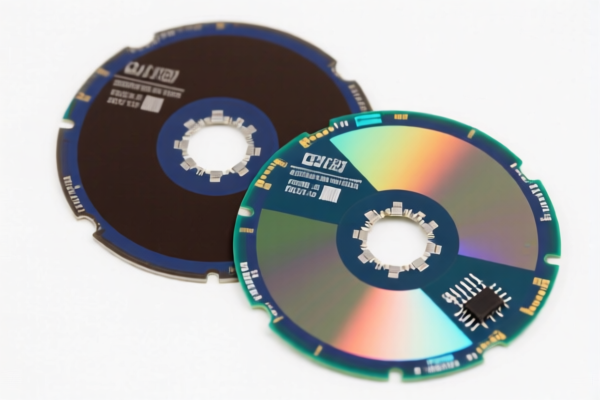
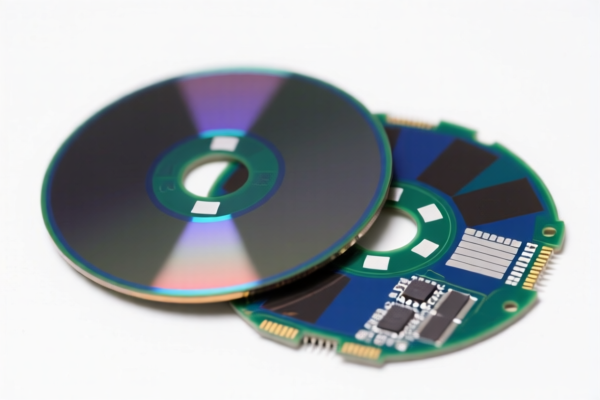
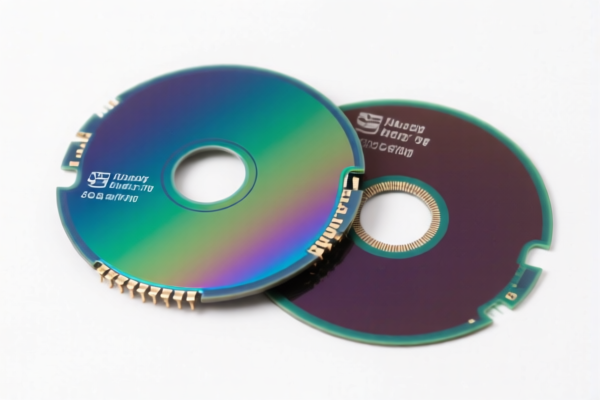
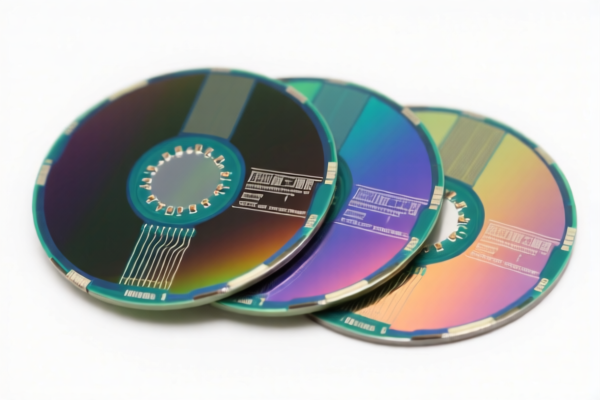
AI分析
⚛️ Silicon Carbide Doped Wafer (Silicon Carbide Doped Wafer)
🌐 HS Code Reference & Customs Clearance Guide | 2026 Latest Tariff Analysis | Professional Entry Strategy
📌 I. Product Definition & Classification: Do You Truly Understand "Silicon Carbide Doped Wafer"?
Silicon Carbide (SiC) Doped Wafers are critical semiconductor raw materials used in power electronics, radio frequency (RF) devices, and high-temperature applications. Unlike pure silicon, SiC wafers undergo doping processes (introducing impurities like nitrogen or aluminum) to alter their electrical properties.
In international trade, they are categorized based on their physical state (bulk material vs. processed wafer) and chemical nature (elemental vs. compound). The classification heavily depends on whether they are considered "pure elemental silicon" (rare for SiC), "semiconductor raw materials," or "chemical preparations/crystals."
⚠️ Key Distinction Point:
- If classified as Silicon Material (often misclassified or broadly categorized under Silicon chapters for certain semi-conductor grades): Falls under 2804.
- If classified as Semiconductor Raw Material/Chemical Preparation: Falls under 3824 (Doped or Undoped).
- If classified as Highly Specific Semiconductor Crystals/Preparations: Falls under 3818.📌 Critical Note: The provided data indicates multiple possible HS codes for "Silicon Wafer" contexts, ranging from pure silicon elements (2804) to complex chemical preparations (3824/3818). For Silicon Carbide, customs often scrutinize the "Doped" aspect, pushing classifications toward Chapter 38 (Chemical Products) rather than Chapter 28 (Inorganic Chemicals), due to the added manufacturing complexity.
📦 II. HS Code Classification Details (2026 Latest Tariff Authority Cross-Reference)
Based on the provided <DATA> set, here are the possible classifications and their corresponding tax implications. Note that "Silicon Carbide" may be broadly mapped to "Silicon" categories in some simplified systems, but the tax rates vary drastically.
| HS Code | Product Description (Based on Provided Data) | Applicable Scenario | Tax Rate (Total) |
|---|---|---|---|
2804.69.10.00 |
Silicon Material, Sheet Form, Other Silicon Category | Pure silicon wafer or broadly categorized silicon material; no doping or simple form | 15.3% |
2804.69.50.00 |
Silicon Material, Sheet Form, Primary Shape | Silicon wafer in primary sheet form, fitting sub-categories under "Other Silicon" | 15.5% |
3824.99.11.00 |
Doped Silicon Wafer (Semiconductor Raw Material) | Doped wafers treated as chemical products/preparations; doping process recognized | 35.0% |
3824.99.19.00 |
Silicon Material Wafer (Chemical/Crystal Attribute) | Silicon wafer classified under chemical industry preparations/crystal materials | 41.5% |
3818.00.00.20 |
Doped Multi-Silicon Wafer (Matched Property) | Specific doped silicon/multi-crystal match; high-level semiconductor preparation | 60.0% |
🔍 Analysis of the Data:
- The data provided explicitly lists Silicon (Si) classifications. However, Silicon Carbide (SiC) is often grouped with Silicon in broad tariff discussions unless specific HS codes for SiC exist (which are rare in basic datasets).
- Doped wafers consistently attract higher tariffs (35%–60%) compared to Undoped/Pure wafers (15.3%–15.5%).
- The jump from 15% to 60% highlights the tariff penalty for processed/doped semiconductor materials under US trade policies (Section 301 & IEEPA).
💰 III. 2026 Latest Tariff Rate Details (Including Additional Taxes & Policy Surcharges)
✅ Applicable Country: United States (US)
✅ Origin: China (CN)
✅ Effective Time: From November 10, 2025 (including subsequent imports)
🎯 1. 2804.69.10.00 & 2804.69.50.00 —— Silicon Material (Undoped / Primary Shape)
| Item | Content |
|---|---|
| Base Tariff | 5.3% (for .10) / 5.5% (for .50) |
| USITC Additional Tariff | 0.0% (No Section 301 surcharge applied to this specific subheading in provided data) |
| IEEPA Additional Tariff | +10% (Section 122 Clause, targeting Chinese products) |
| Total Tariff | 15.3% / 15.5% |
| Calculation Method | CIF Value × 15.3% (or 15.5%) |
| De Minimis Eligibility | ❌ No (deny_de_minimis) |
| Legal Basis Path | IEEPA:9903.01.25 → USITC:2804.69.10.00 → FOOTNOTE:122 |
📌 Explanation:
- These codes represent basic silicon materials.
- The 10% IEEPA tax is the primary driver of cost.
- No 25% Section 301 tax is listed in the provided data for these codes, making them the most cost-effective option if the product can be legally classified here (i.e., as undoped or primary silicon).
- ⚠️ Risk: If your product is Doped SiC, customs may reject this classification and reclassify it to Chapter 38, triggering higher taxes.
🎯 2. 3824.99.11.00 —— Doped Silicon Wafer (Semiconductor Raw Material)
| Item | Content |
|---|---|
| Base Tariff | 0.0% |
| USITC Additional Tariff | +25.0% (Section 301 Surtax) |
| IEEPA Additional Tariff | +10% (Section 122 Clause) |
| Total Tariff | 35.0% |
| Calculation Method | CIF Value × 35.0% |
| De Minimis Eligibility | ❌ No |
| Legal Basis Path | IEEPA:9903.01.25 → USITC:3824.99.11.00 → FOOTNOTE:301 & 122 |
📌 Explanation:
- Doped wafers are treated as chemical preparations.
- The 25% Section 301 tax is added because these are considered processed semiconductor materials originating from China.
- This is a mid-range tariff, significantly higher than undoped silicon but lower than the highest tier.
🎯 3. 3824.99.19.00 —— Silicon Wafer (Chemical/Crystal Attribute)
| Item | Content |
|---|---|
| Base Tariff | 6.5% |
| USITC Additional Tariff | +25.0% (Section 301 Surtax) |
| IEEPA Additional Tariff | +10% (Section 122 Clause) |
| Total Tariff | 41.5% |
| Calculation Method | CIF Value × 41.5% |
| De Minimis Eligibility | ❌ No |
| Legal Basis Path | IEEPA:9903.01.25 → USITC:3824.99.19.00 → FOOTNOTE:301 & 122 |
📌 Explanation:
- This code applies if the wafer is classified as a chemical industrial preparation or crystal material without specific semiconductor raw material status.
- The 6.5% base tariff makes this more expensive than3824.99.11.00even before adding the 25% and 10% surcharges.
🎯 4. 3818.00.00.20 —— Doped Multi-Silicon Wafer (Matched Property)
| Item | Content |
|---|---|
| Base Tariff | 0.0% |
| USITC Additional Tariff | +50.0% (High-level Section 301 or Specific Policy) |
| IEEPA Additional Tariff | +10% (Section 122 Clause) |
| Total Tariff | 60.0% |
| Calculation Method | CIF Value × 60.0% |
| De Minimis Eligibility | ❌ No |
| Legal Basis Path | IEEPA:9903.01.25 → USITC:3818.00.00.20 → FOOTNOTE:301 (50%) & 122 |
📌 Explanation:
- This is the highest tariff tier in the provided data.
- The 50% USITC surcharge suggests this is classified under a high-priority restricted category, possibly for highly processed or specific doped semiconductors targeted by US trade policies.
- Avoid this classification if possible, as it nearly doubles the cost compared to undoped silicon.
🛠️ IV. Customs Clearance Practical Advice (Real-World Pitfall Prevention)
✅ 1. Preparation Checklist (All Documents Required)
| Document | Mandatory? | Description |
|---|---|---|
| ✅ Product Specification Sheet | ✔️ | Must specify: Material (SiC/Si), Doping Type (N/P), Orientation, Resistivity, Thickness. |
| ✅ Doping Process Certificate | ✔️ | Critical for proving if it's "Raw Silicon" (Ch 28) or "Chemical Preparation" (Ch 38). |
| ✅ Product Photos | ✔️ | Clear images of wafers, packaging, and any labels. |
| ✅ Commercial Invoice | ✔️ | Must accurately describe the product as "Silicon Carbide Doped Wafer" or "Silicon Wafer" depending on classification. |
| ✅ Packing List | ✔️ | Detail quantity, weight, and carton dimensions. |
| ✅ Country of Origin Certificate | ✔️ | Required for verifying Chinese origin and applying surtaxes. |
| ✅ Third-Party Test Report | ✔️ | If available, include electrical property tests to support HS code argument. |
✅ 2. Declaration Strategy (Key Mnemonics)
🔥 "Undoped is Cheap (15%), Doped is Expensive (35-60%), Don't Split the Shipment!"
| Scenario | Correct Declaration | Incorrect Practice | Consequence |
|---|---|---|---|
| Undoped SiC/Si Wafers | 2804.69.10.00 or 2804.69.50.00 |
Declare as 3824 (Doped) |
Overpay ~20% tax unnecessarily |
| Doped SiC Wafers | 3824.99.11.00 (Best Case) or 3824.99.19.00 |
Declare as 2804 (Undoped) |
Customs Rejection + Penalties + Back Taxes |
| Highly Processed Doped Wafers | 3818.00.00.20 (If required) |
Declare as 3824 |
Under-declaration risk; if caught, 60% applies |
| Mixed Shipment (Undoped + Doped) | Split Declaration | Mix in one line item | Customs may apply the highest rate (60%) to the entire shipment |
📌 Crucial Advice:
- Do NOT claim doped wafers as2804(Silicon Element). The doping process changes the chemical nature, making it a "preparation" under Chapter 38.
- If your SiC wafers are undoped, fight for2804to save 20%+.
- If doped, try to justify3824.99.11.00(35%) over3818.00.00.20(60%) by emphasizing their role as "raw semiconductor materials" rather than "high-end processed devices."
✅ 3. Special Circumstances Handling
| Situation | Handling Advice |
|---|---|
| SiC vs. Silicon | If customs insist on "Silicon" codes due to dataset limitations, provide Material Safety Data Sheets (MSDS) proving it is Silicon Carbide, not pure Silicon, to avoid misclassification penalties. |
| OEM Custom Wafers | Provide customer order + technical drawings. Show that doping levels are standard for semiconductor industry, supporting 3824 classification. |
| Small Samples (De Minimis) | ❌ Not Eligible. All these HS codes have deny_de_minimis. Even small shipments are subject to full duties. |
| Re-export from Vietnam/Mexico | If SiC wafers are substantially transformed in Vietnam/Mexico, obtain Certificate of Origin from those countries to avoid China-specific surtaxes (IEEPA + Section 301). |
🌍 V. Global Customs Comparison (2026 Latest)
| Country/Region | Recommended HS Code | Estimated Tariff (China Origin) | Certification Requirements | Notes |
|---|---|---|---|---|
| 🇺🇸 USA | 3824.99.11.00 (Doped) |
35.0% | None specific for customs | Avoid 3818 if possible; 2804 only for undoped |
| 🇨🇳 China | 3824.99.11.00 |
0% (Import Duty) | CCC (if applicable) | No Section 301/IEEPA taxes apply |
| 🇪🇺 EU | 3824.99.90 |
0% | REACH, RoHS | No additional surtaxes |
| 🇯🇵 Japan | 3824.99.90 |
0% | PSE (if electronic component) | Free Trade Agreement (JTEPA) benefits |
📌 Conclusion:
- USA is the most expensive market due to Section 301 (25%+) and IEEPA (10%) taxes.
- Total Cost in USA: 35%–60% vs. 0% in EU/China/Japan.
- Strategy: Consider supply chain diversification (e.g., producing in Southeast Asia) to mitigate US tariffs.
📌 VI. Common Mistakes & Pitfall Guide (Lessons Learned)
❌ Mistake 1: Declaring Doped SiC as 2804 (Silicon)
👉 Consequence: Customs will classify it as 3824 or 3818 upon inspection → Back Taxes + Fines.
❌ Mistake 2: Combining Undoped and Doped wafers in one shipment without separate line items
👉 Consequence: Customs may apply the highest rate (60%) to the entire value.
❌ Mistake 3: Ignoring the 10% IEEPA Tax
👉 Consequence: Even if base tax is 0%, you still pay 10% minimum. Many importers forget this.
❌ Mistake 4: Assuming De Minimis applies to semiconductor materials
👉 Consequence: All shipments are taxable, regardless of value.
✅ Correct Approach:
"Silicon Carbide Doped Wafer, P-Type, 4-inch, Doped with Aluminum, for Power Electronics, HS Code: 3824.99.11.00"
🎯 VII. Conclusion: Professional Declaration, Cost Optimization
🎯 Remember the Mnemonic:
🔹 "Undoped = 15%, Doped = 35-60%, Split Shipment, Save Money!"
🔹 "HS Code Determines Tariff, 10% IEEPA is Always On, Don't Skip the Document!"
📌 Pro Tip:
If your SiC wafers are doped, try to argue for 3824.99.11.00 (35%) over 3818.00.00.20 (60%) by providing technical datasheets that show they are raw semiconductor materials rather than finished device components.
📣 Immediate Action:
📞 Consult a Customs Broker + Provide Technical Specs + Apply for Pre-Ruling if possible
🚀 Ensure your Supply Chain is optimized to handle 35-60% tariffs in the US market.
✨ Professional Customs Clearance Starts with Accurate Classification!
💼 Every Dollar of Tax Saved is Pure Profit!
用户评价
关于 HS 编码归类
协调制度(HS)是由世界海关组织(WCO)制定的国际贸易商品分类标准。全球 200 多个国家采用 HS 系统作为海关关税、贸易统计和进出口监管的基础。
每个 HS 编码遵循以下层级结构:
- 章(2 位)——商品大类(例如:第 84 章:机器和机械设备)
- 品目(4 位)——章内的更具体分类
- 子目(6 位)——国际通用细分,所有 WCO 成员国统一使用
- 本国细分(8-10 位)——各国自行扩展的细分编码,如美国 HTSUS 10 位编码
正确的 HS 编码归类对于顺利通关、准确缴纳关税和遵守贸易法规至关重要。错误归类可能导致海关延误、多缴关税或罚款。
从CN进口到US时,适用的关税税率可能包括:
- 最惠国(MFN)税率——适用于 WTO 成员国的标准关税税率
- 普通税率——适用于无贸易协定国家
- 贸易救济关税——附加关税,如 301 条款(反倾销)、232 条款(国家安全)或反补贴税
本页内容仅供参考。如需正式归类,请咨询当地海关或持牌报关代理。