silicone products
CN → US| HS编码 | 关税税率 | 原产国 | 目的国 | 文档 |
|---|---|---|---|---|
| 4016990500 | 20.9% | CN | US | 官方文档 |
| 4014901000 | 10.0% | CN | US | 官方文档 |
| 4015129000 | 49.0% | CN | US | 官方文档 |
| 4015900050 | 39.0% | CN | US | 官方文档 |
| 4016996050 | 37.5% | CN | US | 官方文档 |
商品图片
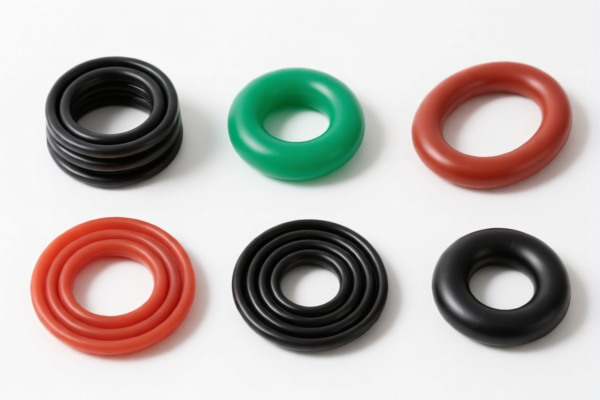
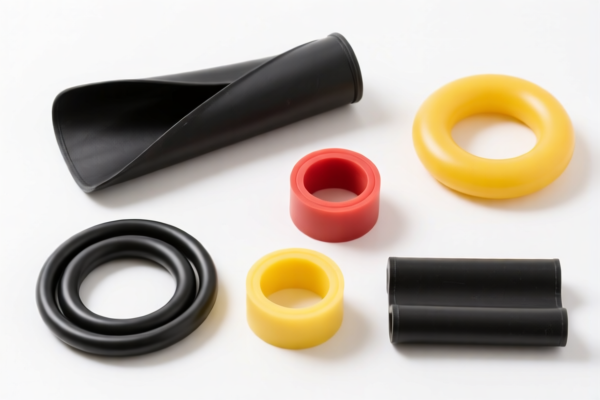
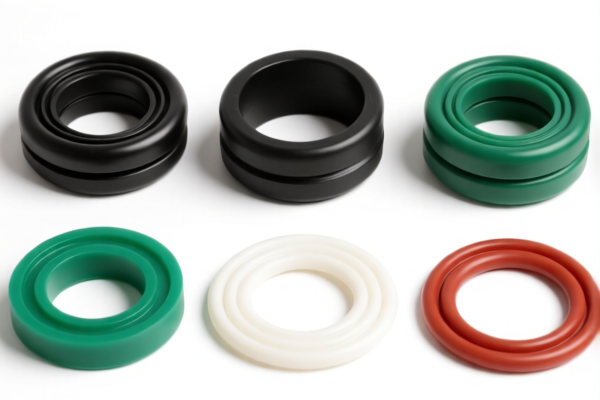
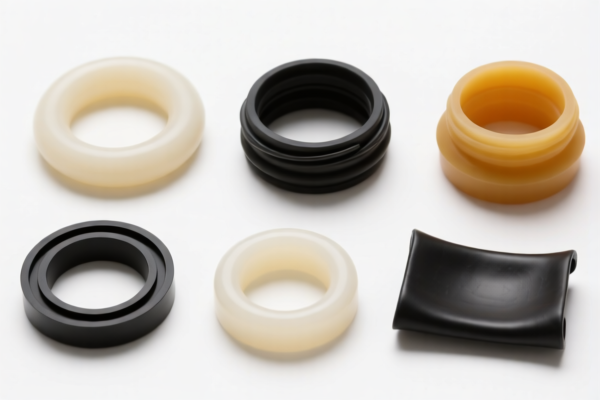
AI分析
🧪 Silicone Rubber Products (Rubber Articles)
🌐 HS Code Reference & Customs Clearance Guide | 2024-2025 Latest Tariff Analysis | Professional Clearance Strategy
📌 1. Product Definition & Classification: What Exactly Are "Silicone Products"?
Silicone products, broadly classified under Chapter 40 of the Harmonized System (HS), refer to articles made of vulcanized rubber (including synthetic rubber and elastomers like silicone). In international trade, they are not a single monolithic category but are split based on their specific physical form and end-use.
The key distinction lies in whether the product is a medical device, a general industrial part, or a specific consumer good. Misclassification here is the #1 cause of customs delays and unexpected tariff hikes (up to 20.9% total in specific scenarios).
⚠️ Critical Distinction Point:
- If the product is transparent/clear and used for medical purposes (e.g., gloves, tubing) → It often falls under 4015.12 (High Risk/High Tax).
- If the product is opaque/black or for general industrial/consumer use → It typically falls under 4014 or 4016 (Variable Tax).
- "Catch-all" Principle: If the product doesn't fit a specific description (like gloves or sheets), it defaults to "Other articles of vulcanized rubber other than hard rubber" under 4014.90 or 4016.99.
📦 2. HS Code Classification Matrix (2024-2025 Latest Tariffs)
Below are the five possible HS Codes derived from your data, ranked by tax efficiency and specificity.
| HS Code | Product Description | Specific Criteria / Use Case | Total Tax Rate (US Import) |
|---|---|---|---|
4014.90.10.00 |
Other Rubber Articles (Catch-all) | Lowest Tax Option. Applies to general vulcanized rubber articles not specified elsewhere. Uses the "residual/catch-all" matching principle. | 10.0% |
4016.99.05.00 |
Other Rubber Articles (Specific Sub-category) | General vulcanized rubber products. Standard classification for many industrial gaskets, seals, and non-medical rubber goods. | 20.9% |
4016.99.60.50 |
Other Rubber Articles (Detailed Catch-all) | Fits the "other categories residual matching principle." Often used when the product is complex but not explicitly listed. | 37.5% |
4015.90.00.50 |
Other Surgical/ Medical/ Hygienic Articles | High Risk Category. Applies to vulcanized rubber articles that might be interpreted as medical/hygienic (even if not strictly medical, ambiguity leads here). | 39.0% |
4015.12.90.00 |
Surgical Gloves, Conduits, etc. | Highest Tax/Strictest Scrutiny. Specifically for surgical gloves and similar medical items. If your silicone product is misidentified as medical, this applies. | 49.0% |
🔍 Key Insight:
- The 10.0% rate (4014.90.10.00) is the most advantageous for general silicone parts.
- The jump to 20.9% (4016.99.05.00) happens when specific sub-categories in 4016 are triggered.
- The 49.0% rate (4015.12.90.00) is punitive and strictly for medical-grade definitions. Avoid ambiguity!
💰 3. Detailed Tariff Structure Breakdown (USA → China Origin)
✅ Applicable Country: United States (US)
✅ Origin: China (CN)
✅ Effective Time: Current (Includes Section 301 & IEEPA measures)
🎯 1. 4014.90.10.00 — The Optimal Catch-All (10.0% Total)
| Item | Details |
|---|---|
| Base Tariff | 0.0% |
| Section 301 Additional Tariff | 0.0% (Not applicable to this specific sub-heading in some contexts, or exempted) |
| 122 Clause (IEEPA) Tariff | +10% |
| Total Effective Rate | 10.0% |
| Tax Calculation | CIF Value × 10% |
| De Minimis Exemption | ❌ Not Eligible (Most rubber articles from China are excluded from de minimis) |
| Legal Basis | IEEPA: 9903.01.25 → USITC: 4014.90.10.00 |
📌 Explanation:
- This is the most favorable classification for general silicone products.
- The 0% base and 0% Section 301 make it rare. Only the 10% IEEPA tariff applies.
- Strategy: Justify that the product is a generic "article of rubber" not fitting specific medical or sheet/glove categories.
🎯 2. 4016.99.05.00 — Standard Industrial Rubber (20.9% Total)
| Item | Details |
|---|---|
| Base Tariff | 3.4% |
| Section 301 Additional Tariff | +7.5% |
| 122 Clause (IEEPA) Tariff | +10% |
| Total Effective Rate | 20.9% |
| Tax Calculation | CIF Value × 20.9% |
| De Minimis Exemption | ❌ Not Eligible |
| Legal Basis | Base: 3.4% + 301: 7.5% + IEEPA: 10% |
📌 Explanation:
- This is the most common classification for general rubber parts (gaskets, seals, bumpers).
- It incurs all three layers of tax.
- Strategy: Only use if4014is legally untenable.
🎯 3. 4016.99.60.50 — Detailed "Other" Category (37.5% Total)
| Item | Details |
|---|---|
| Base Tariff | 2.5% |
| Section 301 Additional Tariff | +25.0% |
| 122 Clause (IEEPA) Tariff | +10% |
| Total Effective Rate | 37.5% |
| Tax Calculation | CIF Value × 37.5% |
| De Minimis Exemption | ❌ Not Eligible |
📌 Explanation:
- This code triggers the maximum 25% Section 301 tariff.
- It is a "detailed" catch-all within 4016, often used when the product is complex.
- Risk: High tax burden. Avoid unless no other classification fits.
🎯 4. 4015.90.00.50 — Medical/Hygienic Ambiguity (39.0% Total)
| Item | Details |
|---|---|
| Base Tariff | 4.0% |
| Section 301 Additional Tariff | +25.0% |
| 122 Clause (IEEPA) Tariff | +10% |
| Total Effective Rate | 39.0% |
| Tax Calculation | CIF Value × 39.0% |
| De Minimis Exemption | ❌ Not Eligible |
📌 Explanation:
- Chapter 4015 is for Medical/Hygienic items.
- If your silicone product (e.g., a clear tube, a seal on a medical device) looks medical, customs may assign this code.
- Risk: High scrutiny. Requires proof of non-medical use to downgrade to 4014/4016.
🎯 5. 4015.12.90.00 — Surgical Gloves/Conduits (49.0% Total)
| Item | Details |
|---|---|
| Base Tariff | 14.0% |
| Section 301 Additional Tariff | +25.0% |
| 122 Clause (IEEPA) Tariff | +10% |
| Total Effective Rate | 49.0% |
| Tax Calculation | CIF Value × 49.0% |
| De Minimis Exemption | ❌ Not Eligible |
📌 Explanation:
- Worst-case scenario for general silicone products.
- Applies strictly to surgical gloves, conduits, and similar items.
- Avoid: Do not allow ambiguity. If it’s not a glove, fight for 4014.
🛠️ 4. Customs Clearance Practical Advice (Real-World Pitfalls)
✅ 1. Documentation Checklist (Non-Negotiable)
| Document | Must Provide | Purpose |
|---|---|---|
| Product Spec Sheet | ✔️ | Detail material composition (e.g., "100% Silicone Rubber, Platinum Cured"). |
| Material Safety Data Sheet (MSDS) | ✔️ | Prove it is not a hazardous chemical; confirms rubber nature. |
| Intended Use Statement | ✔️ | Crucial: "For industrial sealing purposes only. NOT for medical/surgical use." |
| Product Photos | ✔️ | Show clear labeling, lack of medical certification marks (CE-Medical, FDA 510k). |
| Commercial Invoice | ✔️ | Describe product generically if possible (e.g., "Silicone Rubber Gasket") rather than "Surgical Tube." |
| Origin Certificate | ✔️ | Proof of Chinese origin to apply correct tariffs. |
✅ 2. Declaration Strategy (The "Golden Rule")
🔥 "Generic is Safe, Medical is Expensive!"
| Scenario | Recommended HS Code | Strategy |
|---|---|---|
| General Silicone Parts (Gaskets, Seals, Mats, Toys) | 4014.90.10.00 |
Best Rate (10%). Justify as "Article of Vulcanized Rubber Not Elsewhere Specified." |
| Industrial Rubber Parts (O-rings, Bushings) | 4016.99.05.00 |
Standard Rate (20.9%). Safe if 4014 is rejected. |
| Transparent Silicone Tubing | Careful! | If used for water/air → 4014. If used for fluids/medical → Risk 4015. Label clearly "Non-Medical." |
| Silicone Gloves | 4015.12.90.00 |
Avoid if possible. If they are household dish gloves, specify "Household Use" to argue for 4014 or 4016. |
✅ 3. Critical Avoidance Tips
| Pitfall | Consequence | Solution |
|---|---|---|
| Using "Medical" Keywords | Triggers 4015 (39-49% tax) |
Remove words like "biocompatible," "surgical," "sterile" from commercial invoice unless true. |
| Mislabeling as "Plastic" | Customs rejects & reclassifies | Silicone is rubber (Chapter 40), not plastic (Chapter 39). Declare as Rubber. |
| Ignoring Section 301 | Unexpected bill | All Chinese rubber products from China face extra tariffs. Budget for IEEPA (10%) + Base + 301. |
| Ambiguous Description | Customs Audit | "Silicone Product" is too vague. Use "Silicone Rubber Seal, Model X, for HVAC System." |
🌍 5. Global Market Comparison (2024-2025)
| Region | Recommended HS Code | Est. Total Tariff | Key Certification |
|---|---|---|---|
| 🇺🇸 USA | 4014.90.10.00 |
10.0% | No specific, but prove non-medical. |
| 🇨🇳 China (Export) | 4014 / 4016 |
0-5% (Export Duty) | CE (for EU), FDA (if medical) |
| 🇪🇺 EU | 4014 / 4016 |
0-2.5% | REACH, LFGB (Food Contact) |
| 🇬🇧 UK | 4014 / 4016 |
0-2.5% | UKCA, REACH |
| 🇦🇺 Australia | 4014 / 4016 |
5% | RCM, ACMA |
📌 Conclusion:
- The USA is the most expensive market due to IEEPA and Section 301 tariffs.
- Europe/Australia have much lower base tariffs but require strict chemical compliance (REACH/LFGB).
- Optimization: Aim for4014.90.10.00in the US to save ~30% in taxes compared to medical classifications.
📌 6. Common Mistakes & Blood-Sweating Lessons
❌ Mistake 1: Declaring "Silicone Rubber" as "Plastic" (HS 39)
👉 Result: Customs reclassifies to Chapter 40, imposes penalties, and delays shipment.
👉 Fix: Always declare as Rubber (Chapter 40).
❌ Mistake 2: Using "Medical Grade" in the description without FDA approval
👉 Result: Customs assumes it’s medical, applies 4015 (49% tax), and demands FDA docs.
👉 Fix: Use "Industrial Grade" or "General Purpose" unless you have medical clearance.
❌ Mistake 3: Assuming all silicone is 4016
👉 Result: Missing the 10% 4014 loophole.
👉 Fix: Consult a customs broker to justify "Catch-all" status under 4014.
✅ Correct Declaration Example:
"Silicone Rubber Gasket, Opaque Black, 100% Vulcanized Silicone, For Industrial HVAC Seal Only, Not for Medical Use, Model: SG-2024"
🎯 7. Conclusion: Smart Classification Saves Money!
🎯 Remember the Mantra:
🔹 "Generic Rubber = 10% (Best)"
🔹 "Specific Industrial = 20.9%"
🔹 "Medical Lookalike = 39-49% (Avoid!)"🔹 "Describe Non-Medical, Clear Intent, Save Big!"
📌 Pro Tip:
If your silicone product is food-grade (e.g., baking mats, baby nipples), ensure you have FDA 21 CFR 177.2600 compliance docs ready. While this doesn’t change HS code, it prevents rejection and helps argue for general rubber classification if not explicitly food-listed.
📣 Immediate Action:
📞 Engage a Customs Broker: Provide product photos and a Detailed Use Statement.
📝 Request an Advance Ruling (USA): Pay a small fee to get a binding HS Code opinion before shipping.
🚀 Optimize Your Invoice: Remove ambiguous terms.
💼 Your Tax Bill is Directly Proportional to Your Description Ambiguity!
✨ Professional Customs Clearance Starts with Precise Classification!
💼 Every Percent Saved is Pure Profit!
用户评价
关于 HS 编码归类
协调制度(HS)是由世界海关组织(WCO)制定的国际贸易商品分类标准。全球 200 多个国家采用 HS 系统作为海关关税、贸易统计和进出口监管的基础。
每个 HS 编码遵循以下层级结构:
- 章(2 位)——商品大类(例如:第 84 章:机器和机械设备)
- 品目(4 位)——章内的更具体分类
- 子目(6 位)——国际通用细分,所有 WCO 成员国统一使用
- 本国细分(8-10 位)——各国自行扩展的细分编码,如美国 HTSUS 10 位编码
正确的 HS 编码归类对于顺利通关、准确缴纳关税和遵守贸易法规至关重要。错误归类可能导致海关延误、多缴关税或罚款。
从CN进口到US时,适用的关税税率可能包括:
- 最惠国(MFN)税率——适用于 WTO 成员国的标准关税税率
- 普通税率——适用于无贸易协定国家
- 贸易救济关税——附加关税,如 301 条款(反倾销)、232 条款(国家安全)或反补贴税
本页内容仅供参考。如需正式归类,请咨询当地海关或持牌报关代理。