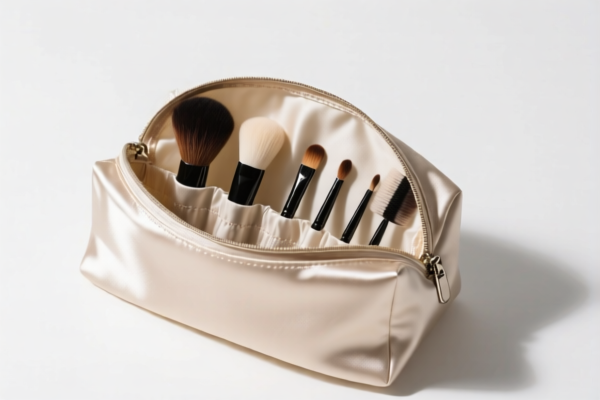
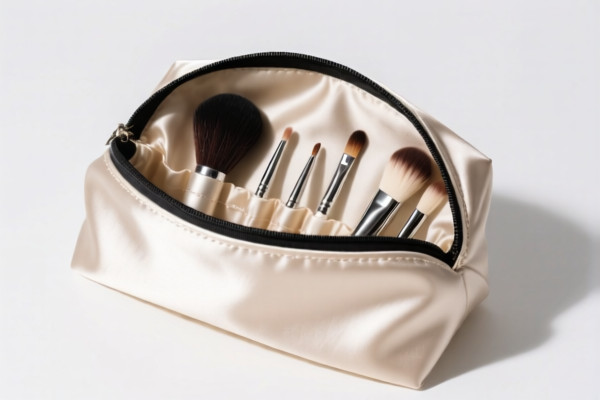
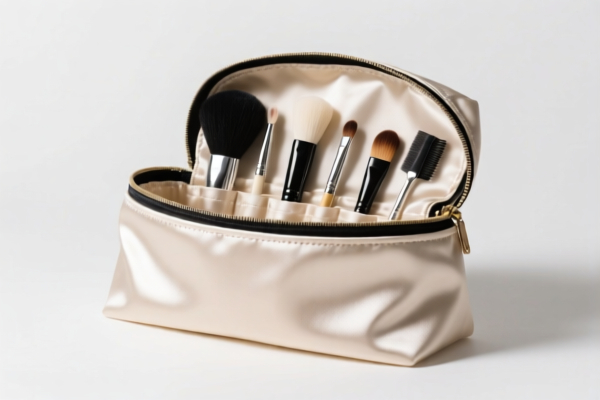
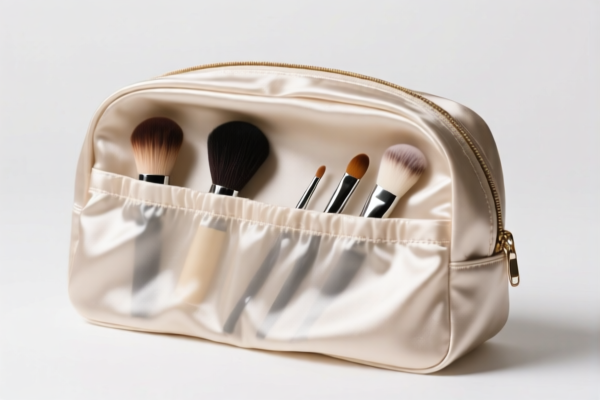
silk cosmetic bag with brush compartment
CN → US商品图片
AI分析
👜 Silk Cosmetic Bag with Brush Compartment
🌐 HS Code Reference & Customs Clearance Guide | 2026 Latest Tariff Analysis | Professional Strategy
📌 1. Product Definition & Classification: Are You Sure It’s Just a "Bag"?
A "Silk Cosmetic Bag with Brush Compartment" is typically categorized based on its primary material and function. In international trade, the distinction lies between:
- Silk/Textile Bags (Chapter 42/63): If the outer shell is predominantly silk (or synthetic silk-like fabric) and the primary function is carrying cosmetics.
- Plastic/PVC Bags (Chapter 39): If the "silk" finish is actually a coated plastic (PVC/PU) with a silk texture. Most mass-market "silk" cosmetic bags are actually PVC or nylon, not natural silk.
⚠️ Critical Distinction:
- If 100% Natural Silk → Chapter 63 (Other made-up articles) or Chapter 42 (if lined with non-silk materials for structure).
- If Synthetic (Nylon/Polyester) or Plastic (PVC) with Silk Texture → Chapter 42 or 39.
- Most Common Scenario: The "Brush Compartment" is an internal feature, not a separate classification driver. It remains a cosmetic bag.
📦 2. HS Code Classification Details (2026 Latest Tariff Reference)
| HS Code | Product Description | Applicable Scenario | Material Note |
|---|---|---|---|
4202.92.76.30 |
Cosmetic bags, with outer surface of textile materials (Nylon/Polyester) | Most common "silk-textured" nylon bags | ❌ Not natural silk |
4202.92.76.10 |
Cosmetic bags, with outer surface of silk | True Natural Silk cosmetic bags | ✅ Yes |
6307.90.98.89 |
Other made-up articles of textiles (if no zipper/closure) | Unlined, simple pouches | ❌ No hard structure |
3926.90.99.99 |
If PVC/Plastic "Silk" finish | Cheap PVC bags with silk print | ❌ Plastic |
🔍 Key Reminder:
- USITC Footnote 9903.88.01 often affects Chapter 42 items from China.
- "Silk" must be proven: If customs suspects it’s synthetic, they may reclassify under synthetic textiles, changing the tariff.
- Brush Compartment: This is an internal feature and does not change the HS Code. It’s still a cosmetic bag.
💰 3. 2026 Latest Tariff Rate Breakdown (US Market Focus)
✅ Applicable Country: United States (US)
✅ Origin: China (CN)
✅ Effective Date: 2025/2026 Tariff Period
🎯 1. 4202.92.76.30 —— Cosmetic Bags, Nylon/Polyester (Most Common)
| Item | Details |
|---|---|
| Base Rate | 32% (Ad Valorem) |
| USITC Section 301 Tariff | +7.5% (Footnote 9903.88.01) |
| IEEPA Additional Tariff | +10% (China-specific, effective Nov 2025) |
| Total Tariff Rate | 49.5% |
| Calculation Basis | CIF Value × 49.5% |
| De Minimis Exemption | ❌ Not Eligible (Value > $800 threshold not applicable for high tariffs) |
| Legal Reference Path | IEEPA:9903.01.25 → USITC:4202.92.76.30 → FOOTNOTE:9903.88.01 |
📌 Explanation:
- Base Rate 32%: Standard MFN rate for other travel/goods bags.
- Section 301 +7.5%: Added in 2018, still in effect.
- IEEPA +10%: New 2025/2026 addition for China-origin textile/consumer goods.
- Total 49.5%: Extremely high. Cost-effective alternatives include sourcing from Vietnam or Thailand for IEEPA exemption.
🎯 2. 4202.92.76.10 —— Cosmetic Bags, Natural Silk
| Item | Details |
|---|---|
| Base Rate | 32% (Ad Valorem) |
| USITC Section 301 Tariff | +7.5% |
| IEEPA Additional Tariff | +10% |
| Total Tariff Rate | 49.5% |
| Calculation Basis | CIF Value × 49.5% |
| De Minimis Exemption | ❌ Not Eligible |
| Legal Reference Path | IEEPA:9903.01.25 → USITC:4202.92.76.10 → FOOTNOTE:9903.88.01 |
📌 Note:
- Even natural silk cosmetic bags from China face the same high tariffs due to their classification under Chapter 42.
- Provenance is critical: Mislabeling synthetic silk as natural silk can lead to customs penalties.
🛠️ 4. Customs Clearance Practical Advice
✅ 1. Required Documentation Checklist
| Document | Mandatory? | Details |
|---|---|---|
| ✅ Commercial Invoice | ✔️ | Must state "Cosmetic Bag, Model XYZ, Material: 100% Silk / Nylon" |
| ✅ Packing List | ✔️ | Include brush compartment details if separate items are included |
| ✅ Material Declaration | ✔️ | Crucial: Specify if "Silk" is natural or synthetic |
| ✅ Photos of Product | ✔️ | Show zipper, interior, and any branding |
| ✅ Test Report | ✔️ | If claimed "Anti-Bacterial" or "Special Coating" |
✅ 2. Classification Tips
🔥 "Material Defines HS, Compartment is Internal"
| Scenario | Correct HS Code | Wrong Approach |
|---|---|---|
| Nylon bag with silk texture | 4202.92.76.30 |
Classify as "Silk" → Audit risk |
| True Silk bag | 4202.92.76.10 |
Classify as "Textile Pouch" → Lower tariff but misdeclaration |
| Bag with removable brushes | 4202.92.76.30 + 9603.30.00.00 (Brushes) |
Combine into one bag → Incorrect |
| PVC bag with silk print | 3926.90.99.99 |
Classify as "Textile" → Misclassification |
✅ 3. Special Handling
| Situation | Recommendation |
|---|---|
| OEM Custom Bags | Provide design specs to prove material composition |
| Mixed Materials | If lining is different, still classify by outer surface |
| Gift Sets (Bag + Brushes) | Declare separately if brushes are high-value |
| Vietnam/Thailand Origin | Apply for IEEPA exemption → 0% IEEPA, lower total tax |
🌍 5. Global Market Comparison (2026)
| Country/Region | Recommended HS Code | Tariff (China Origin) | Certification | Notes |
|---|---|---|---|---|
| 🇺🇸 USA | 4202.92.76.30 |
49.5% (Total) | No specific | High tariff due to Section 301 + IEEPA |
| 🇨🇳 China | 4202.92.76.30 |
5-10% | No specific | Low import tariff |
| 🇪🇺 EU | 4202.92.76.30 |
0-12% (depending on duty-free agreements) | REACH (if chemical-treated) | No IEEPA equivalent |
| 🇬🇧 UK | 4202.92.76.30 |
0-12% | UKCA (if applicable) | Post-Brexit rules apply |
| 🇯🇵 Japan | 4202.92.76.30 |
0-12% | PSE (if electronic, not applicable here) | Low tariff |
📌 Conclusion:
- USA is the highest-cost market due to combined Section 301 and IEEPA tariffs.
- Consider sourcing from Southeast Asia (Vietnam, Thailand) to avoid IEEPA 10% tariff, reducing total to ~39.5%.
📌 6. Common Mistakes & Pitfalls
❌ Mistake 1: Classifying as "Textile Pouch" (6307.90.98.89) to avoid higher duty
👉 Consequence: Customs may reclassify as 4202.92.76.30, leading to back taxes and penalties.
❌ Mistake 2: Labeling PVC bags as "Silk"
👉 Consequence: Customs may reject declaration, demand physical inspection, or impose fines for misdeclaration.
❌ Mistake 3: Ignoring the "Brush Compartment" as a separate item
👉 Consequence: If brushes are high-value, declare separately to optimize tariff rates if possible.
✅ Correct Practice:
"Cosmetic Bag, Model XYZ, Outer Surface: 100% Nylon (Silk Texture), Lining: Polyester, with Brush Compartment. Origin: China."
🎯 7. Conclusion: Strategic Sourcing & Compliance
🎯 Key Takeaways:
🔹 "Silk" is a material classification, not just a finish. Prove it!
🔹 US Tariffs are high (49.5%). Consider supply chain diversification to Vietnam/Thailand.
🔹 Do not split the bag and brushes unless they are sold separately.
📌 Pro Tip:
If your cosmetic bags are originating from Vietnam, Mexico, or Thailand, you can apply for IEEPA Exemption, reducing the total tariff to 39.5% (32% Base + 7.5% Section 301). This is a significant saving!
📣 Immediate Action:
📞 Consult with a customs broker to verify material composition.
🚀 Evaluate supply chain options to mitigate US tariff risks.
✨ Professional Customs Clearance Starts with Accurate Classification!
💼 Your Cost Efficiency Depends on Precision!
用户评价
关于 HS 编码归类
协调制度(HS)是由世界海关组织(WCO)制定的国际贸易商品分类标准。全球 200 多个国家采用 HS 系统作为海关关税、贸易统计和进出口监管的基础。
每个 HS 编码遵循以下层级结构:
- 章(2 位)——商品大类(例如:第 84 章:机器和机械设备)
- 品目(4 位)——章内的更具体分类
- 子目(6 位)——国际通用细分,所有 WCO 成员国统一使用
- 本国细分(8-10 位)——各国自行扩展的细分编码,如美国 HTSUS 10 位编码
正确的 HS 编码归类对于顺利通关、准确缴纳关税和遵守贸易法规至关重要。错误归类可能导致海关延误、多缴关税或罚款。
从CN进口到US时,适用的关税税率可能包括:
- 最惠国(MFN)税率——适用于 WTO 成员国的标准关税税率
- 普通税率——适用于无贸易协定国家
- 贸易救济关税——附加关税,如 301 条款(反倾销)、232 条款(国家安全)或反补贴税
本页内容仅供参考。如需正式归类,请咨询当地海关或持牌报关代理。