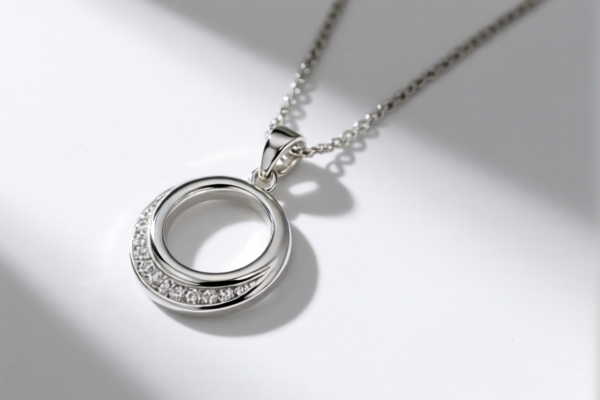
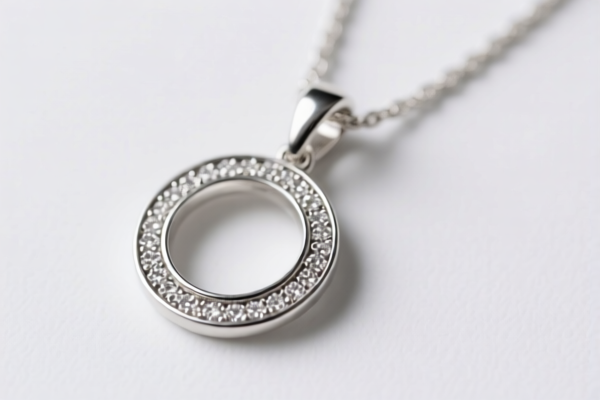
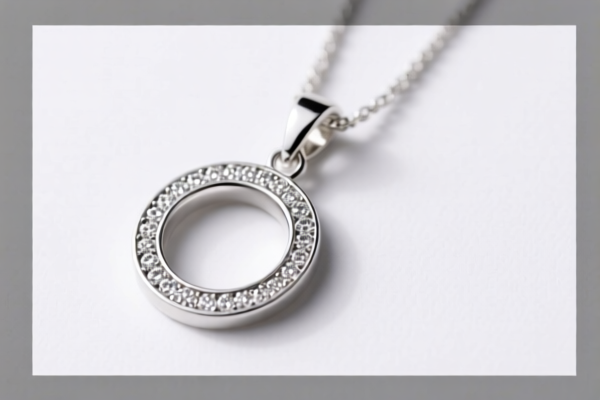
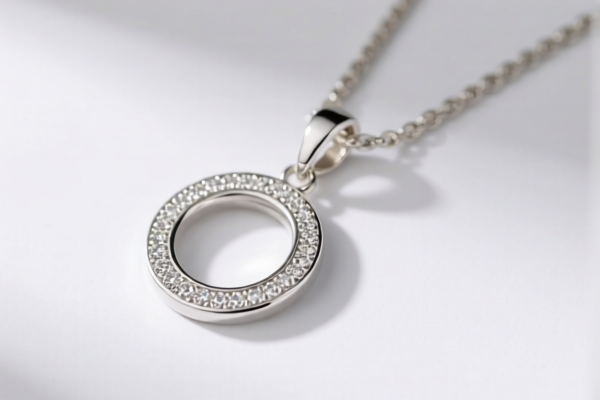
silver pearl pendant necklace
CN → US| HS编码 | 关税税率 | 原产国 | 目的国 | 文档 |
|---|---|---|---|---|
| 7106925000 | 38.0% | CN | US | 官方文档 |
| 7113115000 | 22.5% | CN | US | 官方文档 |
| 7113115000 | 22.5% | CN | US | 官方文档 |
| 7113112000 | 31.0% | CN | US | 官方文档 |
商品图片
AI分析
💍 Silver Pearl Pendant Necklace (Jewelry Classification Guide)
🌐 HS Code Reference & Customs Clearance Guide | 2026 Latest Tariff Analysis | Professional Strategy
📌 One: Product Definition & Classification: Do You Know "Silver Pearl Necklaces"?
Silver pearl pendant necklaces are a classic category of fine jewelry, composed of: * Material: Primarily Silver (Ag) as the base metal, often plated or solid, featuring Pearls (organic gemstone). * Form: A pendant suspended on a chain/necklace structure. * Purpose: Adornment, fashion, and ceremonial use.
⚠️ Critical Distinction for Classification:
- Finished Jewelry (Necklace + Pendant): Must be classified under Chapter 71.13 (Articles of jewelry and parts thereof).
- Raw/Unfinished Silver (Ingot/Sheet): If sold as raw material without jewelry assembly → Chapter 71.06.
- Partial Components: If sold as loose chains or loose pendants intended for assembly, classification may vary, but "Necklace" implies a finished good.
📦 Two: HS Code Classification Details (2026 Tariff Authority Match)
Based on the specific attributes of a "Silver Pearl Pendant Necklace", here are the three potential HS Codes with their corresponding tax breakdowns and logic.
🥇 Option A: The "Standard" Classification (Highest Compatibility)
HS Code: 7113.11.50.00
* Product Description: Silver jewelry (not silver-plated).
* Why it fits: The product name explicitly states "Silver" (Material) and "Pendant Necklace" (Form). This falls perfectly under "Articles of jewelry of silver" (Chapter 71.13).
* Tax Structure:
* Base Tariff: 5.0%
* Additional Tariff (Section 301): 7.5%
* Section 122 Tariff: 10.0%
* 💰 Total Tax Rate: 22.5%
* Verdict: Most likely correct. Matches material + finished form perfectly.
🥈 Option B: The "Specific Form" Classification (Alternative)
HS Code: 7113.11.20.00
* Product Description: Other silver jewelry (specific sub-category).
* Why it fits: Matches the "Silver" material limitation and "Necklace" (Jewelry category). This code is often used for specific sub-types of silver jewelry not covered by ...50.00.
* Tax Structure:
* Base Tariff: 13.5%
* Additional Tariff (Section 301): 7.5%
* Section 122 Tariff: 10.0%
* 💰 Total Tax Rate: 31.0%
* Verdict: Valid alternative, but results in a higher tax burden (+8.5%) than Option A. Avoid unless customs mandates this sub-code for specific silver finishes.
🥉 Option C: The "Material Only" Classification (High Risk/High Tax)
HS Code: 7106.92.50.00
* Product Description: Other silver, semi-finished/unfinished (Silver in other forms).
* Why it might match: Matches the "Silver" material. However, this code is typically for semi-finished silver (bars, rods, wires) or unmounted silver.
* Risk: While the material is correct, the "Necklace" form is a finished good. Classification rules usually dictate that if the article is finished, it goes to Chapter 71.13, not Chapter 71.06 (raw material).
* Logic Exception: Only applicable if the shipment is declared as "Silver Components for Jewelry" rather than finished necklaces, or if there is a "Parts/Accessories" default bias in specific customs zones.
* Tax Structure:
* Base Tariff: 3.0%
* Additional Tariff (Section 301): 25.0% (Heavy penalty rate!)
* Section 122 Tariff: 10.0%
* 💰 Total Tax Rate: 38.0%
* Verdict: NOT RECOMMENDED. Even though the base tariff looks lower (3%), the 25% Section 301 surcharge makes this the most expensive option. Do not use for finished necklaces.
📊 Summary Comparison Table
| HS Code | Classification Basis | Total Tax Rate | Risk Level | Recommendation |
|---|---|---|---|---|
| 7113.11.50.00 | ✅ Silver Jewelry (Finished) | 22.5% | 🟢 Low | ✅ BEST CHOICE |
| 7113.11.20.00 | ✅ Silver Jewelry (Sub-type) | 31.0% | 🟡 Medium | ⚠️ Use if 50.00 is rejected |
| 7106.92.50.00 | ⚠️ Raw Silver / Components | 38.0% | 🔴 High | ❌ AVOID (High penalty) |
💰 Three: Detailed Tax Clause Breakdown (USA Import Context)
✅ Applicable Country: United States (US)
✅ Origin: China (CN)
✅ Effective Date: Current Tariff Regime (2025-2026)
🎯 Clause 1: Section 122 Tariff (10%)
- Legal Basis: Executive Order/Trade Action targeting specific Chinese goods (often textiles, footwear, and jewelry components in certain contexts).
- Calculation: Applied on the dutiable value (CIF).
- Impact: Increases cost by 10 percentage points across all codes.
🎯 Clause 2: Section 301 / USITC Additional Tariffs
- For
7113.11.50.00&7113.11.20.00:- Rate: 7.5% (Standard Section 301 rate for specific jewelry categories).
- Reason: Retaliation or protectionist measure for Chinese consumer goods.
- For
7106.92.50.00:- Rate: 25.0% (Aggressive penalty rate for raw materials/semi-finished goods).
- Reason: Classified under "High Penalty" sub-lists to discourage import of raw inputs without value-add.
🎯 Clause 3: Base MFN Tariff
7113.11.50.00: 5.0% (Standard for silver jewelry).7113.11.20.00: 13.5% (Higher base for specific sub-types).7106.92.50.00: 3.0% (Low base for raw metal, but overshadowed by penalties).
📌 Calculation Formula:
Total Duty = (CIF Value) × [Base% + Additional% + Section 122%]
Example for7113.11.50.00: $1000 × (5% + 7.5% + 10%) = $225 Duty.
🛠️ Four: Customs Clearance Practical Advice (Action Plan)
✅ 1. Preparation Checklist (Must Have)
| Document | Requirement | Why? |
|---|---|---|
| Product Photos | Must show Pearls + Silver Chain + Pendant | Proves it is Finished Jewelry, not raw silver. |
| Material Declaration | Explicitly state: "Solid Silver" or "Sterling Silver (925)" | Avoids "Silver Plated" confusion (different tax). |
| Bill of Materials (BOM) | List Pearl source (Freshwater/Sea) and Silver purity | Ensures compliance with labeling laws. |
| Invoice & Packing List | Must clearly state "Silver Pearl Necklace" | Keyword matching for HS Code 7113. |
✅ 2. Classification Strategy (The "Golden Rule")
🔥 Rule: "Finished > Raw. Form > Material."
DO NOT declare "Silver Pearl Necklace" as7106(Raw Silver) to save money. It will trigger audits and penalties because the form is clearly a necklace. * DO declare as7113.11.50.00. This is the standard for silver jewelry. * Tip: If the pearls are freshwater vs. saltwater, it might affect the "gemstone" classification, but for silver base jewelry*,7113remains dominant.
✅ 3. Pitfalls to Avoid
- ❌ Pitfall 1: Calling it "Silver Chain" only (ignoring pearls).
- Result: Customs may classify as "Jewelry parts" (higher tax or wrong code).
- ❌ Pitfall 2: Declaring "Silver Plated".
- Result: If it is actually Solid/Sterling, this is fraud. If it is plated, HS Code changes to
7117(base metal) with potentially different tax rates (often higher).
- Result: If it is actually Solid/Sterling, this is fraud. If it is plated, HS Code changes to
- ❌ Pitfall 3: Splitting shipment (Necklace vs. Loose Pearls).
- Result: If pearls are loose, they might go to Chapter 71.05. If necklace is finished, go to 71.13. Mixing causes delays.
🌍 Five: Global Market Comparison (2026)
| Market | Recommended HS Code | Base Rate | Section 301/Add. | Total Effective | Note |
|---|---|---|---|---|---|
| 🇺🇸 USA | 7113.11.50.00 |
5% | +17.5% (7.5+10) | 22.5% | Highest Tax Burden |
| 🇪🇺 EU | 7113.11.50.00 |
0% | 0% | 0% | No Section 301 |
| 🇨🇦 Canada | 7113.11.50.00 |
5% | 0% | 5% | CETA Agreement |
| 🇬🇧 UK | 7113.11.50.00 |
0% | 0% | 0% | Post-Brexit Tariff |
📌 Strategic Insight:
Importing into the USA is the most expensive due to Section 122 (10%) + Section 301 (7.5%).
Action: Consider sourcing finished goods from Vietnam or Thailand (if origin rules allow) to bypass Section 122/301 if possible, or factor the 22.5% cost into your pricing.
📌 Six: Conclusion & Final Recommendation
🎯 Final Verdict:
For a "Silver Pearl Pendant Necklace", the only safe and compliant classification is7113.11.50.00.
Total Tax: 22.5% (5% Base + 7.5% Additional + 10% Sec 122).
Reasoning: It is a finished article of silver jewelry.
Avoid*:7106.92.50.00(38% tax) – This is a "Raw Material" code that will get you flagged for misdeclaration.🔥 Pro Tip:
"Name it Right, Tax it Low!"
Ensure your commercial invoice says:
"Finished Silver (925) Necklace with Freshwater Pearl Pendant"
Do not use generic terms like "Silver Wire" or "Jewelry Parts".
📌 Ready to Ship?
📞 Contact Customs Broker: Confirm
7113.11.50.00is accepted for your specific brand.
📄 File Ahead: Prepare BOM and photos to avoid "Hold for Inspection".
💰 Budgeting: Set aside 22.5% of CIF value for immediate duty payment.
✨ Precision Classification = Profit Protection!
💼 Don't let a wrong HS code cost you 10% of your margin!
用户评价
关于 HS 编码归类
协调制度(HS)是由世界海关组织(WCO)制定的国际贸易商品分类标准。全球 200 多个国家采用 HS 系统作为海关关税、贸易统计和进出口监管的基础。
每个 HS 编码遵循以下层级结构:
- 章(2 位)——商品大类(例如:第 84 章:机器和机械设备)
- 品目(4 位)——章内的更具体分类
- 子目(6 位)——国际通用细分,所有 WCO 成员国统一使用
- 本国细分(8-10 位)——各国自行扩展的细分编码,如美国 HTSUS 10 位编码
正确的 HS 编码归类对于顺利通关、准确缴纳关税和遵守贸易法规至关重要。错误归类可能导致海关延误、多缴关税或罚款。
从CN进口到US时,适用的关税税率可能包括:
- 最惠国(MFN)税率——适用于 WTO 成员国的标准关税税率
- 普通税率——适用于无贸易协定国家
- 贸易救济关税——附加关税,如 301 条款(反倾销)、232 条款(国家安全)或反补贴税
本页内容仅供参考。如需正式归类,请咨询当地海关或持牌报关代理。