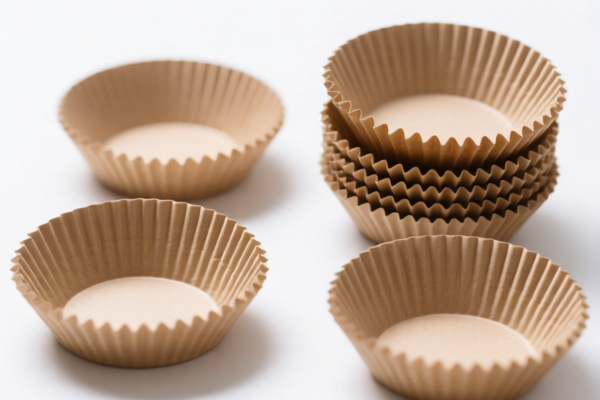
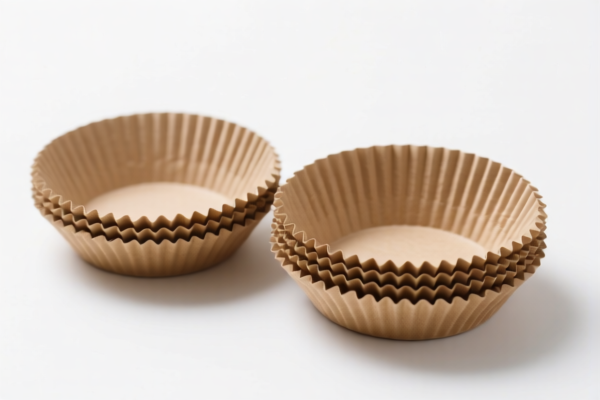
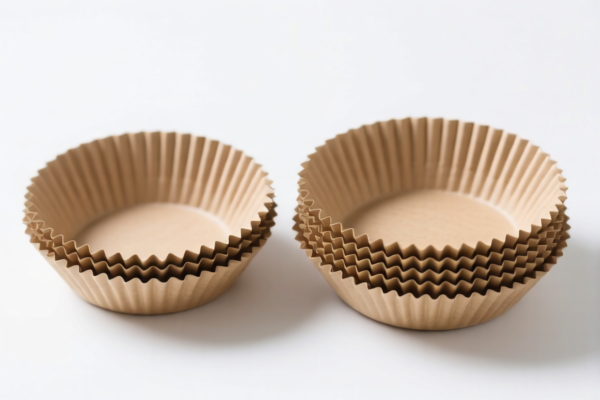
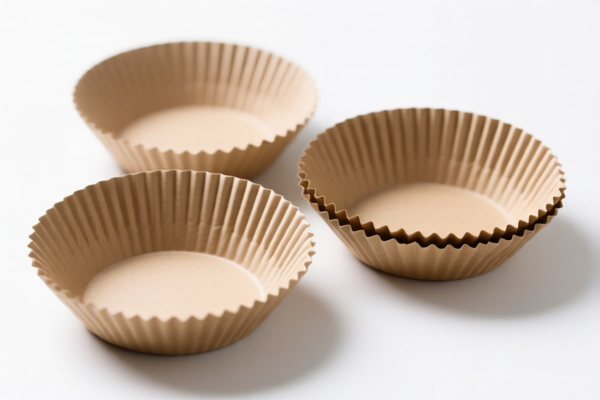
single layer paper cake tray
CN → US| HS编码 | 关税税率 | 原产国 | 目的国 | 文档 |
|---|---|---|---|---|
| 4819200020 | 35.0% | CN | US | 官方文档 |
| 4819100020 | 35.0% | CN | US | 官方文档 |
| 4823610020 | 35.0% | CN | US | 官方文档 |
| 4823690040 | 35.0% | CN | US | 官方文档 |
商品图片
AI分析
🍰 Single Layer Paper Cake Tray (Paper Bakery Tray)
🌐 HS Code Reference & Customs Clearance Guide | 2026 Latest Tariff Analysis | Professional Customs Strategy
📌 I. Product Definition & Classification: Do You Really Understand "Paper Cake Trays"?
Single-layer paper cake trays are disposable food packaging containers primarily used for holding cupcakes, muffins, or small cakes. In international trade, these items fall under Chapter 48 (Paper and Paperboard) because their essential character is derived from the paper material and their form as containers.
However, classification depends heavily on two factors: 1. Material Structure: Is it made of corrugated paperboard (fluted inner layer) or non-corrugated paper (solid board/cardstock)? 2. Form/Shape: Is it designed specifically as a "basket/tray" or as a general "plate/dish"?
⚠️ Key Distinction Points:
- If made of Corrugated Paper → Look for 4819.10
- If made of Non-Corrugated Paper (Solid Board) → Look for 4819.20
- If shaped as a Plate/Dish rather than a deep tray → Look for 4823.61/4823.69
📦 II. HS Code Classification Details (2026 Latest Tariff Authority Comparison)
| HS Code | Product Description | Applicability Scenario | Material Structure |
|---|---|---|---|
4819.10.00.20 |
Paper cake trays, made of correlated paper/board, within the scope of food hygiene containers. | Deep trays with fluted inner layer for heat/insulation. | ✅ Corrugated |
4819.20.00.20 |
Paper cake trays, non-corrugated paper/cardboard material, in the form of trays/containers, used to hold cakes. | Solid paperboard cups/trays, no fluting. | ❌ Non-Corrugated |
4823.61.00.20 |
Paper cake trays, paper material, in the form of trays, plates, dishes class products, used for food containers. | Shallow trays, disc-shaped, often used for cupcakes. | ❌ Non-Corrugated |
4823.69.00.40 |
Paper cake trays, paper material, in the form of trays, dish-like products, no material or use conflict. | General paper plates/trays not specified elsewhere. | ❌ Non-Corrugated |
🔍 Important Reminder:
- 4819.10 is specifically for Corrugated materials. If your tray has a fluted core, this is your primary candidate. - 4819.20 is for Non-Corrugated trays. This is the most common code for standard solid paper cake cups. - 4823 Series covers "Other paper articles," often used if the item is more plate-like than tray-like, or if customs officers prefer the "plate/dish" description over "container."
💰 III. 2026 Latest Tariff Rate Details (Including Surtaxes, Policy Surcharges)
✅ Applicable Country: United States (US)
✅ Origin: China (CN)
✅ Effective Time: November 10, 2025 onwards (for subsequent imports)
All HS Codes listed below share the same tax structure due to US trade policies against Chinese-origin goods.
🎯 1. 4819.10.00.20 & 4819.20.00.20 & 4823.61.00.20 & 4823.69.00.40
(Common Tax Structure for All Paper Cake Trays)
| Item | Content |
|---|---|
| Base Tariff | 0.0% (Ad Valorem) |
| USITC Surtax (Section 301) | +25.0% |
| Section 122 Tariff (IEEPA) | +10.0% (Targeting China/HK products, effective Nov 10, 2025) |
| Total Effective Tax Rate | 35.0% |
| Tax Calculation | CIF Value × 35% |
| De Minimis Eligibility | ❌ Not Eligible (Denied for Section 301/122 goods) |
| Legal Basis Path | IEEPA:9903.01.25 → USITC:4819/4823 → FOOTNOTE:9903.88.01 |
📌 Explanation:
- "Base Tariff 0%": Standard HS duties for paper products are often zero or minimal. - "Surtax 25%": This is the key cost driver. Under Section 301 of the Trade Act, most Chinese-made paper products face a 25% penalty tariff. - "Section 122 Tariff 10%": A new/adjusted levy targeting specific imports from China, adding an additional 10% on top of the base. - Total 35%: This is a high tariff rate. Importers must factor this into their landed cost immediately.
🛠️ IV. Customs Clearance Practical Advice (Battle-Tested Pitfall Avoidance Guide)
✅ 1. Document Checklist (None Are Optional)
| Document | Mandatory? | Explanation |
|---|---|---|
| ✅ Product Specification Sheet | ✔️ | Must specify: Material (Corrugated vs. Non-Corrugated), Dimensions, Weight, Food-Grade Certification. |
| ✅ Product Photos | ✔️ | Clear images showing the structure (fluted vs. solid) and branding. |
| ✅ Commercial Invoice | ✔️ | Clearly state: "Paper Cake Trays, Food Grade, Chinese Origin." |
| ✅ Packing List | ✔️ | Detail carton quantities and gross/net weights. |
| ✅ FDA Compliance Statement | ✔️ | Since it is a food contact material, you must prove it meets FDA 21 CFR standards for direct food contact. |
| ✅ Certificate of Origin | ✔️ | Required to confirm Chinese origin for surtax application. |
✅ 2. Declaration Tips (Key Mnemonic)
🔥 "Material Dictates Code, Food Safety Is Key, Don't Split Shipment!"
| Scenario | Correct Declaration | Wrong Practice |
|---|---|---|
| Solid Paper Tray | 4819.20.00.20 |
Misdeclare as 4823.61 → Risk of reclassification & delay. |
| Corrugated Tray | 4819.10.00.20 |
Misdeclare as 4819.20 → Incorrect duty calculation. |
| Plate-Like Tray | 4823.61.00.20 |
Misdeclare as 4819.20 → Possible dispute on "Form." |
| Mixed Batch | Do Not Mix | Mixing corrugated and non-corrugated in one BL without clear breakdown → Customs Hold. |
📌 Note: While the tariff rate is 35% for all these codes, the HS Code must be accurate based on the physical structure (Corrugated vs. Non-Corrugated). Misclassification can lead to audits even if the rate is the same.
✅ 3. Special Case Handling
| Situation | Handling Advice |
|---|---|
| Food Contact Safety | Ensure you have FDA 21 CFR 176.170 compliance documentation. US Customs (CBP) often queries food-contact paper goods. |
| Plastic-Coated Paper | If the paper tray has a thin plastic lining (e.g., PE coating) for grease resistance, it still classifies under 4819/4823, but the description must mention "PE-Coated." |
| OEM/Private Label | Provide the brand authorization letter if selling under a US brand to avoid IP issues, though tariffs remain based on origin. |
| De Minimis ($800) | ❌ Do Not Rely on De Minimis. Section 301 and Section 122 goods are explicitly excluded from the $800 de minimis exemption. All shipments, regardless of value, are subject to the 35% tax. |
🌍 V. Global Market Comparison (2026 Latest)
| Country/Region | Recommended HS Code | Tariff Rate (China Origin) | Certification Requirement | Notes |
|---|---|---|---|---|
| 🇺🇸 USA | 4819.20.00.20 / 4819.10.00.20 |
35% (0% Base + 25% Sec 301 + 10% Sec 122) | FDA Food Contact | Highest cost market. Pre-clearance is essential. |
| 🇨🇳 China | 4819.20.00.20 |
5-10% | GB Standards | Low tariff, high volume. |
| 🇪🇺 EU | 4819.20.00.20 |
6.5% | EU Food Contact Regulations | No Section 301 equivalent. |
| 🇯🇵 Japan | 4819.20.00.20 |
8% | JIS Standards | Moderate tariff. |
📌 Conclusion:
- The US market is significantly more expensive for paper cake trays due to the 35% total tariff. - If your target is the US, ensure your FOB price accounts for this 35% cost, or consider sourcing from non-China origins (e.g., Vietnam, Indonesia) if tariffs differ.
📌 VI. Common Errors & Pitfall Guide (Blood & Tears Lessons)
❌ Error 1: Ignoring the Section 122 Tariff.
👉 Consequence: Assuming only 25% tax. Actual cost is 35%. Profit margin erased.
❌ Error 2: Misclassifying Corrugated as Non-Corrugated.
👉 Consequence: Even if the rate is the same, it creates a compliance record mismatch. Customs may audit past shipments.
❌ Error 3: Claiming De Minimis for small shipments.
👉 Consequence: Seizure or forced liquidation with penalties. These goods are not eligible for the $800 exemption.
❌ Error 4: Missing FDA Food Contact Statement.
👉 Consequence: Goods held at port for FDA inspection. Possible Refusal of Admission if no proper notification is provided.
✅ Correct Approach:
"Single-Layer Paper Cake Tray, Non-Corrugated, Food-Grade PE Coated, Model XYZ, FDA Compliant, Made in China"
🎯 VII. Conclusion: Precise Classification Saves Money!
🎯 Remember the Rules:
🔹 "Corrugated is 4819.10, Non-Corrugated is 4819.20."
🔹 "Total Tax is 35%: 0% Base + 25% Section 301 + 10% Section 122."
🔹 "No De Minimis for China! Declare Everything."
📌 Pro Tip:
If your volume is high, consider applying for a Tariff Engineering strategy (e.g., modifying the product slightly to fit a different subheading if possible, though limited for paper) or negotiating FOB terms that reflect the 35% duty burden.
📣 Immediate Action:
📞 Contact a Licensed Customs Broker + Provide Product Photos & Specs + Prepare FDA Compliance Docs
🚀 Avoid Customs Holds, Calculate Accurate Landed Cost, and Protect Your Margins!
✨ Professional Customs Clearance Starts with Accurate Classification!
💼 Every 1% of Tax Matters in the 35% Regime!
用户评价
关于 HS 编码归类
协调制度(HS)是由世界海关组织(WCO)制定的国际贸易商品分类标准。全球 200 多个国家采用 HS 系统作为海关关税、贸易统计和进出口监管的基础。
每个 HS 编码遵循以下层级结构:
- 章(2 位)——商品大类(例如:第 84 章:机器和机械设备)
- 品目(4 位)——章内的更具体分类
- 子目(6 位)——国际通用细分,所有 WCO 成员国统一使用
- 本国细分(8-10 位)——各国自行扩展的细分编码,如美国 HTSUS 10 位编码
正确的 HS 编码归类对于顺利通关、准确缴纳关税和遵守贸易法规至关重要。错误归类可能导致海关延误、多缴关税或罚款。
从CN进口到US时,适用的关税税率可能包括:
- 最惠国(MFN)税率——适用于 WTO 成员国的标准关税税率
- 普通税率——适用于无贸易协定国家
- 贸易救济关税——附加关税,如 301 条款(反倾销)、232 条款(国家安全)或反补贴税
本页内容仅供参考。如需正式归类,请咨询当地海关或持牌报关代理。