snowflake building blocks
CN → US| HS编码 | 关税税率 | 原产国 | 目的国 | 文档 |
|---|---|---|---|---|
| 9503000071 | 10.0% | CN | US | 官方文档 |
| 3926100000 | 15.3% | CN | US | 官方文档 |
| 9503000073 | 10.0% | CN | US | 官方文档 |
| 3926909989 | 22.8% | CN | US | 官方文档 |
商品图片
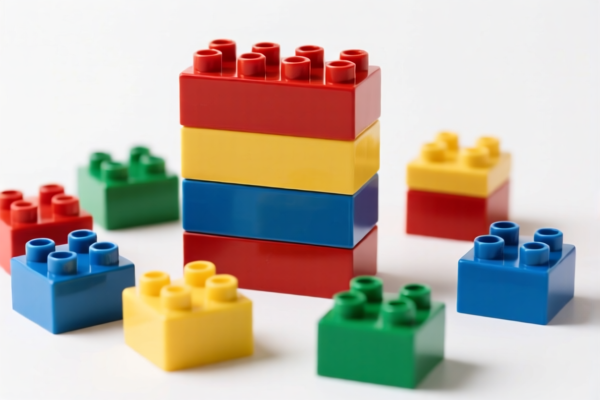
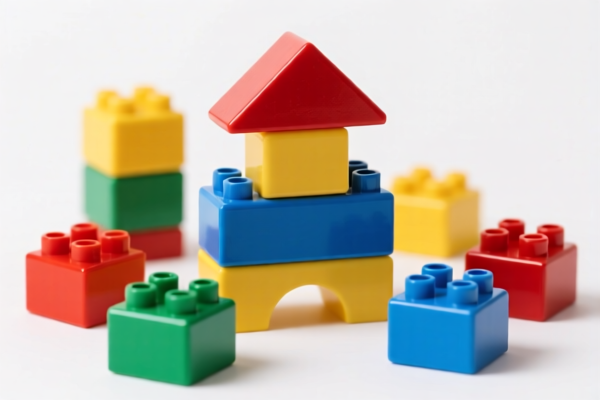
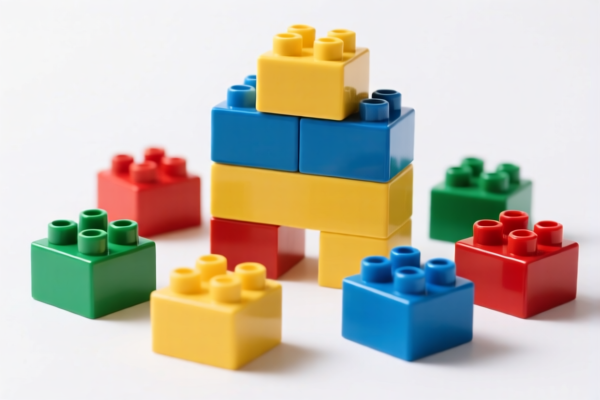
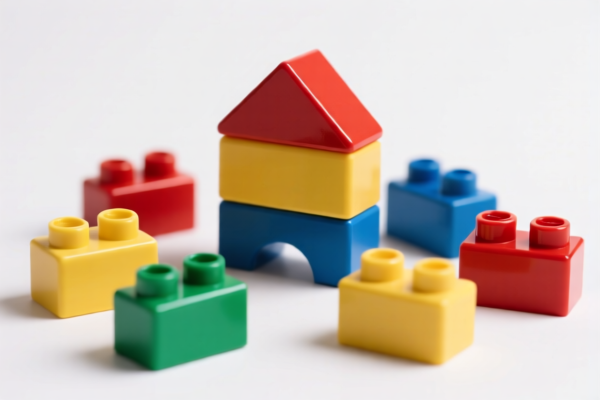
AI分析
❄️ Snowflake Building Blocks (Plastic Toys)
🌐 HS Code Reference & Customs Clearance Guide | 2026 Latest Tariff Analysis | Professional Clearance Strategy
📌 I. Product Definition & Classification: What Are "Snowflake Building Blocks" Really?
"Snowflake Building Blocks" refer to interlocking plastic construction toys. In international trade, these are primarily classified under Chapter 95 (Toys, Games, and Sports Articles) or Chapter 39 (Plastics and Articles Thereof), depending on whether the primary function is deemed "toy" or "manufactured plastic good."
Key Distinction:
- Toy Classification (HS 9503): If the product is clearly marketed, packaged, and used as a toy for children's entertainment or educational play.
- Plastic Article Classification (HS 3926): If the product is considered a general plastic component or lacks specific "toy" characteristics in the eyes of customs (less common for branded building blocks but possible for generic imports).
⚠️ Critical Note:
- The term "Snowflake" usually refers to the shape or brand style (compatible with Lego-style bricks).
- If sold as a toy set, HS 9503 is the standard and most favorable classification.
- If declared incorrectly as a generic "plastic part," it may fall under HS 3926, incurring higher tariffs due to trade restrictions (Section 301/122).
📦 II. HS Code Classification Details (Based on Provided Data)
| HS Code | Product Description | Applicability Summary | Total Tax Rate (China Origin → US) |
|---|---|---|---|
9503.00.00.71 |
Snowflake Blocks, classified as toys/puzzles, material inferred as plastic | Fits definition of "puzzles and other toys" | 10.0% |
9503.00.00.73 |
Building blocks, categorized as toys/entertainment models | Fits definition of "toys" and "entertainment models" | 10.0% |
3926.10.00.00 |
Other plastic articles, specifically toy-related plastic items | Classified as general plastic articles despite toy nature | 15.3% |
3926.90.99.89 |
Other plastic articles, not specified elsewhere | Generic plastic classification, no toy-specific exemption | 22.8% |
🔍 Key Takeaway:
- HS 9503 codes (71 & 73) are the preferred classifications for building blocks, resulting in a lower 10% total tax.
- HS 3926 codes attract higher taxes (15.3% - 22.8%) due to the inclusion of additional Section 122 tariffs.
💰 III. Detailed Tariff Rate Breakdown (2026 Latest)
✅ Applicable Country: United States (US)
✅ Origin: China (CN)
✅ Effective Date: Includes Section 122 Tariffs (as per provided data)
🎯 1. 9503.00.00.71 & 9503.00.00.73 —— Building Blocks (Toy Category)
| Item | Content |
|---|---|
| Base Tariff | 0% (Ad Valorem) |
| Section 301 Surcharge | 0% (Not applicable for these specific subheadings in the provided data) |
| Section 122 Surcharge | +10% |
| Total Tax Rate | 10.0% |
| Tax Calculation | CIF Value × 10% |
| De Minimis Exemption | ❌ Not Eligible (Section 122 typically excludes de minimis for China-origin goods) |
| Legal Basis | HS:9503.00.00.71/73 → Section 122 Tariff: 10% |
📌 Explanation:
- Base Tariff: 0% for most toys under HS 9503.
- Section 122: A specific additional tariff applied to certain Chinese goods. For these toy subheadings, it is 10%.
- Total: 10%. This is the most cost-effective classification.
🎯 2. 3926.10.00.00 —— Plastic Articles (Toy-Related)
| Item | Content |
|---|---|
| Base Tariff | 5.3% |
| Section 301 Surcharge | 0% |
| Section 122 Surcharge | +10% |
| Total Tax Rate | 15.3% |
| Tax Calculation | CIF Value × 15.3% |
| De Minimis Exemption | ❌ Not Eligible |
| Legal Basis | HS:3926.10.00.00 → Section 122 Tariff: 10% |
📌 Note:
- Higher base tariff (5.3%) compared to toys.
- Same Section 122 surcharge (10%).
- Total: 15.3%. This is 5.3% more expensive than the toy classification.
🎯 3. 3926.90.99.89 —— Other Plastic Articles (Generic)
| Item | Content |
|---|---|
| Base Tariff | 5.3% |
| Section 301 Surcharge | +7.5% (As per provided data) |
| Section 122 Surcharge | +10% |
| Total Tax Rate | 22.8% |
| Tax Calculation | CIF Value × 22.8% |
| De Minimis Exemption | ❌ Not Eligible |
| Legal Basis | HS:3926.90.99.89 → Section 301: 7.5% + Section 122: 10% |
📌 Warning:
- This is the least favorable classification.
- Includes a 7.5% Section 301 surcharge (in addition to the 10% Section 122).
- Total: 22.8%. This is 12.8% more expensive than the optimal toy classification.
🛠️ IV. Customs Clearance Practical Advice (Avoiding Pitfalls)
✅ 1. Documentation Checklist (Essential)
| Document | Required | Notes |
|---|---|---|
| ✅ Product Specifications | ✔️ | Must clearly state "Plastic Building Blocks," "Toy," "For Children." |
| ✅ Product Photos | ✔️ | Show interlocking mechanism, branding, and packaging. |
| ✅ Commercial Invoice | ✔️ | Use descriptive terms like "Plastic Toy Building Blocks," NOT "Plastic Parts." |
| ✅ Packing List | ✔️ | Detail item count, weight, and dimensions. |
| ✅ Certificate of Origin | ✔️ | Confirm China origin to apply correct tariffs. |
| ✅ Third-Party Test Reports | ✔️ | ASTM F963 (US Toy Safety), CPC (Children's Product Certificate) if applicable. |
✅ 2. Declaration Tips (Key Mantras)
🔥 “Declare as Toy, Avoid Plastic Penalty, HS 9503 is King!”
| Scenario | Correct Declaration | Incorrect Declaration | Consequence |
|---|---|---|---|
| Standard Building Blocks | 9503.00.00.71 or 9503.00.00.73 |
3926.90.99.89 |
Pays 22.8% instead of 10% → Loss of 12.8% profit |
| Branded Toy Set | 9503.00.00.73 (Toy Model) |
3926.10.00.00 |
Pays 15.3% instead of 10% → Loss of 5.3% |
| Generic Plastic Pieces | 3926.90.99.89 |
9503.00.00.71 |
Customs may reclassify and impose penalties |
✅ 3. Special Cases Handling
| Situation | Handling Advice |
|---|---|
| OEM Custom Blocks | Provide design files and confirm toy usage. Still classify under HS 9503 if intended for play. |
| Bulk Raw Plastic Pieces | If not assembled/branded as toys, may fall under HS 3926. Check intent of sale. |
| Mixed Shipments (Toys + Non-Toys) | Separate declarations. Do not mix HS 9503 and HS 3926 in one line item. |
| Section 122 Eligibility | No de minimis exemption for China-origin goods under Section 122. Ensure all taxes are pre-paid or accounted for. |
🌍 V. Global Market Comparison (2026 Latest)
| Country/Region | Recommended HS Code | Tariff (China Origin) | Remarks |
|---|---|---|---|
| 🇺🇸 USA | 9503.00.00.71/73 |
10% (Total) | Section 122 applies. Toy classification is key. |
| 🇨🇳 China | 9503.00.00.00 |
0% - 5% | No Section 122. Favorable for domestic sales. |
| 🇪🇺 EU | 9503.00 |
0% | No Section 122. CE marking required. |
| 🇦🇺 Australia | 9503.00 |
5% | No Section 122. ACCG certification needed. |
📌 Conclusion:
- USA is the only market imposing Section 122 tariffs on these goods.
- Toy Classification (HS 9503) is crucial to minimize tariff burden to 10%.
- Misclassification as plastic parts (HS 3926) can increase costs by 5.3% - 12.8%.
📌 VI. Common Mistakes & Pitfalls (Lessons Learned)
❌ Mistake 1: Declaring "Snowflake Blocks" as "Plastic Construction Pieces" (HS 3926)
👉 Result: Tax rate jumps from 10% to 22.8%.
👉 Solution: Always use "Toy," "Building Blocks," or "Plaything" in documentation.
❌ Mistake 2: Ignoring Section 122 Tariffs
👉 Result: Underpayment of taxes, leading to penalties or delays.
👉 Solution: Include 10% Section 122 in cost calculations for all China-origin goods.
❌ Mistake 3: Assuming De Minimis Exemption Applies
👉 Result: Goods held at border, duties assessed retroactively.
👉 Solution: Section 122 does not apply to de minimis (under $800) for China-origin goods.
✅ Correct Approach:
"Plastic Building Blocks Toy Set, Interlocking, For Children, Model XYZ, CPC Certified, Origin: China"
🎯 VII. Conclusion: Professional Declaration, Cost Optimization
🎯 Remember the Mantra:
🔹 "Toy Classification = 10% Tax. Plastic Classification = 15-23% Tax."
🔹 "Section 122 is Always On for China Origin. No De Minimis!"
🔹 "Describe as Toy, Declare as Toy, Save 12% in Tariffs."
📌 Pro Tip:
If your building blocks are originally from Vietnam, Mexico, or Thailand, Section 122 may not apply, potentially reducing taxes to 0% - 5%.
Consider supply chain diversification to avoid Section 122 tariffs.
📣 Immediate Action:
📞 Consult with a licensed customs broker.
📸 Provide clear product images.
📄 Apply for a Binding Ruling if unsure about classification.
🚀 Ensure your commercial invoice clearly states "Toy" to secure the 10% rate.
✨ Professional clearance starts with precise classification!
💼 Every cent saved in tariffs is pure profit!
用户评价
关于 HS 编码归类
协调制度(HS)是由世界海关组织(WCO)制定的国际贸易商品分类标准。全球 200 多个国家采用 HS 系统作为海关关税、贸易统计和进出口监管的基础。
每个 HS 编码遵循以下层级结构:
- 章(2 位)——商品大类(例如:第 84 章:机器和机械设备)
- 品目(4 位)——章内的更具体分类
- 子目(6 位)——国际通用细分,所有 WCO 成员国统一使用
- 本国细分(8-10 位)——各国自行扩展的细分编码,如美国 HTSUS 10 位编码
正确的 HS 编码归类对于顺利通关、准确缴纳关税和遵守贸易法规至关重要。错误归类可能导致海关延误、多缴关税或罚款。
从CN进口到US时,适用的关税税率可能包括:
- 最惠国(MFN)税率——适用于 WTO 成员国的标准关税税率
- 普通税率——适用于无贸易协定国家
- 贸易救济关税——附加关税,如 301 条款(反倾销)、232 条款(国家安全)或反补贴税
本页内容仅供参考。如需正式归类,请咨询当地海关或持牌报关代理。