solar energy drawing paper set
CN → US| HS编码 | 关税税率 | 原产国 | 目的国 | 文档 |
|---|---|---|---|---|
| 4911996000 | 17.5% | CN | US | 官方文档 |
| 4911914040 | 17.5% | CN | US | 官方文档 |
| 4820104000 | 35.0% | CN | US | 官方文档 |
| 4820900000 | 35.0% | CN | US | 官方文档 |
| 4911996000 | 17.5% | CN | US | 官方文档 |
商品图片
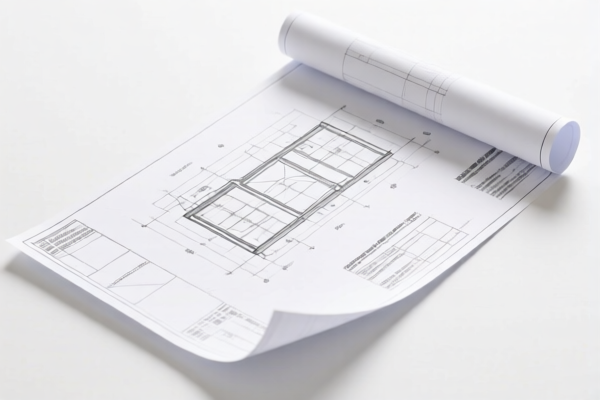
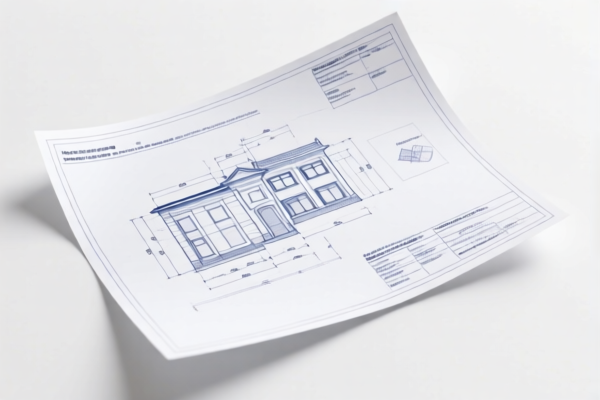
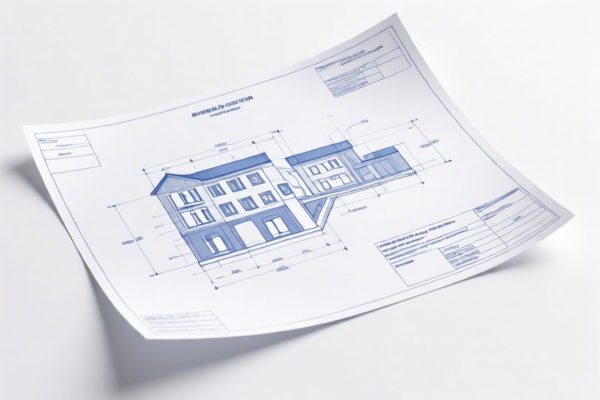
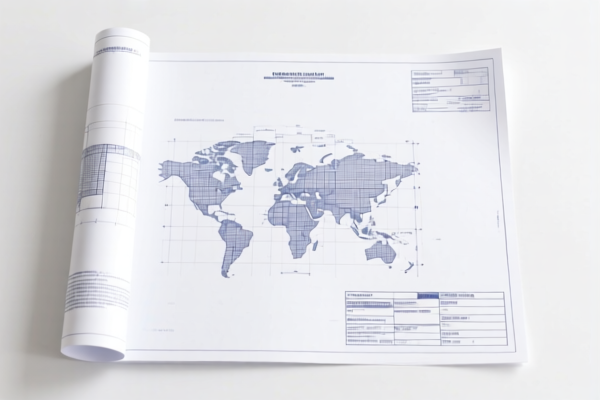
AI分析
🎨 Solar Energy Drawing Paper Set (Solar Energy Sketchbook/Template Kits)
🌐 HS Code Reference & Customs Clearance Guide | 2026 Latest Tariff Analysis | Professional Compliance Strategy
📌 I. Product Definition & Classification: What is a "Solar Energy Drawing Paper Set"?
A "Solar Energy Drawing Paper Set" typically refers to a packaged collection of paper-based materials used for drafting, sketching, or illustrating solar panel layouts, photovoltaic system designs, or educational diagrams related to solar energy.
In international trade, this product is classified based on its core material (Paper/Cardboard) and primary function (Stationery vs. Printed Material). The key distinction lies in whether it is treated as a blank/notepad item (subject to higher structural tariffs) or printed matter (subject to lower base tariffs, but still impacted by trade policies).
⚠️ Critical Classification Logic:
- If the set is primarily blank paper, grid paper, or blank notebooks for the user to draw on → It is classified as Stationery/Notebooks (Chapter 48).
- If the set is primarily pre-printed templates, diagrams, or informational booklets → It is classified as Printed Matter (Chapter 49).
- Note: Even if labeled "Solar Energy," if the core commodity is paper-based stationery, Chapter 48 applies. If it is purely informational printed guides, Chapter 49 applies.
📦 II. HS Code Classification Details (2026 Latest Tariff Authority对照)
Based on the provided data structure, the potential HS Codes fall into two main categories: Stationery/Notebooks (4820 series) and Printed Matter (4911 series).
| HS Code | Product Description | Application Scenario | Core Attribute |
|---|---|---|---|
4820.10.40.00 |
Registration books, account books, note books, letter pads, memorandum pads, and similar articles of paper or paperboard. | Blank or lightly printed drawing paper, sketchbooks, or notepads intended for user drawing. | ✅ Stationery/Notebook Form |
4820.90.00.00 |
Other books, brochures, and similar printed matter; other articles of paper or paperboard. | General paper stationery sets (e.g., plain drawing paper packs) that do not fit specific notebook categories. | ✅ General Paper Stationery |
4911.99.60.00 |
Other printed matter, including printed images and designs. | Sets containing pre-printed solar diagrams, instructional booklets, or templates where the printed content is primary. | ✅ Printed Matter |
4911.91.40.40 |
Other printed matter: Pictures, designs, photographs (excluding posters). | Pre-printed solar energy designs/templates specifically categorized as "other printed matter" (non-poster). | ✅ Printed Designs/Instructions |
🔍 Key Distinction:
- 4820 Series (Stationery): Focuses on the form (notebook/paper pad). Used when the consumer provides the content (drawing).
- 4911 Series (Printed): Focuses on the content (images/instructions). Used when the supplier provides the visual guide or template.
- Risk: Misclassifying a "notebook" as "printed matter" or vice versa can lead to significant tax discrepancies and customs delays.
💰 III. 2026 Latest Tariff Rate Breakdown (Including Surcharges & Policy Add-ons)
✅ Applicable Country: United States (US)
✅ Origin: China (CN)
✅ Effective Time: Post-November 2025 (Current Trade Environment)
🎯 1. 4820.10.40.00 & 4820.90.00.00 —— Stationery / Paper Notebooks / Drawing Paper Sets
These codes classify the item as paper stationery. Due to the nature of paper products from China, they are subject to the highest surcharge rates in the provided data.
| Item | Content |
|---|---|
| Base Tariff | 0.0% (Ad Valorem) |
| Section 301 Surtax (Add-on Tariff) | +25.0% (High-risk category for paper goods) |
| Section 122 Tariff Add-on | +10.0% (Specific trade policy add-on for this classification) |
| Total Tariff Rate | 35.0% |
| Tax Calculation | CIF Value × 35% |
| De Minimis Exemption | ❌ Not Eligible (deny_de_minimis) |
| Legal Basis Path | USITC:4820 → Section 301: 25% → Section 122: 10% |
📌 Explanation:
- The 25% Section 301 tariff is applied to a wide range of Chinese-made consumer goods, including paper products.
- The 10% Section 122 tariff (or similar policy add-on) further increases the cost.
- Total Impact: A 35% total tariff makes this a high-cost item for US importers. Cost structure must account for this significantly.
🎯 2. 4911.99.60.00 & 4911.91.40.40 —— Printed Matter (Templates, Diagrams, Books)
These codes classify the item as printed matter. While the base tariff is still 0%, the surcharges are lower than the stationery category, but the total remains substantial.
| Item | Content |
|---|---|
| Base Tariff | 0.0% (Ad Valorem) |
| Section 301 Surtax (Add-on Tariff) | +7.5% (Lower risk tier for printed matter compared to stationery) |
| Section 122 Tariff Add-on | +10.0% |
| Total Tariff Rate | 17.5% |
| Tax Calculation | CIF Value × 17.5% |
| De Minimis Exemption | ❌ Not Eligible (deny_de_minimis) |
| Legal Basis Path | USITC:4911 → Section 301: 7.5% → Section 122: 10% |
📌 Explanation:
- The 7.5% Section 301 tariff is significantly lower than the 25% for stationery. This suggests that "printed matter" (like instructional booklets or pre-printed solar templates) enjoys a more favorable tariff treatment than "blank drawing paper sets."
- Total Impact: 17.5% total tariff is more manageable than 35%, but still non-trivial.
- Strategic Insight: If the product can be legitimately classified as "printed matter" (e.g., it includes detailed instructions or pre-printed designs) rather than just "blank paper," the importer saves 17.5% in tariffs.
🛠️ IV. Customs Clearance Operational Advice (Practical Pitfall Avoidance)
✅ 1. Documentation Checklist (Mandatory)
| Document | Must Provide | Description |
|---|---|---|
| ✅ Product Description | ✔️ | Detailed description: "Solar Energy Design Template Kit" (if 4911) OR "Blank Drawing Paper Set for Solar Design" (if 4820). |
| ✅ Composition Details | ✔️ | Breakdown: % of blank paper, % of pre-printed pages, % of cardboard cover. |
| ✅ Product Photos | ✔️ | Show if pages are blank, graphed, or pre-printed with solar diagrams. |
| ✅ Commercial Invoice | ✔️ | Clearly state "Paper Stationery" or "Printed Matter" based on classification. |
| ✅ Packing List | ✔️ | List items individually if mixed (e.g., 1 booklet + 5 sheets of paper). |
✅ 2. Classification Strategy (Key Mnemonics)
🔥 "Printed Content First = 4911 (17.5%); Blank Paper Second = 4820 (35%)"
| Scenario | Correct Classification | Risk of Misclassification |
|---|---|---|
| Kit includes pre-printed solar circuit diagrams & instructional booklets | 4911.99.60.00 or 4911.91.40.40 |
Low Tariff (17.5%) |
| Kit is blank grid paper with a "Solar" theme cover | 4820.10.40.00 |
High Tariff (35%) |
| Kit is plain white paper for user to draw solar panels | 4820.90.00.00 |
High Tariff (35%) |
| Kit is posters of solar energy | Not in Data | Check specific poster codes (often higher/lower depending on size) |
📌 Critical Tip:
- If your "Drawing Paper Set" includes any significant pre-printed instructional content, argue for Chapter 49 (Printed Matter).
- If it is primarily blank paper for the end-user to draw on, it falls under Chapter 48 (Stationery).
- Do not split the shipment into "booklet" and "paper" if they are sold as one set; customs may view it as one composite good. Declare based on the essential character of the set.
✅ 3. Special Handling for "Solar" Labeling
- "Solar Energy" is a functional description, not a tariff determinant.
- Customs does not classify based on the topic (Solar) but on the physical form (Paper/Printed).
- Ensure the product does not contain electronic components (e.g., if it’s a "solar calculator drawing kit"), which would shift it to Chapter 85. If it’s purely paper, stick to Chapters 48/49.
🌍 V. Global Market Comparison (2026 Latest)
| Country/Region | Recommended HS Code | Estimated Tariff (China Origin) | Key Requirement |
|---|---|---|---|
| 🇺🇸 USA | 4911.99.60.00 (Printed) |
17.5% (7.5% + 10%) | Detailed product composition; deny de minimis. |
| 🇺🇸 USA | 4820.10.40.00 (Stationery) |
35.0% (25% + 10%) | High cost; consider reclassification as printed matter if possible. |
| 🇨🇳 China | 4820 or 4911 |
0-5% (Export Duty) | Standard export declaration. |
| 🇪🇺 EU | 4820 or 4911 |
0% (Most MFN rates) | CE marking not required for paper; RoHS for packaging. |
| 🇬🇧 UK | 4820 or 4911 |
0-5% | Post-Brexit rules may vary slightly; check specific UK Tariff. |
📌 Conclusion:
- The USA imposes the highest tariffs on this product, with a 17.5% differential between "Printed Matter" and "Stationery."
- European markets are far more favorable (often 0%), making them a better target for high-volume, low-margin paper products.
- Strategy: For US imports, ensure the product is marketed and described as a "Printed Design Kit" (Chapter 49) rather than a "Blank Notebook" (Chapter 48) to save 17.5% in duties.
📌 VI. Common Mistakes & Pitfall Guide (Lessons Learned)
❌ Mistake 1: Declaring a blank sketchbook as "Printed Matter" because it has a solar cover.
👉 Consequence: Customs may reclassify as Stationery (4820) → Back pay 35% vs 17.5% → Penalty.
❌ Mistake 2: Splitting a single set (booklet + paper) into two shipments to avoid scrutiny.
👉 Consequence: Customs may link shipments and assess the higher combined rate or reject de minimis for both.
❌ Mistake 3: Ignoring the "Section 122" 10% add-on in cost calculations.
👉 Consequence: Profit margin erosion. The 17.5% or 35% is not just the Section 301 rate; it includes the 122 add-on.
✅ Correct Approach:
"Solar Energy Design Template Kit (Pre-Printed Diagrams & Instructional Booklet, HS Code 4911.99.60.00)"
vs.
"Blank Grid Drawing Paper Set (For Solar Design Projects, HS Code 4820.10.40.00)"
🎯 VII. Conclusion: Professional Classification Saves Money!
🎯 Remember the Golden Rule:
🔹 "Printed Content = 17.5% (Savings!); Blank Paper = 35% (Expensive!)"
🔹 "HS Code is about Form, Not Function. Solar is just a Topic, Paper is the Commodity."
📌 Tips:
- If your product is 100% blank paper, you cannot avoid the 35% rate. Optimize packaging to reduce CIF value.
- If your product includes pre-printed diagrams, emphasize this in the invoice description to justify 4911 classification.
- Pre-ruling: Consider applying for an Advance Ruling from US Customs (CBP) if the product is a hybrid, to lock in the 17.5% rate.
📣 Action Plan:
📞 Consult a Customs Broker with the actual product samples.
📝 Update Product Descriptions to highlight "Pre-Printed Designs" if applicable.
🚀 Optimize Supply Chain: If tariffs are prohibitive, consider sourcing paper materials from non-China origins or alternative markets with lower tariffs (e.g., Vietnam, Mexico) if possible.
✨ Professional Customs Clearance Starts with Accurate Classification!
💼 Every 1% of tariff saved is pure profit!
用户评价
关于 HS 编码归类
协调制度(HS)是由世界海关组织(WCO)制定的国际贸易商品分类标准。全球 200 多个国家采用 HS 系统作为海关关税、贸易统计和进出口监管的基础。
每个 HS 编码遵循以下层级结构:
- 章(2 位)——商品大类(例如:第 84 章:机器和机械设备)
- 品目(4 位)——章内的更具体分类
- 子目(6 位)——国际通用细分,所有 WCO 成员国统一使用
- 本国细分(8-10 位)——各国自行扩展的细分编码,如美国 HTSUS 10 位编码
正确的 HS 编码归类对于顺利通关、准确缴纳关税和遵守贸易法规至关重要。错误归类可能导致海关延误、多缴关税或罚款。
从CN进口到US时,适用的关税税率可能包括:
- 最惠国(MFN)税率——适用于 WTO 成员国的标准关税税率
- 普通税率——适用于无贸易协定国家
- 贸易救济关税——附加关税,如 301 条款(反倾销)、232 条款(国家安全)或反补贴税
本页内容仅供参考。如需正式归类,请咨询当地海关或持牌报关代理。