soldering paste
CN → US| HS编码 | 关税税率 | 原产国 | 目的国 | 文档 |
|---|---|---|---|---|
| 8311900000 | 35.0% | CN | US | 官方文档 |
| 8311306000 | 35.0% | CN | US | 官方文档 |
| 8311900000 | 35.0% | CN | US | 官方文档 |
| 8311306000 | 35.0% | CN | US | 官方文档 |
商品图片
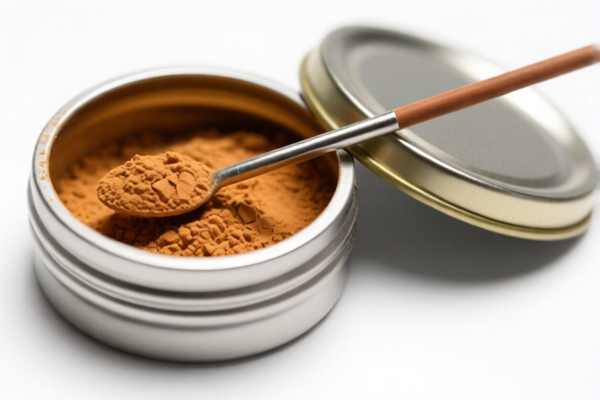
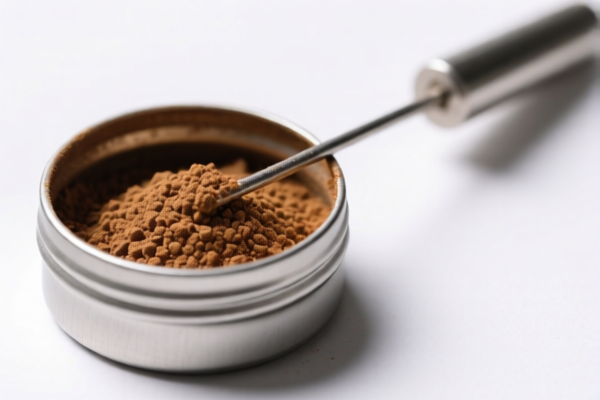
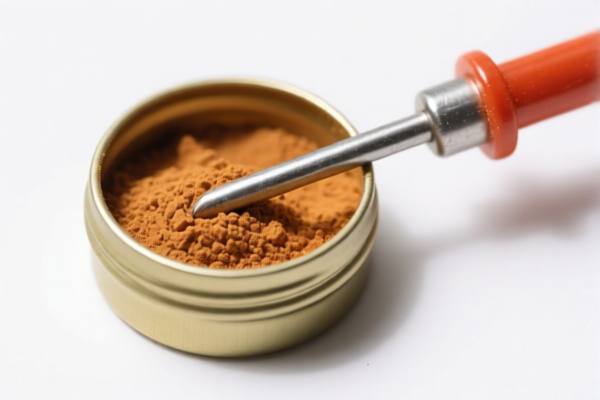
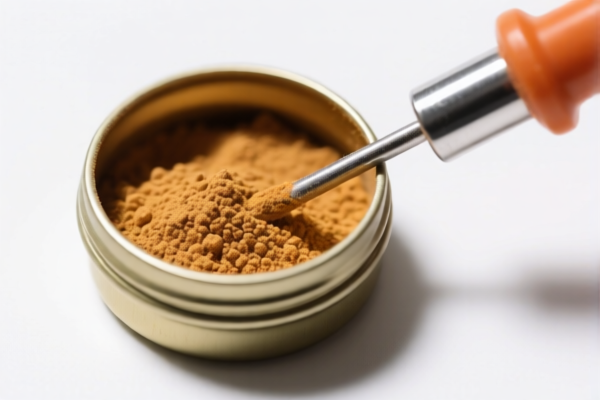
AI分析
🔥 Soldering Paste (Welding/Brazing Materials)
🌐 HS Code Reference & Customs Clearance Guide | 2026 Latest Tariff Analysis | Professional Clearance Strategy
📌 I. Product Definition and Classification: Do You Really Understand "Soldering Paste"?
Soldering paste, in the context of international trade and the provided data, refers to metal-based filler materials in paste or膏状 (paste-like) form. It is primarily used for welding (soldering) and brazing purposes.
Unlike simple wire solder, "paste" implies a specific physical形态 (morphology) and chemical composition, often involving flux mixed with metal particles (usually base metals or metal carbides). In the Harmonized System (HS), these are classified not as standard electronics components (like 8541), but as miscellaneous articles of base metal (Chapter 83).
⚠️ Key Distinction:
- If the product is a solid metal filler (wire, rod) used for brazing/welding → It falls under 8311 (Articles of Base Metal).
- The provided data specifically highlights paste/膏状 forms made of base metals (贱金属) or metal carbides, which are explicitly categorized under 8311.90.00.00 or 8311.30.60.00.
- Crucial Point: Do NOT confuse this with electronic soldering paste containing active fluxes meant for PCB assembly (which might fall under 3824 if the metal content is low, or 8541 if it's a specific electronic component). However, the data provided strictly anchors it to HS 8311, meaning it is treated as an industrial metal welding/brazing material.
📦 II. HS Code Classification Details (2026 Latest Tariff Authority对照)
Based on the <DATA> provided, here are the precise classifications for Soldering Paste/Welding Materials:
| HS Code | Product Description (Summary) | Applicable Scenario | Material Basis |
|---|---|---|---|
8311.90.00.00 |
Other Articles of Base Metal; Soldering Paste (Metal/Grease Form) | Metal material, paste form, fits welding/brazing use cases. "Other" category for metal carbides/bases not specified elsewhere. | Base Metal / Metal Carbide |
8311.30.60.00 |
Base Metal Welding Fillers; Soldering Paste | Base metal matrix, welding filler material, fits welding filler classification. | Base Metal |
🔍 Key Clarification from Data:
- 8311.90.00.00: Used for "Metal material, paste form" and "Brazing use, metal paste belongs to base metal or metal carbide material, other category."
- 8311.30.60.00: Used for "Base metal matrix, welding filler," and "Brazing use, metal paste fits base metal material, extended form of welding filler."
- Both codes carry the same tax burden in this specific context. The choice often depends on the specific product datasheet (whether it's emphasized as a "filler" (30) or "other article" (90)).
💰 III. 2026 Latest Tariff Rate Details (Including Additional Duties & Policy Add-ons)
✅ Applicable Country: United States (US)
✅ Origin: China (CN)
✅ Total Tax Rate: 35.0%
✅ Effective Time: Current as per data (Subject to 301/IEEPA adjustments)
🎯 1. 8311.90.00.00 & 8311.30.60.00 —— Soldering Paste / Welding Filler (Base Metal)
| Item | Content |
|---|---|
| Base Tariff (MFN) | 0.0% (Ad Valorem) |
| Section 301 Tariff (Add-on) | +25.0% |
| Section 122 Tariff (Add-on) | +10.0% |
| Total Tax Rate | 35.0% |
| Tax Calculation | CIF Value × 35% |
| De Minimis Eligibility | ❌ Not Eligible (High duty rate typically excludes small packages from Section 321) |
| Legal Basis Path | USITC:8311.xxxxx → Section 301: 25% → Section 122: 10% |
📌 Detailed Breakdown:
- 0% Base: Standard Most Favored Nation (MFN) rate for base metal articles is often 0%.
- 25% Section 301: This is the standard "Trump Tariff" / Trade War tariff on a wide range of Chinese goods, including base metal products.
- 10% Section 122: Note: Section 122 is not a standard standing tariff in all lists, but it is explicitly mentioned in your data. It likely refers to a specific trade remedy or additional duty imposed under specific executive orders or trade acts targeting Chinese industrial inputs.
- Combined Impact: A flat 35% duty on the declared value. This is a high-cost commodity for importers into the US.
🛠️ IV. Customs Clearance Practical Advice (Combat Pitfall Guide)
✅ 1. Documentation Checklist (Must-Haves)
| Document | Required | Explanation |
|---|---|---|
| ✅ Technical Data Sheet (TDS) | ✔️ | Must clearly state: "Soldering Paste for Brazing/Welding," Material Composition (e.g., Sn/Ag/Cu or Base Metal Alloy), and Physical Form (Paste/Grease). |
| ✅ Composition Analysis | ✔️ | To prove it is Base Metal (HS 8311) and not a chemical mixture (HS 3824) or electronic component (HS 8541). |
| ✅ Commercial Invoice | ✔️ | Must use terms like "Base Metal Welding Filler Paste" or "Brazing Paste." Avoid vague terms like "Glue" or "Chemical Paste." |
| ✅ Safety Data Sheet (SDS) | ✔️ | Required for customs and safety review, especially since pastes may contain flux chemicals. |
| ✅ Certificate of Origin | ✔️ | Essential for claiming any potential exemptions (if applicable) and proving CN origin for 301/122 tariffs. |
✅ 2. Declaration Strategy (Key Mantra)
🔥 “Metal Basis, Welding Use, 35% Duty, No De Minimis!”
| Scenario | Correct Declaration | Incorrect Practice |
|---|---|---|
| Industrial Soldering Paste | 8311.30.60.00 or 8311.90.00.00 |
Misdeclaring as "Chemical Adhesive" (HS 3506) → High Audit Risk |
| Electronics PCB Solder Paste | Check if HS 8311 applies | If it's primarily for PCBs, it might be HS 8541 or 3824. If your data says 8311, treat it as industrial metal filler. |
| Small Sample Shipments | Declare Full Value | Trying to use de minimis (under $800) → Risk of seizure due to 35% duty and trade enforcement. |
✅ 3. Special Circumstances Handling
| Situation | Handling Advice |
|---|---|
| Flux Content High? | If the paste is >50% flux by weight and <50% metal, argue for HS 3824 (Chemical Products). But if it's "Metal Paste," stick to 8311. |
| Multiple HS Codes? | If you have both wire solder (8311) and paste (8311), they are in the same chapter. Ensure consistent classification to avoid "Mixed" audits. |
| Origin Tracing | Ensure the base metal raw material also complies with origin rules. If you just repackage US-origin paste in China, origin might still be US (lower tariff). |
🌍 V. Global Market Comparison (2026 Latest)
| Country/Region | Recommended HS Code | Tariff (China Origin) | Certification Requirements | Notes |
|---|---|---|---|---|
| 🇺🇸 USA | 8311.30.60.00 / 8311.90.00.00 |
35.0% (0% Base + 25% Sec301 + 10% Sec122) | SDS, MSDS | High Duty. Strict on "Base Metal" vs "Chemical" distinction. |
| 🇨🇳 China | 8311.30.60.00 |
Low (0-5%) | No special | Internal trade friendly. |
| 🇪🇺 EU | 8311.90.00 |
Varies (Often 0-2.7%) | REACH, CLP | EU classifies soldering pastes differently; often under 8311 but with different subheadings. |
| 🇯🇵 Japan | 8311.90.00 |
0% - 3% | JIS Standard | Often duty-free for base metal articles if not restricted. |
📌 Conclusion:
- The US market is the most expensive due to the layered tariffs (301 + 122).
- Classification Accuracy is Critical: Declaring as "Chemical Glue" to avoid 35% is a customs fraud risk if the product is metal-based.
- Alternative: If possible, source paste from non-China origins (e.g., Vietnam, Taiwan, Germany) to avoid Section 301/122 tariffs (Check specific origin rules).
📌 VI. Common Errors & Pitfalls (Lessons Learned)
❌ Error 1: Declaring Soldering Paste as "Chemical Adhesive" (HS 3506)
👉 Consequence: Customs will reclassify it to HS 8311, levy 35% duty, and apply penalties.
👉 Why: It is primarily a metal filler for welding/brazing, not a structural adhesive.
❌ Error 2: Ignoring the "Paste" Physical State
👉 Consequence: If declared as "Solid Solder Rod," it might still be 8311, but the description must match the physical reality to avoid inspection delays.
❌ Error 3: Assuming De Minimis Applies
👉 Consequence: Packages under $800 are not exempt from Section 301/122 tariffs on base metal articles in many enforcement cases. Expect detention and back-tariff charges.
✅ Correct Practice:
"Soldering Paste, Base Metal Alloy, for Industrial Brazing/Welding, Paste Consistency, Model XYZ, HS 8311.90.00.00"
🎯 VII. Conclusion: Professional Declaration, Cost Control, and Compliance
🎯 Remember the Mantra:
🔹 "Metal Base, Welding Use, 35% Tax, No De Minimis."
🔹 "HS 8311 is the key, 301+122 is the barrier, declare accurately to avoid tears."
📌 Pro Tip:
If you are importing into the US:
1. Pre-Arbitration: Consider applying for a HTSUS Binding Ruling from US Customs and Border Protection (CBP) to confirm if your specific paste qualifies for 8311 or if it could be argued as 3824 (though 35% is likely if it's metal-heavy).
2. Supply Chain Shift: Explore sourcing from countries not subject to Section 301 (e.g., Mexico, Canada, EU) if duty savings outweigh logistics costs.
3. Document Rigor: Keep Composition Reports ready. If the metal content is low, you might have a case for a different HS code, but don't gamble without expert advice.
📣 Immediate Action:
📞 Consult a licensed Customs Broker
📄 Prepare Technical Datasheets
🚀 Clear your Soldering Paste with confidence, avoid 35% shocks!
✨ Professional Customs Clearance Starts with Precise Classification!
💼 Your Margins Depend on Your HS Code Accuracy!
用户评价
关于 HS 编码归类
协调制度(HS)是由世界海关组织(WCO)制定的国际贸易商品分类标准。全球 200 多个国家采用 HS 系统作为海关关税、贸易统计和进出口监管的基础。
每个 HS 编码遵循以下层级结构:
- 章(2 位)——商品大类(例如:第 84 章:机器和机械设备)
- 品目(4 位)——章内的更具体分类
- 子目(6 位)——国际通用细分,所有 WCO 成员国统一使用
- 本国细分(8-10 位)——各国自行扩展的细分编码,如美国 HTSUS 10 位编码
正确的 HS 编码归类对于顺利通关、准确缴纳关税和遵守贸易法规至关重要。错误归类可能导致海关延误、多缴关税或罚款。
从CN进口到US时,适用的关税税率可能包括:
- 最惠国(MFN)税率——适用于 WTO 成员国的标准关税税率
- 普通税率——适用于无贸易协定国家
- 贸易救济关税——附加关税,如 301 条款(反倾销)、232 条款(国家安全)或反补贴税
本页内容仅供参考。如需正式归类,请咨询当地海关或持牌报关代理。