solution polymerized styrene butadiene rubber
CN → US| HS编码 | 关税税率 | 原产国 | 目的国 | 文档 |
|---|---|---|---|---|
| 4002190016 | 35.0% | CN | US | 官方文档 |
| 4002190014 | 35.0% | CN | US | 官方文档 |
商品图片
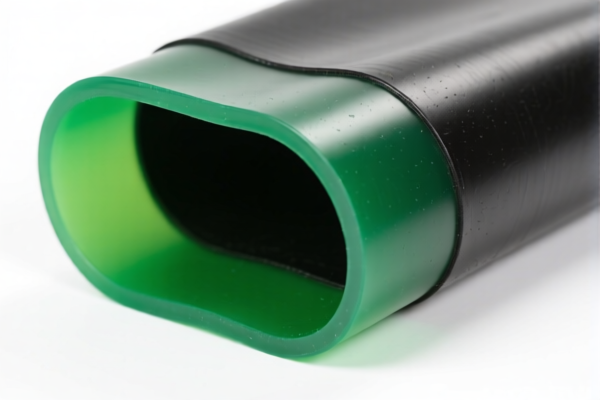
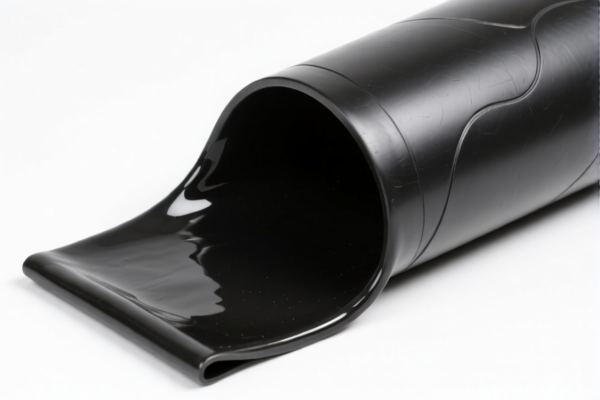
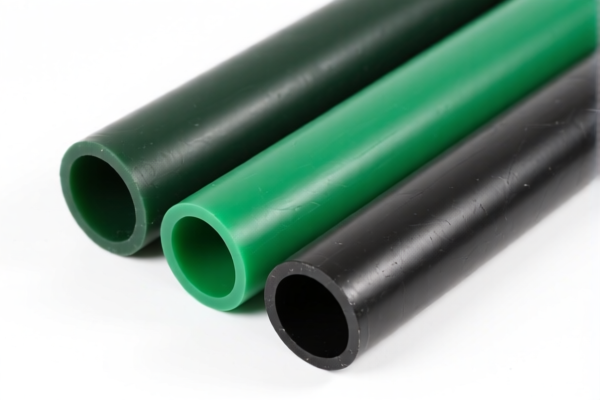
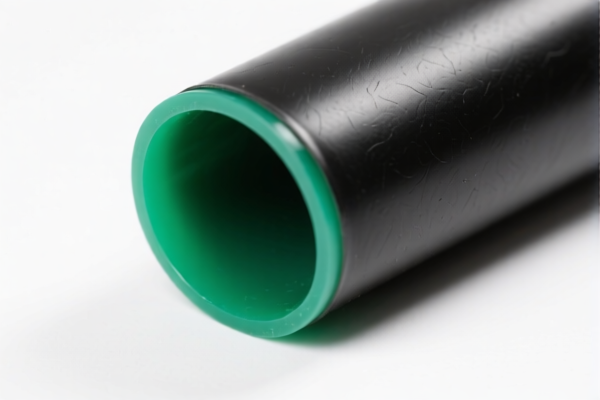
AI分析
🧪 Solution Polymerized Styrene-Butadiene Rubber (S-SBR)
🌐 HS Code Reference & Customs Clearance Guide | 2026 Latest Tariff Analysis | Professional Strategy
📌 I. Product Definition & Classification: What Exactly is S-SBR?
Styrene-Butadiene Rubber (SBR) produced by solution polymerization (S-SBR) is a critical synthetic rubber widely used in the automotive industry (tires, belts, hoses), footwear, and adhesives. Unlike emulsion polymerized SBR (E-SBR), S-SBR offers superior control over molecular structure, resulting in better abrasion resistance, lower heat build-up, and improved wet grip.
In international trade, classification depends strictly on: 1. Production Method: Solution Polymerization (S-SBR) vs. Emulsion (E-SBR). 2. Styrene Content: Must be 50% or less by weight of the dry polymer. 3. Physical Form: Bales, granules, crumbs, or powders.
⚠️ Key Distinction:
- If it is S-SGR (Solution) and in bales → 4002.19.00.16
- If it is S-SBR (Solution) in granules/crumbs/powders → 4002.19.00.14
- If it is E-SBR (Emulsion) → Different HS Code (not covered in this specific DATA snippet)
📦 II. HS Code Classification Details (2026 Latest Tariff Authority Comparison)
Based on the provided data, we analyze two specific sub-categories under HS Heading 4002.19.00 (SBR with ≤50% styrene):
| HS Code | Product Description | Physical Form | Polymerization Method |
|---|---|---|---|
4002.19.00.16 |
Styrene-butadiene rubber produced by solution polymerization | Bales | S-SBR |
4002.19.00.14 |
Styrene-butadiene-styrene block copolymers (SBS) produced by solution polymerization | Granules, Crumbs, or Powders | S-SBR / Thermoplastic Elastomers |
🔍 Critical Reminder:
- 4002.19.00.16 is specifically for S-SBR in Bales. This is the standard form for bulk industrial rubber trade. - 4002.19.00.14 covers SBS (Styrene-Butadiene-Styrene block copolymers), which are often grouped with S-SBR in this context but are technically thermoplastic elastomers (TPE). If your product is granular/crumb-like, verify if it is pure S-SBR or SBS. Pure S-SBR in granules might fall under general "Other" categories if not specifically listed as SBS, but the data explicitly links.14to SBS. Note: Ensure your product specification sheet clearly distinguishes between S-SBR (elastomer) and SBS (thermoplastic).
💰 III. 2026 Latest Tariff Rate Detailed Explanation
✅ Applicable Country: United States (US)
✅ Origin: China (CN) (Assumed based on typical "Additional Duty" context in examples, but please verify)
✅ Effective Date: Current 2026 Tariff Schedule
🎯 1. 4002.19.00.16 — S-SBR in Bales
| Item | Content |
|---|---|
| Base Tariff Rate | 0.0% |
| Additional Duty | 0.0% |
| Total Tax Rate | 0.0% |
| Tax Detail | Base Tariff: 0.0%, Additional Tariff: 0.0% |
| Calculation Basis | CIF Value × 0% = $0 Tax |
| De Minimis Eligibility | N/A (Generally applies to bulk cargo, not de minimis shipments) |
| Legal Basis Path | HTSUS 4002.19.00.16 |
📌 Explanation:
- This code benefits from a zero-duty status. - There are no additional Section 301 or IEEPA tariffs applied to this specific subheading in the provided data. - Advantage: Significant cost saving compared to other rubber products.
🎯 2. 4002.19.00.14 — SBS Copolymers (Granules/Crumbs/Powders)
| Item | Content |
|---|---|
| Base Tariff Rate | 0.0% |
| Additional Duty | +25.0% |
| Total Tax Rate | 25.0% |
| Tax Detail | Base Tariff: 0.0%, Additional Tariff: 25.0% |
| Calculation Basis | CIF Value × 25% |
| De Minimis Eligibility | ❌ Not Eligible (High tariff rate usually excludes de minimis) |
| Legal Basis Path | HTSUS 4002.19.00.14 |
📌 Explanation:
- While the base rate is 0%, the 25% Additional Duty is likely due to Section 301 Trade Actions against Chinese imports. - This applies specifically to SBS (Styrene-Butadiene-Styrene block copolymers) in granular form. - Risk: If your product is S-SBR but declared as SBS to avoid the 0% bale rate, customs may challenge the classification. Ensure chemical structure matches.
🛠️ IV. Customs Clearance Practical Advice (Real-World Pitfall Guide)
✅ 1. Documentation Checklist (Non-Negotiable)
| Document | Must Provide | Explanation |
|---|---|---|
| ✅ Product Specification Sheet | ✔️ | Must explicitly state: "Solution Polymerized", Styrene Content % (must be ≤50%), and Physical Form (Bales vs. Granules). |
| ✅ Certificate of Analysis (COA) | ✔️ | Lab results proving polymerization method and styrene ratio. |
| ✅ Bill of Lading / Air Waybill | ✔️ | Clear description: "Synthetic Rubber, S-SBR, in Bales." |
| ✅ Commercial Invoice | ✔️ | Value must reflect CIF (Cost, Insurance, Freight). |
| ✅ Is it SBS or S-SBR? | ✔️ | CRITICAL: Confirm if the product is a block copolymer (SBS) or random copolymer (S-SBR). They have different HS codes. |
✅ 2. Classification Strategy (Key Mnemonics)
🔥 “Form Dictates Code: Bales = .16, Granules/SBS = .14”
| Scenario | Correct HS Code | Tax Rate | Action |
|---|---|---|---|
| S-SBR in Bales | 4002.19.00.16 |
0.0% | ✅ Declare as "S-SBR, Solution Polymerized, in Bales" |
| SBS in Granules | 4002.19.00.14 |
25.0% | ✅ Declare as "SBS Block Copolymer, Granules" |
| E-SBR (Emulsion) | Not in Data | Unknown | ❌ Do NOT use these codes; use appropriate E-SBR codes (e.g., 4002.11/19.00) |
| S-SBR in Granules | Check Data | Ambiguous | ⚠️ If not SBS, verify if it falls under "Other" in 4002.19.00. If data only lists SBS for granules, consult a customs broker to avoid misclassification. |
✅ 3. Special Situation Handling
| Situation | Handling Advice |
|---|---|
| Mixed Bales | If bales contain both S-SBR and other rubbers, ensure the dominant characteristic is S-SBR (≤50% styrene) to qualify for .16. |
| SBS vs. S-SBR Confusion | SBS is a thermoplastic elastomer (can be melted); S-SBR is a vulcanizable rubber. Provide TGA/DSC test reports to distinguish. |
| Low Styrene Content | If styrene >50%, it does NOT fall under 4002.19.00. It falls under 4002.39.00 (Styrene content >50%). Tax rates may differ! |
🌍 V. Global Market Comparison (2026 Overview)
| Country/Region | Recommended HS Code | Base Tariff | Additional Duty | Total Tax | Notes |
|---|---|---|---|---|---|
| 🇺🇸 USA | 4002.19.00.16 |
0.0% | 0.0% | 0.0% | Favorable for S-SBR in Bales |
| 🇺🇸 USA | 4002.19.00.14 |
0.0% | 25.0% | 25.0% | High cost for SBS granules |
| 🇨🇳 China | 4002.19.00.16 |
Varies | Varies | Varies | Import duties apply, check FTA |
| 🇪🇺 EU | 4002.19.00 |
6.5% | 0.0% | 6.5% | EU does not have Section 301 tariffs |
| 🇯🇵 Japan | 4002.19.00 |
3.2% | 0.0% | 3.2% | Generally lower duties |
📌 Conclusion:
- USA offers 0% duty for S-SBR in bales (.16), making it highly competitive. - SBS granules (.14) face a 25% penalty in the US, likely due to trade tensions. - E-SBR is not covered here; ensure you are not mixing up production methods.
📌 VI. Common Mistakes & Pitfalls (Blood Lessons)
❌ Mistake 1: Declaring SBS granules as S-SBR bales to avoid 25% tax.
👉 Consequence: Customs audit fails due to physical form mismatch (granules vs. bales) → Seizure + Heavy Fines.
❌ Mistake 2: Ignoring Styrene Content >50%.
👉 Consequence: Misclassification from 4002.19 (≤50%) to 4002.39 (>50%) → Back Taxes + Penalties.
❌ Mistake 3: Confusing S-SBR with E-SBR.
👉 Consequence: E-SBR has different tax implications. If your product is emulsion-based, using S-SBR codes is fraud/misdeclaration.
✅ Correct Declaration Example:
"Synthetic Rubber, Styrene-Butadiene Rubber (SBR), Solution Polymerized, Containing 20% Styrene by Weight, in Bales, HS Code: 4002.19.00.16"
🎯 VII. Conclusion: Precision Classification Saves Money!
🎯 Remember:
🔹 "Bales = 0% Tax (Code .16)"
🔹 "Granules/SBS = 25% Tax (Code .14)"
🔹 "Styrene ≤50% is Mandatory"
📌 Pro Tip:
Always request a Certificate of Analysis from your supplier that explicitly states:
1. Polymerization Method: Solution
2. Styrene Weight %: ≤50%
3. Physical Form: Bales (for .16) or Granules (for .14)
✨ Professional Customs Clearance Starts with Accurate Classification!
💼 Zero Duty on Bales? Don’t Miss It!
用户评价
关于 HS 编码归类
协调制度(HS)是由世界海关组织(WCO)制定的国际贸易商品分类标准。全球 200 多个国家采用 HS 系统作为海关关税、贸易统计和进出口监管的基础。
每个 HS 编码遵循以下层级结构:
- 章(2 位)——商品大类(例如:第 84 章:机器和机械设备)
- 品目(4 位)——章内的更具体分类
- 子目(6 位)——国际通用细分,所有 WCO 成员国统一使用
- 本国细分(8-10 位)——各国自行扩展的细分编码,如美国 HTSUS 10 位编码
正确的 HS 编码归类对于顺利通关、准确缴纳关税和遵守贸易法规至关重要。错误归类可能导致海关延误、多缴关税或罚款。
从CN进口到US时,适用的关税税率可能包括:
- 最惠国(MFN)税率——适用于 WTO 成员国的标准关税税率
- 普通税率——适用于无贸易协定国家
- 贸易救济关税——附加关税,如 301 条款(反倾销)、232 条款(国家安全)或反补贴税
本页内容仅供参考。如需正式归类,请咨询当地海关或持牌报关代理。