split cowhide leather for leather craft
CN → US| HS编码 | 关税税率 | 原产国 | 目的国 | 文档 |
|---|---|---|---|---|
| 4107121020 | 35.0% | CN | US | 官方文档 |
| 4107124000 | 12.5% | CN | US | 官方文档 |
商品图片
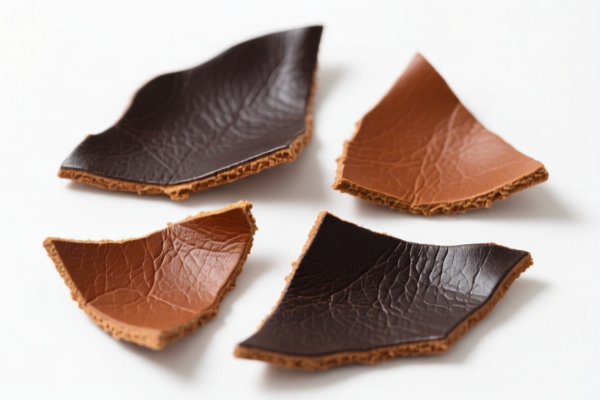
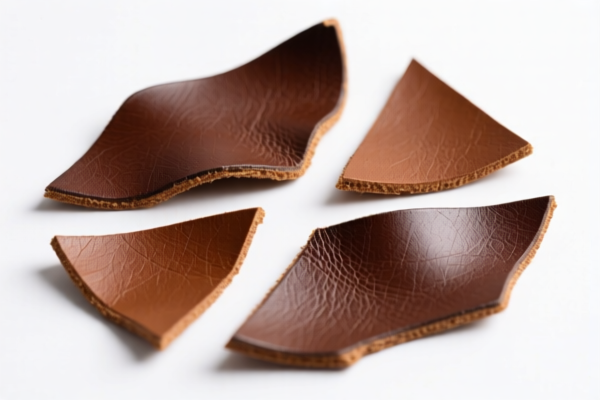
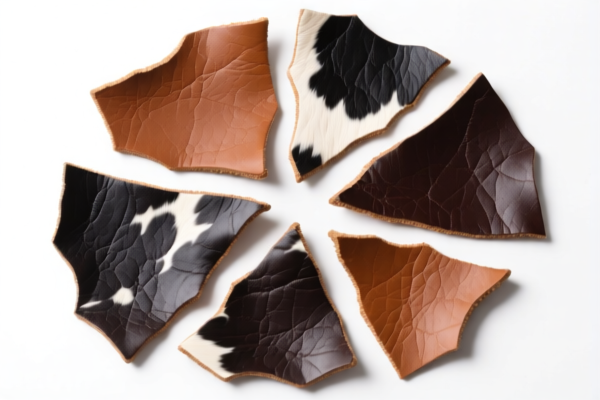
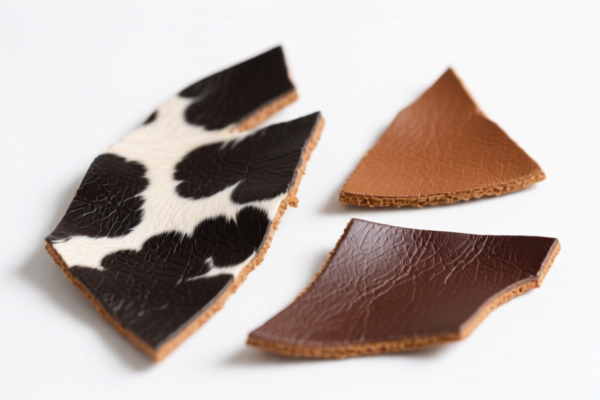
AI分析
🐄 Split Cowhide Leather for Leather Craft (Bovine Grain Splits)
🌐 HS Code Reference & Clearance Guide | 2026 Latest Tariff Analysis | Professional Customs Strategy
📌 I. Product Definition & Classification: What Exactly is "Split Cowhide"?
Split cowhide leather refers to hides or skins of bovine animals (including buffalo) or equine animals that have been tanned or crust-finished, without hair on, and have been split (cut horizontally) into layers.
For "Leather Craft," this typically refers to the lower layer (often called "splits") which is less durable than the top grain but highly versatile for crafting bags, wallets, belts, and accessories.
⚠️ Critical Distinction:
- Top Grain vs. Split: "Grain splits" are specifically the layers obtained after splitting the top grain layer.
- With Hair vs. Without Hair: The classification in strictly applies to leather without hair on. If hair remains, it falls under different headings (e.g., 4106 or 4104).
- Buffalo vs. Other Bovines: The tariff treatment differs significantly between standard bovine leather and buffalo leather, as seen in the data.
📦 II. HS Code Classification Details (Based on Provided Data)
According to the provided , there are two specific HS codes for this product category, distinguished by the animal type (Bovine vs. Buffalo) and specific use/quality.
| HS Code | Product Description | Key Characteristics | Tax Rate |
|---|---|---|---|
| 4107.12.10.20 | Leather, Bovine (Not Buffalo), Grain Splits, Upper or Lining Leather (Unit surface area ≤ 28 sq ft / 2.6 m²) |
- From cows/bulls (non-buffalo) - Grain splits - Used for upper leather or lining - No hair on |
25.0% |
| 4107.12.40.00 | Leather, Buffalo, Grain Splits, Other | - From buffalo - Grain splits - No hair on - Classified as "Other" (not specific upper/lining) |
0.0% |
🔍 Analysis:
- Code 4107.12.10.20 is high-risk due to the 25% additional tariff. It applies to standard bovine (cow) leather splits intended for footwear uppers or linings.
- Code 4107.12.40.00 is tariff-free (0%) but strictly limited to Buffalo leather. Misdeclaring cow leather as buffalo leather is a common customs error that leads to severe penalties.
💰 III. 2026 Latest Tariff Rate Details
✅ Applicable Country: United States (US)
✅ Origin: China (CN) (Assumed based on typical high-tariff contexts in examples)
✅ Effective Date: Current (2025/2026 Regime)
🎯 1. 4107.12.10.20 — Bovine Grain Splits (Upper/Lining Leather)
| Item | Content |
|---|---|
| Base Tariff | 0.0% |
| Additional Tariff (Section 301) | +25.0% |
| Total Tariff Rate | 25.0% |
| Tax Calculation | CIF Value × 25% |
| De Minimis Exemption | ❌ Not Eligible (Section 301 goods generally excluded from de minimis) |
| Legal Basis | HTSUS 4107.12.10.20 → Section 301 Footnote |
📌 Explanation:
- The 0% base rate reflects standard Most Favored Nation (MFN) treatment for leather.
- The 25% additional duty is imposed under Section 301 of the Trade Act of 1974 against Chinese imports.
- Total Impact: For every $1,000 worth of cowhide leather splits, you pay $250 in additional duty. This significantly impacts profit margins for leather craft businesses.
🎯 2. 4107.12.40.00 — Buffalo Grain Splits (Other)
| Item | Content |
|---|---|
| Base Tariff | 0.0% |
| Additional Tariff | 0.0% |
| Total Tariff Rate | 0.0% |
| Tax Calculation | $0 |
| De Minimis Exemption | ✅ Eligible (if value <$800 and not prohibited) |
| Legal Basis | HTSUS 4107.12.40.00 → No Section 301 application listed |
📌 Explanation:
- This code enjoys a 0% total duty.
- Why? The tariff schedule distinguishes between "Bovine" (cow) and "Buffalo." In some trade regimes, buffalo leather may be treated differently or exempted from specific punitive tariffs.
- Caution: You cannot simply claim this for cow leather. The biological species must be verifiable (e.g., via texture, pore structure, or supplier certification).
🛠️ IV. Customs Clearance Practical Advice
✅ 1. Required Documentation Checklist
| Document | Mandatory? | Purpose |
|---|---|---|
| Commercial Invoice | ✅ Yes | Must clearly state: "Split Cowhide Leather," "Tanned," "Hairless," and specify species (Cow vs. Buffalo). |
| Product Description | ✅ Yes | Detailed description: "Grain splits of bovine leather, unit area ≤ 28 sq ft, for upper/lining." |
| Species Verification | ✅ Yes | If claiming 0% for Buffalo, provide proof (photos of pore structure, supplier letter). Cow leather cannot be mislabeled as Buffalo. |
| HS Code Pre-ruling | ⚠️ Recommended | To confirm if your specific split qualifies as "Upper/Lining" (25%) or "Other" (0% if buffalo). |
| Packing List | ✅ Yes | Weight, dimensions, and number of hides/sheets. |
✅ 2. Key Customs Tips (Do's and Don'ts)
🔥 "Species Matters: Cow = 25%, Buffalo = 0%! Verify Before You Ship!"
| Scenario | Correct Action | Incorrect Action |
|---|---|---|
| Importing Cow Hides | Use 4107.12.10.20 → Pay 25% |
Misdeclare as Buffalo → Fraud/Seizure Risk |
| Importing Buffalo Hides | Use 4107.12.40.00 → Pay 0% |
Misdeclare as Cow → Pay unnecessary 25% |
| Mixed Shipments | Declare each species separately | Combine into one line item → Customs Rejection |
| Leather with Hair | NOT covered in this data | Attempt to use 4107 codes → Wrong Classification |
✅ 3. Special Considerations for Leather Craft
- Grain Splits Definition: Ensure the leather is indeed "split" (layered). If it is a full hide not split, the HS code may differ.
- Surface Area: The 25% tariff code specifies a unit area ≤ 28 sq ft (2.6 m²). Larger hides may fall under "Other" categories with different tax implications.
- Buffalo vs. Cow Identification: Buffalo leather has larger, more irregular pores and a different texture. Customs officers may request physical inspection. Keep high-resolution photos ready.
🌍 V. Global Market Comparison (2026)
| Country/Region | Recommended HS Code | Tariff (China Origin) | Notes |
|---|---|---|---|
| 🇺🇸 USA | 4107.12.10.20 (Cow) |
25% | High tariff due to Section 301 |
| 🇺🇸 USA | 4107.12.40.00 (Buffalo) |
0% | Tariff-free, but strict verification |
| 🇪🇺 EU | 4107.12.10 / 4107.12.40 | ~4.5% - 6.4% | Standard MFN rates; no punitive tariffs |
| 🇨🇳 China | 4107.12.10 / 4107.12.40 | ~6% - 10% | Import duty for China |
📌 Conclusion:
- The USA is the most challenging market due to the 25% additional tariff on bovine leather.
- If your leather craft business relies heavily on cowhide, consider sourcing from Vietnam, India, or Thailand (where different tariffs may apply) or buffalo if available, to mitigate costs.
- Never misclassify cow leather as buffalo to evade tariffs. Customs agencies use DNA testing and microscopic pore analysis.
📌 VI. Common Mistakes & Pitfalls (Lessons Learned)
❌ Mistake 1: Calling all split leather "Buffalo" to avoid the 25% tax.
👉 Result: Customs inspection reveals cow pores → Seizure, fines, and blacklisting.
❌ Mistake 2: Ignoring the "Unit Surface Area" limit.
👉 Result: If hides exceed 28 sq ft, the specific subheading may not apply, leading to reclassification and potential penalties.
❌ Mistake 3: Assuming "Leather Craft" is a valid HS descriptor.
👉 Result: Useless. Customs requires technical specs: "Tanned, Hairless, Split, Bovine."
✅ Correct Approach:
"Split Cowhide Leather, Tanned, Hairless, Bovine Species, Unit Area 20 sq ft, for Handbag Manufacturing, HS 4107.12.10.20"
🎯 VII. Conclusion: Smart Classification Saves Money!
🎯 Remember the Golden Rule:
🔹 "Cow = 25%, Buffalo = 0% — Verify Species!"
🔹 "Don't guess the HS Code — get a Pre-Ruling!"
📌 Pro Tip:
If you are importing large volumes, consult a licensed customs broker to apply for a Section 301 Exclusion if applicable, or restructure your supply chain to include buffalo leather options where feasible.
📣 Immediate Action:
📞 Contact a Customs Broker today.
📸 Photograph your leather samples (pores visible).
📄 Request a Tariff Pre-Ruling from U.S. Customs and Border Protection (CBP) to confirm your HS Code and avoid surprise duties.
✨ Accurate Classification, Smooth Clearance, Maximum Profit!
💼 Your Leather Craft Business Deserves Efficient, Compliant Trade!
用户评价
关于 HS 编码归类
协调制度(HS)是由世界海关组织(WCO)制定的国际贸易商品分类标准。全球 200 多个国家采用 HS 系统作为海关关税、贸易统计和进出口监管的基础。
每个 HS 编码遵循以下层级结构:
- 章(2 位)——商品大类(例如:第 84 章:机器和机械设备)
- 品目(4 位)——章内的更具体分类
- 子目(6 位)——国际通用细分,所有 WCO 成员国统一使用
- 本国细分(8-10 位)——各国自行扩展的细分编码,如美国 HTSUS 10 位编码
正确的 HS 编码归类对于顺利通关、准确缴纳关税和遵守贸易法规至关重要。错误归类可能导致海关延误、多缴关税或罚款。
从CN进口到US时,适用的关税税率可能包括:
- 最惠国(MFN)税率——适用于 WTO 成员国的标准关税税率
- 普通税率——适用于无贸易协定国家
- 贸易救济关税——附加关税,如 301 条款(反倾销)、232 条款(国家安全)或反补贴税
本页内容仅供参考。如需正式归类,请咨询当地海关或持牌报关代理。