split leather for furniture
CN → US商品图片
AI分析
🪑 Split Leather for Furniture (Bonded & Recreated Leather Panels)
🌐 HS Code Reference & Clearance Guide | 2026 Latest Tariff Full Analysis | Professional-Level Customs Strategy
📌 I. Product Definition & Classification: Do You Really Understand “Furniture Split Leather”?
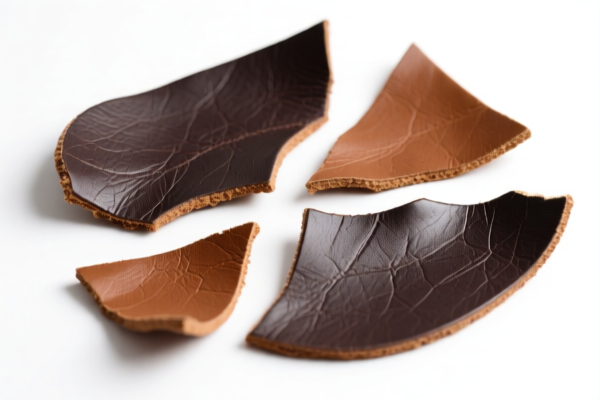
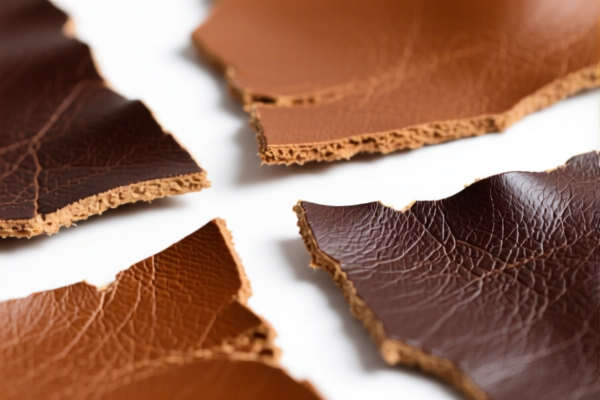
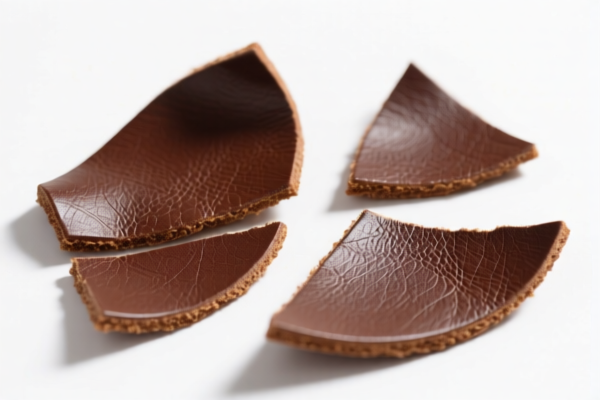
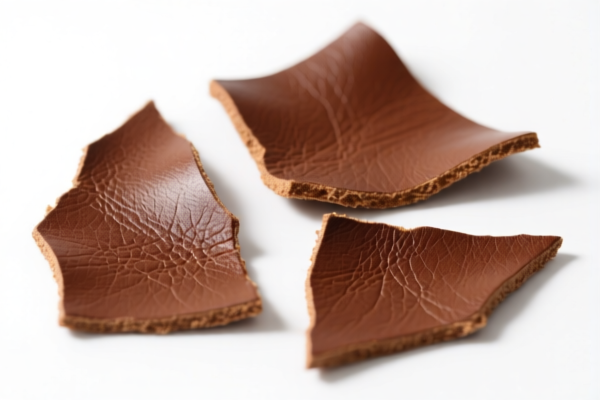
Split Leather, in the context of furniture manufacturing, is NOT top-grain leather. It is the lower layer of the hide that remains after the top grain has been separated. To be usable for furniture, it is almost always processed through one of two methods:
- Corrected Grain Split Leather: The split is sanded, embossed with a grain pattern, and coated with pigments/polyurethane (PU) to look like top-grain leather.
- Bonded Leather: Leather scraps/fibers from splits are ground up, mixed with a binding agent (polyurethane), and pressed onto a fabric backing.
⚠️ Critical Distinction Point:
- If the material is sanded, coated, and embossed → It is classified as “Leather, further prepared” → HS 4115.
- If the material is ground leather fibers bonded to fabric → It is often classified as “Reconstituted Leather” → HS 4115.10.
- DO NOT classify as “Top Grain Leather” (HS 4107) – this is a common customs error that leads to penalties and delays.
📦 II. HS Code Classification Details (2026 Latest Tariff Authority Mapping)
| HS Code | Product Description | Application Scenario | Processing Method |
|---|---|---|---|
4115.10.00.00 |
Reconstituted leather, presented in sheets or strips | Bonded leather, leather fiber mats, “faux” leather made from leather waste | ✅ Ground fibers + Binder |
4115.90.00.00 |
Other leather and compositions leather (further prepared) | Sanded split leather,PU-coated split leather, embossed furniture leather | ✅ Coated/Embossed Split |
3921.90.00.00 |
Other plates, sheets, film, foil, and strip of plastics | Incorrect: If fully synthetic (no leather content), but often confused | ❌ No Leather Content |
4107.21.00.00 |
Cattle leather, full grain, tanned | Incorrect: Top-grain hides, NOT splits | ❌ Top Layer Only |
🔍 Key Reminder:
- Reconstituted Leather (4115.10): Must contain at least 10% leather fibers by weight to be classified under 4115. If <10%, it may be classified under plastics (3921) or textiles (5810), depending on backing.
- Coated Split Leather (4115.90): Must be leather that has been processed (sanded/coated). The base material is still leather, just the bottom layer.
- Customs Alert: Many suppliers label “Bonded Leather” as “Genuine Leather” to lower duties. This is misdeclaration.
💰 III. 2026 Latest Tariff Rate Details (Including Surcharges & Policy Add-ons)
✅ Applicable Country: United States (US)
✅ Country of Origin: China (CN)
✅ Effective Date: From November 10, 2025 (including subsequent imports)
🎯 1. 4115.10.00.00 —— Reconstituted Leather (Bonded Leather)
| Item | Content |
|---|---|
| Base Duty Rate | 4.5% (ad valorem) |
| USITC Surcharge | +25% (from USITC Footnote 9903.88.01 under Section 301) |
| IEEPA Surcharge | +10% (for China/Hong Kong products, starting Nov 10, 2025) |
| Total Rate | 39.5% |
| Tax Calculation | CIF Value × 39.5% |
| De Minimis Eligibility | ❌ No (deny_de_minimis applies to Section 301 goods) |
| Legal Path | IEEPA:9903.01.25 → IEEPA:9903.01.24 → USITC:4115.10.00.00 → FOOTNOTE:9903.88.01 |
📌 Explanation:
- “25% USITC Surcharge” is under Section 301 Trade Act;
- “10% IEEPA Surcharge” is under International Emergency Economic Powers Act for Chinese goods;
- Total 39.5% is a high tariff burden. Must be factored into FOB/EXW pricing!
🎯 2. 4115.90.00.00 —— Other Prepared Leather (Coated Splits)
| Item | Content |
|---|---|
| Base Duty Rate | 4.5% |
| USITC Surcharge | +25% |
| IEEPA Surcharge | +10% |
| Total Rate | 39.5% |
| Tax Calculation | CIF Value × 39.5% |
| De Minimis Eligibility | ❌ No |
| Legal Path | IEEPA:9901.25 → IEEPA:9903.01.24 → USITC:4115.90.00.00 → FOOTNOTE:9903.88.01 |
📌 Note:
- Same rate as reconstituted leather;
- Even if labeled “Furniture Grade Leather” or “PU Leather Split,” if it’s leather-based, it falls here.
🛠️ IV. Customs Clearance Practical Advice (Real-World Pitfall Avoidance Guide)
✅ 1. Required Documentation Checklist (No Exceptions)
| Document | Mandatory? | Description |
|---|---|---|
| ✅ Product Specification Sheet | ✔️ | Must state: “Split Leather,” “Coated/Sanded,” “Bonded Fiber,” backing material (fabric/plastic) |
| ✅ Composition Breakdown | ✔️ | % Leather content vs. % Polyurethane/Binding agent vs. % Fabric Backing |
| ✅ Photos (Label & Cross-Section) | ✔️ | Show surface grain and side layers to prove it’s not top-grain |
| ✅ Third-Party Lab Report | ✔️ | ASTM D1927 or equivalent for “Leather Content” testing |
| ✅ Commercial Invoice | ✔️ | Must specify: “Split Leather Panels for Furniture” or “Reconstituted Leather” |
| ✅ Packing List | ✔️ | Describe rolls/sheets, not “furniture parts” |
✅ 2. Declaration Tips (Key Mantra)
🔥 “Be Honest: Split ≠ Top Grain. Reconstituted ≠ Synthetic.”
| Scenario | Correct Declaration | Wrong Approach |
|---|---|---|
| Bonded Leather | “Reconstituted Leather, 4115.10.00.00” | Call it “Leather” → 4107 (Higher Risk) |
| Coated Split | “Prepared Split Leather, 4115.90.00.00” | Call it “Top Grain” → 4107 |
| Fully Synthetic | “Artificial Leather, 3921.90.00.00” | Call it “Leather” → Misdeclaration |
| Leather-Backed Fabric | Check if >10% leather → 4115 or 5810 | Ignore composition → Wrong HS |
✅ 3. Special Case Handling
| Case | Handling Advice |
|---|---|
| OEM Furniture Covers | Provide design specs. If covers are loose-fit, declare as “Parts of Furniture” (HS 9403) ONLY if they are integral. Usually, leather rolls are 4115. |
| “Vegan Leather”/PU | If 0% leather content → HS 3921. Do NOT declare as 4115. |
| Mixed Shipments (Furniture + Leather Rolls) | Declare separately! Furniture (9403) vs. Raw Material (4115). Do not bundle under one HS. |
| Leather Fiber Mats <10% Leather | May be classified as Plastic Sheets (3921) or Textiles (5810) depending on backing. Get pre-ruling! |
🌍 V. Global Market Comparison (2026 Latest)
| Country/Region | Recommended HS Code | Tariff (China Origin) | Certification | Remarks |
|---|---|---|---|---|
| 🇺🇸 USA | 4115.10.00.00 / 4115.90.00.00 |
39.5% | No specific | High Section 301 + IEEPA burden |
| 🇨🇳 China | 4115.10.00.00 |
5% | CCC (if applicable) | Low duty, no surcharges |
| 🇪🇺 EU | 4115.10.00.00 |
6.5% | REACH (Chemicals) | No Section 301 equivalent |
| 🇦🇺 Australia | 4115.10.00.00 |
5% | RCM | Moderate tariff |
| 🇯🇵 Japan | 4115.10.00.00 |
6.0% | PSE (if plastic-backed) | Moderate tariff |
📌 Conclusion:
- USA is the most expensive market for split/reconstituted leather due to 39.5% total rate.
- EU/Asia markets are more favorable. Consider transshipment (risky) or sourcing from Vietnam/Mexico for IEEPA exemption if targeting USA.
📌 VI. Common Errors & Pitfalls (Lessons Learned)
❌ Error 1: Labeling “Bonded Leather” as “Top Grain Leather”
👉 Consequence: Customs audits find <10% top grain → 25% penalty + retroactive duty + storage fees.
❌ Error 2: Declaring coated splits as “Artificial Leather” (3921)
👉 Consequence: Underpaying duty (3921 may be 0-5%). Customs reclassifies to 4115 (39.5%) → Back taxes + interest.
❌ Error 3: Not disclosing “Reconstituted” nature
👉 Consequence: Violation of FTC labeling laws in the US + Customs misdeclaration. Product seizure risk.
❌ Error 4: Bundling leather rolls with finished furniture under HS 9403
👉 Consequence: Incorrect valuation method. Furniture is 9403 (often 0-5%), but raw leather is 4115. Split line items required.
✅ Correct Practice:
“Reconstituted Leather Panels, 1.2mm thick, PU bonded on polyester backing, for furniture upholstery, HS 4115.10.00.00, Made in China.”
🎯 VII. Conclusion: Accurate Classification Saves Thousands!
🎯 Remember the Mantra:
🔹 “Split is not Top, Bonded is Reconstituted. Declare 4115, not 4107.”
🔹 “39.5% in the US: Plan pricing, get pre-ruling, avoid fines.”
📌 Pro Tip:
If your split leather is sourced from Vietnam, Thailand, or Mexico, you may exempt IEEPA surcharge (10%), reducing total rate to 25-29.5%.
Strongly recommend applying for an Import Ruling (CBP Ruling) before shipment if volume is high.
📣 Immediate Action:
📞 Contact your freight forwarder + Provide composition report + Apply for CBP Ruling
🚀 Ensure compliant clearance, cost control, and no surprises at the port.
✨ Professional Customs: Start with Precise Classification!
💼 Every percentage point matters in global trade!
用户评价
关于 HS 编码归类
协调制度(HS)是由世界海关组织(WCO)制定的国际贸易商品分类标准。全球 200 多个国家采用 HS 系统作为海关关税、贸易统计和进出口监管的基础。
每个 HS 编码遵循以下层级结构:
- 章(2 位)——商品大类(例如:第 84 章:机器和机械设备)
- 品目(4 位)——章内的更具体分类
- 子目(6 位)——国际通用细分,所有 WCO 成员国统一使用
- 本国细分(8-10 位)——各国自行扩展的细分编码,如美国 HTSUS 10 位编码
正确的 HS 编码归类对于顺利通关、准确缴纳关税和遵守贸易法规至关重要。错误归类可能导致海关延误、多缴关税或罚款。
从CN进口到US时,适用的关税税率可能包括:
- 最惠国(MFN)税率——适用于 WTO 成员国的标准关税税率
- 普通税率——适用于无贸易协定国家
- 贸易救济关税——附加关税,如 301 条款(反倾销)、232 条款(国家安全)或反补贴税
本页内容仅供参考。如需正式归类,请咨询当地海关或持牌报关代理。