split leather for toys
CN → US商品图片
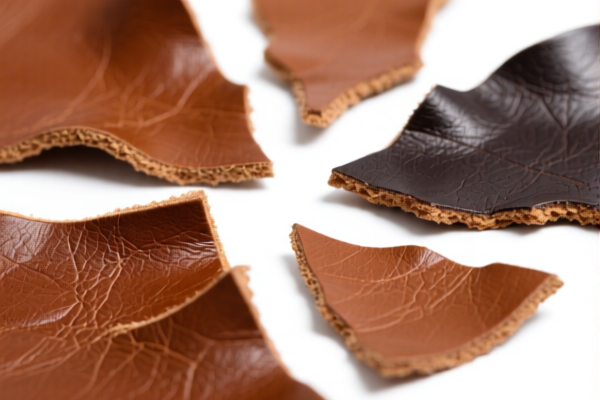
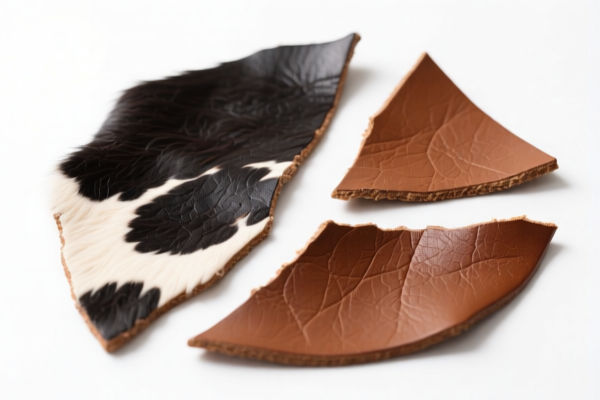
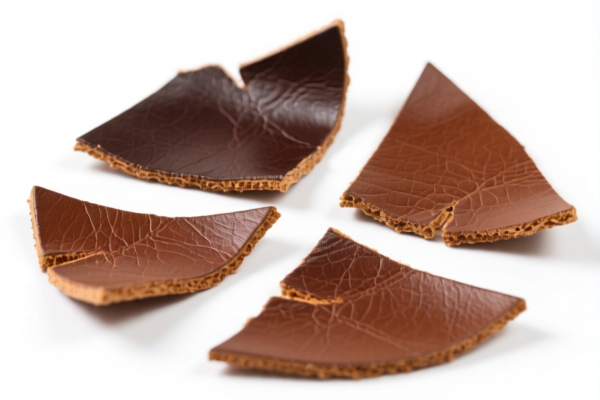
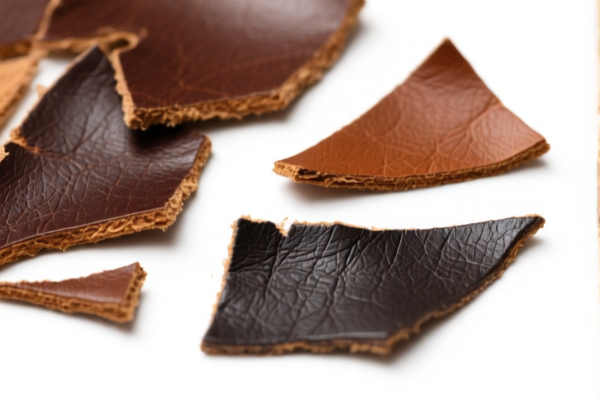
AI分析
🧸 Split Leather for Toys (Toy Leather Components)
🌐 HS Code Reference & Customs Clearance Guide | 2026 Latest Tariff Analysis | Professional-Grade Clearance Strategy
📌 1. Product Definition & Classification: Do You Really Know "Split Leather for Toys"?
Split leather, derived from the lower layer of the hide after the top grain has been split off, is a common material in the toy industry due to its softness, cost-effectiveness, and ease of shaping. In international trade, it is primarily classified based on its processing status and intended use.
Key Distinctions: * Tanned/Processed Split Leather: The leather has undergone tanning, dyeing, or finishing. This is the most common form for toy manufacturing. * Raw Split Leather: Minimal processing; rarely used directly for toys without further finishing. * Cut Pieces vs. Rolls: Even if cut to size, if it remains a material (not a finished toy part), it is classified as leather. If it is a fully assembled toy part (e.g., a sewn stuffed animal), it becomes a "part of a toy" or a "toy."
⚠️ Critical Classification Point:
- If it is tanned and processed leather, regardless of whether it is in rolls or cut pieces, it generally falls under Chapter 41.
- If it is unfinished or merely dressed, it may fall under 4114 or 4107.
- Do NOT classify finished stuffed animals or plush toys here; those belong to Chapter 95.
📦 2. HS Code Classification Details (2026 Latest Tariff Authority Comparison)
| HS Code | Product Description | Application Scenario | Processing Status |
|---|---|---|---|
4112.00 |
Tanned or crusted leather (full hides or skins) | Large sheets of split leather for industrial cutting | ✅ Tanned/Processed |
4114.20 |
Other prepared leather (incl. patent leather & aldehyde leather) | Most Common for Toys: Dyeing, coloring, or slight finishing of split leather | ✅ Tanned/Finished |
4107.21 |
Cattle hides (excluding calves), full & split, chrome-tanned | Raw chrome-split leather before final toy-specific finishing | ✅ Chrome-Tanned |
4107.29 |
Cattle hides (excluding calves), full & split, other tanning | Vegetable-tanned split leather (less common for soft toys) | ✅ Veg-Tanned |
4205.00 |
Other articles of leather or composition leather | Finished Parts: Pre-cut toy pieces, straps, or components ready for assembly | ✅ Semi-Finished Product |
9503.00 |
Toys... (e.g., stuffed animals, dolls) | Finished Toys: The final product, not the raw material | ❌ Not Leather Material |
🔍 Key Reminder:
- Most "split leather for toys" that is dyeing, softened, or slightly finished falls under 4114.20.00.00.
- If it is chrome-tanned but not yet finished for toy use, it may be 4107.21.
- Pre-cut pieces that are specifically shaped for toys might be classified as 4205.00 (articles of leather) if they are more than just cut shapes and have undergone significant processing.
💰 3. 2026 Latest Tariff Rate Details (Including Additional Duties & Policy Surcharges)
✅ Applicable Country: United States (US)
✅ Country of Origin: China (CN)
✅ Effective Date: From November 10, 2025 (including subsequent imports)
🎯 1. 4114.20.00.00 —— Other Prepared Leather (Including Split Leather for Toys)
| Item | Content |
|---|---|
| Base Rate | 0% (ad valorem) |
| USITC Surcharge | +25% (from USITC Footnote 9903.88.01) |
| IEEPA Surcharge | +10% (targeting China/Hong Kong products, effective Nov 10, 2025) |
| Total Rate | 45% |
| Tax Calculation | CIF Value × 45% |
| De Minimis Eligible? | ❌ No (deny_de_minimis) |
| Legal Basis Path | IEEPA:9903.01.25 → IEEPA:9903.01.24 → USITC:4114.20.00.00 → FOOTNOTE:9903.88.01 |
📌 Explanation:
- The 25% USITC surcharge is part of the Section 301 tariffs;
- The 10% IEEPA surcharge is the new对华加征 tariff;
- Total 45%, considered a very high tariff, must be factored into costings.
🎯 2. 4107.21.00.00 —— Chrome-Tanned Split Leather (Unfinished)
| Item | Content |
|---|---|
| Base Rate | 0% |
| USITC Surcharge | +25% |
| IEEPA Surcharge | +10% |
| Total Rate | 45% |
| Tax Calculation | CIF × 45% |
| De Minimis Eligible? | ❌ No |
| Legal Basis Path | IEEPA:9901.25 → IEEPA:9903.01.24 → USITC:4107.21.00.00 → FOOTNOTE:9903.88.01 |
📌 Note:
- Same tariff structure as4114.20;
- Even if not yet dyed or finished for toys, if it is chrome-split leather, it attracts the same high duties.
🛠️ 4. Customs Clearance Practical Advice (Combat Pitfall Avoidance Guide)
✅ 1. Preparation Checklist (Non-negotiable)
| Material | Required | Explanation |
|---|---|---|
| ✅ Product Specification Sheet | ✔️ | Include type (split), tanning method (chrome/veg), color, thickness, width |
| ✅ Photos (Rolls/Cut Pieces) | ✔️ | Clearly show texture, backing, and any labels |
| ✅ Commercial Invoice | ✔️ | Describe as "Tanned Split Leather for Toy Manufacturing" |
| ✅ Origin Certificate (CO) | ✔️ | If not from China, may qualify for lower rates |
| ✅ Bill of Lading | ✔️ | Ensure weight and volume match invoice |
✅ 2. Declaration Tips (Key Mantra)
🔥 "Chrome vs. Veg, Tanned vs. Raw, Name Precisely, Tariffs Climb Slowly!"
| Scenario | Correct Declaration | Wrong Practice |
|---|---|---|
| Chrome-split, dyed for toys | 4114.20.00.00 |
Misclassify as "fabric" → 20%+ |
| Chrome-split, raw/unfinished | 4107.21.00.00 |
Misclassify as "finished leather" → 25% penalty |
| Finished stuffed animal | 9503.00.00.00 |
Misclassify raw leather as toy → 25% base + 25% surcharge |
| Pre-cut leather pieces | 4205.00.00.00 |
Misclassify as raw hide → Higher scrutiny |
✅ 3. Special Situations Handling
| Scenario | Handling Advice |
|---|---|
| OEM Custom Colors | Provide color swatches and approval emails to prove specific toy-use processing |
| Mixed Shipments (Leather + Fabric) | Declare separately. Do not mix HS codes. |
| Small Samples (< $800) | May qualify for de minimis, but LEATHER IS EXCLUDED from most de minimis exemptions under IEEPA. Declare properly. |
| Recycled Leather/Composition Leather | May fall under 4115 or 3926 (plastic articles). Different tariffs. Clarify composition. |
🌍 5. Global Main Market Clearance Comparison (2026 Latest)
| Country/Region | Recommended HS Code | Tariff | Certification | Notes |
|---|---|---|---|---|
| 🇺🇸 USA | 4114.20.00.00 |
45% (China) | None Specific | High tariff due to Section 301 + IEEPA |
| 🇨🇳 China | 4114.20.00.00 |
5-12% | None | Lower base rate |
| 🇪🇺 EU | 4114.20 |
6.5% | REACH (Chemical) | No surcharges, but strict chemical regs |
| 🇦🇺 Australia | 4114.20 |
5% | None | Moderate tariff |
| 🇯🇵 Japan | 4114.20 |
6.5% | None | Stable rates |
📌 Conclusion:
- USA is the most expensive market for split leather imports from China;
- EU and Asia have more favorable tariffs but stricter chemical safety standards (REACH, etc.).
📌 6. Common Errors & Pitfall Guide (Blood & Tears Lessons)
❌ Mistake 1: Declaring "Split Leather for Toys" as "Fabric" or "Textile"
👉 Consequence: False declaration, heavy fines, and cargo detention.
❌ Mistake 2: Mixing "Raw Hides" and "Finished Leather" in one shipment
👉 Consequence: Customs will inspect every item, causing delays and potential re-classification.
❌ Mistake 3: Ignoring IEEPA 10% surcharge in cost calculation
👉 Consequence: Profit margin wiped out by unexpected 10% tax.
❌ Mistake 4: Using "Leather" without specifying "Split" or "Tanning Method"
👉 Consequence: Customs may assign a higher default rate (e.g., for full grain leather).
✅ Correct Approach:
"Chrome-Tanned Split Leather, Dyed, for Toy Manufacturing, Width: 50cm, Thickness: 1mm, HS Code: 4114.20.00.00"
🎯 7. Conclusion: Professional Declaration, Save Time, Reduce Costs!
🎯 Remember the Mantra:
🔹 "Chrome vs. Veg, Name it True, 45% in US, 0% Base, But Add 25+10, Plan Ahead!"
🔹 "HS Code Determines Destiny, 45% Tariff is Heavy, Declare Correctly, Sleep Well!"
📌 Tips:
If your leather is sourced from Vietnam, India, or Turkey, you may avoid IEEPA 10% and Section 301 25%, reducing total tariffs to 0-5%.
Recommend Advance Ruling for large recurring shipments to lock in classification.
📣 Action Now:
📞 Contact Professional Freight Forwarder + Provide Product Photos + Apply for HS Code Advance Ruling
🚀 Let your toy leather, clear smoothly, export efficiently, and maximize profits!
✨ Professional Clearance Starts with Accurate Classification!
💼 Every cent of your cost deserves precise calculation!
用户评价
关于 HS 编码归类
协调制度(HS)是由世界海关组织(WCO)制定的国际贸易商品分类标准。全球 200 多个国家采用 HS 系统作为海关关税、贸易统计和进出口监管的基础。
每个 HS 编码遵循以下层级结构:
- 章(2 位)——商品大类(例如:第 84 章:机器和机械设备)
- 品目(4 位)——章内的更具体分类
- 子目(6 位)——国际通用细分,所有 WCO 成员国统一使用
- 本国细分(8-10 位)——各国自行扩展的细分编码,如美国 HTSUS 10 位编码
正确的 HS 编码归类对于顺利通关、准确缴纳关税和遵守贸易法规至关重要。错误归类可能导致海关延误、多缴关税或罚款。
从CN进口到US时,适用的关税税率可能包括:
- 最惠国(MFN)税率——适用于 WTO 成员国的标准关税税率
- 普通税率——适用于无贸易协定国家
- 贸易救济关税——附加关税,如 301 条款(反倾销)、232 条款(国家安全)或反补贴税
本页内容仅供参考。如需正式归类,请咨询当地海关或持牌报关代理。