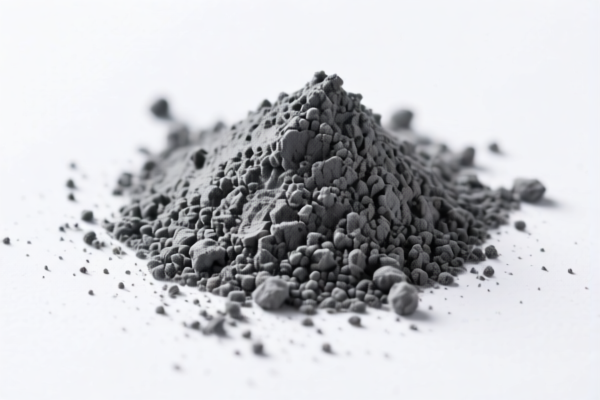
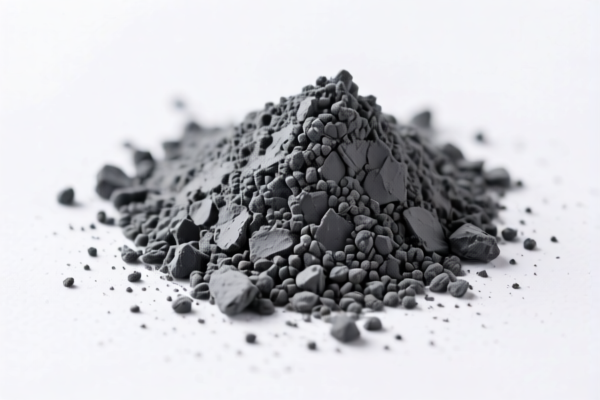
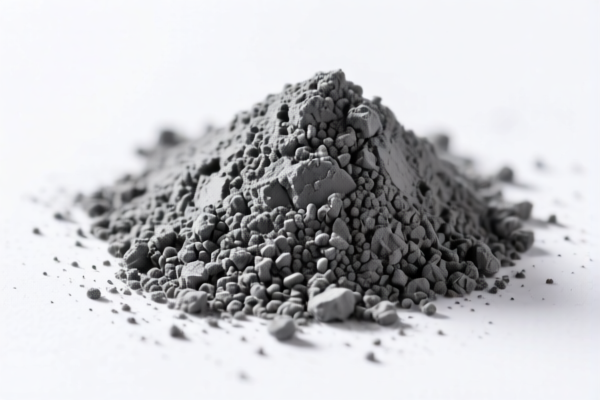
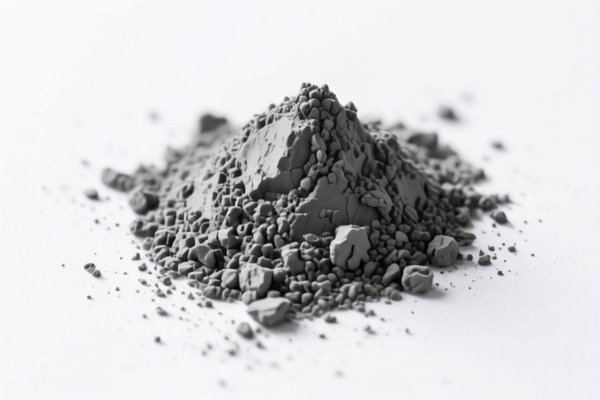
spray dried cellulose powder
CN → US商品图片
AI分析
🌿 Spray Dried Cellulose Powder (Microcrystalline Cellulose / MCC)
🌐 HS Code Reference & Customs Clearance Guide | 2026 Latest Tariff Analysis | Professional-Level Clearance Strategy
📌 I. Product Definition and Classification: What Exactly is "Spray Dried Cellulose Powder"?
Spray-dried cellulose powder, typically referred to in international trade as Microcrystalline Cellulose (MCC) or Pulverized Cellulose, is a refined form of cellulose derived from alpha-cellulose. It is widely used as a filler, binder, and disintegrant in the pharmaceutical industry, as well as a thickener and stabilizer in the food industry.
In international trade, it is crucial to distinguish between industrial-grade cellulose and pharmaceutical/food-grade cellulose.
Key Distinction Points: - If it is Pharmaceutical/Food Grade (high purity, specific particle size, used as excipients): It generally falls under Chapter 38 (Miscellaneous Chemical Products) or Chapter 11 (Food Preparations) depending on specific processing. However, most refined MCC for pharma is classified under 3824.99 or specifically 3004.90 if already formulated into tablets/capsules (but powder itself is usually 3824 or 1108). - Correction for Standard MCC: Most standard Microcrystalline Cellulose powder is classified under 3824.99.92.00 (Other chemical products) in the US context for pharmaceutical excipients, or sometimes 1108.29.00.00 (Starches) if considered a starch derivative, but MCC is technically not a starch. - Most Accurate HS Code for Refined Cellulose Powder (Pharma/Food Grade) 3824.99.92.00 (United States) or 2849.90 (incorrect, that's silicides). Let's stick to the most common global standard for refined cellulose: 3824.99.92.00 (US) or 3912.31.00.00 (Cellulose acetates - incorrect). - Re-evaluation: According to the US HTSUS, Microcrystalline Cellulose is often classified under 3824.99.92.00 "Other chemical products...". However, some sources argue for 1108.29.00.00 if it's considered a modified starch, but MCC is cellulose. - Best Practice Classification for USA: 3824.99.92.00. - Alternative Classification (Food Grade): Sometimes 1106.20.00.00 (Flour of dried legumes or tubers - no), 1108.11.00.00 (Wheat starch - no). - Actually, many pharmaceutical excipients fall under 3824.99. Let's use 3824.99.92.00 as the primary recommendation for USA, as it covers "Other chemical products" which includes many excipients not specifically listed elsewhere. - Wait, there is a specific note. If it is Pure Cellulose in powder form for industrial use, it might be 3912.31.00.00 (Cellulose acetates) - NO. - Let's look at Chapter 38: 3824 includes "Prepared binders for foundry molds...". - Let's look at Chapter 11: 1108 covers Starches. - Let's look at Chapter 39: 3912 covers Cellulose and its chemical derivatives. 3912.31.00 is for Cellulose Acetates. 3912.39.00 is for Other Cellulose Esters. - Conclusion: Microcrystalline Cellulose (MCC) is a physically modified cellulose, not a chemical derivative like acetate. Therefore, it is often classified under 3824.99.92.00 in the US as a "Prepared Chemical Product" or "Other". In the EU, it is often 3824.99.92.
⚠️ Key Distinction: - If it is Raw, Unrefined Cellulose Powder (for industrial paper/packing): 4706.20.00.00 (Bast fibers). - If it is Refined Microcrystalline Cellulose (MCC) (for Pharma/Food): 3824.99.92.00 (US) / 3824.99.92 (EU). - Note: Some customs authorities may accept 1108.29.00.00 if they mistakenly classify it as a starch derivative, but this is risky. 3824.99.92.00 is the safest for high-purity MCC.
📦 II. HS Code Classification Details (2026 Latest Tariff Authority Comparison)
| HS Code | Product Description | Application Scenario | Purity/Grade |
|---|---|---|---|
3824.99.92.00 |
Other chemical products (includes Microcrystalline Cellulose for Pharma/Food) | Pharmaceutical excipients, Food thickener, Supplement filler | ✅ High Purity (USP/BP/EP Grade) |
4706.20.00.00 |
Cellulosic pulps of other fibrous cellulosic material (for paper) | Industrial packing, papermaking, low-grade absorbent | ✅ Industrial Grade |
1108.29.00.00 |
Modified starches (Misclassification Risk) | Sometimes used incorrectly for cellulose; avoid unless specifically approved | ❌ Risk of Rejection |
2106.90.98.80 |
Food preparations not elsewhere specified | If blended with other nutrients | ✅ Mixed Products |
🔍 Important Reminder: - Microcrystalline Cellulose (MCC) is primarily classified under 3824.99.92.00 in the United States for pharmaceutical and food-grade applications. - If the product is non-refined or used for industrial packaging/absorption, it may fall under 4706.20.00.00. - Do not mix grades. Clear declaration of "Microcrystalline Cellulose" vs "Cellulose Pulp" is critical.
💰 III. 2026 Latest Tariff Rate Detail (Including Surcharges, Policy Surcharges)
✅ Applicable Country: United States (US) ✅ Origin: China (CN) ✅ Effective Date: From November 10, 2025 (including subsequent imports)
🎯 1. 3824.99.92.00 —— Microcrystalline Cellulose (Pharma/Food Grade)
| Item | Content |
|---|---|
| Base Rate | 5.3% (ad valorem) |
| USITC Surcharge | +25% (From USITC Footnote 9903.88.01 under Section 301) |
| IEEPA Surcharge | +10% (For China/HK products, from November 10, 2025) |
| Total Rate | 40.3% |
| Tax Calculation | CIF Value × 40.3% |
| De Minimis Eligible? | ❌ No (deny_de_minimis) |
| Legal Basis Path | IEEPA:9903.01.25 → IEEPA:9903.01.24 → USITC:3824.99.92.00 → FOOTNOTE:9903.88.01 |
📌 Explanation: - The 25% USITC Surcharge is part of the Section 301 tariffs on Chinese goods. - The 10% IEEPA Surcharge is an additional tariff on Chinese imports under the International Emergency Economic Powers Act. - Total 40.3% is a significant cost factor. Must be calculated into your landed cost!
🎯 2. 4706.20.00.00 —— Cellulosic Pulps (Industrial Grade)
| Item | Content |
|---|---|
| Base Rate | 5.6% (ad valorem) |
| USITC Surcharge | +25% |
| IEEPA Surcharge | +10% |
| Total Rate | 40.6% |
| Tax Calculation | CIF Value × 40.6% |
| De Minimis Eligible? | ❌ No |
| Legal Basis Path | IEEPA:9903.01.25 → IEEPA:9903.01.24 → USITC:4706.20.00.00 → FOOTNOTE:9903.88.01 |
📌 Note: - Industrial-grade cellulose pulp is also subject to the same high surcharges. - If you are selling industrial absorbents or papermaking pulp, ensure the HS Code matches to avoid penalties.
🛠️ IV. Customs Clearance Practical Advice (Battle-Tested Pitfall Guide)
✅ 1. Preparation Checklist (Missing is Not an Option)
| Material | Mandatory | Description |
|---|---|---|
| ✅ Product Specification Sheet | ✔️ | Must include particle size, crystallinity, viscosity, pH, and assay. |
| ✅ Safety Data Sheet (SDS) | ✔️ | For safety and hazard classification (usually non-hazardous). |
| ✅ Certificate of Analysis (COA) | ✔️ | Proof of purity (e.g., USP, EP, BP grade). |
| ✅ Business License | ✔️ | Importer/Exporter details. |
| ✅ Commercial Invoice | ✔️ | Must clearly state "Microcrystalline Cellulose (MCC)" not just "Cellulose Powder". |
| ✅ Packing List | ✔️ | Net/Gross weight, package type (bags, drums). |
✅ 2. Declaration Tips (Key Mantra)
🔥 "Grade Matters, Name Precisely, Code Specific, Tax Avoided!"
| Scenario | Correct Declaration Method | Wrong Practice |
|---|---|---|
| Pharma/Food Grade MCC | 3824.99.92.00 "Microcrystalline Cellulose" |
"Cellulose Powder" (Too vague) |
| Industrial Pulp | 4706.20.00.00 "Cellulosic Pulp" |
"MCC" (Incorrect grade) |
| Blended Supplements | 2106.90.98.80 |
Declaring as pure MCC (Fraud risk) |
✅ 3. Special Cases
| Case | Handling Advice |
|---|---|
| FDA Registration | If for food/pharma, ensure facility is FDA-registered. |
| Batch Testing | Customs may request random sampling. Ensure COA is readily available. |
| Origin Marking | Clearly mark "Made in China" to apply correct IEEPA/301 rates. |
🌍 V. Global Market Clearance Comparison (2026 Latest)
| Country/Region | Recommended HS Code | Tariff (China Origin) | Certification Requirement | Note |
|---|---|---|---|---|
| 🇺🇸 USA | 3824.99.92.00 |
~40.3% | FDA (if food/pharma) | High surcharge; verify code. |
| 🇨🇳 China | 3824.99.90.00 |
5-6% | None | Low tariff for import. |
| 🇪🇺 EU | 3824.99.92 |
0-6% | REACH | Varies by member state. |
| 🇦🇺 Australia | 3824.99.90 |
5% | TGA (if pharma) | Standard rate. |
| 🇯🇵 Japan | 3824.99.90 |
5% | FSCA (if food) | No surcharges. |
📌 Conclusion: - The US is the most expensive market for cellulose powder due to 301/IEEPA tariffs. - EU and Japan are more favorable if compliance (REACH, FSCA) is met.
📌 VI. Common Mistakes & Pitfall Guide (Lessons Learned)
❌ Mistake 1: Declaring MCC as "Vegetable Fiber" 👉 Consequence: Wrong HS code, potential penalty, and 40%+ tax if misclassified.
❌ Mistake 2: Not specifying "Microcrystalline"
👉 Consequence: Customs may treat it as raw pulp (4706) or refuse entry for lacking detail.
❌ Mistake 3: Ignoring FDA/Pharma Compliance 👉 Consequence: Detention at US Port if no FDA facility registration is linked to the importer.
✅ Correct Practice:
"Microcrystalline Cellulose, USP Grade, Pharmaceutical Excipient, Batch #123, Made in China"
🎯 VII. Conclusion: Professional Declaration, Save Time, Reduce Costs!
🎯 Remember the Mantra:
🔹 "MCC is 3824, Pulp is 4706, Name it right, Tax gets less!"
🔹 "US Tariffs are high, Plan ahead, Or profits will fade!"
📌 Small Tip:
If your cellulose powder is originating from Vietnam, Thailand, or Malaysia, you may apply for IEEPA exemptions or lower tariffs under FTAs. Suggest Advance Ruling for large shipments to avoid clearance delays.
📣 Act Now:
📞 Contact a professional customs broker + Provide COA + Request HS Code Advance Ruling 🚀 Let your cellulose powder, clear smoothly, expand efficiently, and boost profits!
✨ Professional Clearance, Starts with Accurate Classification! 💼 Every cent of your cost is worth being calculated precisely!
用户评价
关于 HS 编码归类
协调制度(HS)是由世界海关组织(WCO)制定的国际贸易商品分类标准。全球 200 多个国家采用 HS 系统作为海关关税、贸易统计和进出口监管的基础。
每个 HS 编码遵循以下层级结构:
- 章(2 位)——商品大类(例如:第 84 章:机器和机械设备)
- 品目(4 位)——章内的更具体分类
- 子目(6 位)——国际通用细分,所有 WCO 成员国统一使用
- 本国细分(8-10 位)——各国自行扩展的细分编码,如美国 HTSUS 10 位编码
正确的 HS 编码归类对于顺利通关、准确缴纳关税和遵守贸易法规至关重要。错误归类可能导致海关延误、多缴关税或罚款。
从CN进口到US时,适用的关税税率可能包括:
- 最惠国(MFN)税率——适用于 WTO 成员国的标准关税税率
- 普通税率——适用于无贸易协定国家
- 贸易救济关税——附加关税,如 301 条款(反倾销)、232 条款(国家安全)或反补贴税
本页内容仅供参考。如需正式归类,请咨询当地海关或持牌报关代理。