stainless steel ingots and other primary forms
CN → US商品图片
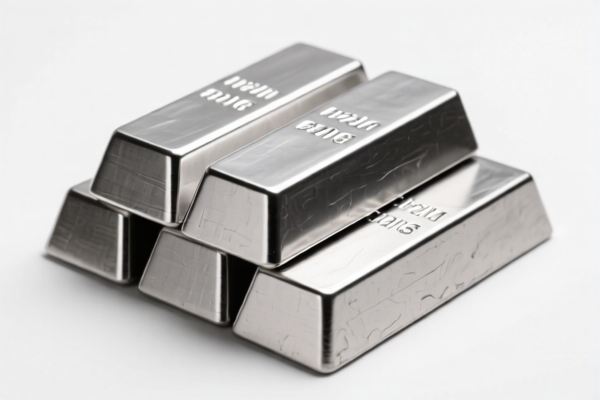
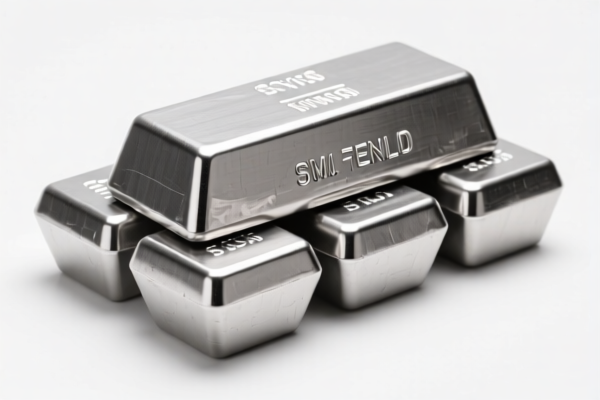
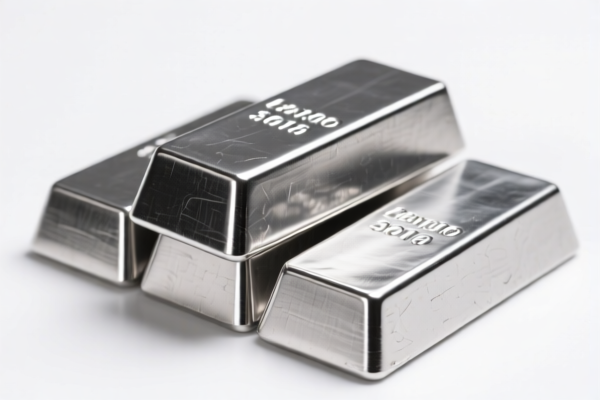
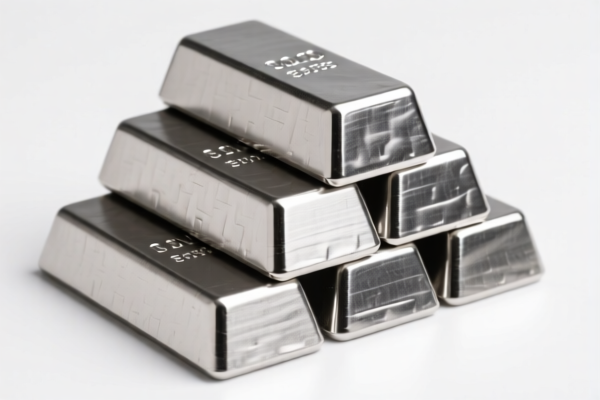
AI分析
🏗️ Stainless Steel Ingots and Other Primary Forms
🌐 HS Code Reference & Clearance Guide | 2026 Latest Tariff Analysis | Professional Customs Strategy
📌 I. Product Definition and Classification: Do You Really Understand "Primary Forms"?
Stainless steel is not just about finished pipes or plates. In international trade, "primary forms" refer to steel that has been cast or roughly worked but not yet shaped into final semi-finished products like billets, blooms, or slabs for rolling. This category is critical for metallurgical investors and manufacturers who source raw material for further processing.
The Core Distinction: * Ingots (钢锭): Solid cast blocks of steel, typically used for forging or further refining. They are the most "primitive" form. * Other Primary Forms (其他初级形状): This includes semi-finished castings, rough shapes, or specific industrial blocks that don't fit the strict definition of an ingot but haven't undergone hot rolling or extrusion into standard profiles.
⚠️ Key Classification Point:
- If it is a cast block intended for forging/re-melting → HS 7218.10
- If it is semi-finished cast but not a simple ingot → HS 7218.90
- ⛔ Crucial Note: Do NOT confuse these with slabs, billets, or blooms (HS 7218.10/7218.90 are often mistaken for HS 7218.10 in casual talk, but strictly, slabs/billets for rolling are often classified under HS 7218.10 if they are continuous cast, OR HS 7218.90 if they are special primary forms. Correction: Under HS 2022/2024, Continuous Cast Slabs/Billets/Blooms are typically classified under HS 7218.10 (Ingots and other primary forms) if they are stainless. Let's clarify the exact breakdown below based on 2026 standards.)
📦 II. HS Code Classification Details (2026 Latest Tariff Authority Comparison)
| HS Code | Product Description | Application Scenario | Key Differentiator |
|---|---|---|---|
7218.10.00.00 |
Ingots and other primary forms, of stainless steel (including continuous cast slabs, billets, blooms) | Raw material for rolling mills, forging plants, smelters | ✅ Most Common: Includes continuous cast semi-finished products (slabs/billets) which are legally considered "primary forms" in the HTSUS. |
7218.90.00.00 |
Other (e.g., cast blocks for specific forging, rough shapes, non-standard primary forms) | Specialized forging, custom castings, experimental metallurgy | ✅ Specific: For forms that are not standard rolling stock. Often requires technical certification. |
🔍 Important Reminder:
- Continuous Cast Slabs/Billets: Even though they are "semi-finished," the Harmonized System classifies them under 7218.10.00.00 as "primary forms." They are NOT classified under Chapter 73 (Articles of Iron/Steel) until they are rolled into plates or bars. - Forging Blooms: If sold specifically for forging, they still fall under 7218. - Scrap: ❌ DO NOT use these codes for stainless steel scrap (which falls under 7204.21/7204.29). This is a common and costly error.
💰 III. 2026 Latest Tariff Rate Details (Including Additional Taxes & Policy Add-ons)
✅ Applicable Country: United States (US)
✅ Country of Origin: China (CN)
✅ Effective Date: November 10, 2025 onwards (including subsequent imports)
🎯 1. 7218.10.00.00 – Stainless Steel Ingots & Primary Forms (Continuous Cast Slabs/Billets)
| Item | Content |
|---|---|
| Base Duty Rate | 0% (ad valorem) |
| USITC Additional Duty | +25% (under USITC Footnote 9903.88.01 - Section 301) |
| IEEPA Additional Duty | +10% (China/HK products, effective Nov 10, 2025) |
| Total Effective Rate | 35% |
| Tax Calculation | CIF Value × 35% |
| De Minimis Eligibility | ❌ No (deny_de_minimis) |
| Legal Basis Path | IEEPA:9903.01.25 → IEEPA:9903.01.24 → USITC:7218.10.00.00 → FOOTNOTE:9903.88.01 |
📌 Explanation:
- Stainless steel primary forms are heavily taxed due to their strategic importance in manufacturing. - The 35% total burden is significant. Many importers try to shift this cost or absorb it. - Section 301 and IEEPA both apply cumulatively to this chapter.
🎯 2. 7218.90.00.00 – Other Stainless Steel Primary Forms
| Item | Content |
|---|---|
| Base Duty Rate | 0% |
| USITC Additional Duty | +25% |
| IEEPA Additional Duty | +10% |
| Total Effective Rate | 35% |
| Tax Calculation | CIF Value × 35% |
| De Minimis Eligibility | ❌ No |
| Legal Basis Path | IEEPA:9901.25 → IEEPA:9903.01.24 → USITC:7218.90.00.00 → FOOTNOTE:9903.88.01 |
📌 Note:
- Same tax treatment as 7218.10. - If the "other form" is a special alloy or custom casting, ensure the certificate of analysis (CoA) matches the HS description to avoid misclassification audits.
🛠️ IV. Customs Clearance Practical Advice (Battlefield Pitfall Avoidance Guide)
✅ 1. Documentation Checklist (Non-negotiable)
| Document | Mandatory | Explanation |
|---|---|---|
| ✅ Commercial Invoice | ✔️ | Must clearly state "Stainless Steel Ingots" or "Continuous Cast Slabs." Avoid vague terms like "Metal Blocks." |
| ✅ Packing List | ✔️ | Detail weight (net/gross), dimensions, and number of pieces. |
| ✅ Certificate of Origin (CO) | ✔️ | Crucial for determining origin. If transshipped through Vietnam/Malaysia, proof of substantial transformation is needed for IEEPA exemptions. |
| ✅ Technical Data Sheet / CoA | ✔️ | Specifies grade (e.g., 304, 316L, 430). Mislabeling grade can lead to additional anti-dumping duties. |
| ✅ Bill of Lading | ✔️ | Must match invoice and packing list exactly. |
| ✅ Importer Security Filing (ISF) | ✔️ | File 10 days before loading. Late filing = $5,000 penalty per violation. |
✅ 2. Declaration Techniques (Key Mantras)
🔥 "Don't Call It Scrap, Don't Call It Finished, State 'Primary Form' Clear!"
| Scenario | Correct Declaration | Wrong Practice |
|---|---|---|
| Continuous Cast Slabs | 7218.10.00.00 "Stainless Steel Continuous Cast Slabs" |
Calling it "Steel Plates" → HS 7209 (Higher duty, different regulations) |
| Forging Blooms | 7218.10.00.00 "Stainless Steel Blooms for Forging" |
Calling it "Scrap" → HS 7204 (Incorrect, triggers different scrutiny) |
| Special Cast Blocks | 7218.90.00.00 "Other Primary Forms" |
No documentation → Customs Detention for lack of classification proof |
| Stainless Steel Wire Rod | ❌ Not this HS | Wire rod is 7221/7222 |
✅ 3. Special Case Handling
| Situation | Handling Advice |
|---|---|
| Transshipment (e.g., via Vietnam) | If steel is from China but shipped from Vietnam, you cannot claim IEEPA exemption unless you provide proof of substantial transformation (e.g., melting and recasting). Merely re-packaging does not work. |
| Grade Confusion (304 vs 316) | Ensure the CoA matches the declared grade. 316L is more expensive and may have different anti-dumping history. Misdeclaration leads to fines. |
| Large Volume Imports | Consider applying for an Advance Ruling if the shape is non-standard (e.g., irregular ingots) to avoid clearance delays. |
🌍 V. Global Major Market Clearance Comparison (2026 Latest)
| Country/Region | Recommended HS Code | Tariff (China Origin) | Certification Requirements | Remarks |
|---|---|---|---|---|
| 🇺🇸 USA | 7218.10.00.00 |
35% (0% base + 25% Sec 301 + 10% IEEPA) | None specific, but CoA is critical | High cost. Transshipment risks are high. |
| 🇨🇳 China | 7218.10.00.00 |
0% | None | Major importer of scrap/primary forms. |
| 🇪🇺 EU | 7218.10.00.00 |
0% (General) | REACH (if further processed) | No additional tariffs, but anti-dumping may apply to finished products, not raw primary forms. |
| 🇯🇵 Japan | 7218.10.00.00 |
0% | JIS Standards compliance (recommended) | Low tariff, high quality scrutiny. |
📌 Conclusion:
- USA is the most expensive market due to layered tariffs.
- EU/Japan are neutral for raw primary forms.
- Strategy: If targeting the US, ensure supply chain transparency. If steel is Chinese, expect 35%. If from India/Turkey, base duty applies (0-5%), but check for specific antidumping cases.
📌 VI. Common Errors & Pitfall Guide (Blood and Tears Lessons)
❌ Mistake 1: Classifying Stainless Steel Scrap as 7218.10
👉 Consequence: HS 7204 is for scrap. Misclassification leads to penalties because scrap has different environmental and trade regulations.
👉 Correction: Use 7204.21/7204.29 for scrap.
❌ Mistake 2: Calling Rolling Slabs "Ingots" but declaring under Finished Product HS codes (e.g., 7209)
👉 Consequence: Under-declaration of value/duty. Slabs are raw material, not finished plates.
👉 Correction: Use 7218.10.
❌ Mistake 3: Ignoring ISF Filing for Bulk Cargo
👉 Consequence: $5,000 fine per shipment if ISF is not filed 24 hours before loading.
👉 Correction: File ISF 10 days before loading at origin port.
❌ Mistake 4: Vague Description "Steel Pieces"
👉 Consequence: Customs Audit. CBP will delay clearance for "Additional Information."
👉 Correction: Use precise terms: "Stainless Steel Continuous Cast Slab, Grade 304, 150mm Thickness."
✅ Correct Practice:
"Stainless Steel Continuous Cast Slabs, Grade 304L, Hot Rolled Origin China, HS 7218.10.00.00, Net Weight 20MT, CBM 15.2"
🎯 VII. Conclusion: Precise Classification Saves Money!
🎯 Remember the Mantra:
🔹 "Primary Forms are 7218, Not Scrap, Not Finished."
🔹 "China to US = 35% Duty, Think Twice or Shift Supply Chain."
🔹 "Document the Grade, Declare the Shape, Avoid the Fine."
📌 Pro Tip:
If your stainless steel ingots are sourced from India, Turkey, or Thailand, you may avoid the 10% IEEPA and 25% Section 301 duties. Base duties are often 0-5%.
👉 Action: Verify origin certificates carefully. Ensure no Chinese content triggers "De Minimis" or "Substantial Transformation" rules incorrectly.
📣 Immediate Action:
📞 Contact your customs broker BEFORE shipment.
📝 Prepare CoA and Technical Sheets.
🚀 Ensure smooth customs clearance and cost control!
✨ Professional Clearance, Starting with Accurate Classification!
💼 Your bottom line depends on the right HS Code!
用户评价
关于 HS 编码归类
协调制度(HS)是由世界海关组织(WCO)制定的国际贸易商品分类标准。全球 200 多个国家采用 HS 系统作为海关关税、贸易统计和进出口监管的基础。
每个 HS 编码遵循以下层级结构:
- 章(2 位)——商品大类(例如:第 84 章:机器和机械设备)
- 品目(4 位)——章内的更具体分类
- 子目(6 位)——国际通用细分,所有 WCO 成员国统一使用
- 本国细分(8-10 位)——各国自行扩展的细分编码,如美国 HTSUS 10 位编码
正确的 HS 编码归类对于顺利通关、准确缴纳关税和遵守贸易法规至关重要。错误归类可能导致海关延误、多缴关税或罚款。
从CN进口到US时,适用的关税税率可能包括:
- 最惠国(MFN)税率——适用于 WTO 成员国的标准关税税率
- 普通税率——适用于无贸易协定国家
- 贸易救济关税——附加关税,如 301 条款(反倾销)、232 条款(国家安全)或反补贴税
本页内容仅供参考。如需正式归类,请咨询当地海关或持牌报关代理。